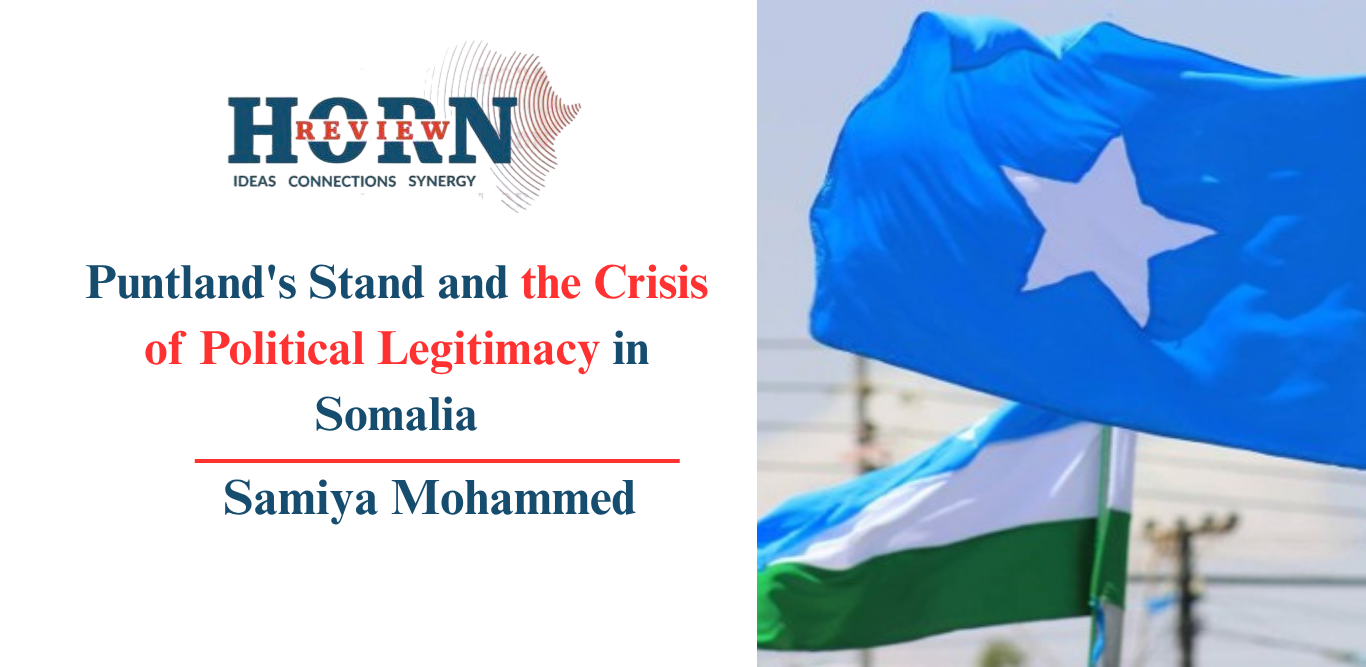
The decision by Puntland to place its armed forces on full alert in anticipation of President Hassan Sheikh Mohamud’s reported visit to Galkayo has transformed a routine presidential itinerary into potential military engagements. However the confrontation is not truly about the visit itself but it is the latest act in a sustained struggle over the future of Somali federalism. Somali’s campaign to recentralise power, pursued through contested constitutional changes and the cultivation of local proxies has provoked a coherent and forceful response from a Puntland administration that views its autonomy as non negotiable and its defensive posture as entirely justified.
The proximate cause of the current tension is President Mohamud’s intended visit to the southern sector of Galkayo the portion of the city administered by neighbouring Galmudug state. In its official response Puntland alleged that the President’s true objective was to foment conflict in the northeast an assertion it did not accompany with supporting documentation. This accusation is more understood as a deliberate exercise in deterrence in which a public posture intended to signal the severity of Puntland’s opposition to any federal initiative on its doorstep. For an administration that has consistently interpreted federal engagement in its territory as an infringement on its autonomy the prospect of a presidential visit to such a sensitive and historical location carries an provocative weight.
Galmudug state officials have dismissed Puntland’s objections with a straightforward assertion of constitutional principle maintaining that the President retains the right to visit any part of the national territory. This position is legally unimpeachable however politically it presents an exercise of a polite fiction a formal adherence to constitutional norms that deliberately overlooks the reality of Galkayo. The city is not a unified administrative entity but a raw fault line between two competing authorities a division enforced not by law but by the balance of armed force on the ground. The argument that the federal president can travel freely throughout the country presupposes a consolidated state that simply does not exist. Galmudug’s minister insisted that his region is not an island outside the nation but the very fact of Puntland’s military alert and public warning demonstrates that for the federal government portions of the national territory remain in practice beyond its direct reach.
The cause of the current crisis however is deeper than a single presidential visit. The Puntland administration’s maximalist position is a direct response to the federal government’s push for constitutional reforms which were passed by the Somali parliament in March 2024. These amendments which include the transition to a universal suffrage election system and critically granting the president the power to appoint the prime minister without parliamentary approval were perceived by Puntland as a fundamental threat to its autonomy and the broader federal compact. The administration of President Said Abdullahi Deni correctly identified these changes as a unilateral power grab by the center and its reaction was swift and definitive. In March 2024 Puntland declared it would withdraw its recognition of federal institutions and operate as a self governing entity until a mutually acceptable constitution is ratified through a national referendum.
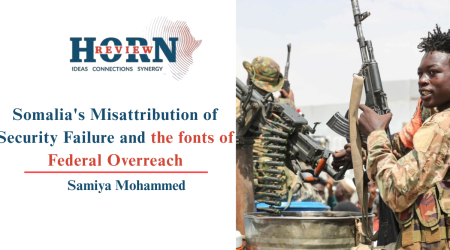
Puntland’s position is internally consistent and backed by effective force. The region has functioned as a relatively stable and effective administration since its establishment in 1998 managing its own security, collecting revenue and maintaining a degree of order that is absent in many other parts of the country. Following the 2024 constitutional crisis it has acted as a de facto independent state in which a status it has now reinforced through military action. The recent operation in northern Galkayo where Puntland forces stormed a military base and captured over one hundred fighters loyal to the federal government was a deliberate and successful assertion of its monopoly on force within its territory. This was not an act of random aggression but a cleanup operation to remove a federal presence and send a clear message about the limits of Mogadishu’s reach.
In contrast the federal government’s actions appear reactive and overreaching. President Hassan Sheikh Mohamud is remaining in power on the basis of the very constitutional amendments that are contested by regional states. His administration’s strategy of cultivating federal aligned security units within Puntland’s territory is a direct challenge to the region’s sovereignty and a violation of the implicit rules of Somali federalism. By attempting to establish military bases in Bosaso and Galkayo, Mogadishu has been testing the limits of Puntland’s tolerance. The federal government appears to be operating with a contested mandate seeking to project power and political authority without the necessary consensus or military capacity to do so effectively. The decision to float a presidential visit into a hot zone seemingly without prior coordination with the Puntland administration suggests either a misreading of the political temperature or a deliberate attempt to provoke a confrontation.
The federal government’s push for direct elections is seen by its opponents as a strategy to consolidate power and weaken the influence of clan based political negotiations. Puntland alongside Jubaland has been a leading voice in opposing this agenda arguing that any fundamental changes to the national system require a process of genuine consensus not parliamentary fiat. President Deni’s refusal to attend the National Consultative Council meetings is not a sign of intransigence but a logical consequence of his position why participate in a process that is designed to legitimize a system his administration has rejected? The federal government’s inability to secure the buy in of its most powerful member states on a matter as fundamental as the constitution reveals the fragility of its own legitimacy.
The potential for localized conflict in Galkayo remains a realistic risk. With Puntland forces on full alert and the President’s itinerary uncertain the situation is combustible. The city has exploded before, and the presence of heavily armed forces on both sides of a tense, divided urban environment is a recipe for escalation.
Puntland has demonstrated a clear willingness to use force to defend what it considers its sovereign prerogatives and the federal government currently lacks the capacity to project sustained power into the Mudug region without local allies. The standoff between Puntland and Mogadishu reveals the polite fiction that currently underpins the Somali federal project. While the language of national unity, constitutional rights and federal cooperation is still employed the reality is that power in Somalia continues to be a function of clan interests, control over revenue and the capacity for armed force. Puntland under the leadership of President Deni is acting as the guardian of a functional regional order, refusing to be subordinated to a central authority it views as both illegitimate and self interested. President Hassan Sheikh Mohamud’s administration in its attempt to recentralise power for its own political survival is testing the boundaries of its mandate in a way that threatens to further fracture an already tenuous national framework.
The parallels with Somaliland are increasingly difficult to ignore. Garowe has withdrawn from federal institutions, asserted administrative autonomy and demonstrated a capacity for self governance that exceeds that of the central government. While Puntland has historically framed itself as a federal partner rather than a secessionist entity, the cumulative effect of Mogadishu’s centralising policies may push it toward a conclusion that many in the region have long contemplated that the costs of remaining within the Somali federation now outweigh the benefits of full independence.
By Samiya Mohammed, Researcher, Horn Review