The security area of the Horn continues to evolve through layers of external partnership. After Turkey established itself as a major security partner with a training presence in Somalia. Saudi Arabia has begun a substantial military cooperation program on Somali. The recruitment and training of 5,107 Somali personnel under a bilateral defense accord shows a clear expansion of Saudi’s engagement. The initiative goals both to reinforce maritime security along the Red Sea and Gulf of Aden and to support the rebuilding of Somalia’s national defense institutions. It aligns Saudi Arabia’s interest in freedom of navigation with Somalia’s stated goal of creating an inclusive national army drawn from across its federal regions.
The composition of the force deserves close attention. Nearly 2,000 recruits come from Puntland the northeastern federal member state whose coastline overlooks the Gulf of Aden and the approaches to the Bab el Mandeb Strait. This location makes Puntland central to any system of maritime domain awareness and littoral security. The Federal Government of Somalia presents the recruitment as a nation building measure designed to bring personnel from every region into a single national force. At the time the substantial Puntland contingent places trained units in a zone of high maritime importance. The arrangement therefore advances Somalia’s aim of a geographically balanced army while linking those units to the Red Sea approaches that remain crucial for Saudi energy exports and commercial shipping.
Relations between the Federal Government in Somalia and Puntland have involved periodic friction over constitutional interpretation, resource allocation and the practical division of security authority. A force whose core is drawn so heavily from one federal member state therefore carries a possibility of becoming drawn into future federal disputes concerning deployment priorities, command appointments or claims of political loyalty. This observation does not question the legitimacy of the recruitment it simply identifies a structural feature common to security sector reform in fragmented federal systems. Inclusive command structures, transparent deployment protocols and continuous dialogue between federal and state authorities will be essential if the unit is to strengthen rather than complicate national cohesion.
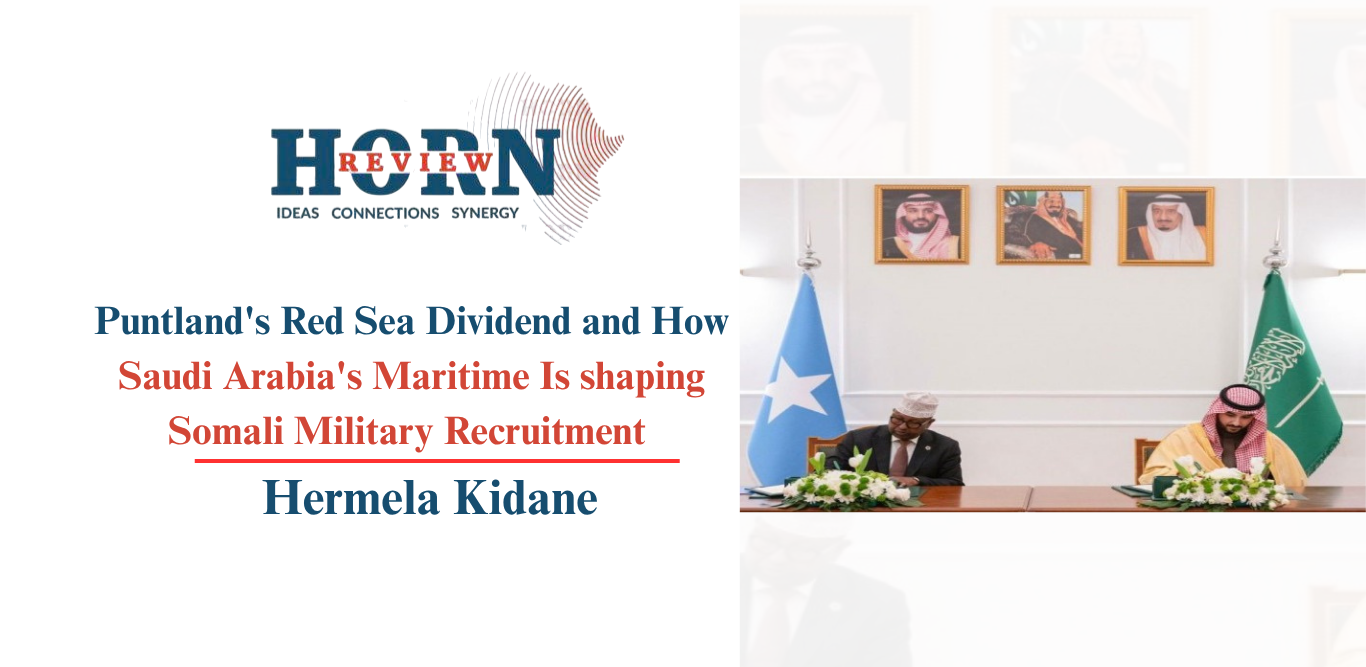
After the defense and military cooperation agreement signed in Saudi on 9 February 2026 by the Somali and Saudi defense ministers training began at facilities in the Guriel area of Galmudug. The nine month curriculum covers basic military skills, operational procedures and combat readiness. Instruction is provided by experienced foreign military personnel from several countries under the bilateral structure. High level Saudi delegations have visited the camps to provide oversight while day to day training is delivered through contracted expertise. This method transfers capacity without large scale conventional troop deployments and allows flexible sustained cooperation. The force is formally integrated into the Somali National Army with salaries and support channeled through official Somali defense institutions thereby reinforcing the contractual and institutional links created by the 2026 agreement.
A related institutional question concerns the integrity of the chain of command. Even when financial support is routed through national ministries a force whose continued pay and logistics depend on a bilateral partnership develops a degree of dual accountability. Over time this financial linkage can create practical dependencies that must be actively managed if a single national command authority is to be preserved. The point is technical rather than political. Experience from other security assistance programs shows that clear protocols on operational control, promotion pathways and resource allocation are needed to keep formal hierarchy and material incentives aligned. Careful institutional design at this stage can turn external support into lasting national capacity.
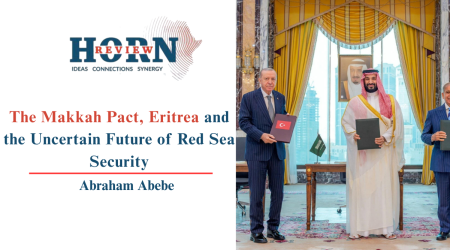
In late July Saudi Arabia advanced a multinational maritime defense coalition of fourteen founding participants including Turkey, Pakistan, Egypt, Somalia and partner states. The coalition’s stated purpose is to protect freedom of navigation through the Bab el-Mandeb the Red Sea and the Gulf of Aden against threats to commercial and energy shipping. Parallel diplomatic and defense consultations have strengthened coordination among the partners. Within this layered structure the Somali training program supplies a complementary terrestrial and littoral element locally recruited personnel familiar with the coastal environment who can enhance intelligence, presence and interdiction capacities beyond the reach of purely naval patrols. The involvement of Pakistani military expertise in wider cooperative frameworks further strengthens the professional networks supporting these efforts and illustrates a practical South dimension of contemporary maritime security collaboration.
The Horn of Africa already hosts multiple external security partnerships of differing scale and focus. The simultaneous presence of distinct state networks each pursuing its own priorities and working with local counterparts creates a structural possibility of misalignment in objectives, doctrines or operational tempos. This is not a judgement on any particular partnership it is simply a recognition that overlapping external commitments require continuous coordination if they are to reinforce rather than complicate national security sector reform.
The Saudi Somali initiative presents a form of security partnership that prioritizes capacity building through financial and technical support while embedding the resulting force inside national institutions. It addresses Saudi Arabia’s lasting interest in stable maritime corridors essential for energy exports and global trade while advancing Somalia’s objective of reconstituting a professional national army after decades of conflict and fragmentation. The program’s scale, geographic weighting and integration into multilateral Red Sea structure set it apart from earlier more limited assistance efforts. Its success will depend less on the volume of resources provided than on the consistency of institutional embedding the clarity of operational mandates and the ability of Somali authorities to manage both the federal dimensions of force composition and the wider challenge of coordinating multiple external partnerships.
In sum Saudi Arabia’s military engagement in Somalia constitutes a structured contribution to bilateral defense cooperation and to the emerging multilateral system of Red Sea security. By combining targeted recruitment professionalized training and alignment with wider coalition efforts involving partners such as Turkey and Pakistan the initiative seeks to generate practical capabilities at the intersection of national army reconstruction and maritime domain security. The real weight of the undertaking lies in its potential to create enduring institutional capacity rather than temporary deployments. Whether that potential is realized will be measured by the degree to which the trained force remains integrated within coherent Somali command structures navigates the complexities of federal politics and contributes measurably to the stability of one of the world’s most maritime theatres.
By Hermela Kidane, Researcher, Horn Review