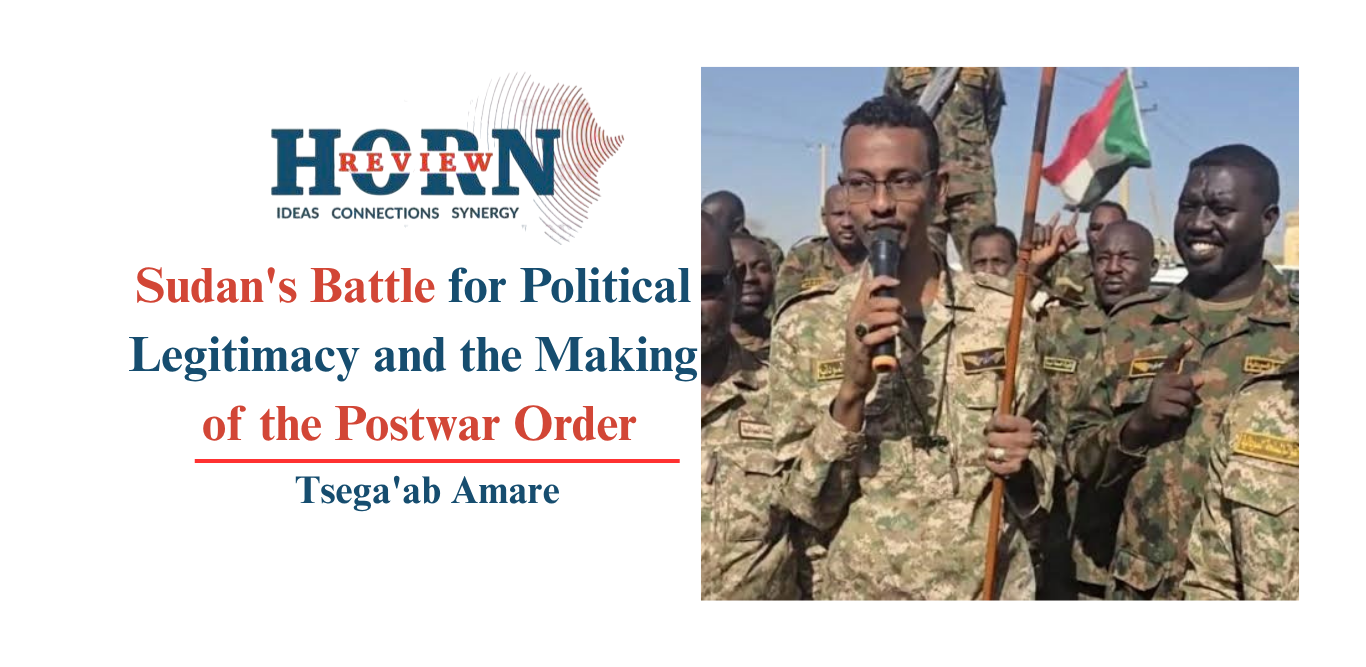
Al-Misbah Abu Zaid Talha, commander of the Al-Bara Bin Malik Battalion released a video directed at his supporters in Omdurman in early May 2025. In it, he mocked Sudanese activists who had appeared in military-style clothing while chanting a modified version of the revolutionary slogan that once defined the 2019 uprising: “the army back to the barracks.” Talha replaced the original call for civilian rule with a message that placed political authority in the hands of those he described as the righteous. He invoked former Islamist First Vice President Ali Osman Mohamed Taha and warned those who had arrived in Khartoum and Omdurman only after the fiercest battles had passed that “shadow battalions” remained ready.
The response from the Omdurman Resistance Committees came quickly. They rejected Talha’s attempt to speak in the name of the armed forces and argued that the freedom he now used to issue threats had been won by the same revolutionary forces he dismissed. They repeated the original demands of the 2019 uprising: an army removed from politics, the dismantling of militias, and no armed group claiming a role in governing the country.
The exchange appeared to be a dispute over slogans, but it revealed a deeper struggle over Sudan’s postwar political order. As the conflict between the SAF and the RSF reshapes the country, competing actors are attempting to convert wartime authority into political legitimacy. The question emerging from Sudan’s war has long moved from who controls territory to who will have the right to define the future state once the fighting ends.
The rise of Al-Bara Bin Malik illustrates this struggle. The battalion emerged from networks associated with the Popular Defense Forces, a paramilitary structure created under Omar al-Bashir’s Islamist government after 1989. Although Sudan’s transitional authorities formally dissolved the Popular Defense Forces in 2020, many of its networks survived. When war broke out between the SAF and RSF in April 2023, Al-Bara Bin Malik became one of the most prominent Islamist-aligned formations fighting alongside the army.
The brigade filled a battlefield need for the SAF, which lacked sufficient infantry forces during the early stages of the war. Over time, however, its military importance became inseparable from its political symbolism. To supporters of the army, Al-Bara Bin Malik represented volunteers who had fought to prevent the RSF from taking power. To critics, its connection to the former regime represented the return of Islamist military networks that had dominated Sudan for three decades.
This strategy reflects a broader political calculation. Sudan’s Islamist movement entered the war deeply divided. Some figures associated with the former regime sought to regain influence through existing political structures, while others increasingly relied on wartime networks and armed formations. For commanders such as Talha, military contribution offers a different source of legitimacy, one based not on historical party structures but on sacrifice, battlefield participation, and the claim of defending the state.
The sanction imposed by the United States on Al-Bara Bin Malik and later by the European Union on Talha did more than target alleged wartime abuses. They also reflected growing international concern that Sudan’s emerging political order could be shaped by armed movements seeking to convert military mobilization into lasting political influence. Whether these measures ultimately constrain Talha’s ambitions remains uncertain, but they underscore a broader international effort to prevent wartime commanders from emerging as central political actors in Sudan’s postwar settlement.
Yet Talha’s ambitions appear to extend beyond the battlefield. Recent report from the Sudan Times indicate that he has sought to establish a political platform separate from Sudan’s traditional Islamist parties, particularly the Islamic Movement and the dissolved National Congress Party. Rather than relying exclusively on established Islamist structures associated with the Bashir era, his reported approach has focused on building relationships with local leaders, including elements of native administration and religious networks.
The distinction matters because Sudan’s competing political forces are operating with different understandings of legitimacy. The resistance committees and civilian movements draw their authority from the 2019 revolution, when mass protests removed Bashir and demanded a transition toward democratic civilian rule. Armed groups aligned with the SAF increasingly draw their legitimacy from the war itself, arguing that those who fought to preserve the state should have a central role in shaping what comes after. In doing so, these factions position themselves as the foundational protectors of the state, claiming a permanent right to dictate its future.
This second source of legitimacy has become increasingly visible in statements from figures close to the former Islamist establishment. In a rare interview in 2025, former National Congress Party chairman Ahmed Haroun argued that Sudan’s political future should be determined through elections after the war but also maintained that the army would need to retain a political role until security threats were resolved. His position reflected a broader argument among sections of Sudan’s Islamist and military networks: that the circumstances of war require a political order in which the armed forces remain a central pillar of governance rather than a security institution separated from politics.
The same logic appears among fighters on the ground. Some members of Al-Bara Bin Malik have presented themselves not as a force seeking to impose Islamist rule, but as volunteers defending the state against the RSF. However, this ‘volunteer’ framing directly contrasts with the brigade’s foundational role as the armed wing of the Sudanese Muslim Brotherhood. Despite public efforts to market themselves as neutral patriots, the group’s integration into the SAF’s frontline operations has institutionalized Muslim Brotherhood influence within the military apparatus. This is the central dilemma facing Sudan’s postwar transition. Armed actors rarely surrender the authority they believe they earned through conflict, and movements that mobilize fighters often seek to transform military networks into political organizations.
However, the path from battlefield influence to political power is far from guaranteed. Sudan’s Islamist current remains fragmented and Al-Bara Bin Malik does not represent a unified political project. Deep divisions persist among Islamist actors over leadership, strategy, and their relationship with the military establishment. Some figures remain closely associated with the old structures of the Islamic Movement, while others appear to favor newer networks built around wartime commanders.
The relationship between Al-Bara Bin Malik and SAF commander Abdel Fattah al-Burhan also reflects these tensions. Although the army relied on various armed formations during the war, the growing visibility of independent forces has created concerns over command and control. Burhan’s repeated emphasis on consolidating armed forces under state authority reflects an attempt to prevent wartime allies from becoming autonomous political-military actors after the conflict.
The struggle surrounding Talha therefore represents more than the ambitions of one commander. It reflects a broader question confronting Sudan and many post-conflict societies: whether those who gain influence through war can be integrated into a political system without allowing military power to dominate civilian institutions.
Sudan’s previous political history offers a warning. The country’s former ruling order was built on the fusion of party networks, security institutions, and armed organizations. The transition that began in 2019 sought to dismantle that model by placing the military under civilian authority. The current war has reversed that process, created new armed actors, and strengthened old networks that now claim a role in determining the country’s future.
The contest therefore extends beyond the struggle between the SAF and RSF, or even between Islamists and civilian movements. It is ultimately a contest between competing conceptions of political legitimacy. The resistance committees argue that legitimacy comes from popular mobilization and the demand for civilian rule. Military-aligned groups argue that legitimacy comes from defending the state during its most dangerous moment. Political parties seek legitimacy through elections and organization. Each vision competes to define what Sudan should become after the war.
Whether Talha succeeds in transforming his battlefield reputation into a formal political movement remains uncertain. His challenge is not only convincing Sudanese voters but navigating a political environment where military leaders, Islamist factions, civilian movements, and regional actors all seek influence over the postwar settlement.
Al-Bara Bin Malik is significant not simply because of its role on the battlefield, but because it represents a wider post-conflict dilemma. Throughout history, armed movements that claim to have saved the state often seek a permanent place within it. Sudan now faces the same challenge. The central question is no longer only how the war will end, but whether military legitimacy acquired through conflict will eclipse the civilian legitimacy demanded by the 2019 revolution. The answer will shape not only Sudan’s postwar political order, but the very meaning of the state that emerges from the conflict.
By Tsega’ab Amare, Researcher, Horn Review