Evaluating the ONLF’s Post-Asmara Evolution
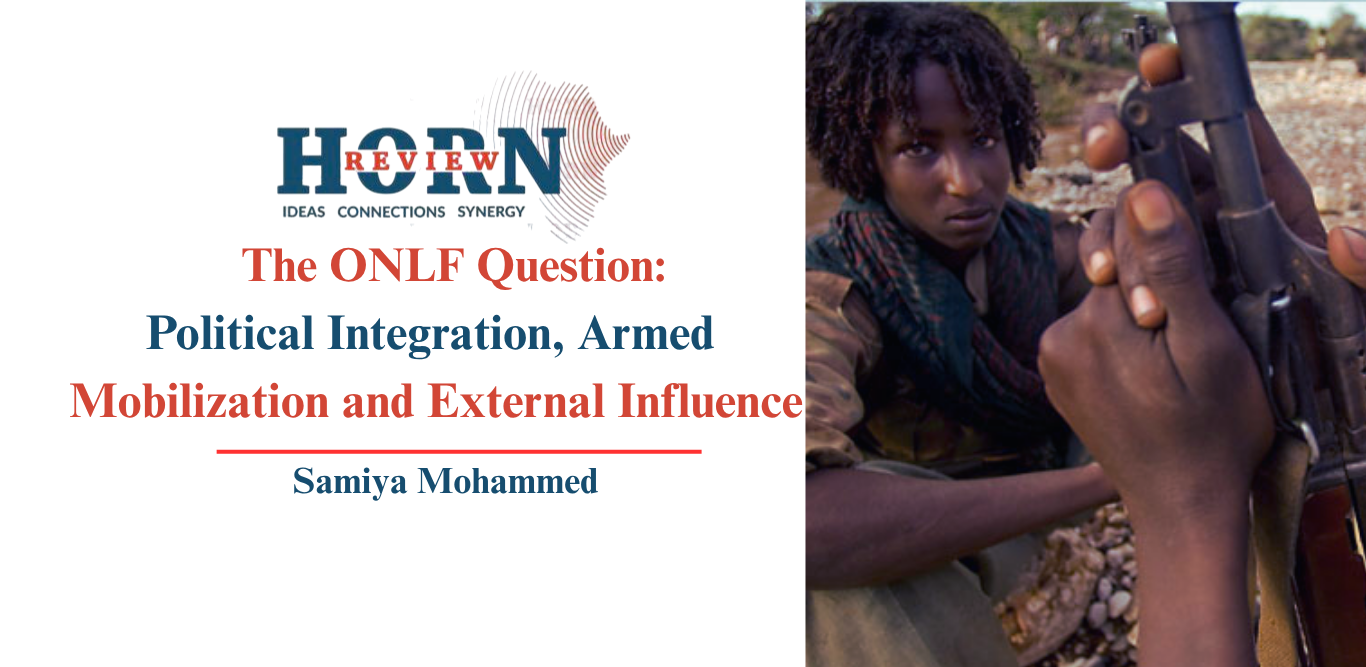
The developments surrounding ONLF leader Abdirahman Mahdi’s participation in meetings held in Asmara and Port Sudan alongside various Ethiopian opposition groups raise questions regarding the true nature of the organization’s current path. ONLF leaders continue to invoke the language of self determination and political rights, the movement’s recent posture increasingly suggests a return to a political structure that risks undermining Ethiopia’s territorial integrity, constitutional order and multi ethnic federal system. The timing, location and external sponsorship of these discussions point toward a pattern of foreign involvement that cannot be ignored.
The ONLF was granted an opportunity in 2018 following the political reforms initiated by Prime Minister Abiy Ahmed. After decades of armed conflict, the organization was removed from Ethiopia’s list of terrorist groups and welcomed into the country’s political process through the peace agreement signed in Asmara. The accord offered the movement a pathway to transform itself from an insurgent force into a legitimate political actor capable of advancing its agenda through peaceful and democratic means.
Former combatants were afforded opportunities for reintegration, political participation became possible without recourse to violence and the Somali Region entered a period of relative stability unprecedented in recent decades. It provided a foundation upon which political dialogue could replace armed confrontation. However any move by factions within the ONLF to resume military activities presents a repudiation of the commitments that shored up the 2018 settlement. Such a decision would point to the abandonment of peaceful political engagement in favour of a path that has historically produced instability, displacement and suffering for the very communities in whose name the organization claims to act.
The principle of self determination occupies an important place in political discourse, it has often been used by nationalist movements to obscure separatist or irredentist ambitions. In the Ethiopian context where multiple ethnic communities coexist within a constitutionally recognized federal structure attempts to advance maximalist territorial claims carry implications that extend any single region. If every political crisis is transformed into a justification for armed separatism, the result is not greater self governance but perpetual instability. The Somalia Region’s future like that of all Ethiopian regions is best secured through constitutional participation, political negotiation and institutional reform rather than through renewed insurgency.
Equally concerning is the extent to which recent developments appear intertwined with broader regional rivalries. The meetings held in Asmara and Port Sudan are particularly important in this regard. Neither venue can be viewed as politically neutral. Both locations have increasingly came as centers of coordination among Ethiopian opposition groups hostile to the federal government raising legitimate concerns regarding external sponsorship and manipulation. Eritrea’s role deserves particular scrutiny. Under President Isaias Afwerki Eritrea has maintained a history of supporting Ethiopian opposition movements as instruments of regional leverage. Throughout previous decades numerous armed groups found sanctuary, logistical assistance or political backing within Eritrean territory as part of Asmara’s strategy of exerting pressure. The ONLF itself has at various points in its history, maintained relationships with Eritrea that reflected this pattern of proxy engagement.
The ONLF leaders in Asmara at a moment of cannot reasonably be dismissed as coincidence. It appears consistent with a geopolitical approach in which Ethiopian internal divisions are viewed as opportunities for exploitation. The involvement of Sudanese and Egyptian actors similarly merits attention. Both countries possess interests in regional power balances, particularly concerning the Nile Basin, water security and Red Sea politics. From this perspective a weakened and internally preoccupied Ethiopia serves the interests of external competitors seeking to constrain growing regional influence.
The logic is straight forward. By encouraging the proliferation of multiple security challenges including insurgencies in different regions, political fragmentation and ethnic tensions external actors can force the Ethiopian National Defense Force to disperse its resources across numerous fronts. The ONLF’s internal condition further increases to such manipulation. The organization has experienced disintegration in recent years with leadership disputes, ideological disagreements and competing political visions weakening its cohesion.
The split between supporters of Abdirahman Mahdi and those aligned with other factions exposed deep structural divisions within the movement. As political relevance declined and organizational unity deteriorated, incentives came for hard line elements to seek external patrons capable of restoring their influence. This act is not uncommon among weakened insurgent organizations. Movements that struggle to maintain domestic support frequently become susceptible to external sponsorship, particularly when foreign actors are willing to provide political backing, financial assistance or platforms. The danger is that organizational survival increasingly becomes tied not to local constituencies but to the geopolitical objectives of external benefactors.
Meanwhile the Somali Regional State has undergone substantial transformation since 2018. The region has experienced levels of stability, economic activity and political participation that would have been difficult to imagine during earlier periods of conflict. Investments in infrastructure, governance reforms and local development initiatives have contributed to a more peaceful environment while efforts to integrate former combatants and community leaders have reduced the appeal of armed mobilization. Under the leadership of regional authorities including President Mustafa Omer attempts have been made to broaden political inclusion and strengthen institutional governance.
However, any resumption of insurgent activities would likely trigger a firm response from the Ethiopian state. Governments possess both the right and responsibility to defend territorial integrity, protect civilian populations and preserve constitutional order. Should armed factions abandon peaceful political participation and return to violence, they risk once again being classified primarily as security threats rather than political actors.
This does not mean that political dialogue should be abandoned. On the contrary, Ethiopia’s stability depends upon maintaining avenues for peaceful engagement, negotiation and constitutional participation. Genuine politics should continue to be addressed through democratic institutions and inclusive dialogue. However, a clear distinction must be maintained between legitimate political opposition and movements that align themselves with foreign adversaries while pursuing armed campaigns against the state.
Ultimately, the convergence of Eritrean, Sudanese, and Egyptian interests around anti government opposition networks suggests an effort to weaken Ethiopia through indirect means at a moment of regional transformation. The lesson of the post 2018 period is clear which is sustainable peace comes through political integration, not insurgency, through development not destabilization and through national dialogue not foreign sponsored proxy conflicts. Any attempt to reverse that road risks jeopardizing both the progress achieved in the Somali Region and Ethiopia’s broader aspirations for stability, prosperity and regional leadership.
By Samiya Mohammed, Researcher, Horn Review