By Zerubabel Getachew, PHD
Disinformation, often emanating from foreign actors, with or without the complicity of domestic proxies, has become a persistent feature of electoral processes in the contemporary information ecosystem. A longitudinal examination of information manipulation, from the Cold War era to the present, reveals a profound shift from episodic interference designed to influence electoral outcomes in favor of particular candidates, to an entrenched architecture of hybrid warfare aimed at systematically undermining electoral processes themselves. This evolution seeks not merely to shape outcomes, but to delegitimize governments formed through elections and to erode public confidence in institutions and social cohesion.
As Ethiopia approaches polling day for its Seventh General Election on June 1, there has been an exponential increase in election-related information circulating across media platforms. While a significant portion of this activity reflects a legitimate commitment to informing an engaged citizenry, a substantial volume is driven by calculated efforts to systematically distort the information environment through the dissemination of falsehoods. These efforts are designed not just to corrode public trust in both the electoral process and its outcomes, but also to fracture the social, legal and institutional foundations upon which democratic governance rests. In the context of expanding digital connectivity, Ethiopia’s predominantly youthful and technologically adept population has emerged as both a primary target and an inadvertent amplifier of disinformation. A growing tendency to place uncritical trust in digital content, often without rigorous verification, renders this demographic particularly susceptible to manipulation.
With approximately 54 million registered voters poised to cast their ballots, the volume and intensity of disinformation have markedly intensified in the final days preceding the election. As stated above, these campaigns seek to disrupt national discourse, weaken confidence in the constitutional order, and cultivate a sense of political futility among citizens. By fostering the perception that electoral participation cannot meaningfully address the country’s challenges, they aim to suppress civic engagement and diminish the legitimacy of the democratic exercise. A central feature of these campaigns has been the systematic targeting of political actors and institutions.These disinformation campaigns have attacked the image and legitimacy of political parties and candidates. The circulation of sexually abusive digital content targeting female candidates, recycling the narrative of token opposition, and labeling election management bodies as inept are just a few of the nodes of these disinformation campaigns. Notably, a significant proportion of these efforts has focused on undermining both the credibility of the electoral process and the agency of Prime Minister Abiy Ahmed.
Election management institutions, in particular, have been portrayed as either inept or politically compromised. Such portrayals serve multiple strategic objectives: to delegitimize the electoral process, precondition the rejection of results, discourage voter participation, and ultimately displace official institutions as the authoritative sources of electoral information. Within this framework, the National Election Board of Ethiopia (NEBE) has been the subject of sustained criticism, much of it unfounded. Allegations that NEBE disenfranchised the Tigray region following the revocation of the TPLF’s registration overlook the party’s own refusal to comply with legal requirements governing political party operations, including the convening of a general assembly. Similarly, claims that elections are proceeding selectively in secure urban centers while ignoring broader insecurity misrepresent NEBE’s publicly stated position: that voting will not take place in 46 out of 176 electoral districts in the Amhara and Tigray regions, a decision reached through extensive consultations with relevant stakeholders.
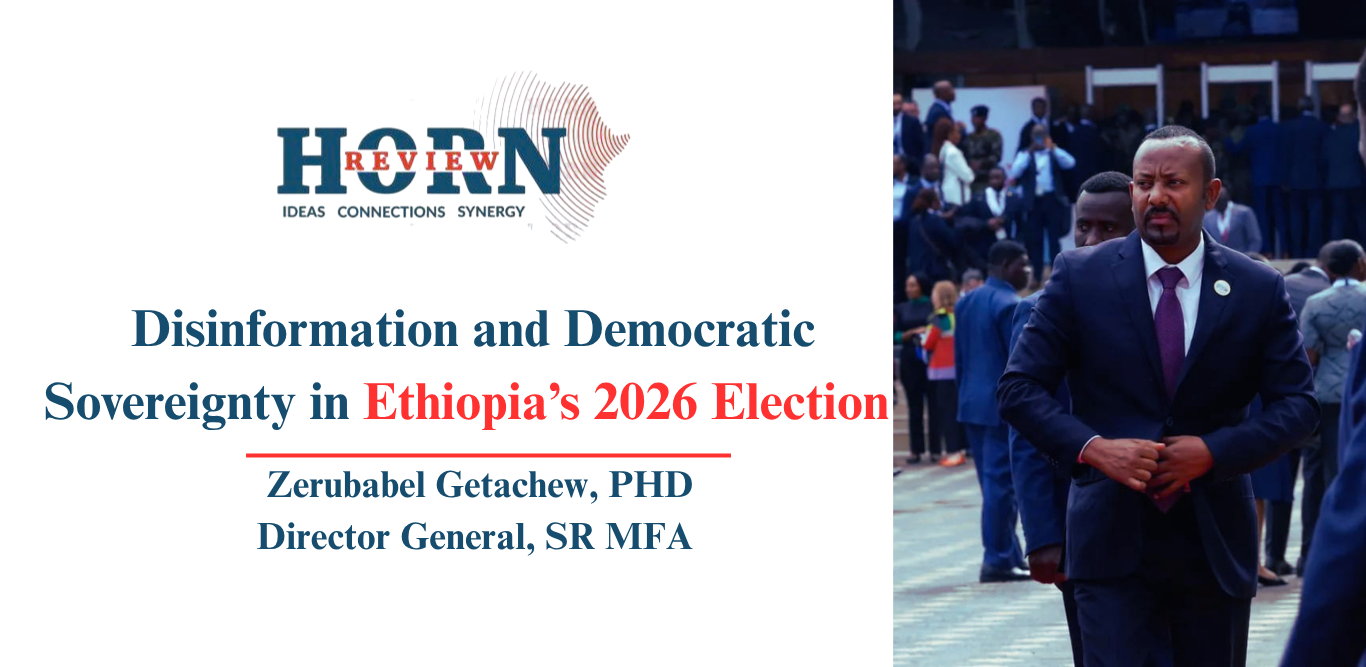
The incumbent and widely endorsed members of the prime minister’s administration have also been a primary target of disinformation efforts. The logic underpinning these attacks is consistent: by undermining the legitimacy of bold technocratic and political state representatives, campaigns seek to construct a broader narrative of systemic governmental failure, thereby weakening the perception of mandate and ability to govern irrespective of electoral outcomes. In recent days, Prime Minister Abiy Ahmed himself has been particularly depicted through a series of reductive and often contradictory narratives – characterized as authoritarian, excessively religious, ineffective in securing lasting peace, and subordinate to external interests. These portrayals stand in stark contradiction from the reality of Ethiopian politics, of Abiy Ahmed’s political identity, and the governance records of his administration – rather entirely relying on personal vilification and the instrumentalization of identity, diverting the much needed attention from substantive policy discourse.
The Prime Minister’s reform trajectory – by any comparative measure – encompasses far-reaching economic liberalization, national digitalisation, the expanded integration of artificial intelligence in to state systems and the society, social welfare initiatives, educational reform, multi-dimensional diplomatic reach, the large-scale redevelopment and urban innovation of Addis Ababa, the execution of critical national infrastructure projects, most notably the Grand Ethiopian Renaissance Dam (GERD), rebuilding the military and strengthening the nation’s security and intelligence capability and so forth. This portfolio further extends to strategically consequential economic undertakings of both national, regional and international projects, including the Bishoftu International Airport City and the establishment of a fertilizer production and the reconstitution of the oil production industry in Ethiopia’s Somali region. Notwithstanding their developmental scope and macroeconomic significance, these initiatives are recast within disinformation narratives as neo-imperial ventures purportedly destabilizing the Horn of Africa. Through such reframing, the disinformation campaigns have so far deployed layered meta-narratives designed to activate historically embedded anxieties surrounding centralized authority and hegemonic governance in Ethiopia, and the entire region as well.
The sudden surge in the publication of so-called “high-impact” articles targeting both the electoral process and the Prime Minister in the immediate pre-election period reflects a well-established pattern in disinformation strategy. At a minimum, such efforts seek to influence voter perceptions and shape international opinion at a critical juncture; at their most consequential, they aim to predispose both domestic and external audiences toward questioning the legitimacy of the electoral outcome. In more extreme articulations, certain narratives appear designed to provoke post-election instability – an objective that rests on a limited appreciation of prevailing public sentiment and the broader political disposition of the electorate.
It shall also be noted that, while elections remain the principal institutional mechanism through which citizens exercise their sovereign right to determine political leadership and to hold it accountable, their legitimacy is not derived solely from procedural compliance, but from the full realization of fundamental political and civil liberties, as well as essential socioeconomic rights. Where these conditions are meaningfully upheld, electoral outcomes acquire undisputed democratic authority – as has been since the last election – and the ones preceding that. Disinformation campaigns, by contrast, function in direct opposition to this normative framework. Yet, despite their increasing sophistication in the contemporary information environment, they do not alter the fundamental locus of democratic authority. The ballot box remains the decisive instrument of political legitimacy, and the ultimate arbiter of Ethiopia’s 2026 electoral outcome is the registered electorate itself – whose collective will stands as the final and incontestable expression of sovereign democratic choice.
About the Author
Dr. Zerubabel Getachew, PhD, is an Ethiopian career diplomat serving as Director General of the Situation Room in the Office of the Minister at the Ministry of Foreign Affairs (Ethiopia). He has worked within Ethiopia’s diplomatic service and has served at different foreign missions, contributing to the country’s diplomatic engagement and coordination of foreign policy through his current senior role.