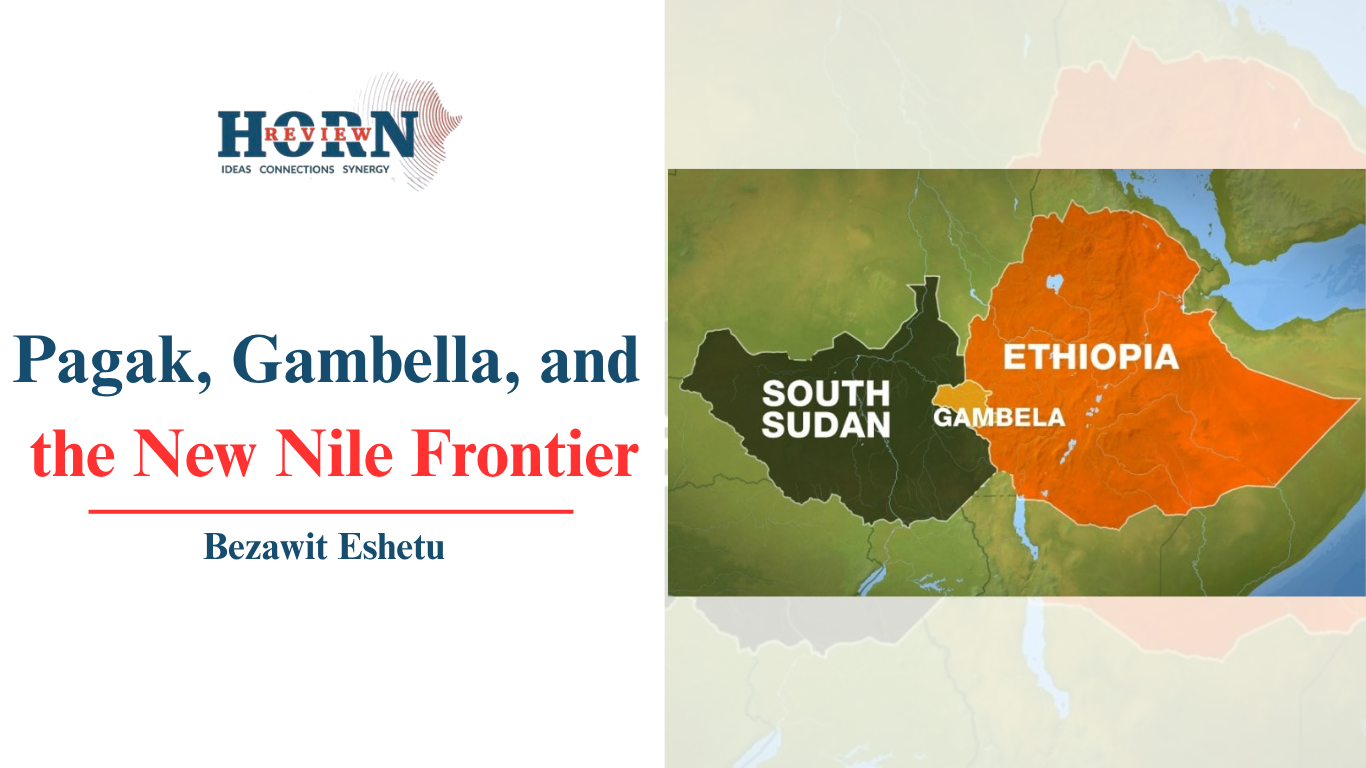
The closure of the Egyptian military outpost at Pagak in May, 2026 represents collapse of a decade-long dual-track strategy through which Cairo sought to preserve both a hydraulic and strategic foothold in the Upper Nile. For years, the Pagak corridor, positioned at the sensitive intersection of South Sudan and Ethiopia, functioned as a forward observation point and a possible instrument of regional leverage against the Grand Ethiopian Renaissance Dam (GERD). By ordering the swift removal of that presence, President Salva Kiir has signaled a clear realignment toward the upstream states of the Nile Basin, effectively abandoning the balancing act that once allowed Cairo to keep a stake in South Sudanese affairs.
Yet Egypt’s withdrawal from an official military position should not be mistaken for strategic passivity. Historically, when Cairo loses overt influence, it often shifts to more covert methods of pressure, relying on informal networks, local intermediaries, and fragmented armed actors. In this context, the Nuer communities, particularly the White Army, may become an increasingly important arena of contestation. For Ethiopia, this means that the security of Gambella is no longer a peripheral concern; it is now a central front in the wider struggle over the Nile.
To understand the significance of this 2026 rupture, it is necessary to return to the origins of the South Sudanese liberation struggle and its deep Ethiopian connections in the 1980s. The early Sudan People’s Liberation Army (SPLA) was shaped in no small measure by Ethiopian territory and Ethiopian support. Under Colonel Mengistu Hailemariam, Dr. John Garang de Mabior was eventually able to consolidate authority, turning Ethiopia into the military and logistical backbone of the revolution.
Mengistu’s support was not driven by idealism; it was a calculated act of Realpolitik. By backing Garang, he sought to counter Khartoum’s support for Eritrean and Tigrayan insurgents. During this period, camps such as Itang, Panyindu, and Dima were far more than refugee settlements. They became quasi-sovereign spaces in which the SPLA operated as a government in exile. By 1989, tens of thousands of SPLA soldiers had passed through Ethiopian training camps, while the refugee population in Itang alone had grown to extraordinary levels. This period created a durable political and emotional bond between South Sudanese liberation elites and the Ethiopian state, one that continues to shape the strategic imagination of the region.
However, John Garang’s vision of the future diverged sharply from the political reality that emerged after his death. Garang had imagined a “New Sudan”: secular, democratic, and united, stretching from the Mediterranean to the forests of the south. For Egypt, this project was not threatening but reassuring. A unified Sudan promised continuity, predictability, and a single negotiating partner within a Nile framework that Cairo believed it understood and could influence through legacy treaties and long-standing state relationships. In that sense, Egypt viewed Garang’s vision as a kind of “plus one” arrangement, in which a reformed Sudan would remain aligned with Egyptian hydro-strategic interests.
But Garang’s death in 2005 changed the direction of history. With Salva Kiir at the helm, the dream of unity gave way to the pursuit of independence, and with independence came a new and more complex geopolitical reality. South Sudan’s emergence as a sovereign state introduced a new actor into the Nile Basin, one that was not bound by the old northern treaties. Egypt’s concerns deepened further as Kiir moved closer to upstream states and eventually aligned more openly with Ethiopia, culminating in South Sudan’s ratification of the Cooperative Framework Agreement in 2024, which significantly weakened Egypt’s traditional veto position over Nile projects.
Marginalized by Juba’s growing tilt toward East Africa and Ethiopia, Cairo responded with a sophisticated dual-track strategy beginning in 2016. While preserving formal relations with Kiir’s government, President Abdel Fattah al-Sisi simultaneously extended a direct and highly public invitation to Riek Machar in February of that year. At the time, South Sudan was engulfed in brutal civil conflict, and Machar represented an alternative channel of influence. Egypt understood that Kiir controlled the formal state apparatus in Juba, but Machar’s forces, together with their broader Nuer support base, held strategic reach across the White Nile corridor and the borderlands adjoining Ethiopia.
This is where the “Pagak Puzzle” took shape. Pagak, long known as a military and political center for Machar’s SPLM-IO, offered exactly the kind of location that could serve Egypt’s interests quietly and effectively. Under the cover of technical cooperation and development-related engagement, Cairo is alleged to have inserted intelligence and advisory personnel into Nuer-dominated zones. These efforts were not primarily about development; they were about surveillance, access, and indirect influence over the western approaches to the GERD.
At the center of this strategy stood the Nuer White Army, one of the most misunderstood armed formations in the Horn of Africa. Often reduced in public discourse to the image of an unruly militia, the White Army is in fact rooted in a deeply organized social and military logic. Anthropologist E. E. Evans-Pritchard described the Nuer as a society of “ordered anarchy,” and that description remains useful for understanding how the White Army functions. Its structure is shaped by segmentary lineage, in which political identity is organized through descent and opposition.
The result is a system of “fission and fusion”: internal divisions may emerge over cattle, status, or local disputes, but those divisions can rapidly disappear when an external threat appears. Age sets, initiation rituals, and spiritual authority also play important roles in sustaining cohesion. Prophets and spear-priests, including figures such as Dak Kueth, have historically been able to mobilize large numbers of fighters across clan lines. For any foreign actor seeking leverage, this is precisely what makes the White Army attractive as a proxy force. It is decentralized, mobile, difficult to contain, and capable of disappearing into civilian life as quickly as it mobilizes.
The danger for Ethiopia is intensified by the fact that the Nuer social world does not stop at the international border. In Gambella, the Nuer form a powerful cross-border community whose identity, kinship ties, and armed networks extend into South Sudan. Over time, migration, displacement, and the arrival of refugees have reshaped the region’s demographic and security landscape. Many young men in Gambella’s refugee camps remain connected to the White Army’s wider lineage structures and retain familiarity with arms, mobilization, and cross-border loyalties.
If Egypt, now removed from its overt position in Pagak, seeks to retaliate against Ethiopia or pressure Kiir, it is likely to do so through these informal networks rather than through direct military action. By supporting local intermediaries, spiritual leaders, or White Army representatives with resources, money, or intelligence, Cairo could provoke localized violence that would serve two purposes at once: destabilizing Ethiopia’s western frontier and punishing Kiir for his strategic realignment with Addis Ababa.
This possibility is not without precedent. Egypt has long relied on indirect methods of influence in the Horn of Africa, whether through past support for insurgent movements or through more recent defense arrangements that appear cooperative on the surface but have the effect of surrounding Ethiopia diplomatically and militarily. These strategies are rarely framed as offensive, yet they often reflect a broader pattern of encirclement.
The closure of the Pagak outpost is therefore a tactical gain for Ethiopia and for Kiir, because it removes an external military presence from a politically sensitive area. But that victory may prove incomplete if the vacuum is not carefully managed. Riek Machar, though politically constrained within the current transitional order, still retains influence among sections of the Nuer youth and could remain useful to a Cairo searching for indirect leverage. What was once an overt relationship of convenience may now shift into a more concealed and fragmented form of cooperation.
For Ethiopia, Gambella is no longer a peripheral humanitarian space; it is a frontier where local fragility can be converted into strategic pressure. That makes the region important not because of its refugees alone, but because displacement, kinship ties, armed youth, and cross-border movement together create a political environment that can be activated from outside. In places like this, security threats rarely arrive as direct assaults. They emerge through leverage over local actors, the manipulation of grievances, and the gradual hardening of community tensions into instruments of instability. The Nuer-Anywaa fault line matters in this context not simply as a local dispute, but as a potential pathway through which outside interests can fracture the western borderlands from within.
Thus, the Pagak shift is a warning about how frontier spaces work in the Horn of Africa: what appears to be a withdrawal or relocation can quickly become an opening for covert influence. Ethiopia’s response must be based on anticipation, not reaction. That means treating Gambella as a zone where intelligence, border management, local politics, and social cohesion are inseparable. The real task is not just to secure territory, but to deny external actors the conditions they need to turn mobility into disorder and local grievance into strategic disruption. Ethiopia’s strength will depend on whether it can govern this frontier before others learn how to exploit it.
By Bezawit Eshetu, Researcher, Horn Review