Ceasefires rarely end wars cleanly. In the 2026 Iran conflict, the pause has become its own battleground, one shaped by mediation, maritime coercion, and the constant risk that violence could spill from Hormuz into other regions including the Red Sea. Currently, the Iran war captures the quintessential fluidity of great-power and regional geopolitics with tactical military success not producing strategic closure, active shuttle diplomacy collides with defiant public rhetoric, and deterrence now ripples across multiple regions at once. What began with U.S.-Israeli strikes in late February has evolved into a tense, mediated ceasefire that has been extended repeatedly but remains vulnerable to reversal.
This pause reflects armed diplomacy in action. The U.S. and Israel inflicted serious damage on Iranian command structures, missile assets, and air defenses, but the strikes did not force a decisive political surrender. Tehran has also used the breathing space to restore parts of its military posture and preserve leverage. Recent intelligence reporting suggesting the damage to Iran’s nuclear program was more limited than initially claimed reinforces the point that the war degraded capabilities without eliminating them.
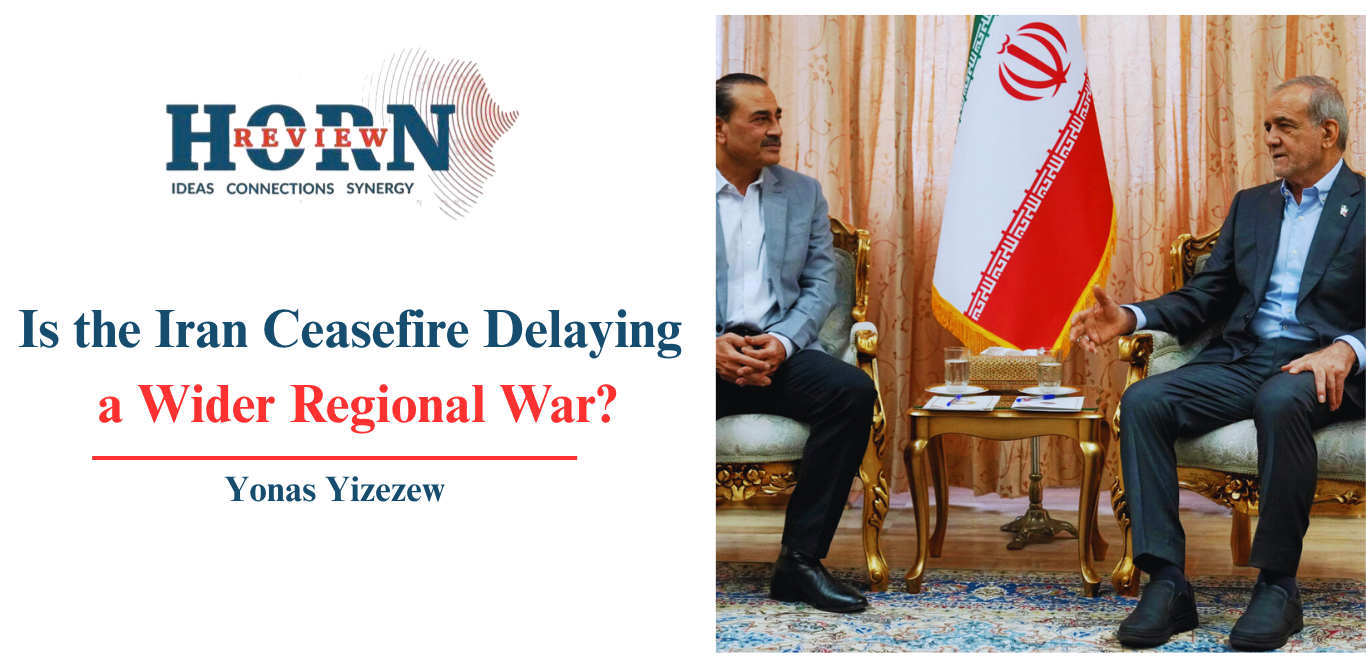
Pakistan has emerged as the most dynamic mediator. Field Marshal Asim Munir’s discussions in Tehran with President Masoud Pezeshkian, Foreign Minister Abbas Araghchi, and Parliament Speaker Mohammad Baqer Qalibaf underline Islamabad’s central role in trying to keep the ceasefire alive and bridge the gap between Washington and Tehran. However, mediation is not the same as resolution, it can keep the process alive while leaving the fundamental disagreement untouched.
Recent developments from Tehran highlight the contradiction at the heart of the crisis. Iranian officials have insisted that “Washington is not a reliable negotiating partner” and that “Iran will not compromise on its national rights,” while simultaneously continuing to engage through intermediaries. That posture reflects a broader Iranian strategy of public defiance for domestic legitimacy, paired with enough flexibility to prevent a return to full-scale war.
The structural impasse remains one of sequencing and substance. Iran appears to favor a phased arrangement with some relief on maritime restrictions, sanctions pressure, or access to blocked assets first, followed later by deeper nuclear talks and longer-term understandings. Washington, by contrast, has wanted a more comprehensive package up front, including verifiable limits on enrichment, missiles, proxies, and freedom of navigation in the Strait of Hormuz. That mismatch explains why the ceasefire has held in form but not yet in substance.
Recent Axios reporting adds an important twist. According to Axios, the U.S. and Iran were described as close to a deal on 23 May, with mediators trying to convert tentative convergence into a more structured framework agreement, possibly a one-page understanding that would buy time for further negotiations. That does not mean a final settlement is near, but it does suggest the process may be moving from improvised crisis management toward a more formalized interim arrangement. The key point is that diplomacy appears to be advancing procedurally faster than it is advancing strategically.
The Strait of Hormuz remains the central pressure point. Iran has tried to normalize a degree of influence over maritime transit, turning geography into a bargaining instrument and seeking to make shipping access part of the negotiating equation. Even limited disruption in the Strait can raise insurance costs, unsettle energy markets, and test Gulf confidence in U.S. deterrence, which is why the maritime track has become inseparable from the broader ceasefire.
A major reason this issue remains so dangerous is the risk of regional spillover, especially into the Red Sea and Bab el-Mandeb. In a recent statement on May 20, the IRGC warned that if the U.S. and Israel resumed strikes, Iran will expand the war “far beyond the region.” While they didn’t spell out exact targets, the Red Sea and Bab el-Mandeb Strait stand out as the most obvious and plausible next fronts.
The Houthis have already warned they could widen the conflict if the war resumes, and reporting from late March and May shows renewed concern over their capacity to threaten Red Sea shipping if the wider confrontation reignites. That makes the Red Sea a potential second front rather than a separate theater, because renewed Houthi disruption could pull in U.S. naval assets, raise shipping costs globally, and widen the crisis beyond the Gulf.
This spillover risk is especially important since the Houthis remain part of Iran’s broader deterrence ecosystem. If the ceasefire weakens, Iran can apply pressure indirectly through maritime harassment, missile threats, or proxy escalation in the Red Sea, Yemen, and the Levant. This will also trigger a more prolonged maritime security crisis affecting Europe, Asia, and the Horn of Africa. The contest is therefore no longer just about Iran and the United States, but about whether the region can contain a geographically expanding crisis before it becomes normalized.
The Gulf states are trying to manage this volatility carefully. Saudi Arabia and the UAE want Iran weakened, but they are also concerned that a wider war that would endanger shipping lanes, energy infrastructure, and alternative export routes through the Red Sea. Qatar and Oman remain more explicitly diplomatic, reflecting their interest in preventing escalation from undermining their own security and mediation roles. The common denominator is restraint with few regional actors want Tehran to emerge unchallenged, but almost none want the war to widen uncontrollably either. This is also a reminder that the ceasefire is not just a U.S.-Iran issue but a regional management problem involving several states that fear spillover more than they trust any final outcome.
Inside Iran, the ceasefire is being managed as both a strategic pause and a political story. The leadership has to show resilience after military damage while also acknowledging the economic and security cost of prolonged confrontation. There is also likely a tension between hardline and pragmatic camps. Hardliners want to preserve the narrative of resistance and protect revolutionary legitimacy, while more pragmatic elements appear to understand that sanctions relief and economic recovery require some form of negotiated accommodation.
Israel, meanwhile, remains focused on preserving the military gains it achieved and preventing Iran from rebuilding too quickly. Its posture reinforces the sense that any ceasefire is provisional, because Israel does not treat the truce as a final political endpoint.
The broader strategic picture is equally important. China wants maritime stability mainly because of energy security. Pakistan’s mediation therefore matters not only because it connects Tehran and Washington, but because it offers a rare channel capable of bridging competing regional interests at a moment when direct diplomacy is politically toxic. At the same time, the U.S. is trying to balance deterrence and de-escalation rather than choosing one over the other, maintaining pressure while preserving space for talks.
The most likely near-term outcome is not a breakthrough peace deal, but a managed interim arrangement that keeps the ceasefire alive while postponing the hardest questions. That would fit the current pattern, which is, military degradation without decisive victory, diplomacy without trust, and regional restraint driven by concern of spillover.
The key risk is that the pause itself becomes unstable if any side concludes that time is working against it. If Tehran believes reconstitution is possible, or Washington believes Iran is buying time, the pressure for renewed coercion will rise quickly. And if that happens, the Red Sea, the Horn of Africa, Hormuz, and the wider Gulf will likely all come under stress again.
So the real story is not whether the ceasefire holds in a formal sense, but whether it can mature into a workable political process before the region drifts back toward armed confrontation. At the moment, the answer is: maybe, but only just.
By Yonas Yizezew, Researcher, Horn Review