
14
May
Sudan’s Crisis: Underdiagnosed by Design?
External Engineering, Structural Failure and the Politics of Selective Analysis
The consistent framing of Sudan’s crisis as a matter of weapons flows and offshore safe havens presents a narrow diagnosis that centers on visible instruments of war rather than the structure that produces conflict. This perspective explains how the war is sustained but does not account for why Sudan repeatedly returns to violence. A complete explanation requires examining how Sudan’s political order developed and how sustained external engagement, particularly from Egypt, shaped that order in ways that constrain civilian governance and reinforce military authority.
The foundations of Sudan’s instability were established during the Anglo-Egyptian Condominium, which organized governance through indirect rule and localized authority. Administrative practice separated regions and embedded patronage as the primary mechanism of control, which limited the development of cohesive national institutions. Independence in 1956 transferred sovereignty without institutional capacity, leaving political authority tied to networks that mediated access to resources and influence. Civilian governments operated within these constraints and relied on the same structures that fragmented authority across the state.
Sudan’s civilian periods in 1956-58, 1965-69, 1986-89, and 2019-21 followed a recurring pattern in which political parties organized around sectarian affiliation and patronage distribution. These parties lacked the institutional capacity to govern across regional divisions or to establish authority over the security sector. The military retained centralized command, continuity across political cycles, and control over coercive force, which positioned it as the dominant actor within the political system. Civilian authority functioned within this imbalance and remained vulnerable to military intervention, as demonstrated in the coups of 1958, 1969, 1989, and October 2021.
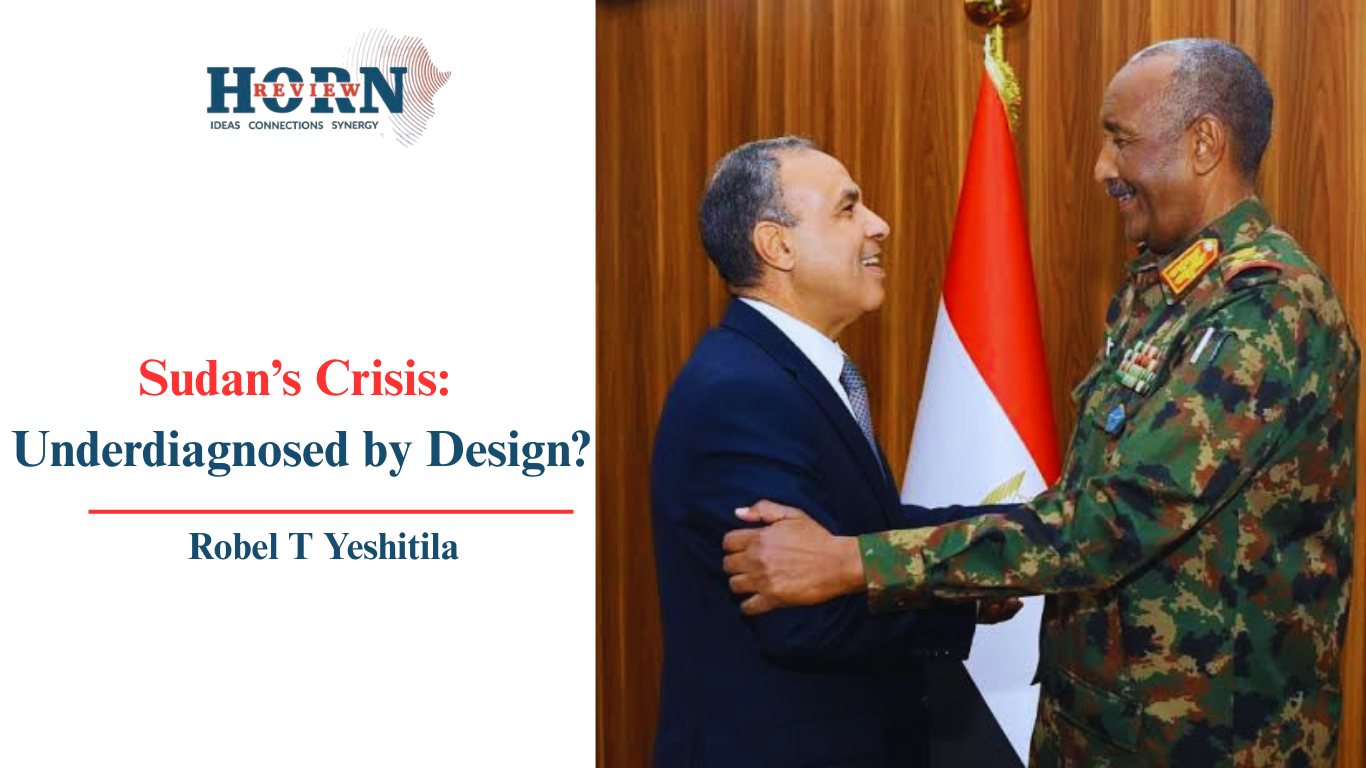
Egypt’s engagement with Sudan reinforced this structure through sustained relationships with military leadership and consistent prioritization of security institutions as the primary channel of political coordination. Egyptian intelligence services maintained continuous contact with Sudanese officers and coordinated on security matters aligned with regional priorities. Military cooperation included joint exercises and officer training that deepened institutional ties between the two armed forces. Diplomatic coordination elevated Sudanese military leaders in regional forums and positioned them as primary interlocutors. These channels concentrated political influence in actors who controlled coercive institutions and narrowed the space for civilian governance.
This approach remained consistent across leadership periods in Cairo, including those of Gamal Abdel Nasser, Hosni Mubarak, and Abdel Fattah el-Sisi. Sudan formed part of a Nile Valley strategic framework in which political alignment in Khartoum directly affected Egyptian priorities. These priorities included management of Nile water flows formalized through the 1959 Nile Waters Agreement, along with border security and regional positioning. A system led by military actors provided continuity in these areas, while civilian governance introduced independent policy formation that could alter established arrangements.
The October 2021 intervention led by Abdel Fattah al-Burhan reflected this system in practice. Burhan dissolved the civilian-led Sovereignty Council and Council of Ministers and placed Prime Minister Abdalla Hamdok under house arrest. Egyptian engagement during this period included sustained coordination with Sudan’s military leadership, which aligned with the reassertion of military control and the suspension of the civilian transition.
The current conflict between the Sudanese Armed Forces and the Rapid Support Forces reflects competition within a shared political and economic framework. The Rapid Support Forces emerged from militias formalized during the Bashir period and developed into a parallel security structure with independent financial networks anchored in gold production and trade. The Sudanese Armed Forces retained formal state authority and institutional continuity, while the Rapid Support Forces accumulated economic resources and coercive capacity outside traditional command structures. Both actors operate within a system in which control of force and access to resource flows define political power, which places the conflict within a contest over control of the existing system rather than transformation of its structure.
The conduct of the Sudanese Armed Forces in relation to mediation efforts reflects a consistent effort to preserve political authority. Leadership under Burhan rejected externally supported frameworks that included defined transitions to civilian governance. The Quad initiative of September 2025 proposed a humanitarian ceasefire followed by a structured transition toward civilian rule, and the Sudanese Armed Forces declined to proceed under those terms. A United States-backed roadmap in February 2026 that outlined phased political transition and elections was also rejected. These decisions reflect a consistent position that preserves military centrality within the state.
Egypt’s alignment with Sudanese military leadership reflects a strategic framework that links political organization in Sudan to Egyptian national interests. Management of Nile water systems, control of border regions, and maintenance of regional influence depend on predictable coordination with authorities in Khartoum. A system led by military institutions provides continuity in these areas, while civilian governance introduces independent decision-making that can alter established arrangements. Egyptian engagement therefore reinforces outcomes that sustain alignment through military channels and strengthens the position of security institutions within Sudan.
The persistence of conflict in Sudan reflects the interaction between historical institutional design and sustained external engagement that preserves a system centered on military authority and patronage-based governance. Policy approaches that concentrate on weapons flows, financial sanctions, or illicit networks engage with mechanisms that sustain conflict while leaving the structure that produces it unchanged. Durable change depends on altering the distribution of authority within the state and reshaping external engagement in ways that support institutional development rather than reinforce existing hierarchies.
A further question concerns why Egypt’s sustained role in Sudan receives limited direct scrutiny while analysis concentrates on visible drivers. This pattern reflects how policy systems define relevance, how diplomatic relationships shape attribution, and how analytical practice aligns with available tools.
The policy ecosystem prioritizes what can be measured and acted upon within short time horizons. Arms flows, sanctions targets, and financial networks generate quantifiable indicators and support immediate intervention through established enforcement mechanisms. These domains produce datasets and reporting pipelines that align with institutional mandates. State formation and external political shaping unfold over longer periods and receive less sustained attention, which directs analysis toward variables that translate into rapid policy action.
Diplomatic constraints shape what enters formal analysis and public reporting. Egypt occupies a central position within U.S. security architecture and Arab regional diplomacy, which places a premium on access and continuity in institutional relationships. Analytical framing adjusts to these conditions and concentrates on areas that allow sustained engagement. Egypt remains an active influence within the system, while its role receives limited explicit attribution.
Narrative competition directs attention toward actors and mechanisms that can be clearly identified and addressed through existing policy tools. Financial networks, gold supply chains, and paramilitary structures provide discrete targets for sanctions and monitoring. A structural account that incorporates Egypt requires sustained examination of long-term interaction across intelligence coordination, military engagement, and regional strategy, which increases analytical complexity. The dominant narrative therefore concentrates on actors that can be isolated and addressed, while broader configurations of influence receive less direct focus.
Access and sourcing reinforce this distribution of attention. Information on sanctions evasion, arms transfers, and commercial networks is accessible through open-source reporting and financial records. Information on intelligence coordination and political signaling between Cairo and Khartoum is less accessible and often dispersed across specialized sources, which shapes the evidentiary base that informs mainstream analysis.
Disciplinary boundaries separate conflict analysis from historical political economy and limit integration across these fields. Many assessments prioritize battlefield developments and mediation efforts, which produces a near-term view of the conflict. The longer arc that connects the Anglo-Egyptian Condominium to contemporary state structure sits within a different body of scholarship. When these strands remain separate, analysis concentrates on proximate drivers.
Institutional risk management also influences analytical framing. Attribution of sustained influence to a regional power introduces questions about policy responses that extend beyond current operational frameworks. Recommendations that focus on sanctions and monitoring align with existing tools, while recommendations that involve recalibration of engagement with external partners require broader strategic adjustment. Analytical output reflects this environment by emphasizing areas where response options are clearly defined.
The mediation framework reinforces this pattern by centering actors who control force on the ground. Negotiation processes focus on the Sudanese Armed Forces and the Rapid Support Forces as primary participants, since these actors determine immediate security conditions. External influence that operates through these forces becomes embedded within the context of negotiations rather than treated as an independent variable, which directs attention toward internal actors while external shaping factors remain in the background even when they influence incentives and outcomes.
The popular uprising that culminated in the 2019 transition demonstrated the depth of civilian political agency and the scale of public demand for accountable governance. Mass mobilization across urban centers and regional constituencies produced a broad-based movement that articulated a clear vision of civilian rule, institutional reform, and national inclusion. This moment generated a coherent political horizon anchored in civilian authority and constitutional order, and organizations such as the Forces of Freedom and Change translated that momentum into transitional frameworks and policy proposals.
Subsequent international processes, including those associated with the Berlin Conference on Sudan, reflected elements of this vision in structured pathways toward civilian-led governance. These developments demonstrate that civilian actors possess both organizational capacity and political legitimacy, while their position within the broader system remains constrained by the concentration of power in armed institutions and by patterns of external engagement that privilege military interlocutors.
Taken together, these dynamics produce an analytical environment in which visible mechanisms of conflict receive sustained focus while the structural configuration of power that includes Egypt’s role receives limited direct scrutiny. As long as external engagement continues to reinforce military channels of authority, control of force will remain the most reliable pathway to political power in Sudan and civilian governance will remain structurally constrained.
By Robel T Yeshitila

RELATED
Posts
2
Sep
A Decade of Saudi Miscalculation in Yemen
On March 26, 2015, Mohammed bin Salman, then a thirty-year-old...
31
Aug
Mahamat Déby or Burhan: Who Can Win the US?
On August 20, 2026, Sudanese warplanes and drones pursued a...
27
Aug
What the Decline of Multilateralism Could Mean for Africa
Multilateralism is weakening just as African states need it most....
19
Aug
Who Gets a Seat in Saudi Arabia’s Red Sea Security Order?
Saudi Arabia’s new maritime defence architecture exposes a contradiction at...
18
Aug
Asymmetric Attrition in Hormuz: Decoding the Escalation Against State Energy Assets
The attacks on ADNOC vessels in the Strait of Hormuz...
17
Aug
Egypt Skipped the Mecca Pact Because It Lacks the Leverage to Join
Egypt’s continued absence from the Mecca collective-defense pact reflects a...
12
Aug
How the Iran and Israel Conflict Recalibrates the Algeria-Morocco Structural Antagonism
The direct hostilities between Iran and Israel have generated effects...
12
Aug
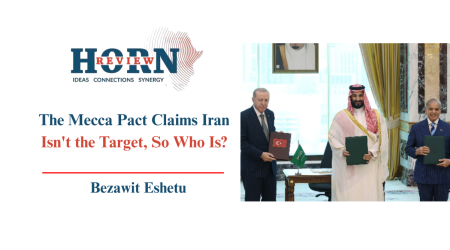
The Mecca Pact Claims Iran Isn't the Target, So Who Is?
On August 7, 2026, in the holy city of Mecca,...
10
Aug
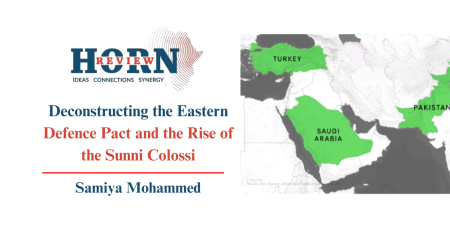
Deconstructing the Eastern Defence Pact and the Rise of the Sunni Colossi
The regional status previously shaped by the Shiite...
9
Aug
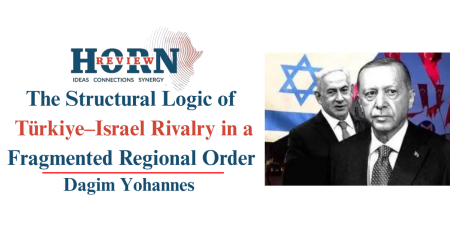
The Structural Logic of Türkiye–Israel Rivalry in a Fragmented Regional Order
The twentieth-century Türkiye-Israel partnership was a structural anomaly produced by...