The Case for Ethiopia’s Special Envoy to Sudan
By Blen Mamo
In the Horn of Africa, diplomacy operates as a continuous process embedded within a regional order defined less by stability than by recurrent disruption. Conflict in this environment does not constitute an exceptional rupture of political order but rather an enduring condition through which state behaviour, regional alignments, and external engagement architectures are repeatedly recalibrated. Ethiopia’s foreign policy is therefore not externally adjacent to instability but structurally conditioned by it. Its security environment, economic connectivity, and strategic positioning within the Nile Basin are continuously shaped by developments in neighbouring political systems, among which Sudan occupies a particularly consequential position. The war in Sudan, which erupted in April 2023 between rival military formations, reflects not only the collapse of the 2019 transitional arrangement – over whose formation Ethiopia played a significant role through sustained diplomatic engagement and facilitative involvement – but also a deeper reconfiguration of authority. Following the removal of Omar al-Bashir and the disintegration of the post-2019 political settlement, Sudan has entered a condition of fragmented sovereignty in which coercive authority is dispersed across competing armed formations, fluid political coalitions, and externally embedded constituencies. Within such an environment, mediation is no longer intelligible as a linear negotiation between centralised authorities; it assumes the form of a dispersed, iterative, and multi-nodal diplomatic field in which legitimacy is continuously contested and reconfigured.
For Ethiopia, the strategic implications are immediate and cumulative. Instability in Sudan alters border security dynamics in contested spaces such as al-Fashaga, disrupts cross-border commercial corridors, generates displacement flows with regional implications, and intersects with broader geopolitical calculations associated with the Nile Basin and the strategic centrality of the Grand Ethiopian Renaissance Dam. It further introduces secondary security externalities, including the emergence of permissive environments for illicit arms flows and transnational smuggling networks that risk feeding into internal conflict theatres within Ethiopia, alongside concerns regarding the consolidation of ungoverned spaces that may function as transient safe havens for armed non-state actors operating across porous border zones. Sudan therefore cannot be and has never been analytically treated as an external theatre of instability; rather constitutive of Ethiopia’s security architecture.
The mediation environment surrounding Sudan reflects a parallel transformation in the governance of conflict at the regional and international levels. Rather than convergence around a unified institutional framework, the field is characterised by overlapping and partially competing mediation architectures. The African Union, IGAD, the United Nations, the European Union and the Arab League each maintain distinct engagement tracks – the “Quintet”, while externally coordinated configurations – frequently described as “Quad”-type arrangements dominated by Gulf monarchies, Egypt and the United States – introduce additional layers of diplomatic intervention. The result is not institutional coherence but structured fragmentation, in which authority is distributed across multiple venues and Sudanese actors, be it military or civilian establishments, navigate between them in a logic of strategic selection. Within such a configuration, diplomatic influence is no longer a function of formal mandate alone; it derives from sustained embeddedness, informational continuity, and the capacity to remain present across shifting centres of negotiation.
Within this configuration, Ethiopia’s diplomatic constraint is not defined by absence of engagement but by discontinuity of engagement. Its involvement in Sudan has oscillated between periods of intensive high-level intervention and phases of relative diplomatic attenuation, reflecting an enduring reliance on leader-centred diplomacy. While such an approach retains efficacy at moments of acute political transition, its structural limitations become pronounced in protracted conflict systems characterised by dispersed authority, fragmented command structures, and competing external alignments. Thus, in Sudan’s contexts, Ethiopia’s episodic intervention failed to accumulate durable influence, as the temporal cadence of engagement diverges from the temporal logic of the conflict system itself. Ethiopia’s diplomatic history nevertheless reveals repeated recourse to continuity-oriented modalities in Sudan-related crises previously. During the imperial period under Haile Selassie, Ethiopia assumed a facilitative role in the negotiation processes that culminated in the 1972 Addis Ababa Agreement between the Government of Sudan and Southern Sudanese representatives. This arrangement was predicated on sustained hosting of negotiations in Addis Ababa and iterative facilitation across an extended temporal horizon. Within Ethiopian institutional memory, figures such as Nebiyouleul Kifle are referenced as part of the broader diplomatic apparatus associated with this mediation architecture, reflecting the historically embedded but often analytically marginalised role of imperial-era facilitators in regional conflict management.
In the post-imperial period, Ethiopian engagement in Sudanese political dynamics did not disappear but rather shifted in modality across successive governing systems, reflecting a continuity of strategic interest in Sudan’s internal stability. During the Derg period, Ethiopia maintained episodic but politically significant involvement in Sudanese conflict dynamics, largely framed by Cold War alignments and regional security considerations, including indirect facilitative contacts and security-oriented diplomatic channels shaped by the broader logic of regional revolutionary solidarity and counter-insurgency concerns. Under the EPRDF, this engagement acquired greater institutional articulation, particularly through Ethiopia’s growing positioning as a regional diplomatic actor within IGAD frameworks and its increasing role in facilitating dialogue spaces on Sudanese political transitions, especially during the post-2005 Comprehensive Peace Agreement period and the subsequent governance transitions in Sudan, where Ethiopia functioned as a consistent regional interlocutor supporting dialogue continuity and regional stability management.
A more durable expression of continuity diplomacy is observable in Ethiopia’s long-term engagement in Somalia. The Somali political environment, characterised by fragmented sovereignty, decentralised authority structures, and persistent insecurity, has necessitated sustained diplomatic presence supported by designated representatives and structured channels of interaction. Ethiopia’s engagement in this context has functioned less as a sequence of isolated interventions than as an enduring relational infrastructure through which influence is maintained across shifting political configurations and evolving centres of authority. This continuity has been operationalised through multiple institutional and semi-institutional modalities since 2006. Ethiopia has consistently maintained a Counselor, a Special Envoy for Somalia and the Horn of Africa portfolio within the Ministry of Foreign Affairs, a role occupied at different times by high level envoys and senior diplomats such as Ambassador Fisseha Shawl, Dr Abdetta Dribissa and others – tasked with coordinating political engagement with Somali federal authorities, regional administrations, and international partners. In the post-2012 federal transition period in Somalia, Ethiopia’s engagement was further structured through high-level diplomatic coordinators operating alongside IGAD-led frameworks, particularly in relation to stabilization efforts in Mogadishu and federal member state formation processes. In parallel, Ethiopia’s peace and stability effort in Somalia has been reinforced through its Defence Forces’ liaison and security coordination architecture.
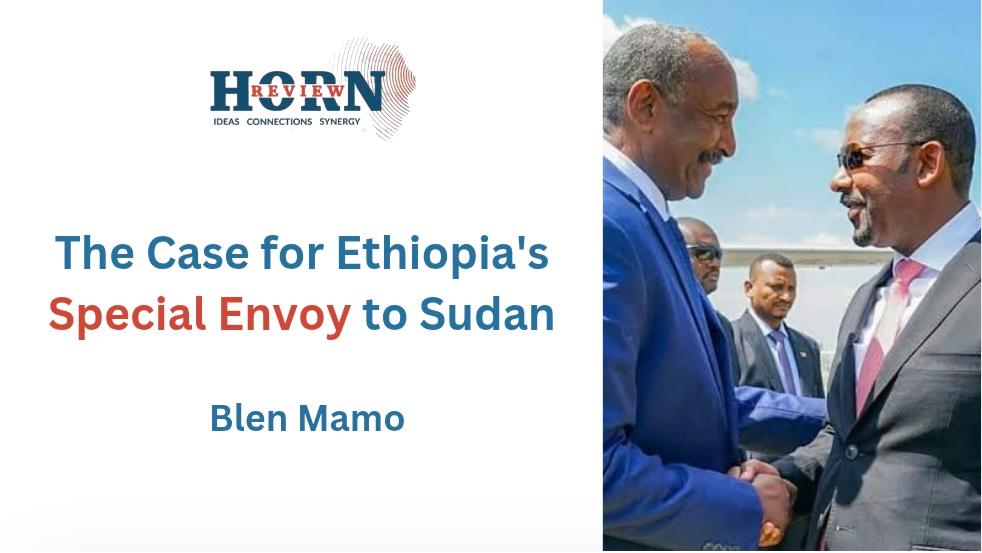
In the contemporary period, Ethiopia has again operationalised structured envoy diplomacy in moments of Sudanese political rupture. The 2019 transition period marked a significant instance in this regard, when Ambassador Mahamoud Dirir was appointed Special Envoy to Sudan. His mandate encompassed sustained shuttle diplomacy between the Transitional Military Council and the Forces for Freedom and Change, contributing to the restoration of negotiations following their breakdown and the reactivation of a stalled transition process. This episode demonstrated the operational utility of continuity-based diplomatic instruments in moments of acute systemic instability, while simultaneously revealing the absence of institutional mechanisms to sustain such engagement beyond transitional exigencies. Crucially, this diplomatic intervention unfolded at a moment when Ethiopia itself was undergoing a profound internal political transformation, following the end of nearly three decades of EPRDF-dominated governance. The opening phase of the post-EPRDF transition introduced significant institutional reconfiguration, elite restructuring, and administrative uncertainty, including the reconstitution and reform of key state institutions, evolving civil–military relations, and the recalibration of foreign policy coordination mechanisms. This domestic context imposed simultaneous pressures on Ethiopia’s diplomatic apparatus, which was required to manage heightened internal political fluidity while maintaining an active and consequential regional diplomatic posture. The deployment of envoy diplomacy to Sudan under such conditions therefore reflected not only external strategic prioritisation but also the resilience and adaptive capacity of Ethiopia’s foreign policy machinery during a period of internal systemic transition and institutional reordering.
These trajectories indicate a persistent but insufficiently institutionalised pattern within Ethiopian diplomatic practice. Across imperial, transitional, and contemporary phases, continuity-oriented engagement has repeatedly emerged as a practical response to fragmented regional conflict environments, yet it has not been consolidated into a permanent institutional architecture of foreign policy implementation. The resulting condition is one in which strategic necessity and institutional design remain misaligned. Any attempt to address this gap must nonetheless proceed with analytical caution, as feasibility architecture, institutional wiring, and operational sequencing carry inherent risks of mandate overlap, capacity fragmentation, and coordination failure within Ethiopia’s existing foreign policy ecosystem. The relevance of this structural gap becomes particularly evident when situated within the current context of the Sudanese conflict. Sudan now exemplifies a condition of fragmented sovereignty in which authority is dispersed across competing armed and political actors, alliances remain fluid, and external actors exercise variable but significant influence over internal dynamics. In such environments, diplomatic efficacy is not derived from episodic access to formal negotiation arenas but from sustained embeddedness across multiple centres of authority. Leader-centric diplomacy, while retaining utility during moments of concentrated political transition, lacks the temporal density and relational depth required to operate effectively within prolonged multi-actor conflict systems, particularly in contexts where engagement is shaped by contested legitimacy claims and shifting military-political configurations, including the present tensions and mutual perception deficits between Ethiopian diplomatic positioning and the Sudanese Armed Forces under General Abdel Fattah al-Burhan, which further complicate episodic, high-level diplomatic access and underscore the limits of personality-driven diplomacy in structurally fragmented environments where perception itself operates as an active component of diplomatic effectiveness, thereby necessitating sustained engagement capable of stabilising trust deficits over time.
Within such conditions, a dedicated Ethiopian special envoy to Sudan assumes significance not as an administrative innovation but as an institutional response to systemic constraints. Its analytical function lies in restoring continuity within a fragmented mediation environment through sustained engagement with Sudanese political, military, and civilian constituencies. The value of such a mechanism resides in its capacity to maintain Ethiopia’s embeddedness across evolving negotiation architectures, thereby converting episodic presence into continuous relational positioning. The operational relevance of such a mechanism becomes particularly pronounced in the current contexts of acute bilateral strain between Ethiopia and SAF, where formal diplomatic architecture alone has become insufficient to guarantee continuity of engagement. Hence, the appointment of a special envoy operates as a stabilising institutional layer that preserves diplomatic functionality under contemporary conditions of heightened political volatility and potential further downgrading of ambassadorial relations following Sudan recalling its Ambassador from Addis Ababa. Now that the ambassadorial engagement is constrained by SAF’s procedural rigidity, and its possible expulsion dynamics, the envoy channel provides an alternative modality of sustained political access that is not structurally dependent on agrément-based accreditation. The special envoy mechanism thus assumes additional importance in light of episodic tensions and mutual perception deficits between Ethiopian diplomatic positioning and elements within the Sudanese Armed Forces under General Abdel Fattah al-Burhan. It mitigates this vulnerability by ensuring the persistence of a functional communication interface even under conditions of institutional stress, preserving informational continuity and reducing risks of misperception-driven miscalculations and escalations.
This logic acquires additional relevance in light of Ethiopia’s recent positioning within continental governance structures. The country’s assumption of the rotating chairmanship of the African Union Peace and Security Council in April 2026 constituted a temporally bounded one-month tenure, yet one that nonetheless carried strategic significance in terms of agenda-setting influence and the shaping of continental security deliberations. Although this chairmanship has since concluded, Ethiopia’s continued membership within the Council preserves sustained institutional proximity to ongoing peace and security governance processes, including informal agenda formation and interpretive framing of emerging crises. Here, the African Union Peace and Security Council may be understood not merely as a deliberative organ but as a continental conflict signal-processing architecture, in which field-level developments are filtered, prioritised, and translated into policy-relevant signals. Within such a system, a dedicated envoy mechanism would function as a transmission and control interface, systematically converting developments in Sudan into structured analytical inputs capable of informing and monitoring continental mediation efforts and decision-making. This would enhance coherence between fragmented field realities and continental policy formulation while simultaneously positioning Sudan as a critical site for testing the effectiveness and adaptability of African-led mediation architecture in conditions of fragmented sovereignty and multi-actor conflict systems. Within IGAD, such a mechanism would function as a coordination interface designed to mitigate fragmentation across regional diplomatic initiatives. Rather than duplicating existing institutional mandates, it would reinforce them through the maintenance of continuity, consistency of information flows, and sustained presence across bilateral and multilateral channels. In fragmented mediation systems, coherence is not an emergent property of institutional design but a contingent achievement sustained through continuous diplomatic labour.
The broader geopolitical environment further reinforces the strategic necessity of such an approach. The mediation landscape in Sudan is increasingly shaped by overlapping external and multilateral actors, producing a diffusion of authority and a corresponding attenuation of African-led coherence within the peace process. Within such an environment, diplomatic absence is not structurally neutral; it translates into measurable diminution of influence over agenda formation, negotiation sequencing, and outcome determination in a conflict system that directly intersects with Ethiopia’s core national security interests. The central challenge, therefore, is not conceptual novelty but institutional consolidation. Ethiopia’s diplomatic practice has already demonstrated, across multiple historical and contemporary contexts, the operational utility of continuity-based engagement in fragmented regional systems. What remains absent is the transformation of this recurrent practice into a coherent institutional mechanism capable of sustaining engagement across temporal and political cycles.
Conclusion:
Sudan’s instability intersects directly with Ethiopia’s border security architecture, economic connectivity, and geopolitical positioning within the Nile Basin system. Within a mediation environment characterised by fragmentation, competitive diplomacy, and externalised influence structures, sustained diplomatic presence becomes a structural requirement rather than a discretionary instrument. The establishment of a special envoy to Sudan should therefore be understood as the institutional consolidation of an already existing diplomatic logic rather than its invention. It formalises a pattern discernible across Ethiopia’s longer historical engagement with Sudanese political ordering, extending from its facilitative role in the diplomatic processes that culminated in the 1972 Addis Ababa Agreement, through its calibrated engagement in Sudan’s post-Cold War and post-Comprehensive Peace Agreement transitions in the 1990s and 2000s, to the structured envoy deployment in 2019, and its broader continuity-based engagement practices in Somalia during the post-2012 federal period and subsequent stabilization phases. In converting episodic engagement into sustained institutional presence, it positions Ethiopia not merely as a recurrent participant in Sudan’s peace processes but as an actor historically embedded within, and continuously shaped by, the evolution of Sudan’s political trajectory within an increasingly fragmented regional order. It also signals Ethiopia’s level of strategic attentiveness and the consistency of its political will to remain actively engaged in Sudan’s evolving political and security landscape.
Authors Bio
Blen Mamo is Executive Director of Horn Review and a researcher specializing in law, international security, and geopolitics in the Horn of Africa. She holds an LL.B and an M.Sc. in International Security and Global Governance.

RELATED
Posts
7
Sep
Abiy Ahmed and the Remaking of the Ethiopian State
Blen Mamo
The political trajectory of Abiy Ahmed cannot be adequately...
3
Sep
Is Ethiopia Ready for a Presidential System?
By Blen Mamo
Ethiopia has spent much of its modern political...
28
Aug
Ethiopia-U.S. Strategic Defense Partnership
The recalibration of United States–Ethiopia relations recently reflects a deeper...
20
Aug
Eritrea’s Buffer Zone Politics from Eastern Sudan to Ethiopia's Tigray
The most consequential development in the Horn of Africa may...
14
Aug
Ethiopia’s Withdrawal from Burhakaba and What Comes Next for Al-Shabaab?
The recent handover of the Burhakaba forward operating base...
13
Aug
What Another War Against Ethiopia Could Mean for Eritrea’s Future
Another Ethiopia–Eritrea war would not be a replay of 1998....