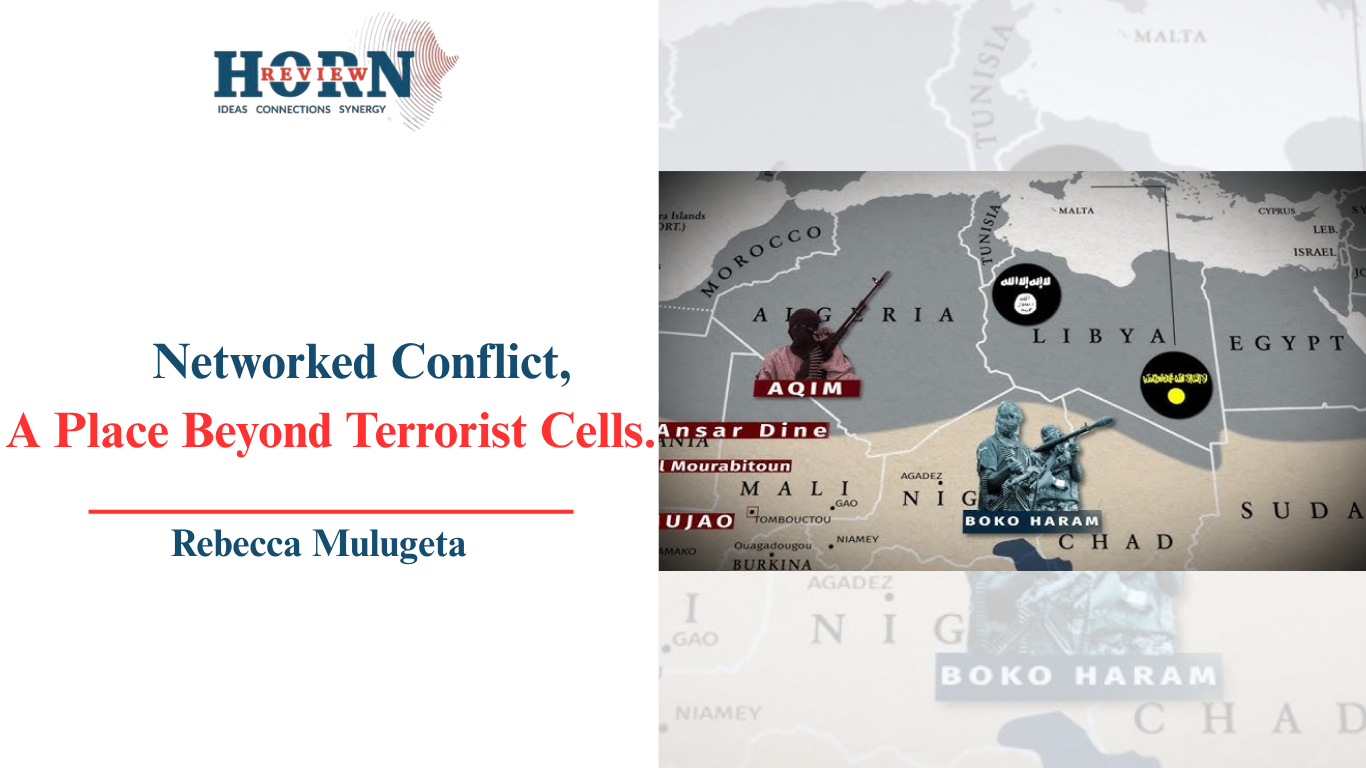
The Sahel rarely commands the frantic, immediate attention of the Middle East, nor does it sit under the constant global spotlight reserved for great power rivalries. Yet, within this vast and fragile expanse, one of the most consequential security transformations of our era has taken root. The Sahel has quietly evolved into the global epicenter of terrorism not through a singular, explosive event, but through a slow, layered process of decay. It is here that local fragility, regional collapse, and the strategic expansion of global militant networks have converged, reinforcing one another to create a new, borderless frontier of conflict.
To understand how this transformation occurred, it is important to move beyond the idea that terrorism in the Sahel was imported fully formed from outside. The roots of the crisis lie deeply within the region itself. For decades, states across the Sahel struggled to extend meaningful governance beyond their capitals. Large rural and semi-arid areas remained politically and economically marginalized, with limited access to public services, weak infrastructure, and minimal state presence. In these environments, communities developed their own systems of survival and authority, often relying on traditional structures or informal networks. These were not inherently violent systems, but they were vulnerable to disruption.
That disruption came in a decisive way after the Libyan Civil War. The fall of Muammar Gaddafi unleashed a wave of instability that extended far beyond Libya’s borders. Weapons from Libyan stockpiles flowed southward into the Sahel, while fighters, including Tuareg combatants who had served in Libya, returned to their home regions with new capabilities and ambitions. In northern Mali, this triggered the Tuareg rebellion in Mali, a resurgence of a long-standing struggle for autonomy. However, what began as a localized political conflict quickly evolved into something far more complex.
Jihadist groups linked to Al-Qaeda, particularly Al-Qaeda in the Islamic Maghreb, inserted themselves into the conflict. They did not simply impose an external agenda; they adapted to local dynamics, forming alliances, exploiting grievances, and gradually reshaping the nature of the insurgency. Over time, new coalitions such as Jama’at Nasr al-Islam wal Muslimin emerged, alongside factions aligned with Islamic State, most notably Islamic State in the Greater Sahara. These groups expanded beyond Mali into Burkina Faso, Niger, and increasingly toward coastal West Africa, transforming what had been a localized crisis into a regional security emergency.
What distinguishes terrorism in the Sahel from other regions is not simply its scale, but its structure. Unlike hierarchical organizations that operate with centralized command, Sahelian militant groups function as decentralized networks. Leadership provides strategic direction and ideological framing, but local commanders exercise significant autonomy. Alliances are fluid, factions split and merge, and groups adapt rapidly to changing conditions. This flexibility makes them particularly resilient. When pressure is applied in one area, they disperse and reconstitute elsewhere. When leadership is disrupted, new figures emerge from within the network.
Equally important is the way these groups embed themselves within local communities. In many parts of the Sahel, the state is either absent or viewed with suspicion. This creates a vacuum that militant groups are able to fill, not only through coercion but also by providing forms of governance. They mediate disputes, enforce rules, and sometimes offer protection against rival groups or criminal activity. For communities facing insecurity and marginalization, cooperation with these groups is often a matter of survival rather than ideological alignment. This dynamic blurs the line between insurgency and governance, making it difficult to isolate and eliminate militant influence.
The economic dimension of Sahelian terrorism further reinforces its resilience. Unlike many other regions where extremist groups rely heavily on external funding, those operating in the Sahel have developed diverse and locally rooted revenue streams. They tax communities and trade routes, engage in smuggling networks, profit from illegal gold mining, and carry out kidnappings for ransom. These activities are not peripheral; they are central to the functioning of the groups. They create a self-sustaining system in which insecurity generates income, and income sustains insecurity. The region’s natural resources, which could serve as a foundation for development, are instead integrated into the conflict economy.
Geography plays a critical role in enabling this system. The Sahel’s vast and sparsely populated terrain, combined with long and poorly controlled borders, provides ideal conditions for mobility and concealment. Armed groups move across Mali, Burkina Faso, Niger, and beyond with relative ease, exploiting gaps in state capacity and coordination. Efforts to contain them within national boundaries are often ineffective, as pressure in one area simply displaces them into another. This mobility not only facilitates the spread of violence but also complicates regional and international responses.
At the global level, the Sahel has become an increasingly important node within the broader landscape. It serves as a space where militant groups can recruit, train, and reorganize, even as they face pressure in other regions. The relationship between local and global dynamics is mutually reinforcing.
The motives driving individuals and groups within this system are complex and varied. While ideology is significant, particularly for leadership aligned with transnational networks, it is often not the primary driver for rank-and-file members. Economic necessity, lack of opportunity, personal grievances, and the search for protection all play a role. In environments where the state is unable to provide basic services or security, the choice to join or cooperate with militant groups is frequently shaped by immediate realities rather than long-term ideological commitments. This complexity challenges conventional counterterrorism approaches that focus narrowly on ideological factors.
The involvement of external actors has further shaped the case of the crisis. France, through operations such as Operation Barkhane, played a leading role in counterterrorism efforts for nearly a decade. While these interventions achieved tactical successes, including the elimination of key leaders and the disruption of networks, they were unable to address the underlying drivers of the conflict. Over time, local perceptions of foreign military presence became increasingly negative, contributing to political tensions and shifts in alliances
In this context, foreign countries have emerged as an alternative partner for several Sahelian states, offering security assistance and seeking to expand its influence in the region. This shift reflects broader geopolitical dynamics, as global powers compete for influence in Africa. However, this competition has not necessarily strengthened counterterrorism efforts. Instead, it has often led to fragmented strategies, inconsistent coordination, and a focus on short-term security gains at the expense of long-term stability.
Despite the intensity of military engagement, the overall reality of violence in the Sahel has continued to worsen. This reflects a fundamental mismatch between the nature of the problem and the strategies employed to address it. Military force can disrupt and degrade militant groups, but it cannot resolve the structural conditions that sustain them. In some cases, heavy-handed security operations have exacerbated local grievances, creating new opportunities for recruitment and expansion.
At the same time, the Sahel remains a region of significant potential. Its natural resources, including gold and other minerals, represent an opportunity for economic development. Its geographic position offers the possibility of greater regional integration and trade. However, these opportunities are currently overshadowed by insecurity and instability. Transforming the Sahel from a conflict zone into a zone of opportunity requires a comprehensive approach that addresses both security and development.
The Sahel’s path will have implications far beyond the region itself. As a source of instability, it influences patterns of migration, economic development, and security across Africa and beyond. As a potential hub of growth and integration, it holds the promise of contributing to a more stable and prosperous continent. The path it takes will depend on the choices made by local, regional, and international actors in the years ahead.
What makes the Sahel unique is not only the presence of terrorism, but the way in which it is embedded within a broader system of governance failure, economic marginalization, and geopolitical competition. Addressing this challenge requires a shift in perspective, from viewing terrorism as an isolated threat to understanding it as a symptom of deeper structural issues. Only by addressing these underlying conditions can the cycle of violence be broken. The story of the Sahel is still being written. It is a story of crisis, but also of possibility in the future.Recognizing both dimensions is essential for moving beyond short-term responses toward a more sustainable and effective approach.
By Rebecca Mulugeta, Researcher, Horn Review