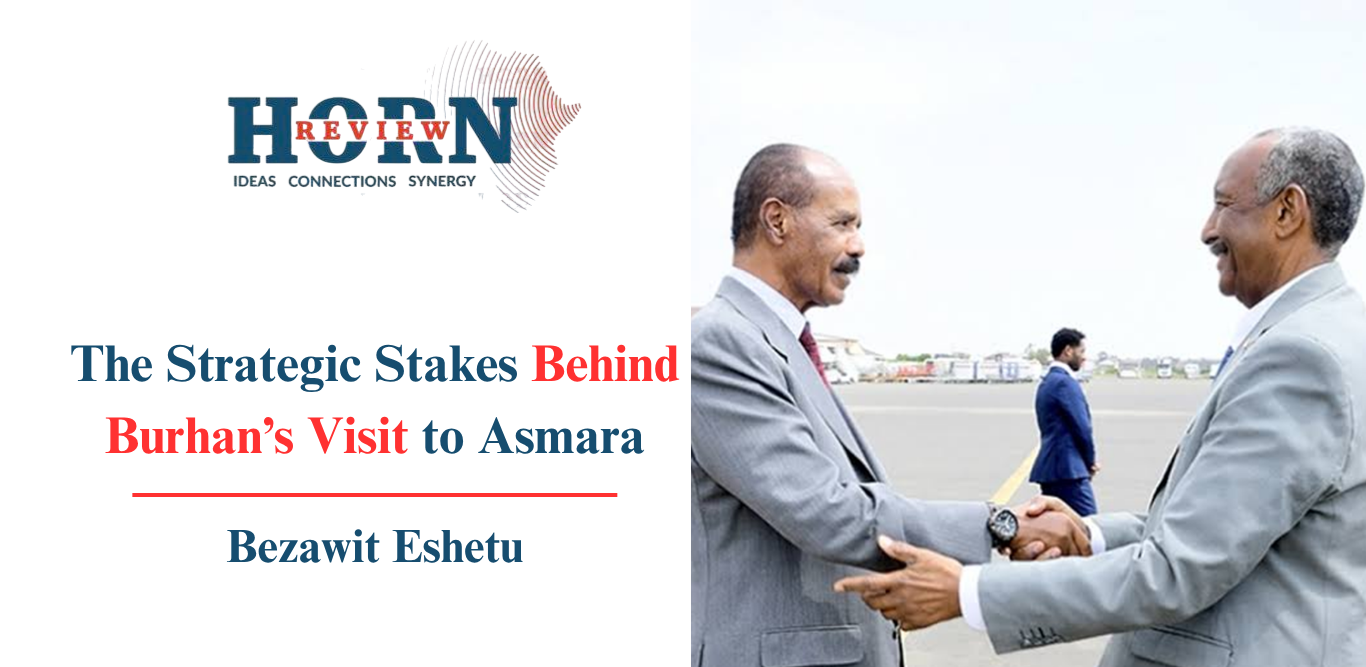
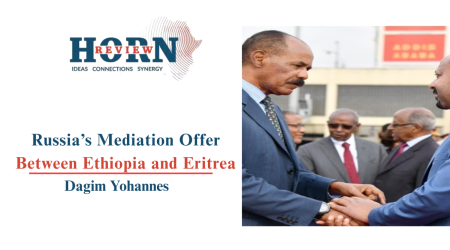
On September 4, General Abdel Fattah al-Burhan arrived in Asmara for a brief working visit and was received at the airport by President Isaias Afwerki. Official statements described the meeting as part of the periodic consultations between Eritrea and Sudan, focused on bilateral cooperation and regional issues. Its significance lies in the pattern behind it. Burhan had already visited Eritrea in April 2025 and July 2026, while Isaias travelled to Port Sudan in November 2025. The frequency of these exchanges indicates that cooperation between Asmara and the Sudanese leadership has become an increasingly important instrument for managing a shared security environment.
The shift is striking given the history of Eritrea-Sudan relations. The two governments spent years operating through opposing proxy networks. Their relationship entered the post-2023 period carrying a legacy of strategic suspicion and not an established trust. Sudan’s war changed the calculation by creating overlapping security pressures along the two countries’ shared frontier.
The change was gradual. During the 2020–2022 Tigray war, Sudanese forces occupied the disputed Al-Fashaga area, while the SAF’s relationship with Tigrayan actors added another source of friction with Asmara. In March 2023, Isaias hosted Mohamed Hamdan Dagalo, Hemedti, in Asmara, reflecting Eritrea’s willingness at that stage to engage Burhan’s principal rival. After the Sudanese war began, Eritrea maintained contacts with both the SAF and RSF before moving more clearly toward Burhan’s side. Asmara also received civilian factions, including elements associated with the Democratic Bloc, while presenting itself as a potential mediator outside the main IGAD and African Union tracks.
That balancing position shifted as Eritrea’s wider strategic environment deteriorated. By September 2023, Eritrea’s strategic environment had changed significantly. Relations between Isaias Afwerki and Prime Minister Abiy Ahmed had deteriorated over Ethiopia’s renewed pursuit of Red Sea access, while the Sudanese war was creating a new security calculation along Eritrea’s western frontier.
By September 2023, Eritrea’s strategic environment had changed significantly. Relations between Isaias Afwerki and Prime Minister Abiy Ahmed had deteriorated over Ethiopia’s renewed pursuit of Red Sea access, while Sudan’s war was creating new security pressures along Eritrea’s western frontier. For Asmara, the SAF offered a more predictable state counterpart through which to manage the frontier and pursue overlapping security interests. The reopening of the Sudan-Eritrea border and the intensification of political contacts with Burhan therefore marked a shift from earlier hedging toward sustained cooperation with the Sudanese military.
The relationship is rooted in complementary strategic needs. For Burhan, Eritrean territory, training infrastructure and logistical access provide greater depth as the SAF faces sustained pressure in Khartoum and Darfur. For Isaias, cooperation with the Sudanese military provides greater influence over the security environment on Eritrea’s western frontier. These interests converge with their respective concerns over Ethiopia’s regional ambitions, particularly around Red Sea access, while also serving immediate wartime requirements.
The relationship becomes more consequential when placed alongside Egypt’s support for Burhan. Cairo’s alignment with the SAF and its increasingly close engagement with Asmara create a broader regional configuration in which Ethiopia faces pressure along more than one frontier. The structure remains informal and its members retain distinct interests, yet their overlapping positions can produce a cumulative constraint on Addis Ababa. The important point is therefore the interaction among these relationships rather than the existence of a formal bloc.
The practical effects are visible in the borderlands. Reporting has described training and recruitment activity in Eritrea’s Gash-Barka region involving eastern Sudanese communities such as the Beja, Beni Amer and Rashaida, with formations including the Eastern Corps subsequently operating alongside SAF forces. Such activity gives Burhan access to additional manpower while allowing Asmara to shape the security environment along its western frontier through local armed networks. The significance lies in how these networks connect the Sudanese battlefield to the wider security politics of the Ethiopia-Eritrea-Sudan borderlands.
The border geography reinforces this pattern. Hamdayet, at the Ethiopia-Sudan-Eritrea tri-border area, has been identified as an important transit point for movement toward western Tigray and the Humera area. Gedaref and Kassala provide staging depth inside Sudan, while Gash-Barka connects training activity to routes leading toward Mekelle, Adigrat, Zalambessa and parts of Amhara. The resulting network links recruitment, staging and battlefield activity across borders, allowing pressure generated in one theatre to be transferred into another. For Addis Ababa, the consequence is a wider dispersal of federal security resources across interconnected theatres, reducing the concentration of forces available for sustained regional projection.
This is the broader strategic constraint created by the changing security environment. As Ethiopia manages these simultaneous pressures, its room for manoeuvre is narrowed in matters that extend beyond the immediate borderlands, including the GERD dispute and its pursuit of Red Sea access. The overlap between Sudan’s war and Ethiopia’s internal conflicts also Egypt and Eritrea a scope to shape Ethiopia’s security environment indirectly through cross-border networks and adjacent theatres. Sudan’s conflict thus acquires significance for Addis Ababa beyond the Sudanese battlefield itself, because developments there can alter the distribution of security pressure inside Ethiopia and, with it, the resources available for wider regional objectives.
Burhan’s 4 September visit should therefore be read as evidence of continued coordination with Asmara rather than proof of a consolidated SAF-Eritrea axis. The repeated movement between Asmara and Port Sudan demonstrates that the relationship has acquired operational value under wartime conditions. Its importance for Ethiopia comes from the cumulative effect of that cooperation and its interaction with Egypt’s support for Burhan, rather than from any formal regional alliance.
That same configuration gives greater significance to the unconfirmed reports that Hemedti visited Addis Ababa during the period when fighting along the Ethiopia-Sudan border was intensifying and when the Sudanese military was deepening its relationship with Eritrea. If the visit occurred as reported, its strategic meaning would lie in Ethiopian hedging rather than in evidence of an Ethiopia-RSF alliance. Addis Ababa would have an interest in retaining channels to the RSF while the SAF becomes increasingly connected to Eritrea and Egypt and while Sudan’s conflict begins to intersect more directly with Ethiopia’s western security environment.
Such engagement would reflect a familiar regional logic. South Sudan’s dealings with Hemedti have repeatedly been shaped by the strategic importance of oil infrastructure, particularly Heglig and the pipeline linking Sudan’s oil fields to Port Sudan. Juba has consequently had strong incentives to maintain working channels across Sudan’s competing centres of power because developments inside Sudan directly affect its own security and economic interests. Ethiopia faces a different set of interests, but the underlying calculation is comparable. As the Sudanese battlefield moves closer to its border and becomes connected to wider military networks, Addis Ababa has greater incentive to preserve strategic options across the conflict. The central issue, therefore, is the changing security geography around Ethiopia. Burhan’s engagement with Asmara, Egypt’s support for the SAF and armed activity around western Tigray and Amhara all point to a conflict environment in which Sudan’s internal war increasingly affects the strategic calculations of its neighbors. Ethiopia’s challenge is consequently broader than managing instability on its western border. It is managing a regional security environment in which rival actors can connect Sudanese battlefields with Ethiopia’s internal fault lines, stretching federal resources and narrowing Addis Ababa’s freedom to pursue its wider strategic objectives
By Bezawit Eshetu, Researcher, Horn Review