
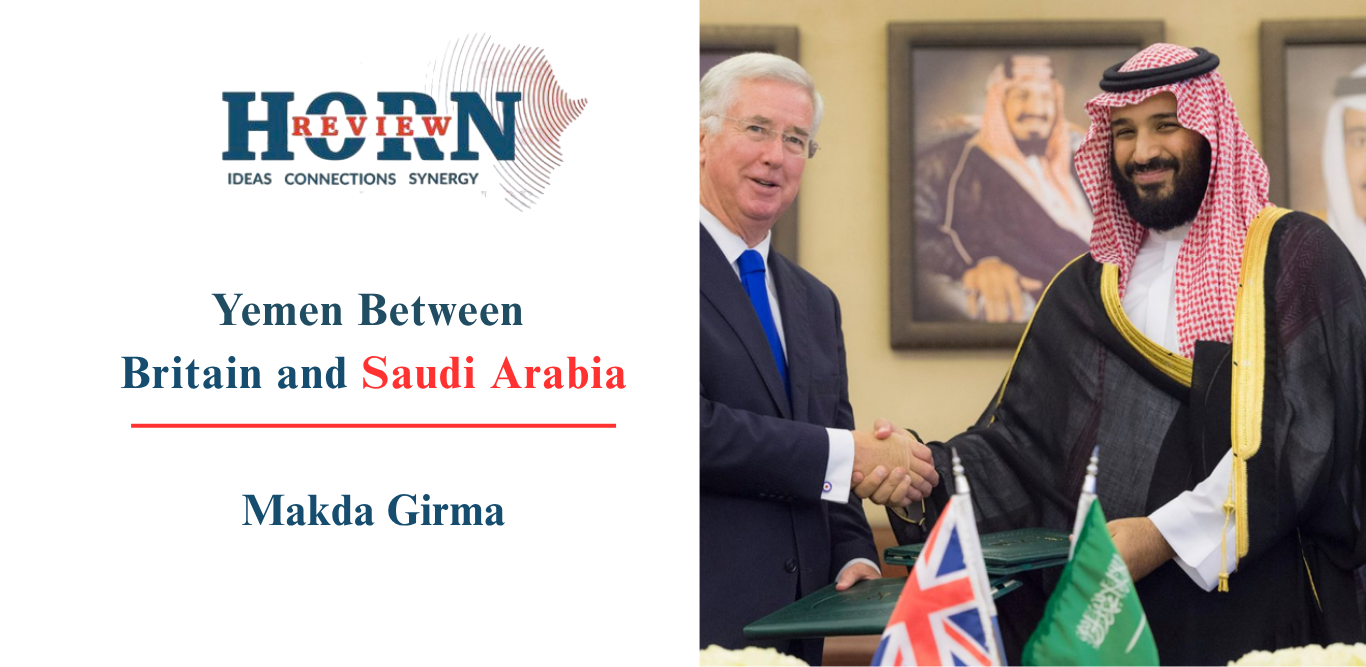
Yemen Between Britain and Saudi Arabia
The Houthi advance along Yemen’s Red Sea coast has exposed a weakness in the security arrangement that developed around Yemen after Britain left Aden. Houthi forces have captured Mocha and expanded toward islands and positions around Bab el Mandeb, while renewed missile and drone attacks have placed Saudi cities and energy infrastructure under pressure. Those gains matter beyond the territory itself. Saudi Arabia increasingly relies on its western export infrastructure when instability affects the Strait of Hormuz, meaning pressure on Bab el Mandeb can place both sides of the Arabian Peninsula under simultaneous stress. Britain, the United States and other Saudi partners share an interest in preventing that outcome, but Saudi Arabia carries a level of direct territorial and economic exposure that none of them shares.
The imbalance is not new. Britain occupied Aden in 1839 because the port gave it control over an increasingly important route between Europe, the Suez Canal, India and the wider Indian Ocean. British involvement in Yemen was therefore driven less by Yemen’s political importance than by the maritime system Britain considered essential. This produced a security model centred on Aden and the surrounding coast rather than control of the northern highlands. Britain could intervene directly because it possessed territory, military infrastructure and political authority in southern Yemen. The end of colonial rule in 1967 removed those instruments and gradually replaced direct control with diplomacy, development assistance and support for regional partners.
Saudi Arabia could never detach itself from Yemen in the same way. The 1934 Saudi Yemeni War concerned Asir, Jizan and Najran, territories directly connected to the kingdom’s southern frontier. British interests during the conflict remained concentrated on Aden and maritime access, while Saudi Arabia was fighting over the shape and security of its own border. The Treaty of Taif helped settle the territorial dispute, but it also revealed a difference that remained after British withdrawal: Britain could decide how deeply Yemen mattered to British strategy, while geography made that decision impossible for Saudi Arabia.
The 1962 North Yemen civil war briefly narrowed this difference because Britain and Saudi Arabia faced the same immediate opponent. Egypt deployed tens of thousands of troops in support of the new republican government, threatening Saudi Arabia with the expansion of Nasserist republicanism and Britain with the possibility that Egyptian influence would reach Aden. Britain therefore covertly supported the royalist camp while Saudi Arabia financed and supplied it. Israel joined for another reason: forcing Egypt to keep troops tied down in Yemen weakened Cairo elsewhere. Yemen created an unusual alignment between Britain, Saudi Arabia and Israel because each could use the same Yemeni forces to contain a different strategic threat.
Religion alone does not explain Saudi policy toward Yemen. Saudi Arabia supported a Zaydi monarchy despite its own Sunni religious establishment because Nasser represented the more immediate threat. Zaydism belongs to the Shia tradition but developed separately from Iranian Twelver Shiism and historically shared several features with Sunni jurisprudence. The later Saudi Houthi confrontation therefore cannot be projected backwards as an ancient Sunni Shia rivalry. Saudi policy changed because the political and strategic environment around Zaydism changed.
After the republican revolution, the religious balance shifted. Zaydi political authority weakened while Salafi institutions expanded, including in northern areas where Zaydism had historically dominated. Dar al Hadith in Dammaj became one of the most visible examples. Founded by Muqbil bin Hadi al Wadi’i after his years in Saudi Arabia, the institute developed into a major centre of Salafi teaching inside Saada. Saudi support for Salafi networks gave what might otherwise have remained a theological dispute a geopolitical dimension: religious competition increasingly became associated with outside influence.
The Houthi movement emerged partly from that transformation. Hussein al Houthi mobilised Zaydi grievances over declining religious and political influence, but the movement expanded far beyond religious revival. Conflict with Salafis around Dammaj, repeated wars with the Yemeni government and growing opposition to Saudi and American influence turned Ansar Allah into an armed political movement. Its later relationship with Iran altered the Saudi calculation further. A Zaydi movement that Riyadh might once have treated as another Yemeni political actor increasingly became connected to missiles, drones, Iranian regional strategy and control of territory directly adjacent to Saudi Arabia.
Yemeni reunification in 1990 gave Britain an opportunity a chance to recast the relationship after empire. London welcomed the merger of North and South Yemen and initially treated the unified republic as a state that could be stabilised through political participation, trade, institutional development and normal diplomacy. Britain no longer sought a territorial position in Aden. Its preferred outcome was a unified Yemeni state strong enough to manage its own territory and weak points without requiring direct British control.
The new arrangement ran into problems almost immediately. Yemen’s position during the Kuwait crisis strained its relationship with Britain and the Gulf states, while the 1994 civil war showed that formal reunification had not produced a fully consolidated state. Britain nevertheless continued treating Yemeni unity as preferable to renewed partition. The strategic logic was increasingly clear: a single government capable of controlling the country was less dangerous to British maritime and counterterrorism interests than several competing authorities around the Gulf of Aden and Bab el Mandeb.
Saudi Yemen relations followed a different route after the same crisis. Ali Abdullah Saleh gradually repaired relations with Riyadh after the 1994 civil war, culminating in the 2000 border agreement. Britain welcomed the settlement but was not its central architect. Saudi Arabia possessed forms of leverage Britain did not: a shared border, financial influence, migration ties and long standing connections with Yemeni political and tribal networks. Riyadh dealt directly with the problems created by proximity while London concentrated increasingly on whether the Yemeni state itself could function.
By the late 2000s, the two approaches were clearer. Saudi Arabia needed Yemen to remain politically manageable and strategically non hostile. Britain increasingly needed Yemen to become institutionally viable. British policy connected weak governance, poverty, unemployment, northern conflict, southern separatism and terrorism because each weakened the state that London expected to manage the consequences of instability on Britain’s behalf.
The British government set out that strategy clearly in 2010. London argued that terrorism could not be separated from poverty, poor governance, political exclusion and weak state capacity. Development, government institutions, employment, public services and political participation were all treated as security instruments because they were supposed to produce a Yemen capable of containing its own crises. The same speech acknowledged the weakness in this strategy: fragmented donors, inconsistent external intervention and deteriorating security were already limiting what international assistance could accomplish. Britain’s answer remained greater coordination rather than greater direct coercive capacity.
The Friends of Yemen process put this approach into practice. Britain, Saudi Arabia and Yemen became central participants in an international framework designed to coordinate political support, economic reform, governance programmes and security assistance. Britain supplied diplomatic coordination, international institutions, development programmes and influence at the United Nations. Saudi Arabia supplied money, regional leverage and direct political access. Yemen was expected to transform that support into stronger state institutions.
It also exposed the source of later British Saudi friction. Britain’s preferred model depended on Yemeni institutions becoming strong enough to reduce the need for outside intervention. Saudi Arabia could not wait indefinitely for that transformation because instability in Yemen crossed directly into Saudi security. A British failure in Yemen could mean another difficult foreign policy problem. A Saudi failure could mean hostile forces on the border, missiles over Saudi cities, attacks on oil infrastructure and pressure on Red Sea exports. The two countries could agree on the desirability of stability while placing very different values on how quickly it had to be achieved and how much force could be justified.
For a time after 2011, the two approaches could coexist. Saudi Arabia and the Gulf Cooperation Council led negotiations that removed Saleh and transferred power to Abdrabbuh Mansur Hadi, while Britain used the Friends of Yemen, development assistance and the UN Security Council to reinforce the political transition. Saudi influence was expected to manage immediate regional politics while British backed institutional and diplomatic processes helped build a more durable state. The model assumed that political transition could move faster than the fragmentation of authority on the ground.
The Houthi seizure of Sana’a in 2014 broke that assumption. The Saudi led intervention of 2015 was driven by a threat that Riyadh regarded as immediate: an armed movement with growing Iranian support had captured the capital and was expanding through the country. Britain supported Saudi security and maintained extensive defence relations with Riyadh but continued to insist that Yemen ultimately required a political settlement. The difference was no longer merely one of diplomatic style. It reflected the unequal consequences of failure. Saudi Arabia faced the military threat directly while Britain could continue to prioritise institutional restoration, humanitarian access and negotiations because British territory was not under attack.
The war widened that gap further. Saudi military action could weaken Houthi capabilities but also deepen the destruction of the Yemeni state that Britain wanted restored. British support for Saudi security therefore existed alongside growing concern about civilian casualties, humanitarian access and the sustainability of the campaign. London did not abandon Riyadh; the two governments continued to agree on Saudi security, Yemeni territorial integrity and the need for a political settlement. The contradiction was embedded inside that agreement. Saudi Arabia required protection from threats emerging from Yemen, while Britain sought to preserve a Yemeni political order that repeated military escalation was making progressively harder to rebuild.
Britain’s present policy still reflects those limits. In January 2026, London again described support for a “unified and stable Yemen” as unwavering and backed Saudi hosted political dialogue aimed at addressing southern disputes without allowing another fragmentation of the state. Britain continues to use the UN process, diplomatic pressure and cooperation with Riyadh to maintain the political framework around Yemen.
The Houthi offensive has now moved faster than that framework can respond. The capture of Mocha and strategically important islands around the Red Sea has changed the military balance through territorial action rather than negotiation. Iranian support gives the Houthis access to capabilities that state building programmes and diplomatic coordination cannot directly neutralise. The displacement caused by the renewed fighting also demonstrates that the collapse of political restraint quickly recreates the humanitarian conditions Britain has spent years trying to manage.
Israel has returned to the Yemen equation for similar reasons. The Houthis now threaten Israeli territory and Red Sea access as well as Saudi infrastructure, giving Riyadh and Israel overlapping security interests despite the absence of normal diplomatic relations. That resemblance to the 1960s is not accidental. Yemen again creates temporary alignments because local territorial change affects several external powers at once. Israeli intelligence or military experience can help Saudi Arabia counter particular Houthi capabilities, just as Israeli involvement once helped constrain Egypt, but such cooperation manages the immediate threat rather than resolving the political order inside Yemen.
Britain is still important, but its position is fundamentally different from the one it occupied before 1967. It can organise diplomacy, support the Yemeni government, mobilise aid, strengthen maritime security and influence negotiations through the UN. What it no longer possesses is a territorial position in Aden that makes the security of southern Yemen a direct British military responsibility.
This difference in exposure helps explain why repeated British Saudi cooperation has not produced an identical Yemen policy. Saudi Arabia is forced toward military action whenever political collapse produces an immediate cross border threat. Britain can continue favouring political settlement because its exposure is indirect and because the tools it retained after leaving Aden are overwhelmingly diplomatic, institutional and economic. Britain has military capabilities, but it is no longer territorially embedded in Yemen and has little political appetite to assume the kind of sustained burden that colonial control once imposed automatically.
The current crisis is not simply a clash between Saudi military urgency and British diplomatic caution. It is the outcome of the security order that followed British withdrawal. London attempted to replace direct control with a functioning Yemeni state, regional partnerships and multilateral coordination.
After decades of managing Yemen through diplomacy, development and multilateral coordination while leaving the hardest security burden to Saudi Arabia, the Houthi seizure of the southern Red Sea coast and islands has exposed the limits of Britain’s approach. It can neither prevent state failure nor impose a political settlement when local military realities and Iranian support allow territorial change to move faster than diplomacy.
Saudi Arabia now faces direct threats to its cities, energy infrastructure and a shipping lane made more important by the wider crisis around Iran and the Strait of Hormuz. Britain still offers much of the same toolkit: dialogue, humanitarian pressure, support for Yemeni unity, maritime assistance and the UN process. Those tools may contain the consequences of war, but they have not reversed Houthi territorial gains.
Britain and Saudi Arabia still share important interests in Yemen, but the consequences of failure are not equal. London can continue to work through diplomacy, aid and international institutions, while Riyadh faces the immediate effects of instability across its border. Support from Britain, the United States, Israel and other partners may help contain particular threats, but it does not remove the basic problem. As long as armed groups can change the balance on the ground faster than negotiations can respond, Saudi Arabia will remain the actor carrying the greater risk.
Makda Girma, Researcher, Horn Review

RELATED
Posts
9
Oct
Could the Riyadh Airport Strike Reshape the Yemen Conflict?
A series of claimed missile and drone strikes on King...
8
Oct
The Makkah Pact and the Limits of Collective Defence
The Makkah Joint Defence Agreement rests on an ambitious...
28
Sep
Saudi-led Multinational Maritime Defence Coalition and the Changing Security of Bab el-Mandeb
On 2 September, the Saudi-led Multinational Maritime Defence Coalition...

28
Sep
The AI Disinformation War in the Horn and the Economics of Digital Conflict
In September, Marc Owen Jones, an Associate Professor of...
24
Sep
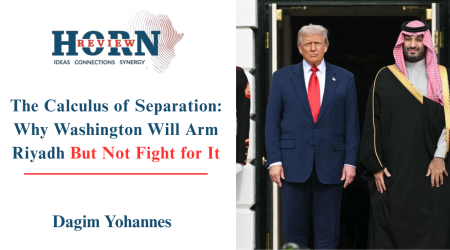
The Calculus of Separation: Why Washington Will Arm Riyadh But Not Fight for It
The episode reveals a distinction in the U.S.-Saudi security relationship...
21
Sep
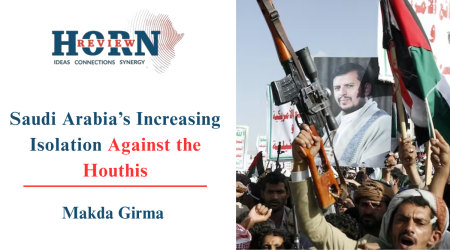
Saudi Arabia’s Increasing Isolation Against the Houthis
Saudi Arabia’s renewed confrontation with Yemen’s Houthis has exposed how...
21
Sep
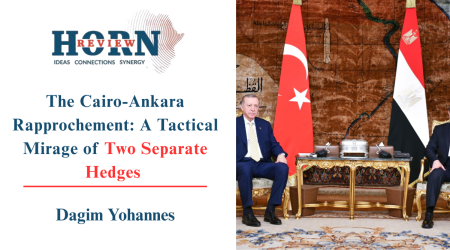
The Cairo-Ankara Rapprochement: A Tactical Mirage of Two Separate Hedges
The recent run of headlines out of Cairo and Ankara,...
20
Sep
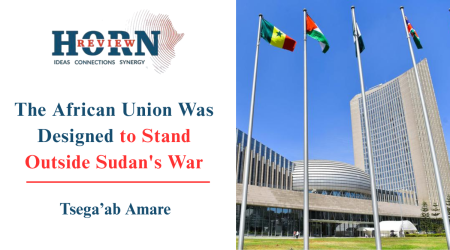
The African Union Was Designed to Stand Outside Sudan's War
Every time Sudan's war comes up in public discussion, mentioning...
2
Sep
A Decade of Saudi Miscalculation in Yemen
On March 26, 2015, Mohammed bin Salman, then a thirty-year-old...
31
Aug
Mahamat Déby or Burhan: Who Can Win the US?
On August 20, 2026, Sudanese warplanes and drones pursued a...