
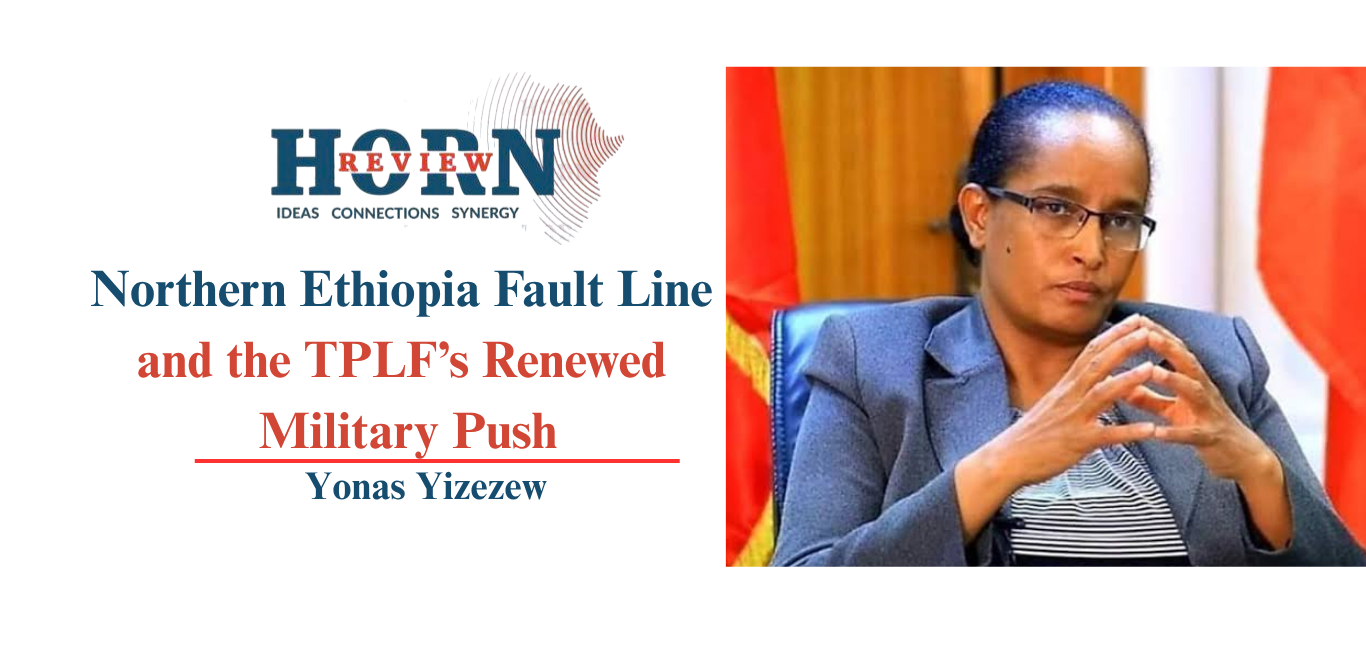
Northern Ethiopia Fault Line and the TPLF’s Renewed Military Push
Following the popular movements that swept parts of the country before 2018, Prime Minister Abiy Ahmed ascended to power in April 2018. The subsequent dissolution of the EPRDF in 2019 gave rise to the Prosperity Party. The TPLF rejected the merger of the former ruling coalition into the new party and retreated to its regional stronghold in Mekelle.
Tensions escalated in September 2020 when the TPLF unilaterally organized sub-national parliamentary elections in explicit defiance of a federal postponement mandated by the COVID-19 pandemic. The federal government declared the regional vote unconstitutional and null. Facing acute political isolation and a hardening of military posture on both sides, the escalating political and legal dispute reached a breaking point on November 3, 2020, when hostilities broke out at bases of the Ethiopian National Defense Force Northern Command in Tigray after an attack by TPLF forces, precipitating full scale conventional war.
What followed was two years of war that drew in the ENDF, the Eritrean Defense Forces, and Amhara regional militias. By March 2022 the war had reached a rough stalemate and a truce has been declared. On November 2 of that year, the African Union brokered the Pretoria Cessation of Hostilities Agreement between the federal government and the TPLF, followed ten days later by the Nairobi Declaration on its implementation. The agreement called for the disarmament of Tigrayan forces, the withdrawal of non-federal troops from Tigray, the restoration of constitutional order and federal services to the region, and the seating of an interim regional administration to govern until elections could be held.
The Pretoria Agreement and the Limits of Implementation
The formal terms of the Pretoria Agreement required all non-federal armed entities to withdraw completely from Tigrayan territory to allow for the restoration of constitutional order. However, complete withdrawal did not occur. Eritrean units entrenched themselves in border areas including Badme, the flashpoint of the 1998 war, as well as parts of Zalambessa and Irob. This lingering presence in frontier pockets kept tensions over the unresolved boundary alive and severely undermined confidence in the security provisions of the peace deal.
By early 2023, humanitarian relief began returning to Tigray after having been almost completely blocked during the war’s final phase. The federal government and international aid agencies moved to rush food, medicine, and fuel to a population on the brink of famine. Essential services were gradually restored across major urban centers. Electricity was reconnected to the regional grid, national telecommunications networks came back online, commercial banking activities resumed under operational restrictions, and Ethiopian Airlines prepared to resume regular passenger flights to Mekelle.
The TPLF on the other hand, retained the core of the Tigray Defense Forces largely intact under the interim administration’s authority. The disarmament, demobilization, and reintegration process meant to dissolve that force never proceeded past its opening phase.
The Interim Administration and the Widening TPLF Rift
One cornerstone of the Pretoria Agreement was the formation of an interim administration to govern Tigray until elections could be held. On March 23, 2023, Getachew Reda was appointed IRA President, in line with Pretoria’s stipulation that an interim government be formed within thirty days of the TPLF’s delisting as a terrorist organization by parliament. A federal regulation formally created the administrative body. Getachew, a senior TPLF figure, former federal communications minister, and Tigray’s chief negotiator at Pretoria, assumed office in Mekelle and assembled a cabinet of twenty seven members drawn from the TPLF, the TDF leadership, civil society, and regional opposition parties.
One early success of the IRA was the resumption of federal budget subsidies to the region after two years of total suspension. In April 2023, Getachew announced that his administration had secured sufficient federal funds to pay civil servant salaries and restart basic government administrative functions across the region.
Despite these arrangements, tensions simmered beneath the surface in Tigray. A faction of the TPLF led by party chair Debretsion Gebremichael and his deputy Fetlework Gebreegziabher, having lost its military leverage during the final stages of the war, sought to ensure it would not also lose its political dominance over the regional state apparatus. Throughout 2023, the promise of peace was continuously tempered by ongoing disputes over CoHA implementation, slow progress on territorial recovery, and intensifying power struggles between the IRA leadership and party hardliners in Mekelle.
The post-Pretoria order was never accepted uniformly by the principal actors in northern Ethiopia. The TPLF viewed the agreement as a pathway to preserve its political and military relevance in Tigray, secure the survival of its organizational structure, and create the conditions necessary to regain influence over the region’s political and territorial future. Fano and other Amhara actors remained deeply opposed to provisions they believed could ultimately facilitate the return of contested territories to Tigrayan administration. The PFDJ, meanwhile, applied a fundamentally different strategic calculation, viewing the TPLF not as a political actor to be reintegrated but as a long term security threat whose political and military dismantling should be completed.
This created an inherently unstable environment in which former wartime adversaries could, under certain circumstances, find tactical common ground despite holding fundamentally different objectives. The emerging alignment was therefore not based on shared ideology or mutual trust, but on overlapping opposition to the federal government’s evolving political and security order.
Legal Status and Political Disagreements
While military instability spread across Amhara, the legal and political status of the TPLF within Ethiopia’s federal framework became the subject of intense institutional confrontation. Following the parliamentary lifting of the TPLF’s terrorist designation after Pretoria, the House of Peoples’ Representatives passed Proclamation No. 1332/2024 in June 2024. The legislation amended the existing political party registration framework, Proclamation No. 1162/2019, to create a legal mechanism allowing political groups previously engaged in armed rebellion to register under special considerations, provided the Ministry of Justice confirmed they had ceased illegal activities and committed to operating within the constitutional system.
Following an application by the party and supporting documentation from the Ministry of Justice, the National Election Board of Ethiopia granted the TPLF conditional re-registration under special circumstances on August 9, 2024. NEBE mandated that the TPLF hold a General Assembly within six months under its official supervision to approve party bylaws and elect executive leadership, and stipulated that it would monitor the party’s peaceful political activities for eighteen months following the assembly.
Amid these legal proceedings and the various showdowns with NEBE that followed, governance in Tigray grew increasingly turbulent as internal factions emerged. Getachew initially worked in tandem with the TPLF leadership. Over time, a profound rift developed between the ‘IRA camp’, aligned with Getachew’s more cooperative approach toward Addis Ababa, and TPLF hardliners centered around Debretsion.
In explicit defiance of NEBE’s instructions, Debretsion’s faction convened an unapproved TPLF Party Congress in August 2024 without election board observers present. Getachew Reda and fifteen senior IRA officials boycotted the assembly, prompting the congress to formally expel Getachew and his allies from the party. Because the TPLF failed to comply with statutory requirements and ignored repeated formal warnings, NEBE issued a final ruling in May 2025, completely revoking the TPLF’s legal political party status under Article 99 of Proclamation No. 1162/2019. This act has returned in May 2026, when the TPLF reconstituted the pre-war Tigray Regional Council and installed Debretsion as regional president, by dismantling the post-Pretoria interim governance structure.
Collapse of Regional Governance
The political split within the TPLF rapidly escalated from institutional boycotts into an armed struggle for physical control of the regional state apparatus. In January 2025, over two hundred senior commanders of the Tigray Defense Forces issued a joint declaration openly siding with Debretsion’s hardline faction, stripping President Getachew Reda of his domestic military backing. In March 2025, TDF units loyal to Debretsion executed a forcible takeover of administrative headquarters across Mekelle, physically removing Getachew’s interim administration from power.
Following his removal from Mekelle, Getachew Reda forged closer institutional ties with Prime Minister Abiy Ahmed’s administration in Addis Ababa. In April 2025, Prime Minister Abiy appointed Getachew as Senior Adviser on East Africa Affairs. Getachew subsequently founded a new regional political party named Simret. In May 2026, Simret joined forces with General Tsadkan Gebretensae, the former TDF commander and Getachew’s former IRA vice president, alongside the Tigray Peace Force operating along the Afar border.
Strategic Realignment and the Tsimdo Alliance
The breakdown of the Pretoria framework triggered a dynamic geopolitical realignment across the Horn of Africa. Strategic divergence between Addis Ababa and Asmara surfaced immediately following the Pretoria deal, which President Isaias viewed as a federal compromise that rescued the TPLF from total destruction. Starting in 2024, a remarkable rapprochement unfolded between two former enemies, the TPLF leadership and the regime of President Isaias Afwerki in Eritrea.
What is now widely referred to in Tigrinya as Tsimdo began as secret contacts reportedly hosted in Dubai in March 2024 and escalated by May 2025 into open meetings between Eritrean officials and TPLF representatives, accompanied by coordinated messaging between pro-TPLF and pro-Eritrean media outlets. According to reporting citing Africa Intelligence, an unpublicized meeting in Asmara in late January 2025 saw President Isaias Afwerki personally assure Tigrayan officers that Eritrea would protect them in the event of renewed conflict with the federal government. In June 2026, reports indicate that TPLF leaders under Debretsion inaugurated construction of a road linking the town of Ahse’a in Adwa directly to Eritrea, a symbolically loaded act of normalization given that Eritrean forces had been among the principal perpetrators of atrocities against Tigrayan civilians only a few years earlier.
TPLF Executive Committee member Abraham Tekeste has publicly dismissed criticism of the opening to Asmara, stating that the party does not seek anyone’s approval for its choices. Debretsion himself has reportedly turned to Isaias as a counterbalance to Abiy’s growing federal authority, even as the historical animosity between the two sides runs deep. President Isaias declared at Eritrea’s Sawa military camp in July 2018 that the political remnants of the TPLF, referred to by the historically loaded term Weyane, required thorough elimination.
The TPLF’s relationship with Fano follows a similar logic of tactical convergence but rests on a foundation that is, if anything, more contradictory. Fano fighters fought on the government’s side against the TPLF during the 2020 to 2022 war, and the relationship between Amhara militias and Addis Ababa only soured afterward over various calculations including territorial claims.
Out of that rupture, Fano factions consolidated in January 2026 into the Amhara Fano National Movement. Analysts have documented what they describe as an unprecedented operational alignment between elements of the AFNM and the TPLF, built on the logic that the enemy of one’s enemy is a friend, even though the exact command relationship between the two remains unclear from the outside. This convergence, together with parallel activity by the Oromo Liberation Army in western Oromia, appears intended to overstretch the ENDF across multiple fronts simultaneously and fracture its capacity to respond to any single theater with full force.
It would nonetheless be a mistake to collapse the TPLF, Eritrea, and Fano into a single unified bloc. The interests binding them are transactional rather than shared, and each actor pursues a distinct and in some respects incompatible objective. President Isaias’s current opening to Debretsion’s faction is best read as an opportunistic attempt to keep Ethiopia’s federal government off balance, not as a genuine alliance of shared purpose, and Western governments have been cautioned against reading it as any sign of Eritrean moderation.
This domestic realignment intersected directly with broader Red Sea geopolitical rivalries. Egypt, seeking to pressure and contain Addis Ababa over the Grand Ethiopian Renaissance Dam and its Red Sea strategy, moved to consolidate a strategic alliance with Asmara. Working alongside Eritrean intelligence and Sudanese actors, Egyptian security channels reportedly funneled logistical and material support to insurgent groups inside Ethiopia, explicitly backing opposition groups that claimed external support to undermine the federal government’s operational capabilities.
International Engagement and Response
External engagement intensified through the summer of 2026 as the risk of renewed war became harder for outside actors to ignore. On June 18, 2026, the State Department announced that Secretary of State Marco Rubio was imposing visa restrictions on hardline TPLF members and their immediate families, citing their role in threatening the Pretoria framework and regional stability.
Diplomatic engagement deepened further in mid July 2026, when US Ambassador to Ethiopia Ervin Massinga traveled to Mekelle, the first stop in a two day tour of Tigray and Amhara conducted as Ethiopia’s National Dialogue conference opened in Addis Ababa. In Tigray, the ambassador met with humanitarian implementers, political figures, and civil society representatives, stressed the urgent need for dialogue and full implementation of the Cessation of Hostilities Agreement, and held a substantive meeting with TPLF Deputy Chairman Amanuel Assefa focused on the political situation and drought driven humanitarian conditions.
A separate meeting the ambassador had scheduled with interim administration president Lieutenant General Tadesse Worede was reportedly disrupted when security forces prevented the general from traveling to the appointment, an incident that points to continued contestation over who inside Tigray is permitted to represent the region to outside partners.
The TPLF leadership under Debretsion issued a counter-statement condemning Ambassador Massinga’s visit and public remarks, accusing the US envoy of departing from an impartial diplomatic stance and violating his responsibilities as an observer to the Pretoria Agreement. The TPLF firmly rejected Massinga’s call to put people first, above politics, asserting that the conflict was fundamentally political, rooted in structural disputes over constitutional order, territorial integrity, and governance.
Remilitarization and the Road Back to War
Drawing on support from Egypt and Eritrea and passage through SAF controlled Sudan, the TPLF hardline leadership accelerated regional mobilization. In June 2026, the regional assembly in Mekelle passed troop mobilization legislation and established a centralized Command Post under the direct personal leadership of TPLF Chairman Debretsion Gebremichael. Regional authorities initiated forced conscription drives across Tigray to reinforce the TDF. The reliance on forced recruitment reflected widespread war fatigue among the Tigrayan populace, many of whom actively resisted mobilization given the prospect of being drawn into an intra-Tigray civil war.
A key element of Tigray’s expanding military capability was the operationalization of Army 70. Comprising several thousand well equipped TDF combatants operating from bases in eastern Sudan along the border with western Tigray, Army 70 functioned with the support of the Sudanese Armed Forces. Positioned along the trilateral Sudan-Ethiopia-Eritrea frontier, it operated with a high degree of local command autonomy, establishing a volatile forward operational presence designed to encircle western Tigray.
The Sudan connection is not incidental. Army 70 units have fought inside Sudan alongside the Sudanese Armed Forces against the Rapid Support Forces, and in July 2026 a drone strike attributed to the RSF on the town of al Kurmuk killed several senior Army 70 commanders along with Eritrean soldiers present at the same gathering, illustrating how closely the Tigrayan, Eritrean, and Sudanese battlefields have become entangled with one another.
Military skirmishes escalated across multiple sectors throughout late 2025 and early 2026. In November 2025, TDF units clashed with the Tigray Peace Force, known locally as Hara Meret, pursuing the splinter group across regional boundaries into Afar.
The clearest evidence of the TPLF’s drift back toward confrontation came in late January 2026, when Tigray Defense Forces units crossed the Tekeze River and entered the disputed Tselemt woreda along the Tigray-Amhara boundary, triggering direct clashes with the ENDF on January 26, 28, and 29. On January 30, separate from the Tselemt fighting, Tigrayan forces took the towns of Alamata and Korem in southern Tigray after the federal command post in the area withdrew.
Analysts at ACLED concluded that the TPLF had made a deliberate decision to retake the disputed zones of Welkait, Tsegede, Humera, and Tselemt by force, mobilizing Army 70 units drawn both from Tigray proper and from TPLF aligned fighters embedded in Sudan’s civil war to encircle western Tigray for a renewed push. Operating from positions in eastern Sudan, Army 70 forces reportedly attacked ENDF positions and local Amhara aligned Tekeze Guard units guarding routes into western Tigray. These clashes marked the most serious direct confrontation between TDF aligned forces and the ENDF since the Pretoria Agreement, and demonstrated the growing regionalization of the conflict through the use of Sudanese territory as a military rear area.
The latest clashes further demonstrate that confrontation has moved beyond political disputes into direct military escalation. The TPLF’s trajectory has involved dismantling post-Pretoria political arrangement, rebuilding its military capacity, expanding Army 70s operational role and leveraging cross-border support and positions, ultimately bringing it into direct confrontation with the federal forces. Throughout this period, the federal government has maintained maximum restraint, limiting its response to military containment and deterrence while continuing to pursue political and institutional mechanisms for resolving the Tigray crisis. This restraint reflects a deliberate effort to prevent localized confrontations from escalating into a renewed full scale war.
By Yonas Yizezew, Researcher, Horn Review

RELATED
Posts
4
Oct
Egyptian Airpower and the GERD: From Strike Capability to Strategic Limits
The Grand Ethiopian Renaissance Dam is within the theoretical reach...
3
Oct
How Should Saudi Arabia Approach the Conflict in Northern Ethiopia?
Saudi Arabia’s position toward the renewed conflict in northern Ethiopia...

2
Oct
The possibility of Sudan’s War Converging with Ethiopia’s Renewed Conflict
Ethiopia’s renewed conflict has changed the security significance of its...
2
Oct
Government-Humanitarian Coordination for Effective Humanitarian Response in Northern Ethiopia
Humanitarian assistance in a conflict environment depends not only on...
2
Oct
Al-Shabaab's Monitoring of Ethiopian Politics and Why the TPLF's Moves Matter
The emergence of a coalition of armed and political...
2
Oct
Egypt’s Denial of Intervention in Ethiopia Does Not Survive Scrutiny
Egypt’s Foreign Ministry has answered Ethiopian charges of external...
2
Oct
Ethiopia and Libya Rebuild a Bilateral Channel
In late September, Ethiopian Ambassador Zerihun Abebe Yigzaw met Libya’s...
2
Oct
Why the Ethiopian Prime Minister and Sudanese Armed Forces Commander Must Meet
A direct meeting between Ethiopian Prime Minister Abiy Ahmed and...
1
Oct
Ethiopia Expels Egyptian Diplomatic Staff Member as Regional Tensions Escalate
Ethiopia has declared Egyptian diplomatic staff member Ahmed Moharam Ahmed...
1
Oct
Ethiopia Closes its Embassy in Asmara, What Could this Mean?
Ethiopia Has Been Patient. The Embassy Closure Shows the Limit...