The newly released United States counterterrorism strategy marks a notable shift away from the approaches of its predecessors. In the Obama years, for instance, counterterrorism efforts were embedded in a multipolar world where the United States sought to assert its global influence and safeguard its interests through a mix of military interventions, diplomatic initiatives, and active engagements across many regions. At that time, the fight against jihadism and radical Islamism formed the unmistakable core of American strategy. Today’s document, however, takes a different path in its breadth, central priorities, stated goals, how America intends to be seen on the world stage, the way it defines national interests, and the nature of its international partnerships. Narcotics cartels have moved to the forefront, while the long-dominant focus on radical Islamism and jihadism has been pushed into a more secondary role after decades at the center of American counterterrorism thinking.
This reorientation became particularly clear when the Trump administration designated narco cartels as foreign terrorist organizations. By framing radical Islamism increasingly as a legacy concern, the administration signaled that decades of policy were being redirected. Counter-narcotics now sits at the heart of the effort. As Sebastian Gorka, the National Security Council’s counterterrorism director who helped shape the strategy, has explained, the primary threat is now hemispheric in nature. Narcoterrorists and transnational gangs are pouring drugs, weapons, and trafficked people into the United States. What were once seen mainly as law enforcement challenges have been elevated to foreign terrorist organizations and are now being confronted with military force. Adding another layer that breaks fresh ground, the strategy formally lists violent left-wing extremists, including anarchists and Antifa, as a counterterrorism concern alongside jihadists and the cartels.
Turning to Africa, the document sets out two straightforward but important goals: preventing any jihadist group from building a base that could threaten the American homeland, and protecting Christian communities that are being massacred by terrorist organizations. Rather than maintaining a heavy presence, the United States plans a light military footprint and expects regional partners and neighboring countries to take on a much larger share of the burden. It also makes clear that Washington is actively rebuilding bilateral counterterrorism relationships with African governments that it believes were ‘sidelined’ by the previous administration’s policies it describes as neocolonial and driven by globalist left-wing cultural priorities.
Understanding Ethiopia’s place in this picture requires looking at the broader transformations underway in the Horn of Africa. The region has always been strategically vital, but the crises of the recent years have layered multiple instabilities, heightening both dangers and possibilities. For instance, Sudan, which the 2026 strategy specifically highlights as an area of resurgent threat, has largely stopped functioning as a coherent state.
Ethiopia is widely regarded as the central actor in the Horn of Africa, with a regional role that significantly influences developments across neighboring states. This influence makes Ethiopia especially valuable for American objectives related to regional counterterrorism, peacekeeping, and efforts to maintain political stability.
Consistent with broader America First thinking, the strategy favors a lighter American footprint overseas, encourages real burden-sharing among partners, and seeks to link security cooperation more closely with economic and commercial relationships. For Ethiopia, this approach draws on existing foundations of cooperation while setting fresh expectations and introducing new dynamics. Relations between Washington and Addis Ababa had grown quite strained under the previous administration, especially after arms embargo was imposed in connection with the Tigray conflict.
Despite past strains, the bilateral relationship remains resilient, and Ethiopia continues to act as a significant partner for US Africa Command in supporting African-led security arrangements. The strategy expresses a clear commitment to working alongside governments that face threats from ISIS and al Qaeda affiliates—groups that pose dangers to both sides.
This move toward a more restrained global counterterrorism role comes at a particularly critical moment. Insecurity around the Red Sea, Houthi attacks, the breakdown in Sudan, tensions between Ethiopia and Eritrea, intensified proxyism and Somalia’s ongoing fragmentation are all converging near one of the world’s most critical maritime passages. These pressures make capable regional partners more valuable than ever, especially those that can handle greater responsibility without needing heavy direct American involvement. From Washington’s viewpoint, Ethiopia appears to stands out as the kind of partner that can help fill that space in the Horn of Africa.
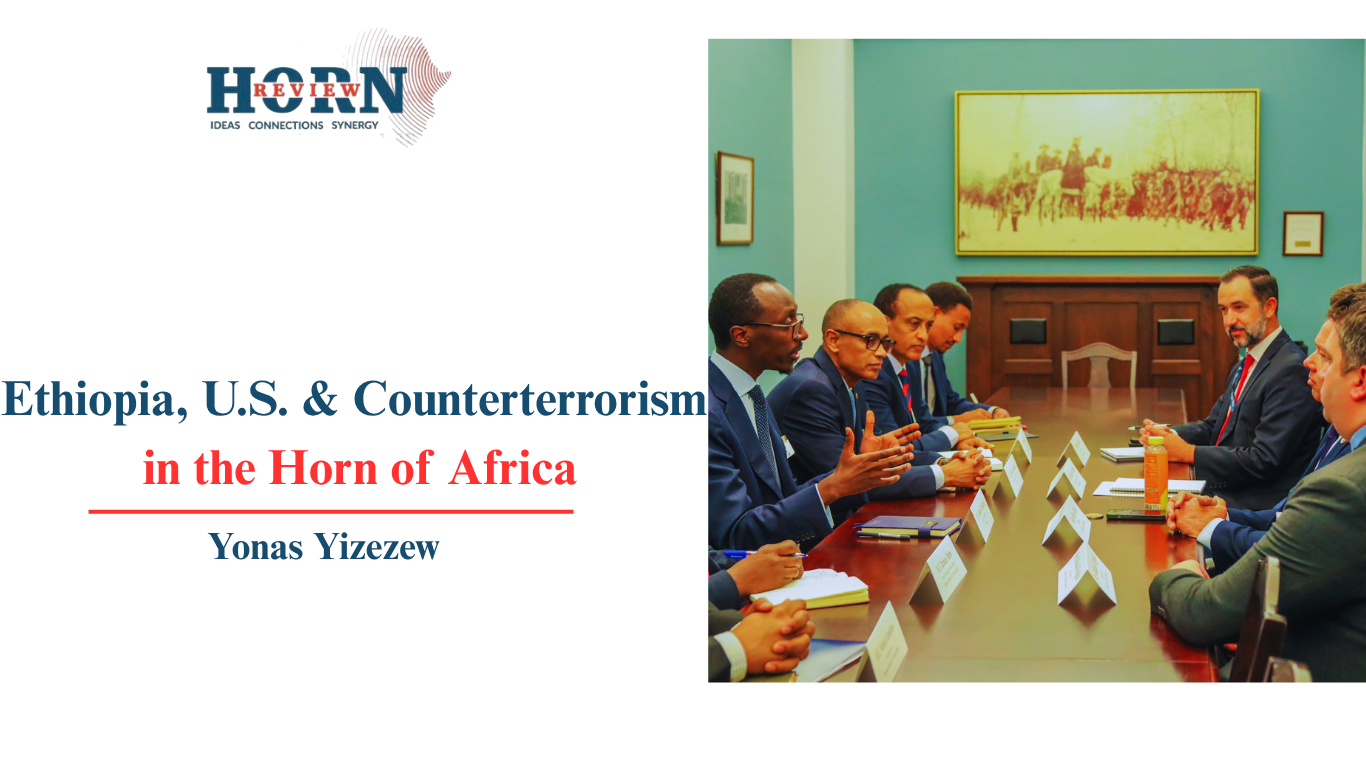
Recent diplomatic steps demonstrate this direction. During Ethiopia’s foreign minister’s visit to the United States, the two sides held discussions on deepening security cooperation, strengthening economic links, and finding ways to ease tensions across East Africa. Not long afterward, Washington lifted the arms embargo on Ethiopia, a step that gives Addis Ababa better access to military equipment and can be a sign that the United States wants Ethiopia to carry a larger share of the regional security burden.
Situated where the southern entrance to the Red Sea meets the Gulf of Aden and the Bab el-Mandeb Strait, the Horn of Africa has long served as a refuge for terrorism and piracy. Its location beside a sea lane that handles twelve percent of global shipping has kept the United States deeply involved in battling terrorist groups there for years. However, the 2026 strategy does not magically solve the region’s deep-rooted problems. Instead, it redistributes responsibility for managing them. Threats such as al-Shabaab, the growing connections between the Houthis and Somalia, and the expanding ungoverned spaces in Sudan remain very real, and some are even intensifying. What the strategy does is shift the American posture from primary actor to senior partner, from funder of last resort to transactional ally that measures its commitments by what it receives in return.
This evolution offers Ethiopia a mix of real opportunity and notable risk. On the positive side, a transactional United States that values tangible security contributions and commercial partnerships—rather than tying everything to governance conditions—could allow Addis Ababa to engage on terms that better match its own strategic priorities.
The risk is that the burdens the strategy assigns are not matched by the support structures required to carry them. Regional counterterrorism cooperation, African-led security solutions, burden-sharing with nearby partners: these are phrases that describe a strategic concept. Translating them into operational reality requires sustained American engagement. Whether this evolving version of America First will maintain the level of sustained engagement required for such a strategy to succeed in the Horn of Africa remains to be seen.
Ethiopia itself is navigating internal pressures and ongoing tensions with Eritrea that could stretch its security resources thin. Even so, its counterterrorism operations have continued without major disruption despite these domestic challenges. The Horn of Africa as a whole is facing reconfigured external relationships at the very time when its internal situation is most fragile. With deep internal crisis of the regional States, transnational terrorism and piracy threat and great-power competition intensifying over resources and key chokepoints, the environment would strain even the most engaged outside actor.
By deliberately reducing its own footprint and handing more responsibility to local players, the United States is testing these regional actors in new and demanding ways, and Ethiopia, cast as the anchor of this burden-sharing model in the Horn, will likely face the toughest test of all.
Several risks stand out in this new strategy for both Ethiopia and the wider region. Perhaps the most pressing is the potential mismatch between the light-footprint approach and the sheer scale of the threats on the ground. Al-Shabaab still controls significant territory and has proven capable of sophisticated, multi-pronged attacks. Its partnership with the Houthis has brought in drone technology and training that it lacked before. Meanwhile, Sudan’s disintegration has created dangerous ungoverned zones along Ethiopia’s western and northwestern borders, already being used for arms smuggling and cross-border raids.
Although the strategy recognizes these dangers, it leans heavily on regional partners to contain them without spelling out exactly what resources or assurances those partners will get in exchange, leaving a gap between expectations and support.
Another concern is that counterterrorism cannot be cleanly divorced from the political problems the strategy largely chooses not to engage with. The Africa section firmly rejects nation-building and the interventionist habits of the past. However, in Somalia, al-Shabaab’s strength is deeply entangled with the troubled relationship between the federal government and member states, with strained electoral processes, and with rival external patrons backing different factions. A strategy that narrows its lens mainly to military and intelligence tools while avoiding the political foundations of the conflict may find that any tactical victories can be quickly undermined by the persistent structural realities on the ground.
Furthermore, the strategy’s designation of Islamist terrorism as a legacy threat also carries risks that have not been fully reckoned with. Legacy implies managed decline, a threat that remains real but is contained and diminishing. The actual trajectory of jihadist groups in Africa is not one of decline. JNIM is expanding in Mali. ISIS Somalia is active. Al-Shabaab, despite losing some coastal territory, remains capable of offensive operations and has demonstrated adaptability that has consistently outpaced predictions of its demise.These realities suggest that the Horn of Africa is entering a period where regional actors will be expected to manage increasingly complex security burdens under a changing American counterterrorism framework.
The doctrine, thus reflects a recalibrated US security approach in the Horn of Africa, one that relies more heavily on capable regional partners and a lighter direct footprint. Whether this approach can contain the region’s increasingly interconnected security threats will depend not only on the willingness of states like Ethiopia to shoulder greater responsibility, but also on whether the United States sustains the strategic engagement necessary to support the burdens it is asking others to carry.
By Yonas Yizezew, Researcher, Horn Review