
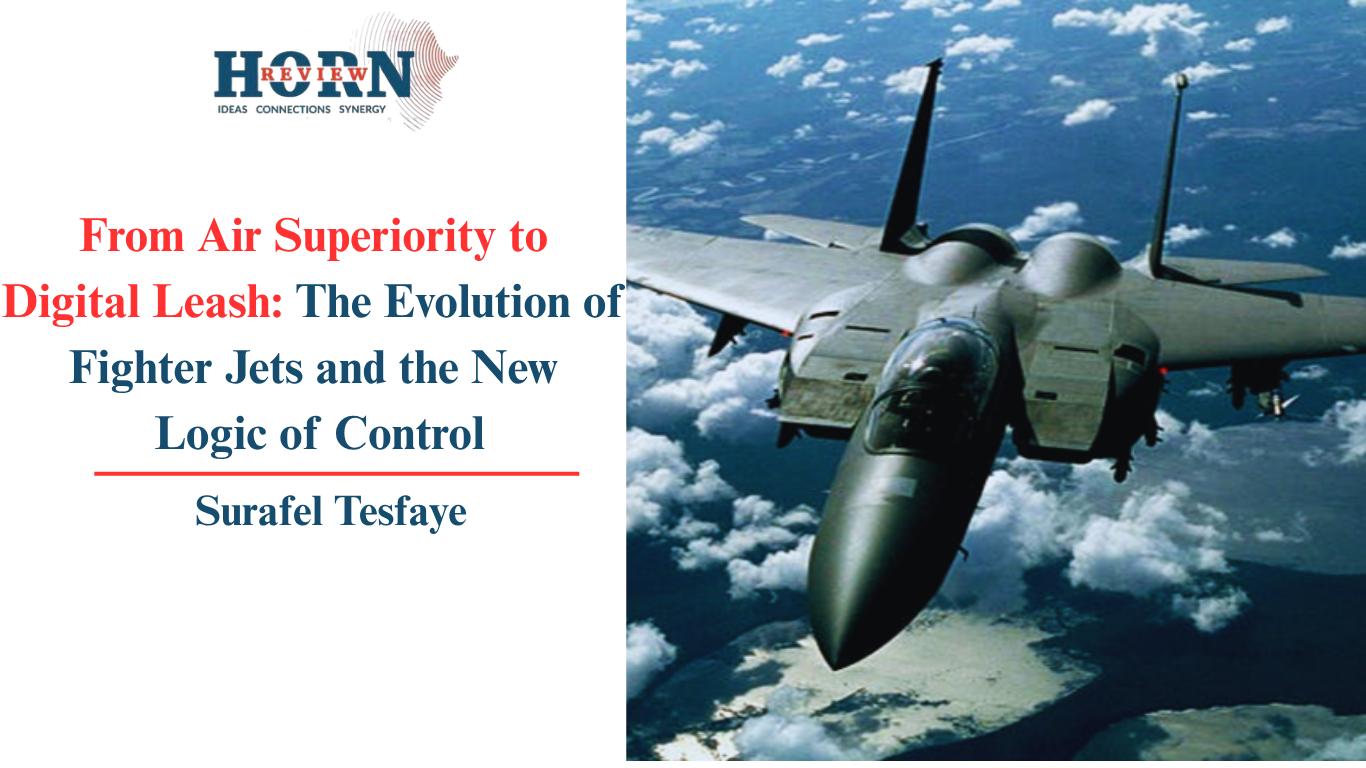
From Air Superiority to Digital Leash: The Evolution of Fighter Jets and the New Logic of Control
The history of fighter jets is a quite astonishing ride through the evolution of aviation, reflecting not only technological progress but also the continuous transformation of military thinking. It begins from very primitive origins of aerial warfare, starting with hot air balloons used for observation, and moves through the early improvisations of the First World War, eventually reaching today’s highly sophisticated stealth and networked aircraft. Throughout this long trajectory, what truly evolved was not only the machine itself, but the idea of control over the skies and, more importantly, the systems behind that control.
As military aviation historians such as Jon Guttman have emphasized, aerial warfare did not emerge suddenly as a refined doctrine but developed through necessity, improvisation, and gradual institutional learning. Long before aircraft became weapons, hot air balloons had already been used for battlefield observation, including in conflicts such as the American Civil War. However, the introduction of fixed-wing aircraft during the First World War fundamentally altered the depth and scale of reconnaissance, allowing forces to observe enemy positions far beyond the front lines and making the skies an operational domain rather than a supporting one.
During the First World War, there was no such thing as a “fighter jet,” but that does not mean there was no aerial combat. On the contrary, the war marked the true beginning of it. In the early phase, aircraft were used purely for reconnaissance, acting as the eyes of the army. Nevertheless, very quickly, the logic of war pushed pilots into confrontation. What started as simple observation turned into direct engagement, even if in the most primitive ways. Pilots initially tried to shoot each other using pistols and rifles, and in some cases even threw grenades or bricks. This chaotic phase reflects how unprepared military doctrine was for the new dimension of warfare and how technological limitations forced human improvisation.
The turning point came when technology began to align with necessity. As reconnaissance planes started using cameras to track enemy movements and map terrain, the need to eliminate those observing aircraft became urgent. Ground crews began mounting machine guns on planes, and by 1915 the invention of synchronization gear allowed guns to fire through the propeller safely. This single innovation transformed aircraft into true fighter platforms. What had been improvised combat became structured aerial warfare. By the end of the war, the idea of controlling the skies, what is now understood as “air superiority”had emerged from a previously unrecognized concept into a strategic necessity, even though it was almost entirely absent at the beginning of the conflict.
After the First World War, aviation moved beyond reconnaissance into a phase of rapid technological and tactical development. Aircraft design improved significantly, with better speed, maneuverability, and firepower. The so-called “wild west” and unstructured phase of early dogfighting gradually evolved into a more organized and industrialized form of warfare. By the time of the Second World War, aerial combat had become faster, deadlier, and more systematic, supported by large-scale production and scientific advancement. The decisive breakthrough came in 1944 when Germany introduced the Messerschmitt Me 262, the world’s first operational jet fighter. Although it arrived too late to alter the outcome of the war, it marked the end of the propeller era and the beginning of the jet age. From that moment forward, aerial combat would increasingly be defined by speed, altitude, and technological sophistication.
The post-war period, especially during the 1950s and 1960s, introduced another major shift in thinking. Engineers, scientists, and military planners began to believe that dogfighting itself would become obsolete. The focus moved toward air-to-air missiles, with the assumption that combat would be conducted from long distances at the push of a button. This belief was widely shared within military establishments and defense research communities, reflecting a growing confidence in automation and guided systems. However, the Vietnam War exposed the limits of this assumption. Early missile systems often failed or missed their targets, and U.S. pilots flying advanced jets such as the F-4 Phantom found themselves forced back into close-range dogfights, often without guns. This moment reintroduced a fundamental lesson that had been prematurely dismissed, that technological advancement does not eliminate the enduring realities of combat.
At the same time, the Cold War intensified the race for aerial superiority between the United States and the Soviet Union. This rivalry pushed rapid innovation, moving the world from the propeller-driven systems of the Second World War into the jet-powered realities of modern warfare within just a few years. The Cold War acted as the engine behind this transformation, but the 1970s became the turning point where the foundations of the modern fighter jet were firmly established. By the late 1980s, with the introduction of stealth aircraft such as the Lockheed F-117 Nighthawk, the philosophy shifted again from winning the dogfight to avoiding detection entirely. The objective was no longer to outmaneuver the enemy, but to remain invisible to them.
However, as aircraft became more advanced, another dimension began to emerge, one that was less visible but far more consequential. The production of modern fighter jets became an exclusive domain, limited to a small number of countries with the necessary industrial and technological base. This created a global system of sellers and buyers, where advanced military technology became both a commodity and a strategic instrument. Superpowers began exporting aircraft, but these exports were never neutral. They carried with them embedded forms of control, shaped by political, economic, and security considerations.
The defining moment in understanding this control came after the Iranian Revolution. Before that, the United States treated key allies like Iran as extensions of its own military structure, supplying them with advanced systems such as the F-14 Tomcat. When the political relationship collapsed, the United States was confronted with a strategic dilemma, its most advanced technology was now in the hands of an adversarial state.
The primary reason for initiating the “leash” mode was the collapse of the U.S.-Iran alliance. After the Shah was overthrown and the U.S. Embassy in Tehran was occupied, the U.S. government implemented an arms embargo to ensure that its own advanced technology was not used against its interests.
The response was not the activation of a dramatic remote kill switch, but something more effective and sustainable. The United States cut off spare parts, maintenance support, and technical assistance. Over time, this logistical blockade degraded Iran’s fleet, grounding many aircraft despite their physical integrity.
This episode became a historical lesson that reshaped the global arms trade. It demonstrated that control does not need to be immediate or visible. Instead, it can be embedded within systems of dependency. Iran adapted through cannibalization, stripping parts from multiple aircraft to keep one operational, and through smuggling and reverse engineering. While this allowed the country to maintain a limited level of capability, it also revealed the structural limits of operating without access to the original supply chain. Over time, Iran shifted its strategic focus, investing heavily in missiles and drones, which are cheaper, scalable, and less dependent on external suppliers.
From this point forward, the idea of a “leash” in military technology became more clearly defined. This leash is not a single device or a literal kill switch, but a layered system of control mechanisms. Modern fighter jets operate as flying computers, requiring continuous software updates, digital activation systems, and integration with external data networks. Without these, their operational effectiveness is significantly reduced. This creates what can be understood as a software leash. At the same time, high-precision weapons depend on satellite data and mission files provided by the supplier, creating an intelligence leash. Finally, the reliance on specialized spare parts establishes a logistical leash, through which a supplier can gradually ground a fleet simply by interrupting the flow of components.
The debate about a physical kill switch often obscures this broader reality. There is no confirmed evidence of a button that can remotely crash an aircraft. However, the absence of such a mechanism does not imply the absence of control.
The risk of an enemy hacking a built-in “kill switch” is one of the main reasons military officials often deny these mechanisms exist. If a manufacturer builds a “backdoor” into a jet’s software to disable it, that same door could theoretically be found and kicked open by a clever enemy hacker. Nevertheless, this is why most “control” is done through external logistics rather than a hidden button inside the plane. It is much harder for a hacker to fake an entire logistics network than to find a single “off” command in the code.
In practice, control is exercised through complex and distributed systems. In modern cyber warfare, vulnerabilities are embedded across entire networks rather than isolated points. Techniques such as GPS spoofing can mislead navigation systems, AI manipulation can distort target identification, and supply chain attacks can compromise the integrity of components long before they are deployed. Rather than instantly disabling a platform, these methods aim to degrade its performance, reliability, and effectiveness over time.
Superpowers often deny the existence of direct control mechanisms, and from a strictly technical standpoint, this denial is accurate. Yet this technical truth conceals a functional reality. Control exists through software, logistics, and data. A country purchasing advanced aircraft is not simply acquiring a machine; it is entering a long-term structure of dependency and it must be. The producer retains influence not by pressing a button, but by controlling the conditions under which the system can operate.
This creates a fundamental challenge for developing countries, particularly in Africa, where historical participation in the evolution of air power has been limited. The question is no longer simply how to acquire advanced systems, but how to avoid being structurally constrained by them, especially for African nations who were not entered the air superiority race in any event or situation or history of the world and lagged way behind the technological advancement that the westerns or the eastern get.
For many nations, including Ethiopia, building a full-scale fighter jet industry remains far beyond current capabilities. However, a shift is taking place toward alternative strategies, particularly in drone manufacturing and localized production. No country should wait an overnight change or start building a sophisticated warfare machine immediately, but it needs to start from the foundation by using alternative methods and not waiting another forty or fifty years to become advanced, instead beginning an autonomous strategic defense sovereignty.
While building a fighter jet remains a dream for most African nations, there is a shift toward manufacturing smaller components, drones, and armored vehicles domestically to slowly reduce reliance on foreign systems. In Ethiopia Under the leadership of Abiy Ahmed, there is a deliberate push toward local production of smart sensor technologies, which represents a strategic move to transition Ethiopia from a technology assembler to a technology creator. This initiative aims to secure technological sovereignty by controlling the most sensitive components of modern defense and civil systems.
Realistically speaking Ethiopia’s move into local drone production represents an attempt to break part of this dependency. By designing and controlling the software locally, the country reduces the risk of external digital control. These systems do not rely on foreign servers or continuous external validation, which removes the immediate threat of a remote shutdown. However, this does not eliminate dependency entirely. The components, microchips, sensors, and engines, are still largely imported. This means the leash has shifted from the finished product to the supply chain, but this is a good foundational base for autonomous strategic defense sovereignty. By manufacturing these sensors locally, Ethiopia aims to ensure that the critical intelligence-gathering capabilities of its aircraft cannot be remotely tampered with or restricted by external actors.
What Ethiopia has achieved can be understood as operational sovereignty but not yet industrial sovereignty. The country can build, modify, and deploy its systems independently, but it cannot yet produce all the critical components required to sustain them indefinitely. This creates a transitional phase, where local production provides short-term independence but long-term vulnerability remains.
To move beyond this stage, a country must gradually transition from being a user of technology to a producer. This involves developing local expertise in software, expanding into the production of critical components such as sensors, and eventually building the capacity for high-end manufacturing like semiconductors. It is a long and difficult process, but it is the only path toward true technological sovereignty. That is why Ethiopia is using smart systems. Local production of smart sensors allows Ethiopia to build systems that can independently identify targets, navigate without GPS using dead reckoning sensors, and conduct electronic warfare without relying on foreign-coded algorithms.
These developments are not limited to military objectives but are also tied to broader economic ambitions. Technological and military strength is increasingly viewed as a shield for economic prosperity. Beyond domestic defense, Ethiopia intends to export these locally manufactured drones and their underlying technologies to other markets. By widening its scalability, Ethiopia has already demonstrated rapid production capacity, producing three hundred drones in just three months through partnerships between SkyWin and AeroAbay.
At the same time, these technologies serve dual strategic purposes. As stated by the Prime Minister, smart sensors are also being developed for non-military sectors such as agriculture and healthcare, including crop monitoring and robotics. This integration aligns with the broader vision of digital transformation and positions technological development as a national priority. Through these efforts, Ethiopia is attempting to build a form of technological firewall against foreign political pressure, ensuring that its most advanced systems serve national and regional interests.
However, Ethiopia remains in a transitional phase. While it has begun mass-producing the bodies and software of drones, it still lacks the advanced industrial base required to manufacture high-end components such as microchips and precision sensors from scratch. The Ethiopian Artificial Intelligence Institute is developing domestic computer vision and machine learning systems, allowing the country to control how drones identify and engage targets, which serves as a critical defense against external control. At the same time, institutions such as Dejen Aviation Industry provide maintenance capabilities, though the country still lacks the capacity to manufacture high-performance engines independently.
To address these gaps, Ethiopia is pursuing multiple strategies. The Ethiopia Tamirt movement is driving industrialization, increasing manufacturing capacity significantly. Import substitution policies aim to replace billions of dollars in foreign goods with locally produced alternatives. Investment in smart sensor research is being prioritized to ensure that critical technologies are not dependent on external suppliers.
The bottom line is that Ethiopia has achieved assembly sovereignty, the ability to build systems and control their software, but it has not yet achieved component sovereignty, the ability to produce all critical inputs domestically. Through gradual progress, this gap can be reduced. Cannibalization is no longer a sustainable long-term strategy, and diversification alone may not be sufficient. True independence requires autonomous technological development, because every major power maintains some form of control over the systems it exports.
It is evident that if a country cannot produce its own raw materials or high-end components, it cannot achieve complete independence from major powers such as the United States, China, or Russia. However, building digital sovereignty must be prioritized even before full industrial capacity is achieved. Progress must occur gradually. Every superpower uses a form of digital leash. If a country cannot build its own hardware, it remains vulnerable. However, several strategies can reduce this vulnerability. Developing a software firewall ensures that foreign hardware operates under domestic control. Maintaining less network-dependent systems reduces exposure to external interference. Diversifying suppliers makes coordinated control more difficult. Stockpiling critical components allows continued operation during supply disruptions.
In the end, the evolution of fighter jets reveals a broader reality. It is about not only speed, stealth, or firepower. It is about control, who exercises it, how it is maintained, and how it shapes the global balance of power. The modern battlefield is defined not only by what flies in the sky, but also by the invisible systems that determine whether those machines can function at all. In this context, high technology inevitably produces high dependency, and the pursuit of sovereignty becomes a long-term strategic necessity.
By Surafel Tesfaye, Researcher, Horn Review

RELATED
Posts
9
Oct
Could the Riyadh Airport Strike Reshape the Yemen Conflict?
A series of claimed missile and drone strikes on King...

8
Oct
The Makkah Pact and the Limits of Collective Defence
The Makkah Joint Defence Agreement rests on an ambitious...

28
Sep
Saudi-led Multinational Maritime Defence Coalition and the Changing Security of Bab el-Mandeb
On 2 September, the Saudi-led Multinational Maritime Defence Coalition...

28
Sep
The AI Disinformation War in the Horn and the Economics of Digital Conflict
In September, Marc Owen Jones, an Associate Professor of...
24
Sep
The Calculus of Separation: Why Washington Will Arm Riyadh But Not Fight for It
The episode reveals a distinction in the U.S.-Saudi security relationship...

21
Sep
Saudi Arabia’s Increasing Isolation Against the Houthis
Saudi Arabia’s renewed confrontation with Yemen’s Houthis has exposed how...

21
Sep
Yemen Between Britain and Saudi Arabia
The Houthi advance along Yemen’s Red Sea coast has exposed...

21
Sep
The Cairo-Ankara Rapprochement: A Tactical Mirage of Two Separate Hedges
The recent run of headlines out of Cairo and Ankara,...

20
Sep
The African Union Was Designed to Stand Outside Sudan's War
Every time Sudan's war comes up in public discussion, mentioning...

2
Sep
A Decade of Saudi Miscalculation in Yemen
On March 26, 2015, Mohammed bin Salman, then a thirty-year-old...