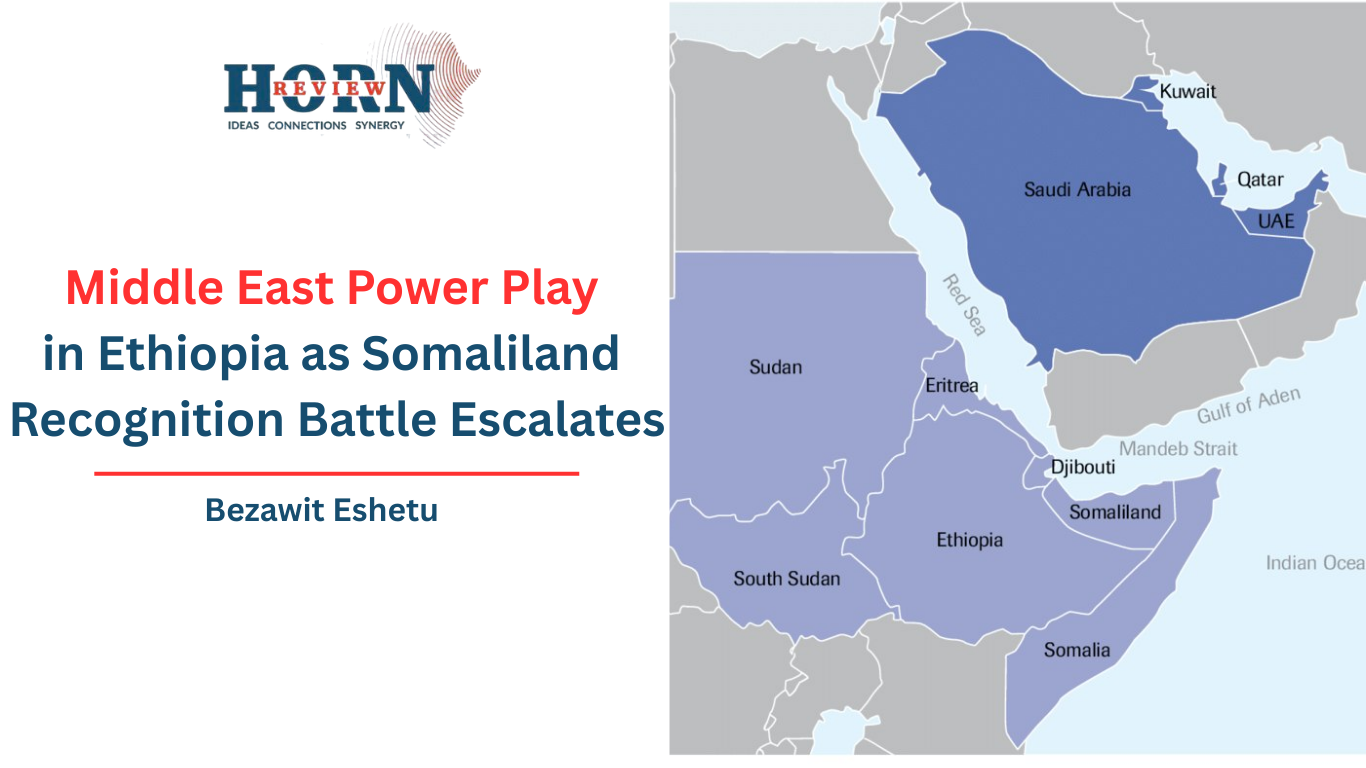
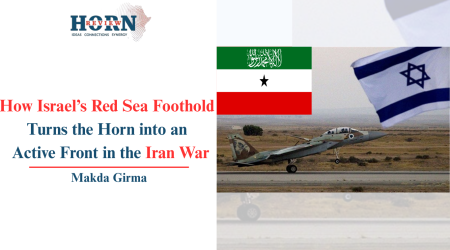
The visit of Israeli President Isaac Herzog to Addis Ababa on February 24-25, forms part of a concentrated sequence of diplomatic engagements in Ethiopia whose primary axis concerns the prospective recognition of Somaliland by Ethiopian authorities. Israel’s formal recognition of Somaliland on December 26, introduced the initial formal breach in the usual international stance that had treated the territory’s de facto independence since 1991 as incompatible with Somalia’s territorial integrity.
To grasp the full pattern of this high-stakes tug-of-war, each power’s engagement must be examined in turn, revealing how India and Israel are steadily pulling Ethiopia toward the Somaliland-recognition axis, while Saudi Arabia and Turkey, visibly anxious to defend their Red Sea leverage, have responded with layered urgency to keep Addis Ababa locked in the Somalia-unity camp.
India’s December 16-17, 2025 visit by Prime Minister Narendra Modi was not routine diplomacy but the deliberate laying of strategic keystone. By elevating ties to a full strategic partnership, New Delhi explicitly endorsed Ethiopia’s quest for reliable maritime outlets and signaled willingness to deepen involvement at Berbera. The move embedded Ethiopia within India’s SAGAR vision of Indian Ocean connectivity, creating a counterweight to Chinese and single-power dependencies while quietly aligning Addis Ababa with the emerging Israel-UAE-Indo axis. It established the pro-recognition pole that later visitors would have to contest.
Saudi Arabia, visibly anxious to prevent any consolidation of the 2024 Berbera memorandum, orchestrated a rapid succession of high-level contacts. First it hosted Ethiopian Foreign Minister Gedion Timothewos in Riyadh in early February; then Prince Faisal bin Farhan travelled to Addis Ababa on 11 February; and finally deputy Foreign Minister Waleed Elkhereiji returned to the Ethiopian capital on 23 February. This back-and-forth pattern reveals Riyadh’s acute concern: Ethiopian recognition would entrench an Israeli-Emirati security presence at a port commanding the southern Gulf of Aden, directly threatening Saudi leverage over Red Sea transit and its preferred Somalia-unity framework. Each visit layered economic incentives and security assurances to keep Addis Ababa anchored in the status-quo camp.
Turkey’s response was blunter and more public. On 17 February President Recep Tayyip Erdogan arrived for a full official visit and, standing beside Prime Minister Abiy Ahmed, asserted that Somaliland recognition “would benefit nobody” and risked turning the Horn into a battlefield for foreign powers, language widely read as a direct warning. The intervention aimed to constrain Ethiopian options, safeguard Ankara’s extensive defense and reconstruction footprint in Mogadishu, and prevent any shift that would diminish Turkish influence once an Israeli-Emirati foothold at Berbera became irreversible. It underscored Ankara’s determination to treat the Somaliland file as an existential red line.
This intense Saudi-Turkish diplomatic flurry is driven by the high stakes of the 2024 memorandum of understanding. That memorandum had already linked commercial and potential naval access for Ethiopia to steps toward recognition; additional recognitions by Ethiopia, the UAE (through its established DP World concession at Berbera), India (via deepened strategic coordination established during the December 2025 Modi visit), or South Sudan would institutionalize the arrangement and raise the threshold for reversal.
Saudi and Turkish diplomacy in this period operates from a calculation centered on the operational implications of an entrenched Israeli-Emirati presence at Berbera. The port’s position on the southern Gulf of Aden provides direct adjacency to the Bab el-Mandeb corridor, which accounts for a significant volume of global maritime traffic. Emirati infrastructure upgrades have enhanced commercial throughput, while formalized Israeli security arrangements would add layered monitoring and rapid-response capacities across adjacent sea lanes.
For Turkey, this configuration constrains the utility of its defense arrangements with the Somali federal government, including the training facility in Mogadishu and associated naval logistics options. For Saudi Arabia, it introduces an alternative security framework aligned with the Abraham Accords that functions outside Saudi-led Gulf Cooperation Council coordination mechanisms. Both actors therefore frame Ethiopian recognition as the decisive variable that would embed these capabilities and shift leverage over Red Sea transit.
The Somaliland dimension also intersects directly with Ethiopia’s relationship with Eritrea, where divergent external alignments intensify existing frictions over maritime access and border security frictions that echo the broader diplomatic contest over Somaliland recognition, as powers like Saudi Arabia and Turkey seek to preserve Somali unity while Israel and India push for shifts that align with their anti-Iranian and diversified security networks. Eritrea has pursued closer operational ties with Iranian entities, evidenced by documented patterns of Iranian-linked cargo flights and drone deliveries reported in late 2025 amid heightened Ethio-Eritrean tensions, along with periodic logistical support at Assab and Massawa ports.
These patterns not only position Eritrea within a network capable of supplying asymmetric capabilities such as drones, intelligence, or materiel in any renewed confrontation but also heighten the stakes for Ethiopia’s maritime ambitions, which form a critical undercurrent in the ongoing tug-of-war between pro- and anti-recognition camps. Israel, by contrast, maintains longstanding military and intelligence cooperation with Ethiopia, rooted in shared interests in countering Iranian regional networks and diversifying away from dependencies on single external partners. This stance complements the Abraham Accords-aligned push for Somaliland recognition, as Israeli policy explicitly treats both Iranian and Turkish influence structures as adversarial, further aligning it with Ethiopia’s efforts to secure alternative outlets amid opposition from Riyadh and Ankara.
Ethiopia’s strategic calculus assigns priority to Assab as the core, long-term objective for restored maritime sovereignty, reflecting its historical function as Ethiopia’s primary Red Sea outlet prior to Eritrea’s 1993 secession and its alignment with Ethiopia’s demographic scale, economic imperatives, and stated existential requirements for direct sea access. Official Ethiopian positions frame this pursuit as irreversible and grounded in legal, historical, and developmental rights, pursued through negotiation where possible but not contingent on external mediation outcomes.
In this context, the Somaliland-Berbera arrangement serves strictly as a diversification mechanism: it provides an immediate, parallel corridor on the Gulf of Aden that reduces short-term exposure to Djiboutian or Eritrean dependencies while Assab negotiations proceed on their separate track. This dual-track orientation persists independently of whether Somaliland recognition advances; Ethiopian policy treats Berbera as supplementary access rather than a substitute for Assab, ensuring that demographic and economic pressures continue to drive claims on the Eritrean port regardless of developments at Berbera, even as external actors like Saudi Arabia and Turkey intensify efforts to block recognition and maintain leverage over Red Sea dynamics.
In this configuration, any escalation of Ethio-Eritrean hostilities carries a high probability of internationalization, extending beyond a localized border or port dispute into a broader proxy arena for Middle Eastern middle-power rivalries a scenario that directly amplifies the core tensions surrounding Somaliland recognition, where shifts in Ethiopian alignments could tip the balance toward Israel-India-UAE networks or reinforce Saudi-Turkish dominance.
Ethiopian emphasis on Assab, paired with potential Israeli-Emirati support at Berbera, would establish complementary nodes across the Gulf of Aden, with Assab functioning as an Iranian-aligned western-shore logistical point and Berbera as a stabilized counter-presence for maritime domain awareness thereby transforming the Horn into an extension of the very rivalries that Herzog’s visit and the preceding diplomatic flurry aim to navigate.
Saudi Arabia and Turkey, already aligned against Somaliland recognition to preserve Somali unity and limit Emirati-Israeli expansion, would face pressure to calibrate responses that could include enhanced support for Eritrean or Somali actors, thereby channeling the conflict through their respective networks. The result would transform the Horn from a peripheral theater into an active extension of Middle Eastern competitions, where Ethiopian demographic and economic weight, Eritrean coastal control, and external basing arrangements at Assab and Berbera determine access to critical chokepoints.
Thus, Herzog’s visit constitutes one calibration point in this process, where the disposition of deep-water facilities at Berbera shapes the distribution of influence across the Red Sea and Horn for the medium term. As such, it underscores Ethiopia’s emergence as the indispensable linchpin in the Horn of Africa’s geopolitical reconfiguration: a nation of more than 120 million people, with commanding economic potential and a location across the Red Sea, Gulf of Aden, and Nile Basin, that every external actor now courts to secure maritime chokepoints and regional stability.
By Bezawit Eshetu, Researcher, Horn Review