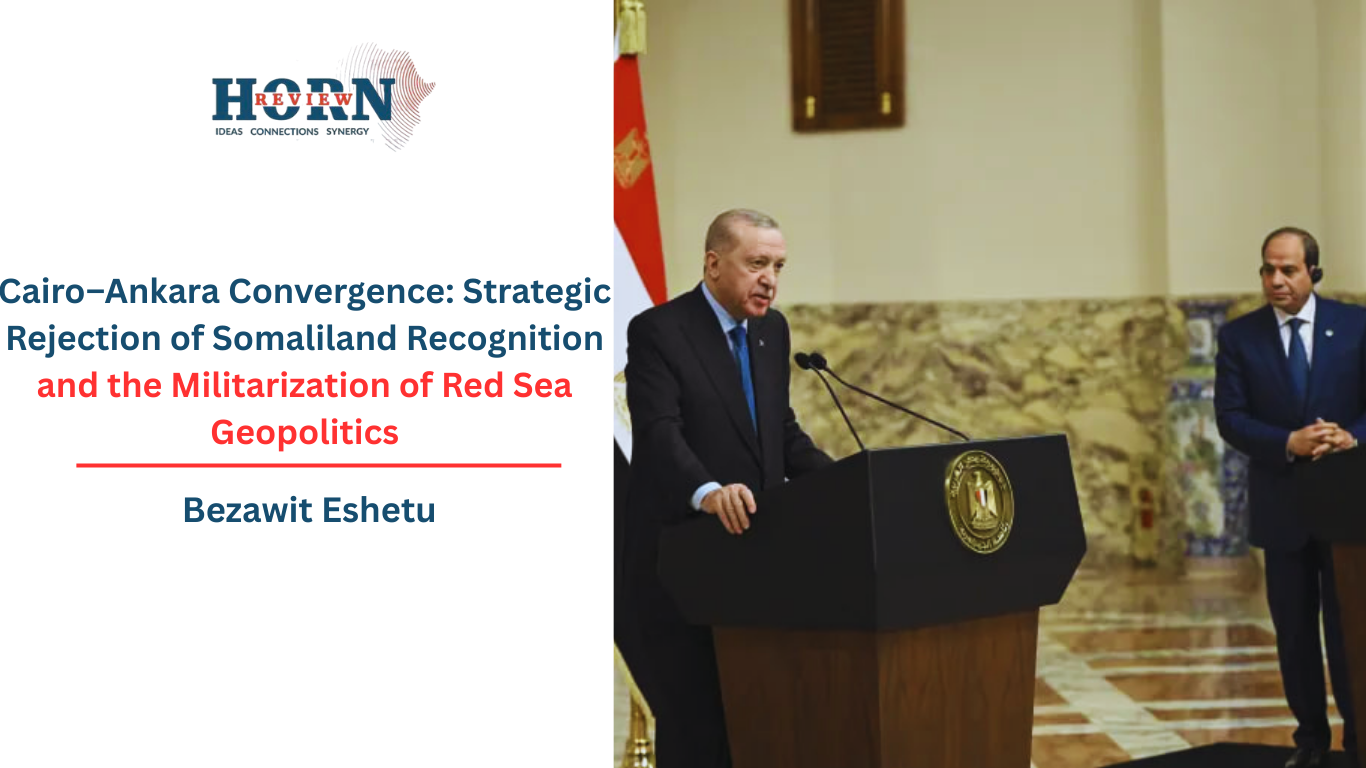
At the Cairo summit in 2026 President Recep Tayyip Erdogan tore into Israel’s decision to recognize Somaliland, condemning it as a deliberate outrage to Somali sovereignty and a calculated bid to install a rival southern anchor at Berbera. Framing recognition as a strategic provocation that weaponizes law to reshape control of the Gulf of Aden, he cast Turkey, alongside Egypt, as the primary defender of Somalia’s territorial integrity and signaled that diplomatic rebuke would be matched by a hardened security posture to dull Israeli-Emirati encroachment.
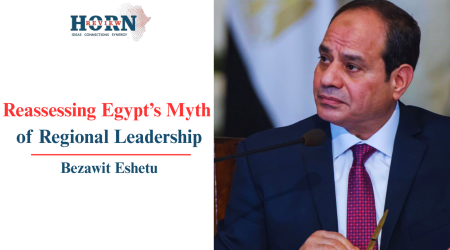
By positioning themselves as the primary defenders of Somali territorial integrity in the wake of Israel’s recognition of Somaliland, Ankara and Cairo have effectively weaponized international law to contest the establishment of a rival southern anchor in Berbera. This strategic posture seeks to prevent the transformation of the Gulf of Aden into a landscape where Israeli and Emirati intelligence and logistics facilities can monitor and influence the maritime traffic essential to the economic survival of the Suez Canal and Turkey’s broader African ambitions.
The decline of Turkish-Israeli relations provides essential context for the intensity of this response. Once strategic partners from the 1960s to the early 2000s, with deep military cooperation, intelligence sharing, and thriving trade, the relationship collapsed after the 2010 Mavi Marmara incident, successive Gaza wars, and Erdogan’s outspoken pro-Palestinian positions. Post-October 2023, Ankara imposed a full trade embargo, restricted Israeli use of its airspace, hosted Hamas leadership, and cast itself as Jerusalem’s primary ideological opponent. Even following the 2025 Gaza ceasefire, tensions endured, limiting any reconciliation.
Israel’s late-2025 recognition of Somaliland is widely viewed in Ankara as deliberate retaliation: a targeted strike at Turkey’s extensive Somalia portfolio, including the TURKSOM base, port developments, and prospective offshore energy resources. This move has reshaped the political setting, pushing Turkey to deepen its alignment with Egypt, Saudi Arabia, and Qatar into a cohesive axis countering Israeli-Emirati influence and accelerating the militarization of the Horn as a proxy arena.
The convergence of Turkish and Egyptian interests stems primarily from a shared imperative for strategic depth and the safeguarding of vital economic lifelines. For Egypt, maintaining the Suez Canal’s dominance is essential to national financial stability, as transit fees constitute a substantial portion of foreign-exchange earnings. Periods of Red Sea instability have starkly illustrated this vulnerability, with sharp declines in receipts exacerbating external imbalance.
Meanwhile, Ethiopia’s efforts to gain Red Sea access, highlighted by a January 2024 memorandum of understanding with Somaliland that, if enacted, would provide commercial and naval rights to the Berbera port, pose an emerging competitive threat. Over time, this could diminish Egypt’s control over maritime routes and negotiating power, though the MoU’s execution remains contentious, fiercely opposed by Somalia and other regional players.
Currently, Ethiopia relies heavily on the Port of Djibouti for approximately 95% of its international trade, paying between $1.5 billion and $2.8 billion annually in fees, which underscores its landlocked vulnerability. However, Djibouti’s growing ties with Egypt, including recent agreements on port development, logistics, and renewable energy signed in December 2025, make it susceptible to Cairo’s influence, potentially allowing Egypt to exert indirect pressure on Ethiopian trade flows.
This dynamic fuel Egypt’s paranoia over a containment strategy aimed at isolating Ethiopia and denying it independent Red Sea access, as evidenced by Cairo’s parallel port upgrade deals in Eritrea and Djibouti to encircle and constrain Addis Ababa amid the Nile dispute. Yet, if Somaliland gains broader international recognition and Ethiopia operationalizes Berbera as an alternative corridor, this strategy could unravel, heightening Cairo’s anxiety by eroding its leverage and exposing Suez revenues to further geopolitical shocks from a more diversified Ethiopian maritime posture. Compounded by Ethiopia’s bold regional stance and the protracted Nile River dispute over the Grand Ethiopian Renaissance Dam, these factors hinder Cairo’s capacity to shield Suez revenues from geopolitical disruptions
Turkey, conversely, views a unified federal Somalia as the essential platform for its most expansive African power projection, encompassing the TURKSOM training facility, lucrative port management contracts, and offshore energy exploration. Consequently, the rhetoric of Somali sovereignty serves as a convenient legal framework for both powers to secure forward positions that afford them leverage over global trade routes, thereby denying their regional competitors a functional monopoly over the littoral geography of the Horn.
This pursuit of leverage is operationalized through a defense pact that emphasizes intelligence sharing and sophisticated defense production, yet this very militarization introduces a destabilizing variable into an already fractured Somali landscape. History suggests that the influx of advanced materiel into environments characterized by weak central governance inevitably leads to leakage, where weaponry intended for federal forces migrates into the hands of clan militias and regional warlords.
This systemic failure to contain military hardware is not merely a logistical oversight but a structural consequence of treating a sovereign state as a tactical vacuum. As Turkey and Egypt escalate their military footprint to offset the Emirati presence in Berbera, they inadvertently subsidize the fragmentation of the very state they claim to be consolidating, creating a proliferation of arms that challenges the long-term viability of their own strategic investments.
The consequences of this military escalation are increasingly visible in the heightened instability across the Gulf of Aden. While direct operational links between Yemen’s Houthis and Somalia’s al-Shabaab remain opportunistic rather than formalized, the spread of weapons and the persistence of ungoverned spaces create fertile ground for transactional exchanges in smuggling, technology, and tactics.
Both groups oppose elements of the Saudi-led order, and any cross-border arms flows risk amplifying maritime threats to the very shipping lanes these powers seek to safeguard. This dynamic underscore a deeper irony: external militarization intended to secure interests may instead empower non-state actors capable of disrupting the maritime security upon which Egypt’s fiscal health and Turkey’s regional returns depend.
Furthermore, the focus on external defense frameworks frequently ignores the internal sociological realities of Somalia, where clan-based realignments and local resource disputes remain the primary drivers of conflict. When middle powers prioritize forward positioning over genuine societal stabilization, they empower local spoilers who view external support as a resource to be exploited in narrow power struggles.
The lessons of previous proxy engagements in Libya and Yemen demonstrate that support intended to bolster a central authority often ends up emboldening factions that outlast their foreign sponsors. In the Somali context, this pattern risks entrenching a cycle of dependency and violence, where the federal government in Mogadishu gains short-term military capacity at the expense of the sustainable political reconciliation required to actually govern the territory.
Ultimately, the emergence of the Turkey-Egypt alignment reveals a structural irony in the pursuit of regional hegemony. While the bloc decries the secessionist precedent set by the Israel-Somaliland engagement, its own militarized response accelerates the conditions under which transnational networks and maritime disruption thrive.
The Red Sea has become an arena where accounts are settled under the banner of high principle, yet the realpolitik on display is fundamentally self-subverting. If the escalation of arms and the prioritization of rival-denial continue to succeed the goal of long-term regional governance, the resulting instability may render the entire landscape ungovernable. The very corridors of trade and energy that these powers seek to dominate are increasingly at risk of being neutralized by the unintended consequences of their own competitive strategies.
By Bezawit Eshetu, Researcher, Horn Review