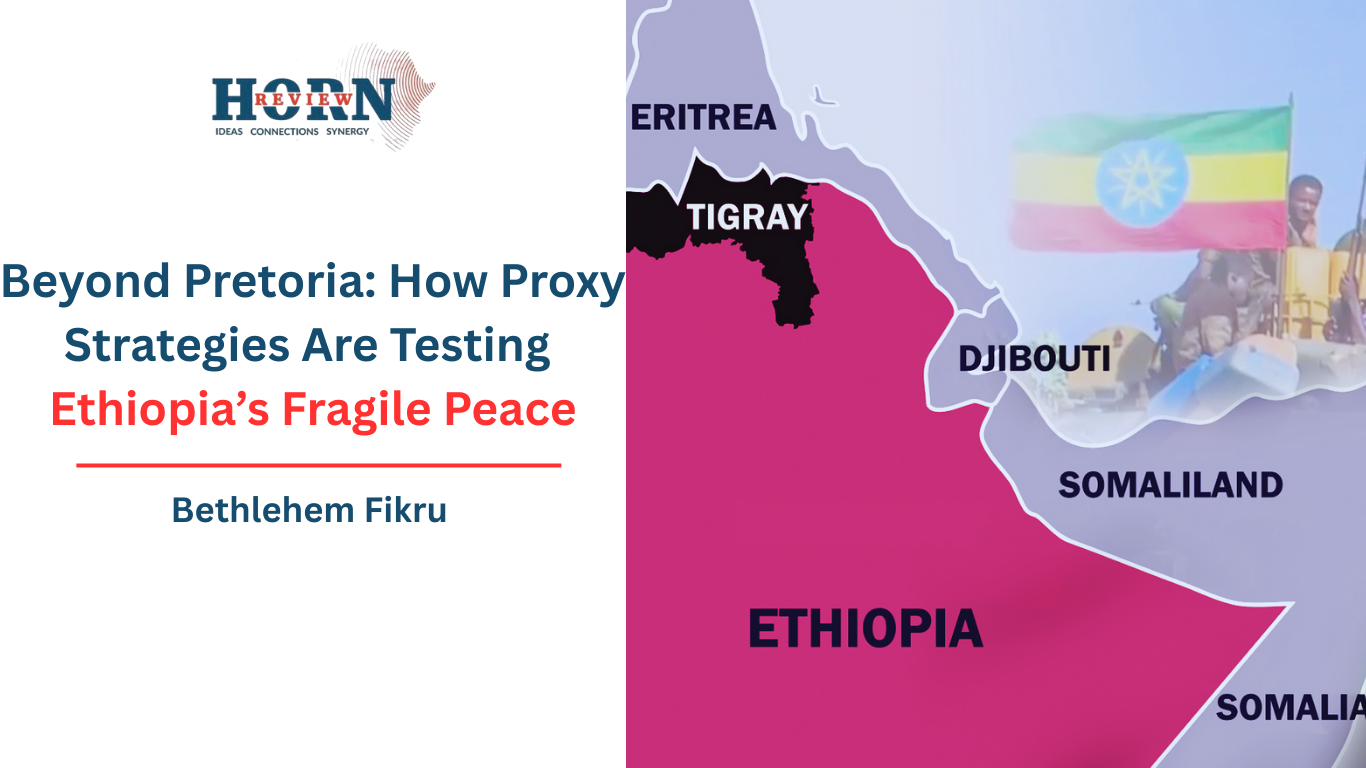
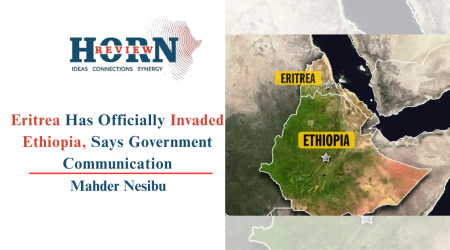
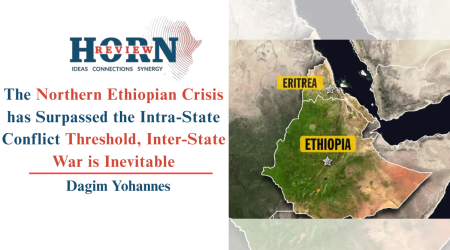
The current escalation in northern Ethiopia cannot be understood as a localized security incident. It reflects a broader pattern of external interference converging with internal political fragmentation, producing what increasingly resembles a regional proxy confrontation. Arms smuggling, coordinated proxy mobilization, and synchronized diplomatic signaling point to a deliberate strategy aimed at destabilizing Ethiopia from multiple vectors, with TPLF hardliners functioning as the internal enablers of that pressure.
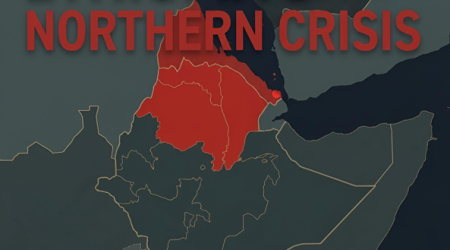
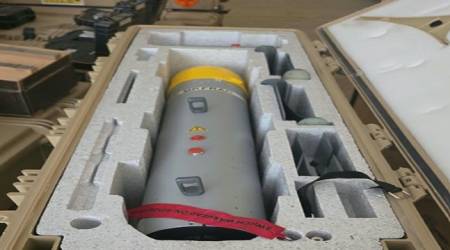
Central to this pattern are persistent allegations of arms flows through northern and northeastern corridors, particularly routes passing through Afar and along the Eritrean border. Federal security assessments have repeatedly flagged these channels as conduits for destabilization, linking them to organized smuggling networks rather than ad hoc trafficking. The reported movement of heavy weaponry through points such as Rama and Zalambesa is especially consequential, not merely because of the volume involved, but because of the timing. These flows coincide with renewed TPLF force mobilization in western Tigray, suggesting material preparation for escalation rather than defensive posturing.
This external supply dimension fundamentally alters the character of the conflict. Without sustained rearmament, the capacity of TPLF hardliners to conduct prolonged incursions or maintain pressure across multiple fronts would remain limited. The introduction of new weapons, however, provides the operational depth required to transform harassment into structured confrontation. In this sense, arms smuggling is not an auxiliary factor but a central mechanism through which instability is manufactured.
Egypt’s role in this environment operates through indirect but increasingly visible channels. Over the past several years, Cairo has significantly deepened its political and security alignment with Eritrea, marked by high-level visits, defense consultations, and convergent positions on Red Sea security. Parallel engagement with elements inside Sudan has further expanded this network. Taken together, these relationships form what many regional observers now describe as an emerging axis, united less by formal treaties than by shared strategic incentives.
Egypt’s incentive structure is well established. A fragmented and crisis-prone Ethiopia is less able to consolidate its position on Nile governance, less capable of projecting influence across the Red Sea, and more vulnerable to external pressure. Escalation through open confrontation is widely viewed as inefficient, leading actors to favor indirect methods of exerting pressure.. Within this framework, indirect support channeled through Eritrea and Sudanese intermediaries becomes a tool of strategic leverage rather than an act of open hostility.
Eritrea’s role is more operational and immediate. Asmara is consistently identified as the primary facilitator of proxy activity, providing transit, logistics, and coordination while avoiding formal engagement. The logic is straightforward. Proxy warfare allows Eritrea to weaken Ethiopia and constrain Tigrayan autonomy simultaneously, without exposing itself to the costs of direct war. Preventing Ethiopia’s regional consolidation, particularly regarding sea access and post-war normalization, remains a core objective. Using Tigray as an indirect battlefield serves that purpose efficiently.They are looking for an opportunity to achieve their dream of crushing Tigray and weakening Ethiopia. The second beneficiary is Egypt.
These external dynamics intersect with renewed instability in contested areas, particularly in the Welkait–Humera corridor. Accusations of TPLF incursions and force buildups in this area are not isolated claims; they are part of a sustained pattern documented in official Ethiopian communications and reinforced by the sequencing of events on the ground. The movement of forces toward contested territories, combined with external rearmament, signals intent to revise realities through force rather than negotiation. This directly undermines the foundations of the 2022 Pretoria Agreement, which rested on demilitarization and political normalization.
An additional and particularly destabilizing element in this evolving landscape is the activation of Army 70. This Tigrayan military force, trained on Sudanese soil and operating largely outside the direct command structure in Mekelle, represents a new generation of proxy actors. Its emergence reflects the outsourcing of confrontation to semi-autonomous groups whose incentives are shaped as much by external patronage as by local political goals.
Army 70’s alignment with the Sudanese Armed Forces under General Abdel Fattah al-Burhan further elevates its strategic significance. Participation in Sudan’s civil war in exchange for training, logistics, and sanctuary creates a mutually reinforcing relationship. Army 70, Sudanese territory offers a staging ground for a potential western thrust toward Humera and the Metema corridor. This configuration effectively creates a western pincer, complementing eastern mobilizations inside Tigray.
The implications of this convergence are difficult to overstate. What begins as localized friction in northern Ethiopia risks hardening into a multi-front proxy confrontation involving actors whose primary interests lie outside Ethiopia itself. The federal government’s response, including the suspension of civilian flights and tighter control over ground logistics, reflects an attempt to contain these risks and prevent civilian exposure to military miscalculation. These measures are defensive, not punitive, and are consistent with a strategy aimed at preventing escalation rather than provoking it.
The beneficiaries of this trajectory are increasingly clear. Eritrea gains strategic leverage and regional disruption without direct engagement. Egypt benefits from an Ethiopia preoccupied with internal security rather than regional leadership. Political elites insulated from the battlefield retain influence through crisis rather than consent. The costs, however, fall elsewhere: on forcibly recruited young Tigrayans, on communities denied recovery, and on a country repeatedly pulled back from stabilization.
The main victim, however, is the young Tigray militant who was forcibly recruited. Next is the entire Tigray community. In short, Ethiopia. It is a sad situation that such a high price is being paid to the old, corrupt robbers and criminals who have sent their children to America and Europe. The people of Tigray want change and peace.
The primary burden of this conflict is borne by Tigrayan youth, many of whom face involuntary mobilization, and by the broader Tigrayan community. Ultimately, this represents a significant loss for Ethiopia as a whole. It is a distressing reality that national stability is being compromised by a leadership cadre whose interests appear detached from the local population. There is a clear and urgent desire within Tigray for a transition toward sustainable peace and institutional reform.
Taken together, arms smuggling, proxy mobilization, and coordinated escalation threats constitute a deliberate attempt to disturb Ethiopia’s internal peace. The pattern is consistent, the timing aligned, and the strategic motives transparent. Accountability, therefore, is not optional. It is a prerequisite for preventing the transformation of a fragile peace into a regionalized conflict whose consequences would extend far beyond northern Ethiopia.
This is not Tigray’s fight. It is the consequence of a political choice to substitute conflict for renewal, enabled by external actors who profit from instability while remaining distant from its costs.
By Bethlehem Fikru, Researcher, Horn Review