Earlier this month, Al-Jazeera, through its Arabic platform and citing Sudanese Armed Forces (SAF) sources, reported that the SAF believes the Rapid Support Forces (RSF) are operating a military base inside Ethiopia’s Benishangul-Gumuz region. The report carried an explicit threat to open a new front against the alleged base, elevating an unverified claim into a direct national security concern for Ethiopia. The allegation was presented without independent verification, satellite imagery, or on-the-ground corroboration. Its relevance lies in its timing, its framing, and the regional environment in which it has emerged.
The accusation has surfaced during a period of sustained RSF battlefield momentum. RSF forces have expanded their control across large parts of Darfur, capturing El-Fashir and seizing the oil-rich Heglig area. Subsequent reporting points to RSF movements toward Kordofan, indicating an expansion beyond western theatres into central Sudan. These advances are altering the military balance and placing the SAF under mounting operational pressure, intensifying both strategic uncertainty and political strain within Port Sudan.
As battlefield conditions have deteriorated, the SAF has widened the political and strategic framing of the war. Ethiopia has entered this framing as a regional variable rather than a belligerent, with accusations functioning as a means of externalizing pressure and recasting the conflict within a broader regional security narrative. The allegation concerning Benishangul-Gumuz has appeared during this phase of heightened pressure, as the SAF seeks to reposition itself amid shifting realities on the ground.
Alongside these developments, diplomatic activity has intensified. Eritrean President Isaias Afewerki, a key SAF ally, undertook a series of regional visits, traveling first to Egypt, then to Port Sudan for meetings with SAF leadership, before continuing to Riyadh for discussions with Saudi Crown Prince Mohammed bin Salman. These engagements preceded similar visits by SAF commander Abdel Fattah al-Burhan, who later traveled to Riyadh and Cairo. The sequence places Eritrea at the center of coordination efforts at a moment when the SAF is seeking external backing and strategic reassurance.
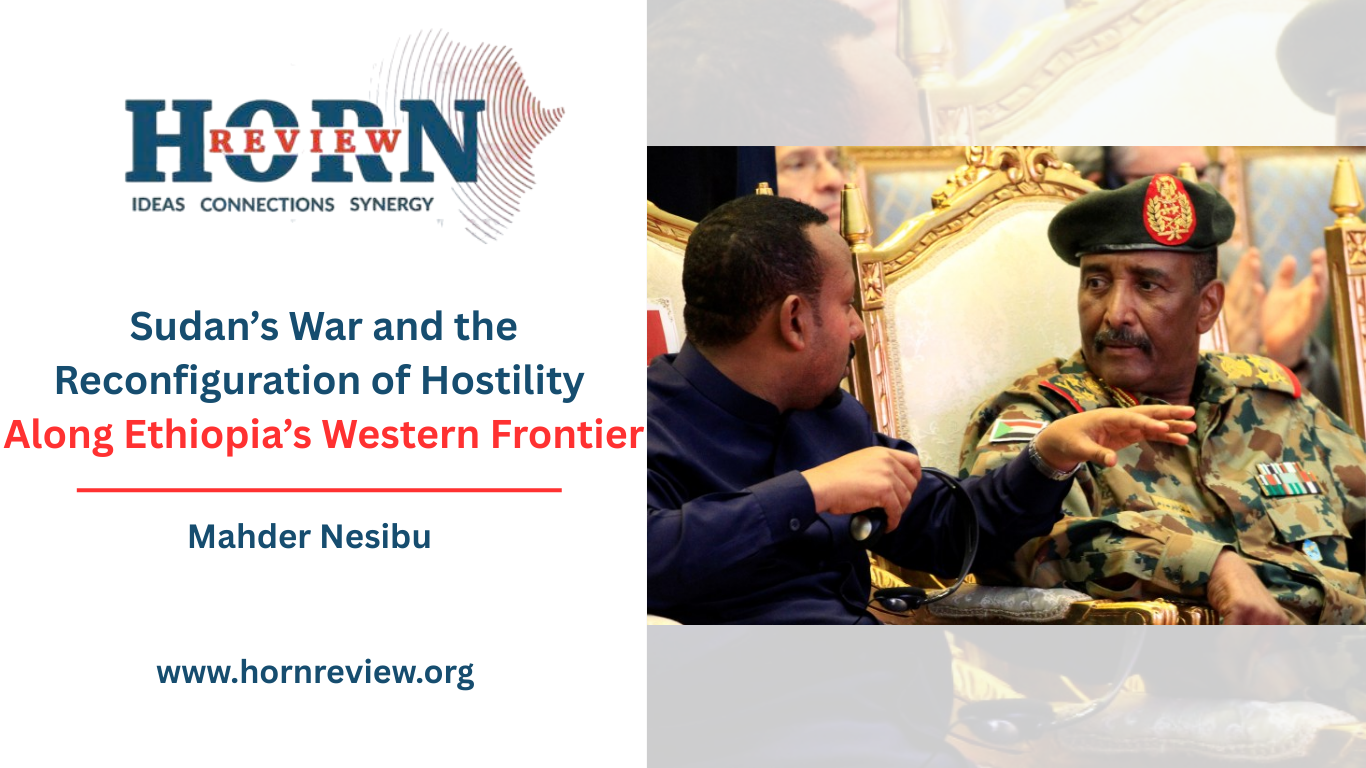
Before this phase, Ethiopia had attempted to position itself as a mediator. In the early months of the war, Prime Minister Abiy Ahmed personally pushed mediation efforts, reflecting Addis Ababa’s interest in preventing regional spillover. At that stage, battlefield dynamics suggested SAF superiority, shaping Port Sudan’s expectations and limiting receptivity to negotiated arrangements. As the conflict evolved, several developments complicated Ethiopia’s role. The SAF’s earlier forceful entry into Al-Fashaga had already intensified border tensions. Eritrea’s visible and extensive alignment with the SAF later altered the regional balance. Reports that TPLF fighters were participating in the conflict further strained relations between Addis Ababa and Port Sudan, eventually pushing Ethiopia to step back from active mediation.
Ethiopia’s neutrality increasingly frustrated Port Sudan’s leadership, which remained committed to a strategy of total victory over the RSF. That position diverged from conditions on the ground and from the assumptions underpinning Ethiopia’s mediation approach. Following the deterioration in relations, several diplomatic missions this year, including those led by Redwan Hussien and Getachew Reda, had attempted to preserve dialogue amid the growing rupture. These efforts produced limited results, reflecting the depth of mistrust and the hardening of positions.
Eritrea’s role has expanded well beyond diplomatic coordination. Eritrean authorities are reported to provide training to SAF forces, facilitate arms transfers, mobilize long-standing proxy networks, and deploy elements of the Eritrean Defence Forces into the conflict. Recent intelligence reports indicate that Eritrean Defence Forces (EDF) fighters have been injured while participating in combat operations alongside the Sudanese Armed Forces. This engagement is unfolding alongside Eritrea’s deepening tensions with Ethiopia and is taking shape within a broader regional strategy pursued by Asmara.
That strategy, commonly referred to as Tsimdo, has long been understood as an effort to exploit regional fractures. For some time, it was widely believed that the rift between Addis Ababa and Port Sudan was being leveraged by Asmara, alongside TPLF and Fano elements, to draw the SAF into a wider anti-Ethiopian alignment. The accusation regarding Benishangul-Gumuz has hardened these assumptions, with Eritrean support feeding into the increasingly antagonistic posture the SAF now holds toward Ethiopia.
Proxy activity has reinforced this trajectory. Earlier this year, militia figures associated with the Eastern Cohort issued direct threats against Ethiopia following engagements with Eritrean leadership. These statements have added another layer to the evolving security environment along Ethiopia’s periphery.
TPLF involvement has further complicated the landscape. It was reported previously that the SAF made use of TPLF fighters during earlier phases of the conflict. The TPLF has since entered a period of increasing friction with Addis Ababa. Sources now indicate that TPLF forces are receiving training from the Sudanese Army, with recent reporting suggesting that this training includes UAV operational instruction. These developments are adding further strain to Ethiopia’s security calculations along its western frontier.
Egypt’s role intersects with these dynamics through a distinct logic. Cairo’s approach focuses on integrating the SAF into a broader set of pressure points against Ethiopia. This strategy does not imply an intention to physically target the Grand Ethiopian Renaissance Dam. Instead, it embeds Sudan within a wider diplomatic, political, and security architecture aimed at constraining Ethiopian leverage. Within this context, Benishangul-Gumuz carries particular sensitivity for Ethiopia. The presence of the GERD in the region signals the level of risk Ethiopia faces as SAF hostility intensifies, rather than indicating a direct operational linkage between Cairo and Port Sudan.
Geography compounds these pressures. Benishangul-Gumuz, the Blue Nile corridor, and Al-Fashaga form an arc where Sudan’s internal conflict intersects with Ethiopia’s core security concerns. These areas combine proximity, strategic infrastructure, and unresolved historical tensions. As SAF rhetoric escalates and proxy activity expands, Ethiopia faces growing pressure to reinforce deterrence and prevent spillover across its western frontier.
The cumulative trajectory places Ethiopia in an increasingly constrained strategic space. SAF antagonism, shaped by Eritrean involvement and reinforced through Egyptian alignment, raises the likelihood that Ethiopia may be compelled to respond more assertively to safeguard its interests. Such a development would carry serious regional consequences. Drawing Ethiopia directly into the conflict would significantly expand the war’s geographic and political scope. Regional analysts and security experts continue to warn that Ethiopia’s involvement would accelerate fragmentation, deepen proxy warfare, and amplify the humanitarian and economic devastation already unfolding.
Sudan’s war has already demonstrated a strong tendency toward internationalization. Further escalation along Ethiopia’s western frontier would push the conflict into a far more dangerous phase, marked by limited mechanisms for containment and few credible pathways toward de-escalation.
By Mahder Nesibu, Researcher, Horn Review