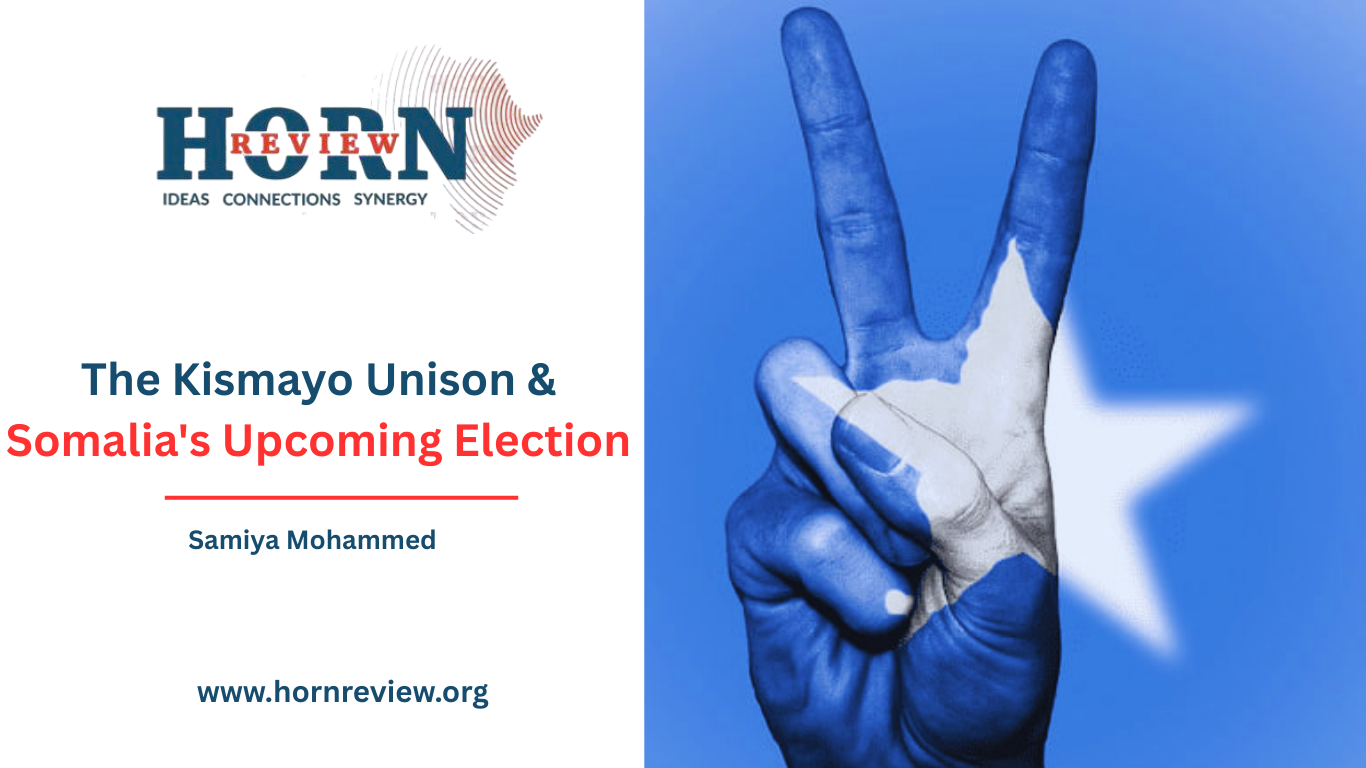
In the port city of Kismayo under the weight of tight security and al-Shabaab threat, a resultant gathering unfurl this mid-December. Former presidents, regional leaders, and opposition figures are not assembling to reject democracy however to sound an alarm against a dangerous charade. Their unified message to Mogadishu is to halt the heedless drive for universal suffrage elections by May 2026. This Kismayo meeting is not a rebellion against the principle of one person, one vote, it is a necessary intervention against a process designed to be neither free, fair, nor feasible, revealing a federal government more intent on consolidating power than cultivating genuine democracy.
The technical impossibility of credible direct elections in less than six months is overwhelming. The foundation simply does not exist. Nationwide biometric voter registration has never been conducted, with a just one million voters pre-registered during the last indirect election. There is no verified voter roll, no functional National Identification Authority, and no consensus on constituency boundaries. An independent electoral commission trusted by all federal and regional stakeholders remains a fiction. With the African Union mission, ATMIS, having departed, the security apparatus to protect over 7,000 hypothetical polling stations especially in vast areas under al-Shabaab influence is absent. A government that only began logistical discussions in August cannot credibly promise a transformational electoral exercise by May.
This sudden, inflexible insistence on direct voting after 55 years of clan-based indirect selection coincides with a deeply controversial constitutional review. The proposed amendments pushed aggressively by President Hassan Sheikh Mohamud’s administration seek to radically centralize power by abolishing the prime minister’s office and granting the president authority to appoint regional leaders. The timing is acutely suspicious creating a clear link between a rushed electoral calendar and a constitutional coup.
As leaders in Kismayo argue this is less about giving power to the people and more about stripping it from the federal member states potentially paving the way for unilateral term extensions under a new president dominated system.
Therefore, the critical question is not whether Somalia deserves democracy but what a real democratic election actually requires in a delicate, clan-based federation. The prerequisites are extensive and non negotiable. A completed, biometrically verified national voter register is a minimum 18-to-24-month undertaking, not a six-month checkbox. It must be preceded by a consensus based constitutional settlement that clarifies the boundaries of federalism and power-sharing. Any credible process demands an electoral commission formed through agreement between Mogadishu and the federal member states, not by unilateral decree. Security arrangements for a post-ATMIS environment must be realistic, and funding must be transparent and inclusive.
A truly progressive vision for Somalia must acknowledge a politically inconvenient truth, the 4.5 clan power-sharing system is not the enemy of democracy, but the operating system that has prevented total state collapse since 2000. It is an imperfect but functional mechanism for managing conflict in a society where state institutions are embryonic. Dismantling this framework overnight without a trusted, and alternative institutional plan in place is not progressive and it is dangerously reckless. International examples from Libya to Afghanistan demonstrate that rushed democratization without foundational institutions leads not to liberation, but to chaos and renewed conflict.
The opposition in Kismayo is often mischaracterized as regressive, but their stance is fundamentally pro-realistic. They are calling for the hard, unglamorous work of state-building that must precede a legitimate election. This includes finalizing the federal constitution, establishing professional and inclusive security forces, and building independent judicial and electoral bodies. These steps lack the political spectacle of a national election day, but they are the actual substance of democratic construction. Ignoring them in favor of symbolic voting is to prioritize form over substance.
By applauding Mogadishu’s democratic rhetoric while willfully ignoring the absence of enabling conditions, key partners risk becoming complicit in a destabilizing fraud. Support should be conditioned on demonstrable, inclusive progress on the prerequisites, not on hollow adherence to a politically convenient timeline. The goal must be a credible process, not a hastily organized event that will inevitably lack legitimacy and deepen the country’s fractures.
Somalia requires a sober postponement of the May 2026 deadline. This is not a defeat for democracy, but a pause to build it correctly. The interim period should be dedicated to a nationally owned roadmap developed in concert with federal member states, completing the constitutional review through genuine dialogue, and launching a technically sound voter registration drive. The alternative plowing ahead with a sham election will only produce a disputed result, cement centralization, and potentially trigger widespread conflict.
The gathering in Kismayo, therefore, constitutes a crucial defense of democratic principles against their theatrical appropriation. It is a stand for substance over slogan, for inclusion over imposition, and for realistic institution-building over magical thinking. The federal government’s current path, devoid of consensus and technical preparation, threatens to replace one imperfect system with something far worse, a centralized autocracy legitimized by a hollow electoral performance.
True democrats, both within Somalia and in the internationally, should recognize the Kismayo meeting for what it is, a necessary corrective. The choice is clear. One can either stand with a rushed process that consolidates power and sows the seeds of future instability, or stand for the patient, inclusive, and institutional work that makes democracy meaningful. If the world continues to mistake a slogan for democracy, it will be complicit in manufacturing Somalia’s next political crisis. The courageous call from Kismayo is to choose the harder, but only viable, road.
By Samiya Mohammed, Researcher, Horn Review