The year 2011 delivered a decisive dual shock to the Sudanese state. The first was the secession of South Sudan in July, which immediately deprived Khartoum of approximately three-quarters of its oil revenue. This loss precipitated a severe fiscal crisis for the ruling National Congress Party (NCP), contributing to hyperinflation and forcing the withdrawal of longstanding fuel and food subsidies.
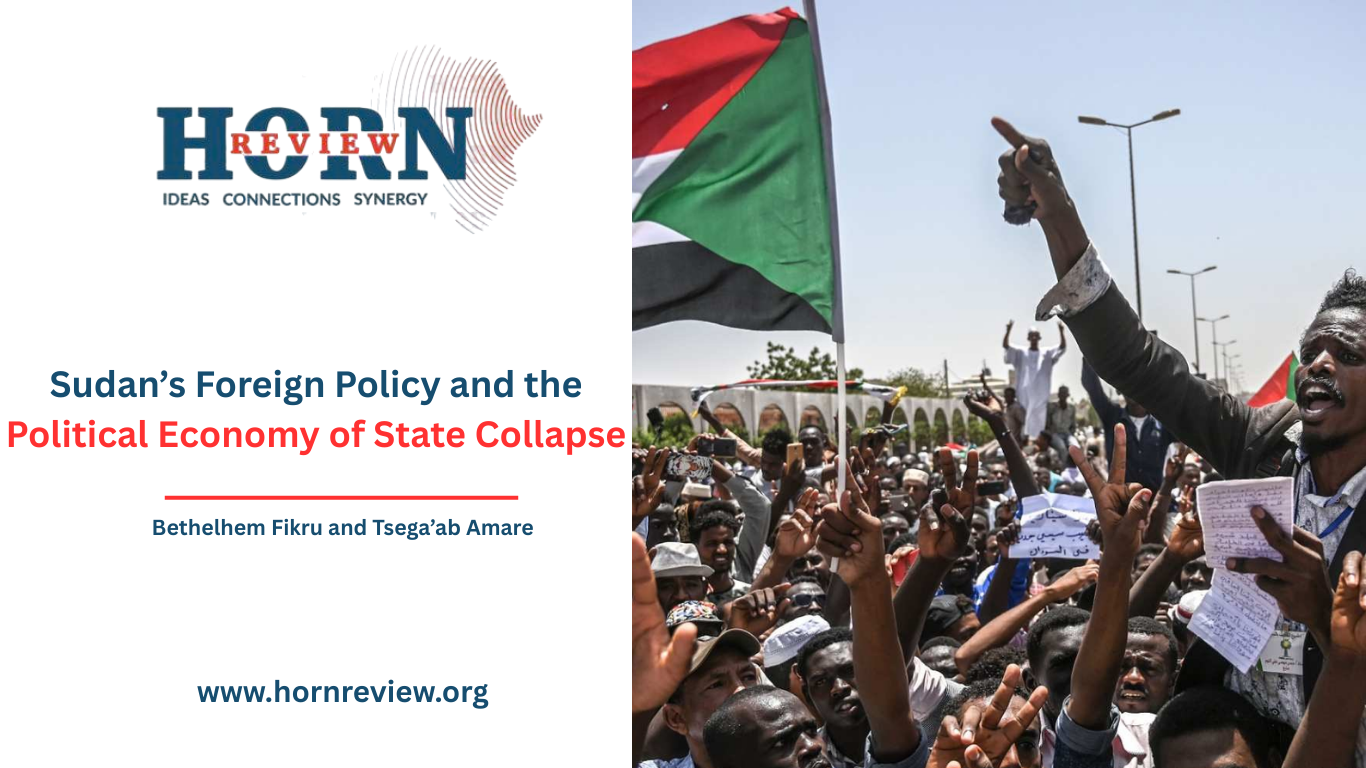
The second blow was the Arab Spring contagion, which provided a template and a narrative for popular dissent. The “nice phase” of revolution, the initial, hopeful, civilian-led outpouring against economic stagnation and political autocracy was instantly recognizable to Sudanese youth. When Bashir’s regime began implementing austerity measures, the urban populace, galvanized by the sights of popular uprisings in Tunis and Cairo, took to the streets. The demand, “The people want the fall of the regime,” echoing across the region, transformed localized economic grievance into a pan-Arab revolutionary demand.
Unlike in Egypt or Tunisia, Bashir’s security forces successfully crushed the early 2011–2013 protests. However, the revolutionary energy was not extinguished; it was merely deferred. The primary impact of the Arab Spring was not instant collapse, but the internal re-prioritization of the Bashir regime, setting a clear course for its eventual downfall.
Faced with a fiscal abyss and the specter of regional contagion, Bashir’s foreign policy structure underwent a marked transformation. The old ideological alliances, particularly with Iran and the Muslim Brotherhood axis, were suddenly deemed unaffordable and counterproductive.
The new geopolitical imperative was survival financing. This necessitated a decisive pivot to the Gulf states, specifically Saudi Arabia and the United Arab Emirates (UAE). These states, determined to roll back the influence of the Muslim Brotherhood and Iran in the wake of the Arab Spring, offered a lifeline that Khartoum desperately needed.
The most dramatic act of this pivot was Khartoum’s commitment of Sudanese troops, many drawn from the increasingly powerful paramilitary Rapid Support Forces (RSF), to the Saudi-led coalition in the Yemeni Civil War starting in 2015.This was the ultimate transactional foreign policy: in exchange for hard cash injections, subsidies, and vital diplomatic cover, Sudan sold its security capabilities.
This realignment effectively de-Islamized Sudan’s foreign policy and provided the resources needed to keep the military and security forces loyal. This shift was a strategic success for Bashir in the short term, securing the funds to buy time and suppress dissent, but it was a catastrophic failure for the integrity of the Sudanese state in the long term.
The Bashir regime’s survival strategy, framed by the chaos of the Arab Spring, introduced the fatal flaw that would ultimately lead to the civil war of 2023.
In his last years, Bashir consciously hollowed out the traditional state institutions including the ruling party and the regular SAF and privileged the Rapid Support Forces (RSF), led by Hemedti. This was a lesson learned from the Arab Spring: to survive, an autocrat must create a loyal, independent security force unencumbered by the old military elite.
The RSF’s Geopolitical Entrenchment: The RSF’s participation in Yemen and their direct financial relationship with Gulf states (particularly the UAE) transformed them from a militia into a geopolitically funded, parallel state security apparatus. Hemedti gained direct access to immense foreign wealth and sophisticated weaponry, bypassing the traditional state budget. The RSF became a powerful sub-state entity whose power was structurally derived from Sudan’s new, transactional foreign policy.
By allowing the security sector to secure independent revenue streams through external military contracts, Bashir successfully protected himself from the internal coup threat he feared, but he unintentionally created a Frankenstein’s monster, a dual-security structure (SAF vs. RSF) whose power was rooted in external relationships rather than internal cohesion.
The seeds of instability planted in 2011 blossomed in 2018. The sustained, peaceful street revolution of 2018–2019, organized by groups like the Forces for Freedom and Change (FFC), was the delayed arrival of the Arab Spring’s revolutionary moment.
Bashir’s eventual overthrow in April 2019 was a military coup, not a civilian victory, but it was forced by the revolutionary tide. This led to the Transitional Government, headed by the civilian economist Abdalla Hamdok, which represented the “nice phase” of the revolution, a fragile, internationally celebrated attempt to pivot Sudan toward democracy and stability.
The transitional foreign policy under Prime Minister Hamdok was designed to dismantle the transactional chaos inherited from the previous ruler, focusing urgently on two interwoven objectives: first, to Restore Legitimacy by successfully reintegrating Sudan into the Western financial system, which entailed securing vital debt relief and ending the decades of crippling international sanctions; and second, to Unify Foreign Policy by eliminating the damaging dual-track diplomacy that had emerged, where the civilian government sought engagement with the West while the military factions maintained separate, lucrative, and destabilizing ties with the Gulf state.
However, the Hamdok transition was fatally undermined by the structural instability left by Bashir. The shared Sovereignty Council was a pact between the civilian FFC and the two military rivals, the SAF and the RSF, both of whom had grown immensely powerful through their external, Gulf-backed revenue streams. The transition was doomed because the forces of the ancien régime (the security sector) retained the power resources that the revolution had sought to dissolve.
Sudan’s experience from 2011 onward illustrates the complex legacy of the Arab Spring in fragile political systems. While mass mobilization can inspire democratic aspirations, it can also accelerate elite strategies that entrench fragmentation when survival becomes the overriding objective.
The coexistence of two heavily armed, externally connected military structures effectively elevated the RSF and SAF into quasi-sovereign actors, diminishing the capacity of civilian authorities to assert control. This duality, rooted in the political economy of regime survival, became a central driver of the conflict that erupted in 2023.
As one of the key factors perpetuating the conflict, this all traces back to Bashir’s shortsighted maneuvers, which prioritized regime survival over state integrity. As the 2023 war rages on, displacing millions and drawing in global proxies, Sudan’s path underscores a timeless truth: true stability demands dismantling the architectures of autocracy, not merely deferring their collapse. In reflecting on this history, there lies hope for renewal through civilian-led reconciliation and regional de-escalation, to forge a unified future from the fragments of the past.
By Bethelhem Fikru and Tsega’ab Amare, Researcher, Horn Review