Turkey has entered a new phase of military involvement in Somalia with the deployment of three F-16 fighter jets to Mogadishu alongside helicopters and the first confirmed direct participation of Turkish ground forces in combat against Al-Shabaab. These locomotion comprise the most forward leaning Turkish military posture in Somalia to date and form a decisive shift away from Ankara’s abiding emphasis on training, advisory roles and indirect support toward overt combat participation and airpower projection. Taken together, the developments spot a qualitative escalation that carries implications for Somalia’s counter insurgency campaign, Turkey’s regional strategy and the evolving geopolitics of the Horn.
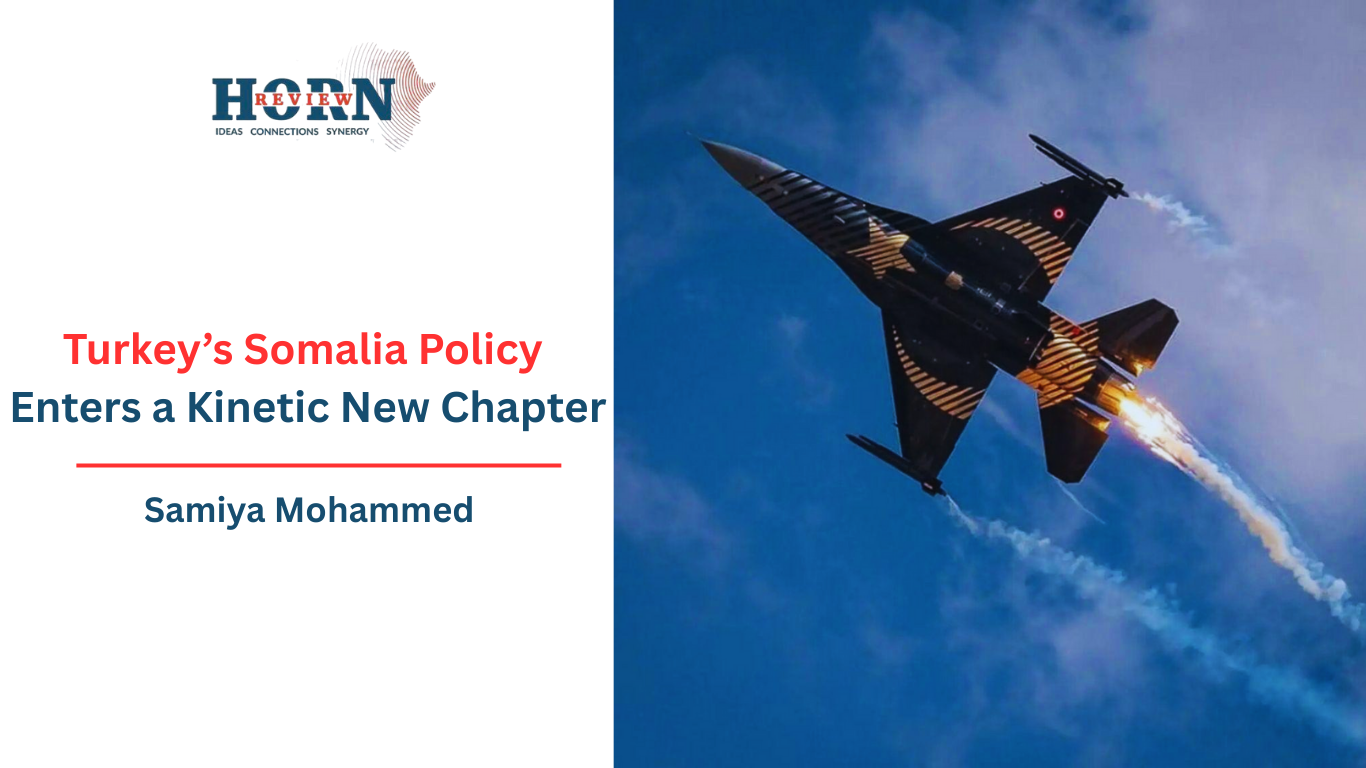
The three Turkish F-16s landed at Aden Adde International Airport in Mogadishu on January 28, according to Somali government officials accompanied by two military helicopters intended to support operations against Al-Shabaab across southern and central Somalia. While there has been no confirmation of active airstrikes conducted by the jets their presence alone introduces a new operational dimension. For the first time Turkey has forward deployed manned combat aircraft into Somalia expanding its role beyond drones, transport aviation and advisory support.
The timing of the deployment is particularly spot on. The expansion extended within roughly one month of Israel’s December recognition of Somaliland which was the first such recognition by a United Nations member state. That decision was condemned by Somalia’s federal government and rejected by a broad coalition that included Turkey, Egypt, the Arab League, and the Organization of Islamic Cooperation all of which framed it as a violation of Somalia’s sovereignty and territorial integrity. The compressed timeline between that diplomatic rupture and Turkey’s heightened military posture suggests an acceleration rather than a coincidental overlap reinforcing interpretations that Ankara is responding not only to battlefield requirements but also to shifting geopolitical pressures.
The fighter jet deployment follows and is closely linked to Turkey’s first documented direct ground engagement against Al-Shabaab earlier in the same week. In the Middle Shabelle region near the Jabad-Godane area approximately twenty kilo meters from the Somali National Army base in Qorilow, Somali forces initiated a sustained artillery bombardment around midnight on Sunday targeting entrenched Al-Shabaab positions. The shelling continued throughout the morning and into midday Monday after which Somali ground forces launched a coordinated assault. The operation was spearheaded by the elite Gorgor special forces but was directly supported by Turkish ground troops and officers who had been stationed at the Qorilow base in preceding days.
According to local sources dozens of Turkish soldiers equipped with armoured vehicles and advanced weaponry participated in the three hour ground battle. This engagement shows a historic turning point in Turkey’s Somalia policy. Until now Ankara had maintained a clear operational boundary limiting its military role to training, equipping, intelligence sharing and indirect support including the use of armed drones. While Turkish personnel have long operated in proximity to Somali forces particularly through Camp TURKSOM in Mogadishu they had avoided confirmed participation in frontline combat. The Middle Shabelle operation effectively ends that distinction and places Turkey directly alongside Somali forces in kinetic engagements against Al-Shabaab.
From a military perspective the introduction of Turkish F-16s into Somalia’s airspace constitutes a qualitative leap in capability. While Turkey has previously employed unmanned aerial systems in coordination with Somali forces manned fighter aircraft offer greater flexibility, payload capacity and responsiveness. Their presence enhances the potential for close air support, rapid reaction to emerging threats and deterrence against large scale militant movements. Even in the absence of confirmed strike missions the jets significantly alter the operational arithmetic for Al-Shabaab by increasing uncertainty and constraining locomotion.
The January escalation builds on this foundation but moves decisively beyond it. Where Turkey once emphasized capacity building and Somali ownership of combat operations which is now visibly embedded in the conflict. This shift carries both potential benefits and significant risks. On the one hand closer operational integration and enhanced firepower could improve the effectiveness of campaigns particularly in regions such as Middle Shabelle where Al-Shabaab has demonstrated resilience. On the other hand direct foreign combat involvement risks becoming a focal point for militant propaganda and could expose Turkish personnel and interests to retaliatory attacks.
The dimension of Turkey’s actions is equally significant. Ankara has been an outspoken opponent of Somaliland’s secessionist road and has consistently affirmed its support for Somalia’s territorial integrity. In this light the deployment of F-16s and the willingness to engage directly on the ground can be interpreted as a forceful reaffirmation of that stance. The timing and visibility of the escalation as a multidirectional signal to Israel and any potential followers that Ankara will resist moves perceived as undermining Somali unity to Somaliland that external recognition will be contested not only diplomatically but through enhanced support for the federal government and to regional actors, that Turkey intends to remain a decisive player in Horn of Africa security.
That said Turkey’s actions are unlikely to halt Somaliland’s political momentum on their own. Recognitions are shaped by broader international arithmetic and military developments in southern and central Somalia may have limited direct impact on Somaliland’s internal governance. Nonetheless Ankara’s escalation shows its determination to shape outcomes and to contest influences in the region.
For Somalia the implications are mixed but potentially consequential. Enhanced Turkish support may strengthen federal forces and improve battlefield performance against Al-Shabaab particularly if airpower and ground coordination are effectively integrated. At the same time Somali authorities must carefully manage the optics and political implications of foreign troops fighting on Somali soil. Maintaining the narrative of Somali leadership and sovereignty will be essential to preserving domestic legitimacy and preventing backlash.
Ultimately the deployment of Turkish F-16s to Mogadishu and the first confirmed direct combat engagement by Turkish troops mark a clear inflection point. Turkey has crossed from indirect partner to overt combat participant reshaping both the military balance on the ground and the political signalling surrounding Somalia’s conflict. Whether this escalation contributes to meaningful degradation of Al-Shabaab, deters further fragmentation of Somalia or inadvertently heightens regional tensions will depend on how carefully Ankara calibrates its involvement and how the coming months unfold. What is clear is that Turkey has demonstrated a readiness to move decisively showing that Somalia and the broader Horn of Africa now occupies an even more central place.
By Samiya Mohammed, Researcher, Horn Review