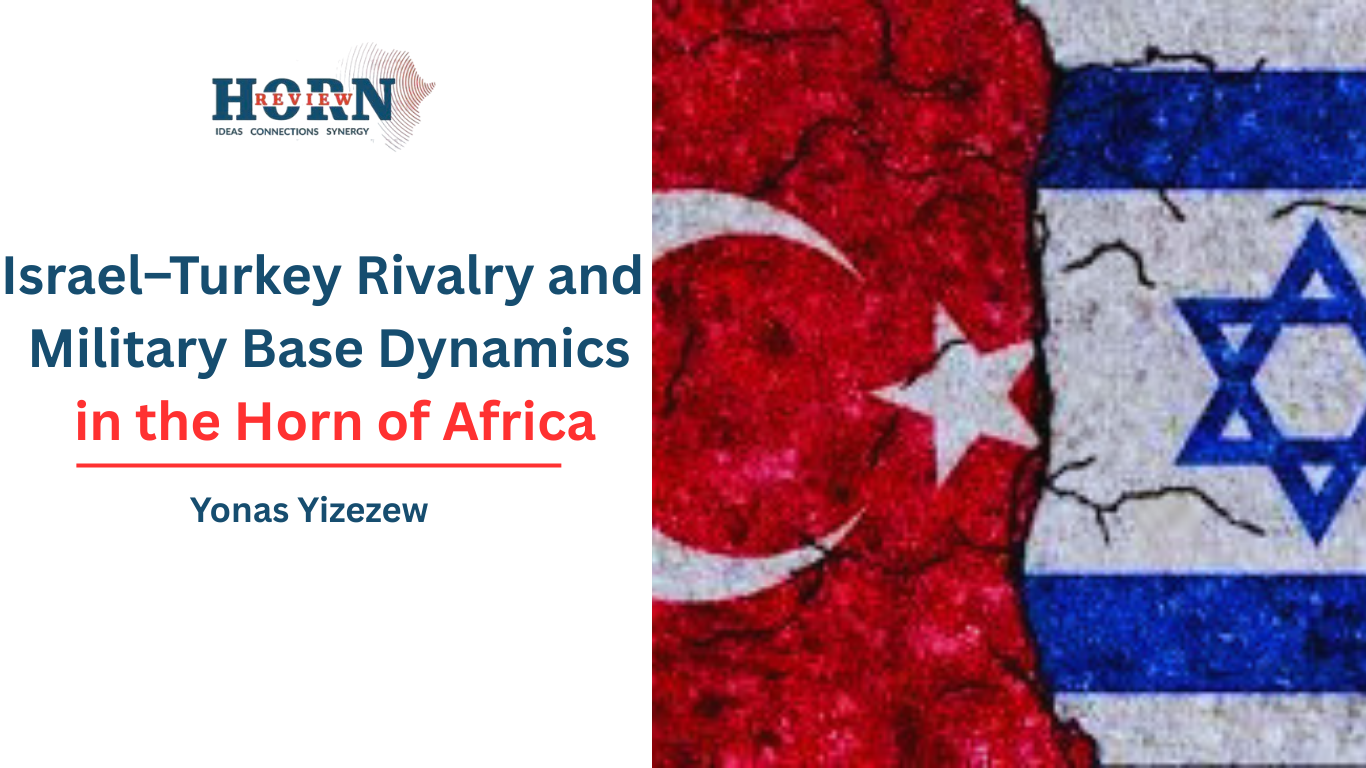
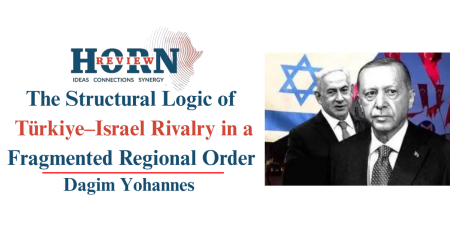
Israel and Turkey’s rivalry, once largely confined to the Eastern Mediterranean and the Levant, has spread into distant regions, becoming a high-stakes contest shaped by competing visions of regional order. Jerusalem seeks alliances to counter Iran and its proxies, while Ankara extends its influence through a combination of Sunni solidarity and pragmatic realpolitik, projecting power far beyond its traditional sphere of engagement. Deterioration accelerated after the Abraham Accords, as Turkey condemned Israel’s operations in Gaza and proxy clashes intensified in Syria.
This antagonism spilled into the Horn of Africa with Israel’s landmark December 26, 2025, recognition of Somaliland couched in Abraham Accords expansion to secure Red Sea flanks. Erdogan swiftly branded it “illegitimate and unacceptable,” warning of Horn instability during a joint presser with HSM, accusing Netanyahu of exporting Gaza war to African shores. Turkey’s UN envoy echoed this at an emergency Security Council session, decrying sovereignty violations as threats to global peace, demonstrating Ankara’s alarm at losing its unchallenged Somali patronage.
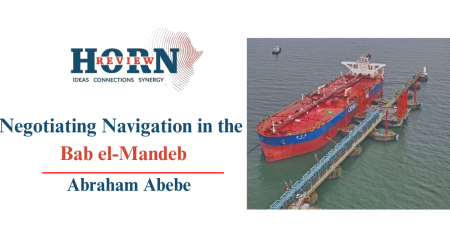
The Horn of Africa’s instability amplifies the strategic significance of key ports. Reports indicate that Mogadishu and Ankara are negotiating the construction of a military base in the contested region of Las Qoray. Las Qoray, located in the newly formed Khatumo federal state, lies across the Bab al-Mandeb. Khatumo emerged after the 2023 Las Anod clashes, taking nearly half of Somaliland’s claimed Sool and Sanaag regions. President Hassan Sheikh Mohamud backed Khatumo and armed it to remove Somaliland’s control of Las Anod, shifting overlapping territorial disputes between Mogadishu, Hargeisa, and Garowe onto Turkey. If such a base becomes feasible, Ankara’s rapid construction model would enable President HSM to project federal authority in the name of “Somali unity” while insulating Mogadishu from direct confrontation with local actors. At the same time, Somaliland’s Berbera port—upgraded by the UAE since 2017 with a runway capable of hosting fighter jets—would reportedly become a logistics hub linked to Israel, supported by incentives such as agricultural technology and intelligence cooperation. With Las Qoray and Berbera in close proximity, rival military facilities would be positioned within a narrow operating space, heightening the risks of surveillance contestation, drone activity, and exploitation by Houthi actors operating across the Red Sea.
This Israel–Turkey friction in the Horn increasingly mirrors their rivalry in Syria. Turkish deployments around Las Qoray would be well positioned to monitor Israeli-linked activity from Berbera. This mirrors the dynamics near Syria’s T4 airbase, where prospective Turkish air-defense deployments were perceived by Israel as an effort to constrain Israel’s operational latitude in Syrian airspace. Israel’s strikes around T4 were thus interpreted as efforts to complicate the establishment of advanced air-defense systems, drone infrastructure, or heavy logistical corridors that could affect Israel’s operational flexibility in Syrian airspace. Consequently, Jerusalem blocked Turkish air-defense deployments at T4 airbase to safeguard its uncontested overflights.
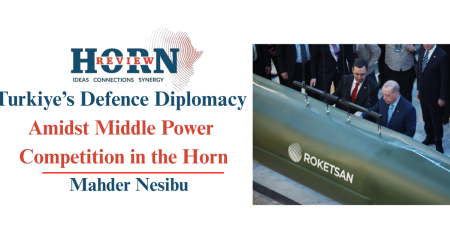
In the Horn, a similar dynamic would sharpen should Turkey formalize a military base in Las Qoray—closer to its entrenched presence in Mogadishu—while Israel deepens or institutionalizes a base in Berbera. Israel’s positioning in Somaliland would already function as a counterweight to Ankara’s expanding footprint in Somalia, anchored by Camp TURKSOM, influence over key airports, and the Jamaame spaceport supporting surveillance satellites. Therefore, Israeli foothold on both sides of the Babel-Mendeb would be a big undercut for Turkey’s huge investment and geopolitical position.
Compounding these dynamics, Gulf rivalries are increasingly intertwined with Horn politics. Saudi Arabia, sidelining normalization momentum with Israel amid the Gaza war and growing friction with the UAE, has aligned more closely with President HSM and Turkey in opposing Israel’s foothold in the region and UAE’s extensive influence. Riyadh now seeks to restore lost influence by channeling support to the federal government, while the UAE’s fortified position in Berbera—linked operationally to Bosaso and island nodes off Yemen—facilitates Israeli access and surveillance reach. This, in turn, has pushed Abu Dhabi to reinforce its Red Sea buffer strategy amid widening Saudi–Emirati divergences over Yemen’s southern factions.
Beneath these geopolitical maneuvers, al‑Shabaab has been quick to exploit emerging vacuums, expanding its footprint amid fragmented authority and shifting external engagements. A recent United Nations Panel of Experts report highlights the group’s growing presence in contested areas Sool and Sanaag where political disputes and governance gaps leave spaces that militants can fill. Across central and southern Somalia, al‑Shabaab continues to conduct complex attacks—suicide bombings at military installations and urban centers—demonstrating tactical resilience. Its financial network, derived from taxation, extortion, and coercive revenue extraction estimated in the hundreds of millions annually, has been strengthened by shifting external priorities and political distraction.
For many years, the United States and Ethiopia have been the primary external actors deterring and combating al‑Shabaab, alongside African Union missions. However, with the U.S. scaling down support and President HSM’s recent policy decisions affecting Ethiopia—including courting Egyptian troops and other critical moves—traditional buffers have weakened. These developments leave Somalia increasingly exposed to militant exploitation.
Egypt, meanwhile, seeks to assert itself in the Horn by joining an emerging regional alignment—sometimes described as the “Sudan–Egypt–Saudi Arabia–Turkey axis”—which includes Somalia. This coalition coordinates on Red Sea security to counter UAE influence, particularly Israeli- and UAE-linked operations in Berbera, and opposes secessionist moves such as Somaliland’s. Reports indicate that Saudi Arabia is finalizing a new military framework with Egypt and Somalia to strengthen military cooperation across the region and counter competing actors.
Locally, HSM remains focused on undermining Somaliland’s international recognition while consolidating authority in Mogadishu. Yet, as external actors maneuver to expand their influence, HSM’s openness to forming alliances and accommodating foreign engagement has exposed tensions with federal member states that disagree with his approach. At the same time, rivalry among middle powers increasingly shapes the strategic landscape, creating overlapping spheres of competition. Amid this complex environment, converging interests have begun to emerge among non-state actors—most notably al‑Shabaab and the Houthis—who leverage instability to counter Israeli-linked presence and assert influence over contested spaces. Other structural factors, including weak federal cohesion, fragmented security arrangements, and shifting regional priorities, further amplify these dynamics, making the Horn a highly fluid and turbulent environment where state, regional, and non-state actors intersect.
The growing presence and maneuvering of external and regional powers in Somalia increasingly undermines the strategic autonomy of states in the Horn. Ideally, each state should have the capacity to determine its own policies, security priorities, and long-term trajectory, yet Somalia is becoming deeply entangled in competing agendas, from middle powers to Gulf rivals and foreign militaries operating on its soil. For a country long recognized for fighting jihadism, this entanglement represents a dramatic shift: its territory now hosts overlapping interests and interventions that constrain independent decision-making and amplify instability, turning the Horn into an increasingly chaotic and unpredictable region where domestic sovereignty is subordinated to external rivalries.
By Yonas Yizezew, Researcher, Horn Review