
The Imperative of Maritime Sovereignty: Ethiopia’s Naval Renaissance and the Reclaiming of Blue Power in the Red Sea Geopolitics
Ethiopia’s historical strength once surged from the seas, as the ancient Aksumite Kingdom wielded a formidable Red Sea fleet that dominated trade routes and influenced power dynamics across the Indian Ocean for nearly a millennium. Today, however, this illustrious maritime heritage clashes with a challenging geopolitical reality: Ethiopia is a landlocked nation, heavily reliant on costly and sometimes hostile neighbors for access to the sea. This dependence constrains the nation’s economic lifeline and exposes it to vulnerabilities in logistics, trade, and national security. Prime Minister Abiy Ahmed’s 2018 call to revive Ethiopia’s naval power was not mere rhetoric; it represents a decisive declaration of sovereignty and survival.
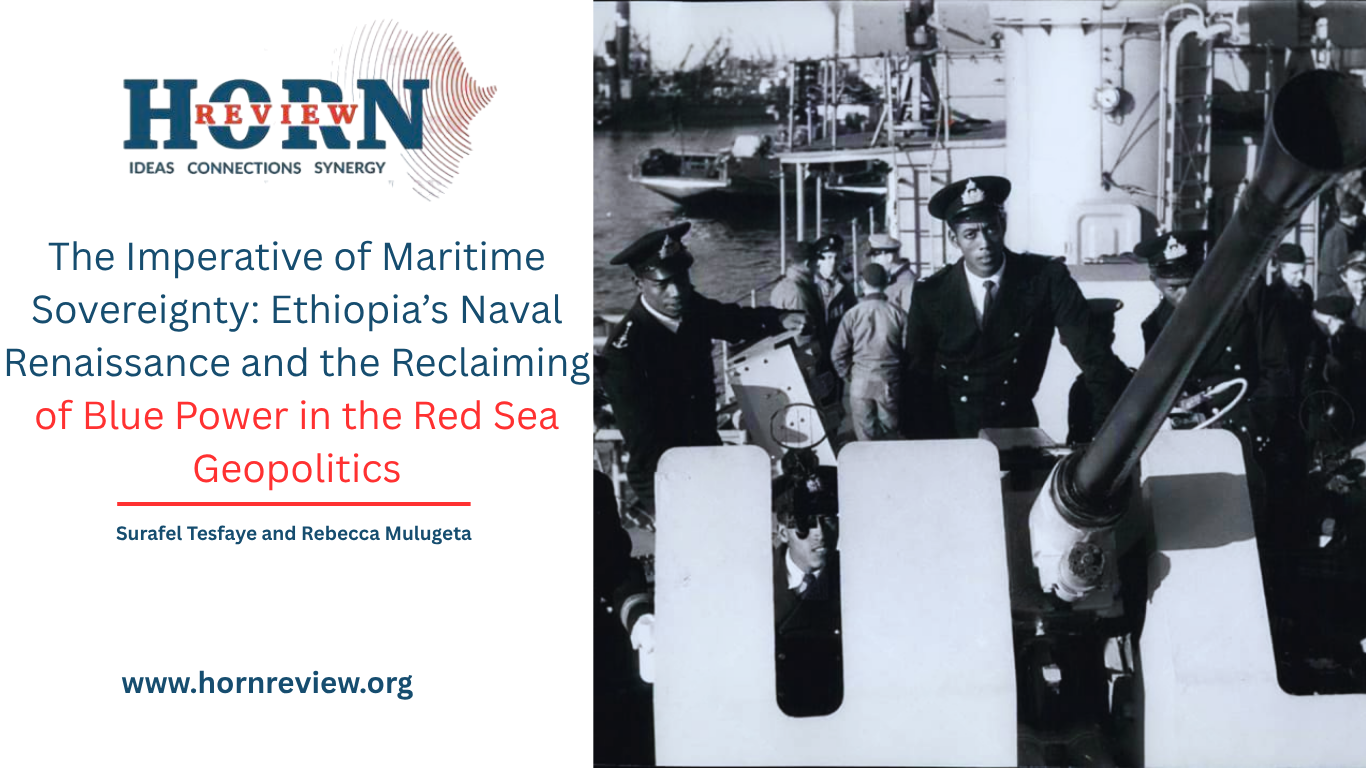
By reclaiming its rightful place on the maritime stage, Ethiopia is asserting its future as a regional powerhouse capable of securing vital trade routes, boosting economic autonomy, and reshaping the strategic balance within the Horn of Africa. The legacy of Ethiopia’s maritime power is twofold. It encompasses not only the ancient Aksumite fleet but also the modern era of the Imperial Ethiopian Navy, established in the mid-20th century and operational until the early 1990s.
The imperial navy maintained four major bases that is the Haile Selassie I Naval Base in Massawa served as the headquarters and the main enlisted training hub; Asmara hosted the naval air station and academy; Assab functioned as a critical naval station with training facilities and repair docks; and the Dahlak Islands operated as the communications and signals center, also housing repair infrastructure, on last the main the navy station seated in Addis Ababa. By the early 1960s, Massawa had been equipped with advanced workshops and facilities, providing complete naval base capabilities to support a formidable fleet. At its height in 1991, the Ethiopian Navy’s inventory included two frigates, eight missile craft, six torpedo craft, six patrol boats, amphibious vessels, and several support and training ships, constituting a significant maritime force in the Red Sea region.
However, the watershed moment arrived in 1993 during Eritrea’s succession, resulting in Ethiopia’s sudden loss of direct sea access and the dissolution of its navy. Compounding this setback was Yemen’s growing impatience with hosting Ethiopian naval ships; as a result, sixteen vessels were relocated to Djibouti, while others, including the Ethiopian training frigate, fell into disrepair and were abandoned in Yemeni waters. Along with these stranded ships, approximately 200 Ethiopian sailors remained in Yemen as displaced persons, highlighting the human cost of this maritime collapse. Against this turbulent backdrop, the Ethiopian transitional government led by the Tigray People’s Liberation Front (TPLF) undertook negotiations with Eritrea, seeking rental access to the port of Assab to continue naval operations despite the loss of the national coastline.
Eritrea, asserting its newfound sovereignty and wary of hosting what it perceived as an erstwhile adversarial navy, refused Ethiopia’s request outright. This deadlock endured for over two and a half years, during which the Ethiopian fleet languished in Djibouti’s harbor, becoming increasingly unusable. The burden of maintenance costs grew heavier, especially as Ethiopia struggled with mounting debts and failed to meet port dues. As a result, Djibouti took all 16 ships, making 6 to be sold to Eritrea.
In an ironic and troubling turn, Ethiopia extended support to Eritrea during its crisis with Yemen in 1996, leasing four helicopters that were never returned and eventually permitting Eritrea to purchase several of its naval vessels. This puzzling series of actions raises questions about the transitional government’s motives: was this cooperation a strategic maneuver to recover naval assets from Yemen, or did it reflect deeper political calculations favoring Eritrea’s rise at Ethiopia’s maritime expense? The period following Eritrea’s secession encapsulates a tragic unraveling of Ethiopia’s maritime strength. From a powerful navy operating multiple bases and commanding regional respect, the country became landlocked and diplomatically isolated at sea. The negotiations faltered not only because of Eritrean intransigence but also due to the transitional government’s (TPLF) inability to secure lasting agreements or military protection for its naval assets.
The history of the Hanish Islands is a clear reflection of the Red Sea’s volatile power struggles. While the islands were once firmly under the Ethiopian Navy’s patrol, this established order was fundamentally dismantled by Eritrea’s secession in 1993, which immediately sparked a claim that Yemen aggressively contested, resulting in a military clash in 1995. This ownership dispute was ultimately settled by the 1998 international arbitration, which affirmed Yemeni sovereignty. Today, the strategic picture is once again changing, as the UAE has become a key external actor, reportedly building military facilities, like airstrips, on the islands and strategically supporting Eritrean forces through arrangements involving the Port of Assab, thereby significantly escalating the geopolitical tension and the international contest for control over this vital maritime passage.
Over time, this failure erased the tangible presence of Ethiopian naval power, with many ships lost at sea, sold, or seized, marking a fractured historical chapter. Today, Ethiopia finds itself at a critical point. Reviving its navy is not merely about honoring a historic legacy; it is a vital strategic priority essential for securing sovereignty, protecting trade routes, and asserting regional influence in the Horn of Africa’s shifting geopolitical landscape. The loss of strategic ports that Ethiopia has influence on and protects has effectively marginalized Ethiopia from maritime affairs. Still, the memory of the Imperial Navy’s role in forging alliances and stabilizing the region reminds us of the soft and hard power naval forces bring to the table.
The preeminent consideration is that a modern Ethiopian navy would restore this diplomatic leverage, counter coercive behaviors, and promote balanced engagement within a region rife with contestation and competition. Eritrea’s continued control over former Ethiopian ports, notably Assab, intensifies Ethiopia’s vulnerability at sea. By restricting access and leveraging its geographic advantage, Eritrea exacerbates Ethiopia’s dependency, weakening the latter’s trade and security posture. Without a naval presence, Ethiopia’s valuable shipping assets, managed by the Ethiopian Shipping and Logistics Services Enterprise (ESLSE), remain unprotected in contested waters.
The covert strategic engagement by Egypt, involving calls to the GCC and Western allies, aimed at containing Ethiopia’s regional influence and complicating its pursuit of Red Sea access, represents a critical external variable that must be factored into Ethiopia’s national security planning. Specifically, the development of a robust Ethiopian naval capability is not merely an internal defense project; it is a necessary and legitimate response to this external containment dynamic.
The absence of maritime escorts exposes Ethiopia’s economic lifelines to exploitation, disruption, and strategic manipulation. By building a capable navy, Ethiopia could safeguard these logistical arteries, neutralizing Eritrea’s advantages and ensuring the secure movement of goods and military shipments through vital sea lanes. The paradox deepens when regional comparisons are made. Neighbor, involving calls to the GCC and Western allies, aimed at containing Ethiopia’s regional influence and complicating its pursuit of Red Sea access, ring countries like Djibouti, Eritrea, and Somalia maintain coast guards or naval forces despite their relatively small commercial shipping lines. Ethiopia, uniquely positioned as an inland economic giant operating a significant shipping fleet, remains conspicuously underprotected at sea, a glaring strategic deficiency that exposes the country to unnecessary risks.
The imperative to rebuild a navy extends beyond economic concerns to encompass profound security and geopolitical dimensions. The Horn of Africa is among the world’s most heavily militarized regions, saturated with foreign military bases from global powers such as the United States, China, Turkey, and the United Arab Emirates. This intense militarization fuels arms races and heightens tensions, generating a complex security dilemma. Ethiopia’s landlocked status within such a volatile environment magnifies its strategic vulnerabilities, the preparation of the navy takes into account potential attacks that may come from the sea, today modern war far is changing, most nations don’t use army men rather the use modern technologies that can even attack the capital of Ethiopia from the sea, making the establishment of a naval force both timely and essential. By reestablishing naval capabilities, Ethiopia gains the means to project power symmetrically across the Red Sea, deter regional threats, and actively engage in multilateral security architectures critical for maintaining stability.
Access to the sea is far from a luxury for Ethiopia; it is an existential necessity for a rapidly growing economy and population. Operating the Ethiopian Shipping and Logistics Services Enterprise without naval protection renders vital maritime commerce susceptible to piracy, geopolitical friction, and military contestation. A navy would secure trade routes, lessen Ethiopia’s dependence on foreign ports, and enhance logistical effectiveness, thus supporting the country’s development trajectory and integration into regional supply chains. The strategic significance of a navy extends even further amidst contemporary regional dynamics.
Eritrea’s recent actions, including the seizure of Ethiopian armaments, shows Ethiopia’s critical need to establish a navy. Without a naval presence, Ethiopia lacks the means to monitor, protect, or secure these vital shipping lanes, leaving its strategic interests at risk of disruption or hostile actions, as demonstrated by Eritrea’s seizures.
Furthermore, global precedents in the Red Sea that don’t have a direct connection to the sea show that having a navy is not limited to countries with extensive coastlines. For Ethiopia, developing a navy would serve multiple purposes: safeguarding its trade routes, asserting sovereignty over maritime corridors, deterring future aggression or seizures, and increasing its leverage in regional security dynamics.
Neighboring Somalia’s recent threats to close its airspace, alongside Eritrea’s historical and ongoing restrictions, have severely restricted Ethiopia’s aerial and military mobility, a phenomenon some analysts term the “geopolitical airspace paradox.” These closures undermine Ethiopia’s strategic options and isolate the country both economically and militarily. Under such conditions, naval power becomes a crucial asymmetric tool, offering Ethiopia competitive leverage by controlling maritime chokepoints and providing alternative routes for military and commercial access. In potential conflict scenarios, naval strength can offset airspace limitations by protecting sea lanes, escorting convoys, and enabling amphibious or hybrid operations, thereby preserving Ethiopia’s regional footprint and enhancing national security.
A naval force also elevates Ethiopia’s diplomatic standing and sovereign authority. Globally, naval power symbolizes state maturity and command over national territory. Naval capabilities serve as powerful bargaining chips in international negotiations over port access, maritime boundaries, and security partnerships. Historically, Ethiopia’s Imperial Navy facilitated strategic alliances, including with the United States during the Cold War, boosting the nation’s international profile. Reinstating maritime forces today would bolster Ethiopia’s capacity to negotiate effectively within multilateral forums such as the African Union and the Intergovernmental Authority on Development (IGAD), strengthening its hand in diplomatic and economic negotiations. Moreover, control over naval assets deters coercion and fosters equitable partnerships in the Horn of Africa’s complex geopolitical theater.
By safeguarding Ethiopia’s access to maritime corridors, a navy would help ensure resilience against political leverage wielded by neighboring states. This protection is vital given Eritrea’s continued exploitation of former Ethiopian ports, charging premium fees and manipulating access in ways that hamper Ethiopia’s economic and security interests. Establishing a navy is also a force multiplier that enhances Ethiopia’s overall military effectiveness. By integrating maritime capabilities with existing land and air forces, Ethiopia can transform into a tri-domain power capable of deterring aggression, promoting peace, and contributing robustly to regional peacekeeping missions under the African Union. Naval forces enable joint operations, provide strategic depth lost after Eritrea’s secession, and secure alternative supply routes vital for Ethiopia’s agrarian-led economy, including imports of fuel and fertilizers.
These efforts align with international legal frameworks such as the United Nations Convention on the Law of the Sea (UNCLOS) and the 1965 Convention on Transit Trade of Land-Locked States, which affirm landlocked countries’ rights to access the sea, but even the law affirms that it requires military capacity to enforce these rights effectively. Reflecting on Ethiopia’s geopolitical geography, the loss of the Red Sea coastline due to Eritrea’s secession created a harsh paradox where economic expansion is throttled by exorbitant transit fees and logistical choke points. Further compounding this is the closure or restriction of airspace by neighbors such as Eritrea and Somalia, substantially limiting Ethiopia’s ability to engage fully in regional and global networks.
Historically, landlocked nations such as Bolivia have sought similar naval revivals to assert sovereignty and leverage in territorial or geopolitical disputes, demonstrating the broader importance of maritime forces in national security and diplomacy. Regionally, available port alternatives face significant challenges; Sudan’s Port Sudan, Eritrea’s Assab, and Somaliland’s Berbera each come with political risks and diplomatic complexities. Treaties involving Berbera risk tensions with Somalia, while the Kenyan port of Lamu exposes Ethiopian supply lines to threats from insurgent groups such as Al Shabaab, some of which have ties to regional proxies.
Egypt, Ethiopia’s chief geopolitical rival, dominates African naval power and actively contests Ethiopia’s rising influence in the Red Sea and surrounding regions, leveraging a naval force for its survival and Red Sea dominance and crippling Ethiopia’s ambition towards Blue water. This rivalry heightens the urgency for Ethiopia’s naval resurgence as a strategic counterbalance. Despite the challenges posed by Eritrea’s secession and regional hostilities, Ethiopia’s naval revival offers a path toward restoring independent maritime capabilities. Through diplomatic partnerships, negotiated port access agreements, and strategic investments in naval infrastructure, the country can overcome its geographic and political constraints. This transformation would redefine Ethiopia’s defense and economic posture, shifting it from a landlocked state dependent on neighbors to a proactive maritime actor with sovereign reach. Encouragingly, Ethiopia’s naval comeback is underway.
As of 2025, the nation is nearing completion of its new Navy Headquarters in Addis Ababa, reflecting cooperation agreements with Russia that support training and capacity building. Ethiopia has launched naval academies and graduated its first class of officers after dismantling its navy in the 1990s, signaling a determined effort to reclaim its maritime legacy. Access to ports like Berbera in Somaliland forms part of the strategy, though such arrangements carry diplomatic sensitivities with Somalia and other regional players.
landlocked developing countries (LLDCs) face structural economic challenges that stem from their geographic isolation. Without direct access to the sea, their development levels are estimated to be about 20 percent lower than they would be otherwise. Their economies often depend heavily on a small number of commodities and minerals, with weak industrial and social capacities. High unemployment, low productivity, and a large informal sector define much of their economic landscape. This dependency also translates into limited export diversity, leaving these nations vulnerable to external shocks and global market fluctuations.
For Ethiopia, the search for alternative seaports highlights how geography shapes its politics and security choices. Options such as Port Sudan and Berbera present both opportunity and risk, each tied to complex historical tensions and fragile regional relations. Sudan’s instability, Eritrea’s uneasy history with Addis Ababa, and Somaliland’s disputed status all complicate Ethiopia’s access to maritime routes. Even Kenya’s Lamu port carries exposure to security threats from Al-Shabaab and cross-border armed groups. Looming over all these dynamics is Egypt, Ethiopia’s key geopolitical rival, whose influence spans the Nile Basin and the Red Sea.
The training of hundreds of Al-Shabaab fighters with Iranian-made drones and missiles, together with a UN report revealing that an expanding militant alliance in the region that we present to and Red Sea, reflects that a critical security threat, as this and many insurgent presences along this coast, Ethiopia must urgently establish its own strong navy on the Red Sea. The emerging Houthi–Al-Shabaab partnership directly endangers Ethiopia’s national security and its vital connection to global trade. Depending solely on Djibouti, a small neighboring country, for maritime access is inadequate and unsustainable. A robust Ethiopian Navy is absolutely indispensable to protect the strategic Red Sea corridor through which 12% of the world’s trade passes and to ensure Ethiopia’s sovereignty and security in the region.
In this highly militarized and contested Horn of Africa, Ethiopia’s naval reemergence introduces vital new strategic dynamics. It enables secure maritime trade, the projection of power, and negotiation from a position of strength. Above all, the revival of the Ethiopian Navy symbolizes a bold reclamation of sovereignty and forward-leaning commitment to national interests in one of the world’s most geopolitically significant waterways. This strategic recalibration confronts historical grievances and current paradoxes, transforming longstanding challenges into opportunities for national growth, regional leadership, and enhanced security. The Ethiopian Navy’s rebirth will do more than defend maritime boundaries; it will serve as a crucial force multiplier and diplomatic asset restoring Ethiopia’s rightful role on the Red Sea and beyond, anchoring the country’s future in regional stability, prosperity, and sovereign strength.
By Surafel Tesfaye and Rebecca Mulugeta, Researchers, Horn Review

Leave a Reply Cancel reply
RELATED
Posts

7
Sep
Abiy Ahmed and the Remaking of the Ethiopian State
Blen Mamo
The political trajectory of Abiy Ahmed cannot be adequately...

3
Sep
Is Ethiopia Ready for a Presidential System?
By Blen Mamo
Ethiopia has spent much of its modern political...


28
Aug
Ethiopia-U.S. Strategic Defense Partnership
The recalibration of United States–Ethiopia relations recently reflects a deeper...

20
Aug
Eritrea’s Buffer Zone Politics from Eastern Sudan to Ethiopia's Tigray
The most consequential development in the Horn of Africa may...

14
Aug
Ethiopia’s Withdrawal from Burhakaba and What Comes Next for Al-Shabaab?
The recent handover of the Burhakaba forward operating base...

13
Aug
What Another War Against Ethiopia Could Mean for Eritrea’s Future
Another Ethiopia–Eritrea war would not be a replay of 1998....


Comment (1)
I’ve been browsing on-line more thawn 3 hours these days,but I by no means found
any interesting article like yours. It’s prertty value enough for me.
In my view, if alll website owners and bloggers made just rigfht
content material as you probably did, the internet will probably bbe a lot more useful than ever before.