Certain structural conditions in political history recur with regularity to permit analytical generalization. Armed formations united principally by opposition to an authority periodically formalize cooperation through announced coalitions. Their stated objectives are consistent being forcible removal of the existing government and establishment of an inclusive transitional administration. The structures governing such coalitions display consistency across cases. The historical record accordingly permits an assessment of the Libyan case since 2011 which provides the clearest available illustration of what follows when armed coalitions are adopted as the primary instrument of political change. It is not an aberration however it is the mirror.
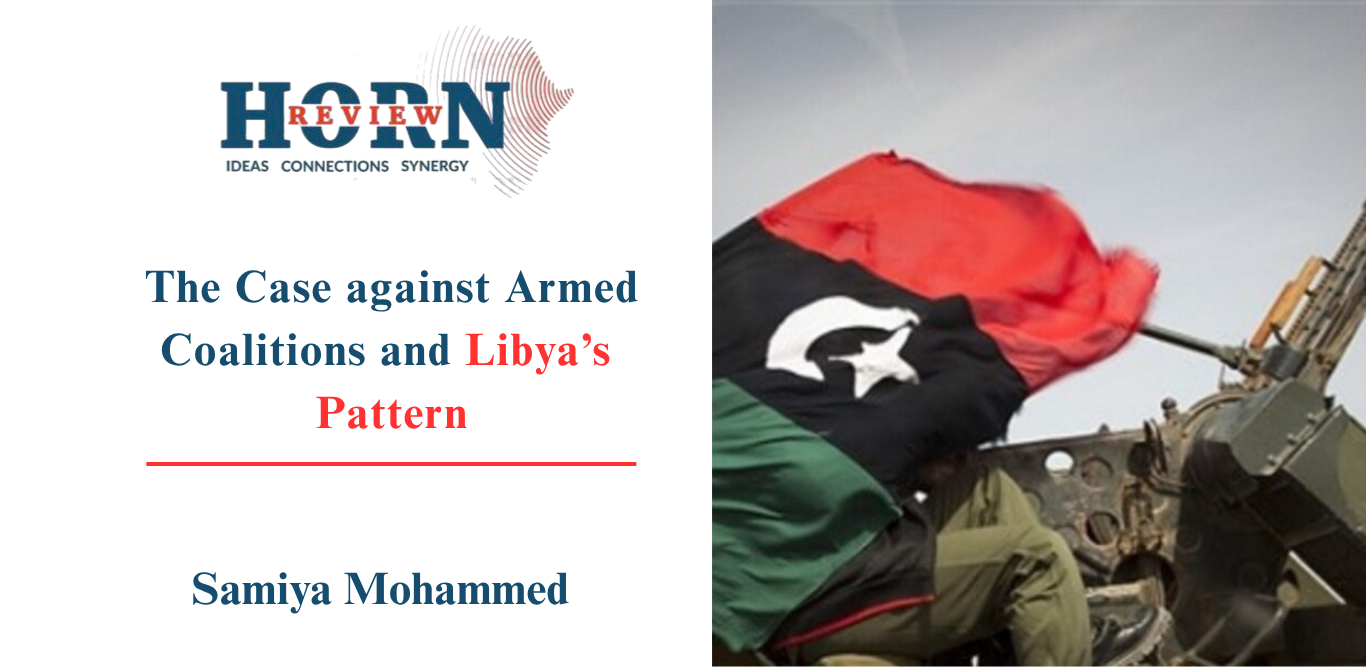
In the Libyan case the sequence of events following the 2011 intervention demonstrates with clarity the inherent fragility of armed coalitions assembled. Multiple armed groups tribal militias, regional forces, Islamist brigades, secular factions and criminal networks coalesced around a single shared objective which is the removal of the existing regime. The sole durable bond among these formations was hostility toward the central authority. Ideological commitments, territorial ambitions and resource interests remained fundamentally divergent. Once ultimately removed the coalition did not transition into a coherent governing structure however fragmented. The absence of shared institutional frameworks, mutual accountability mechanisms or agreed upon post conflict power sharing arrangements rendered the coalition incapable of sustaining itself beyond the immediate objective of regime change.
The previous regime collapsed rapidly under sustained military pressure from the assembled forces. Within months, the coalition that had achieved this objective began to disintegrate. Competing local authorities emerged each claiming legitimacy and control over territory. Warlord fiefdoms replaced the centralized state apparatus. Regional and international actors intervened, selecting proxies and exacerbating existing divisions. National resources particularly hydrocarbon revenues were converted into instruments of patronage and conflict financing. The transitional phase rather than culminating in a stable, inclusive political order, prolonged into a multiyear condition characterized by parallel governments, contested legitimacy and sustained violence. Fourteen years after the initial intervention, the country still lacks a monopoly on legitimate force, a coherent state structure and a unified government. The transitional phase never transitioned and it became the permanent condition.
The structural logic underlying this outcome is not complicated. Coalitions of armed groups predicated chiefly on shared antagonism lack the internal mechanisms required for post conflict power sharing or institutional reconstruction. Once the unifying external target diminishes or disappears, latent rivalries over territory rank and resources surface with inevitable regularity. External actors exploit the resulting space selecting proxies and exacerbating fragmentation. The rhetoric of inclusivity and transition does not alter these incentive structures. It just delays the moment when internal contradictions explode into open conflict.
The Libyan case further illustrates the specific mechanisms through which armed coalitions fail. The absence of a unified command structure means that military victories are attributed to individual commanders rather than to the coalition as a whole. Each formation retains its own chain of command, its own territorial ambitions and its own external patrons. The result is a competition for control that frequently escalates into armed confrontation.
The Libyan experience also demonstrates the ease with which external actors manipulate fragmented armed coalitions. Regional powers and international actors, pursuing their own interests, select proxies from among the competing formations. These proxies receive weapons, funding and political support enabling them to sustain conflicts that might otherwise exhaust themselves. The conversion of national resources particularly oil revenues into instruments of patronage and conflict financing further entrenches the cycle of violence. Control over resource extraction becomes a primary objective of armed competition and the revenues generated are used to purchase loyalty, acquire weapons and sustain military operations. The economy becomes war economy and the war economy perpetuates the conditions that make political settlement impossible.
The Libyan case is not unique in its essentials. It represents the default outcome when the primary tool of politics is the gun and the primary structure is a temporary marriage of convenience among men with guns. The language of survival and transition does not rewrite the underlying incentives. It only obscures them. Any parallel situation that follows the same script multiple armed formations declaring a coalition whose first and loudest demand is the forcible removal of the government should be expected to travel the same road. The historical record provides no basis for expecting a different outcome in the absence of fundamentally different conditions.
There is however a cleaner path. The preference for a peaceful political path therefore rests not on abstract preference but on the documented record of outcomes. The Libyan case demonstrates that armed coalitions lack the internal cohesion and institutional mechanisms necessary to build a durable political order. The structural incentives that govern such coalitions competition over territory, resources, and rank inevitably produce fragmentation, violence and external manipulation. The language of inclusivity and transition does not alter these incentive structures. It only delays the moment when they assert themselves.
The historical evidence further suggests that negotiated political processes while imperfect offer a fundamentally different path. Constitutional dialogue, non violent pressure for reform, internationally monitored elections and sequenced demobilization under verified guarantees have in other cases produced more durable institutional outcomes. The case serves as a comprehensive demonstration of the consequences that follow when armed coalitions are chosen as the primary instrument of political change. The fragmentation of the coalition, the emergence of competing authorities, the intervention of external actors, the conversion of resources into instruments of conflict and the prolongation of the transitional phase into a permanent condition of violence all of these outcomes were foreseeable and all of them materialized. The structural dynamics that produced them remain operative in any comparable situation.
Coalitions of armed groups lack the internal mechanisms required for post conflict power sharing or institutional reconstruction. Once the unifying external target diminishes, latent rivalries surface, elevating the most coercive actors and inviting external spoiler dynamics. The rhetoric of inclusivity and transition does not alter these incentive structures. The Libyan experience demonstrates at catastrophic cost, the consequences of choosing the coalition of the armed over negotiated political processes. The Libyan mirror reflects a path that should not be followed.
Samiya Mohammed, Researcher, Horn Review