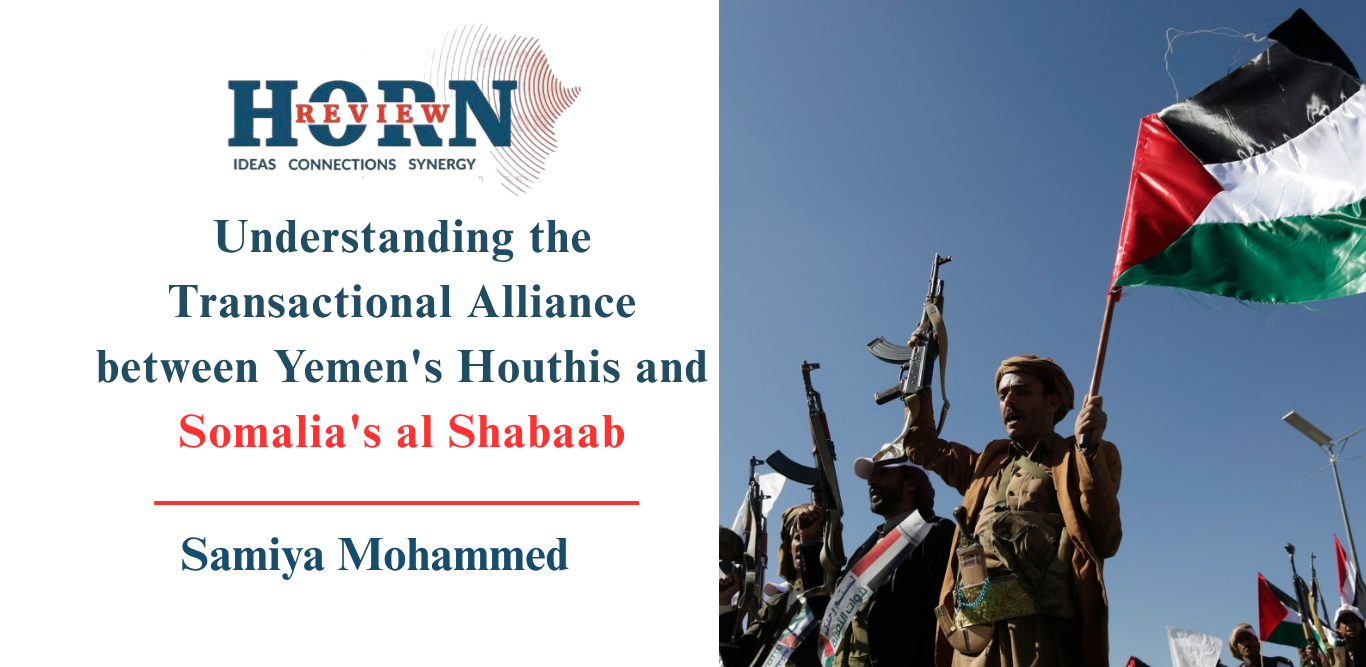
The alleged al Shabaab fighters among Houthi casualties on Yemen’s western coast could reignite debate about the nature of cooperation between these two militant organizations. The National Resistance Forces led by Tariq Saleh claim to have recovered bodies bearing documents and personal effects that identify them as members of the Somali based al Shabaab. This battlefield evidence whether fully verified or not points toward a relationship that has been building through intelligence channels and regional networks. The alliance between the Iran aligned Houthis and the al Qaeda linked al-Shabaab presents a puzzle that defies simple ideological explanations. These groups occupy opposite ends of the sectarian spectrum with the Houthis adhering to Zaydi Shia Islam and al Shabaab following a strict Sunni Salafi jihadist doctrine.
The theological divide between the Houthis and al Shabaab is deep and historical. The Houthi movement came from the Zaydi tradition of Shia Islam in which a branch that has existed in Yemen for over a millennium. Zaydi doctrine differs from the Twelver Shia Islam practiced in Iran yet the Houthis have aligned themselves with Iran’s political and military orbit. This alignment has transformed the movement from a localized Zaidi revivalist group into a regional actor that embraces the resistance narrative championed by the Islamic Revolutionary Guard Corps. The Houthis view themselves as part of a broader struggle against Western imperialism and Saudi hegemony in which a position that has drawn them closer to Iran’s vision for the Middle East.
Al-Shabaab operates from an entirely different theological foundation. The group adheres to a militant interpretation of Sunni Islam that regards Shia Muslims as deviants who have strayed from the true path. Al Shabaab’s ideology draws from the same wellspring as al Qaeda viewing the Shia as a heretical sect that poses a threat to Islamic purity. The group’s leadership has historically denounced Shia influence across the Muslim world with particular venom often portraying it as a greater danger than Western presence in the region. This sectarian animosity is not just rhetorical but has shaped al Shabaab’s operational priorities within Somalia and the broader Horn of Africa.
The existence of such doctrinal differences means that any cooperation between these groups must be understood as fundamentally transactional rather than ideological. Neither organization has abandoned its core beliefs or its sectarian identity. Instead they have chosen to set aside these differences in service of more immediate objectives. This is not a merger of movements or a synthesis of worldviews but an arrangement between two combatants who find themselves facing common challenges. The relationship operates in a space where survival and tactical advantage outweigh theological purity.
The cooperation between the Houthis and al Shabaab manifests across multiple dimensions with each serving distinct but complementary purposes. The area of collaboration involves weapons procurement and military training. Intelligence reports indicate that al Shabaab has actively sought advanced weaponry from the Houthis including anti aircraft missiles, attack drones, Katyusha rockets, and anti tank systems. These are capabilities that al-Shabaab has struggled to acquire through other channels particularly given the international counter terrorism efforts that have targeted its supply lines. The Houthis possess the technical expertise and inventory to fulfil at least some of these requests.
Training represents another critical component of this relationship. Evidence suggests that al Shabaab operatives have participated in training camps run by Houthi instructors where they receive instruction in marksmanship, anti aircraft techniques and the use of improvised explosive devices. This exchange of knowledge enhances al Shabaab’s operational capabilities while allowing the Houthis to build relationships with a proven militant organization that controls territory in Somalia. The training dimension of this cooperation is particularly concerning because it represents a transfer of expertise that could improve al Shabaab’s effectiveness against both Somali government forces and international counter terrorism operations.
Logistical cooperation forms the third pillar of this relationship. The Houthis have been actively building smuggling and training networks across the Red Sea into the Horn of Africa and Sudan. This network serves multiple purposes for the Houthis including the diversification of their supply lines, the creation of revenue streams through illicit trade and the establishment of relationships with local actors who can provide sanctuary and support. For al Shabaab access to these networks offers new routes for the movement of fighters, weapons and other resources.
This expansion is driven by both defensive and offensive considerations. Defensively the Houthis seek to create alternative supply routes that are less vulnerable to interception by naval forces patrolling the Red Sea. The coalition blockade of Yemen’s ports has made it essential for the Houthis to find new ways to receive weapons and other supplies. By establishing relationships in the Horn of Africa they can move goods through overland routes or via smaller vessels that can evade detection. Offensively this network allows the Houthis to project power beyond Yemen’s borders and to threaten commercial shipping.The relationship with al Shabaab fits naturally into this expansionist vision. By cultivating ties with a powerful militant group in Somalia, the Houthis gain a presence in the Horn of Africa that can serve multiple purposes. The alliance also provides the Houthis with access to al Shabaab’s extensive smuggling networks which extend throughout East Africa and into the Arabian Peninsula.
Despite the growing evidence of cooperation, the Houthi-al-Shabaab relationship remains fragile. The ideological differences between the two groups are not superficial but fundamental and they create a persistent source of tension. History offers numerous examples of jihadist groups and Iran backed proxies cooperating tactically only to become bitter enemies when their immediate interests diverged. The sectarian animosity that separates these groups can be suppressed but not eliminated and it may resurface if either party perceives that the other has gained an unfair advantage or betrayed the partnership. The transactional nature of the relationship means that it is contingent on continuing mutual benefit. Should either group conclude that the costs of cooperation outweigh the benefits, the alliance could dissolve.
The most immediate concern is the potential transfer of advanced weaponry from Yemen to Somalia. If al Shabaab acquires anti aircraft missiles or attack drones from Houthi sources it would represent a qualitative leap in the group’s capabilities. Al-Shabaab currently faces regular aerial bombardment from Somali government forces, African Union peacekeepers and international partners. The acquisition of even basic anti aircraft defenses would complicate these operations and potentially reduce the effectiveness of the air power that has been a critical advantage for counter terrorism forces.
The ideological chasm that separates these groups cannot be bridged permanently and the alliance is likely to dissolve if the circumstances that gave rise to it change. The relationship is a marriage of convenience not of conviction and it should be understood as such. The current cooperation is transactional and it could evolve into something more dangerous if allowed to develop unchecked. The deepening ties between these two militant groups add another element of instability in to the environment.
Samiya Mohammed, Researcher, Horn Review