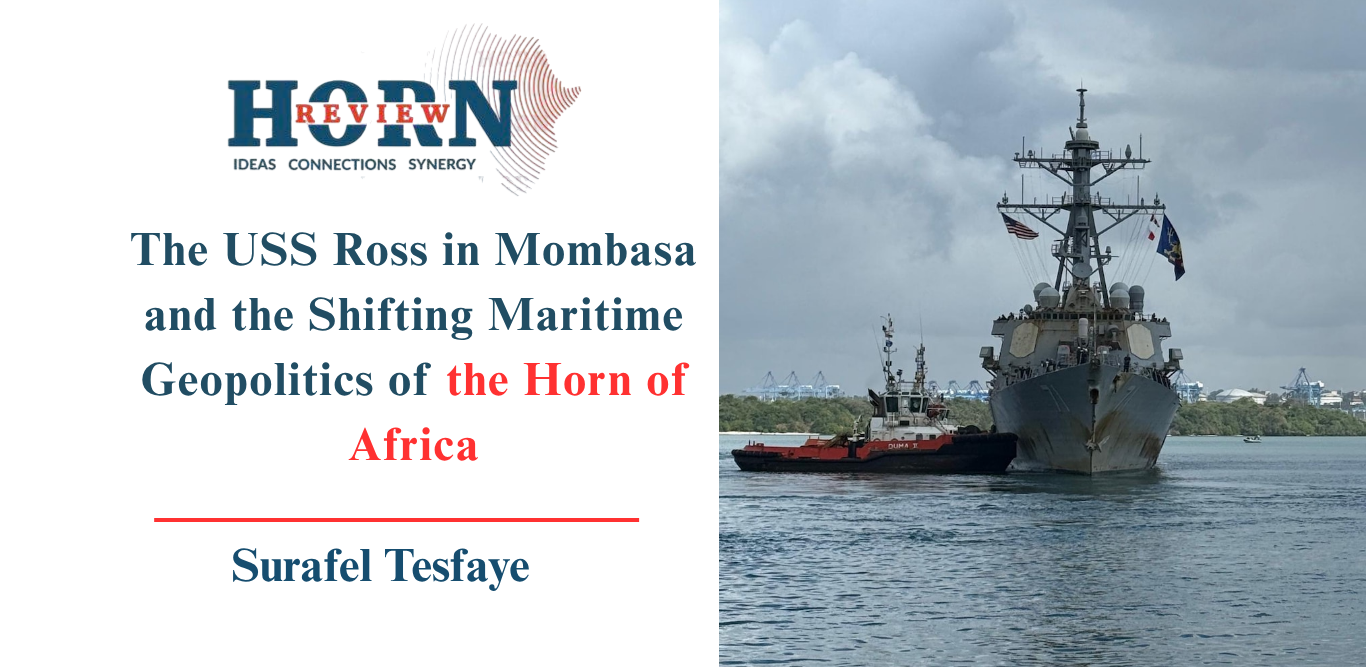
On September 5, 2026, the Arleigh Burke-class guided-missile destroyer USS Ross (DDG 71) docked at the Port of Mombasa for what was officially described as a scheduled port visit. The vessel had been deployed since April in the US Fifth Fleet Area of Operations, supporting Operation Epic Fury and the US blockade against Iran. It had also been operating in the US Sixth Fleet area, which covers Europe and Africa. On the surface, the visit was routine: crew rest, logistical resupply, and professional exchanges with Kenyan maritime partners.
Nevertheless, the arrival of this particular warship, coming weeks after British naval vessels made similar port calls in Mombasa, carries implications that extend beyond the standard language of port visits. The broader context in which the USS Ross has docked escalating tensions in the Red Sea, intensifying competition in the Western Indian Ocean, and a shifting US military posture across the Horn of Africa suggests that Mombasa is becoming something more than a routine stopover. It is emerging as a critical node in a maritime security architecture that is being reshaped by forces far beyond Kenya’s shores.
The Red Sea and the Bab el-Mandeb strait have become increasingly contested waterways. In July 2026, the Houthis announced a blockade against Saudi Arabia and resumed attacks on vessels in the Red Sea after a nine-month pause. By late July, the Houthis had struck at least four oil tankers. Commercial shipping through the Bab el-Mandeb dropped sharply, with total vessel crossings falling to 29 on July 21, down from 41 the previous day. The disruption has effectively closed one of the world’s most important maritime trade corridors, forcing vessels to reroute around the Cape of Good Hope. For a country like Kenya, which depends heavily on reliable shipping through the Red Sea and the wider Indian Ocean for imports and exports, prolonged disruptions carry direct economic consequences.
The USS Ross is not an ordinary patrol vessel. It is a guided-missile destroyer equipped with the Aegis Weapon System and the Mk 41 Vertical Launching System, capable of air defence, anti-surface warfare, anti-submarine operations, and long-range maritime strikes. Its presence in Mombasa therefore carries considerably more strategic weight than a conventional diplomatic vessel. The destroyer’s deployment as part of the George H.W. Bush Carrier Strike Group and its support for Operation Epic Fury place it squarely within the broader US-Iran confrontation that has escalated throughout 2026.
Yet it would be a misreading of the situation to interpret the Mombasa visit as evidence that Kenya is being drawn into the US-Iran conflict. The more defensible interpretation is simpler: an American warship operating in a high-tempo Middle Eastern deployment is using a Kenyan port for logistics and crew support while Washington continues strengthening its security relationship with Nairobi. US procurement records show that the Navy had already arranged voyage-repair work for USS Ross in Mombasa between August 29 and September 3, 2026. This is not simply a symbolic diplomatic visit; Mombasa is providing actual logistical and maintenance support to a deployed American warship.
But there is a broader strategic dimension that cannot be ignored. The Western Indian Ocean is becoming increasingly contested, with growing Chinese naval activity, instability around the Red Sea and Gulf of Aden, piracy and illicit trafficking, and competition over strategic ports and maritime infrastructure. Mombasa is becoming an increasingly important logistics and security node in this environment. The successive British and American naval visits underline a broader trend: as uncertainty continues to affect shipping routes from the Red Sea to the Indian Ocean, Mombasa’s importance is likely to extend beyond trade. Its docks are increasingly becoming part of the wider network supporting international efforts to keep vital sea lanes open.
There is a parallel development that adds another layer to this picture. Reports have emerged that the United States plans to expand CIA operations in Somalia’s Puntland region and turn its current presence at Bosaso airport into a military base capable of launching airstrikes and surveillance missions. Puntland publicly announced the agreement on August 2, following a meeting between President Said Abdullahi Deni and a US delegation. The talks covered counterterrorism operations, maritime security, and security in the Red Sea and Gulf of Aden. This development suggests that Washington is not merely relying on established partners like Kenya but is actively expanding its military footprint along the strategic coastline of the Horn.
The convergence of these developments points to a region undergoing a significant strategic realignment. The Horn of Africa is no longer viewed by Washington primarily through the lens of counterterrorism. It is increasingly seen as a critical theatre for managing maritime competition, securing vital sea lanes, and maintaining operational flexibility in an environment where access to ports and airfields can shape the outcome of broader geopolitical contests. The USS Ross’s port visit is a small but telling indicator of this shift. It suggests that the US is recalibrating its logistics network to sustain naval operations across a region where the boundaries between the Fifth Fleet and Sixth Fleet are becoming increasingly porous.
Kenya’s position in this evolving landscape is both advantageous and delicate. The country benefits from access to American military training, technology, intelligence cooperation, and maritime-security capabilities. At the same time, it must navigate the complexities of hosting military assets that are part of a broader geopolitical confrontation. Mombasa’s deep-water port offers Western navies a strategic staging and support location without necessarily making Kenya a combat participant. This is a balance that Nairobi must manage carefully: maintaining strong security partnerships with Western powers while protecting Kenya’s interests as an important commercial gateway to East Africa.
The broader question is whether this pattern of naval visits and base expansion represents a temporary response to immediate security challenges or a more enduring shift in how the Horn of Africa is integrated into global maritime security architecture. The answer may lie in the region’s geography. The Horn sits at the crossroads of some of the world’s most important sea lanes, and as competition over these routes intensifies, the demand for reliable logistics hubs along the western Indian Ocean will only grow. Mombasa, with its deep-water port and established security partnerships, is well positioned to play that role. Whether it does so on its own terms, or as part of a broader alignment, will depend on how Nairobi manages the competing pressures of sovereignty, security, and economic interest in a region where the maritime stakes are rising.
What is unfolding across the Horn of Africa is not merely a series of bilateral security agreements but a fundamental restructuring of regional security architecture. The US presence in Mombasa and the planned expansion in Puntland are part of a broader pattern of realignment that involves multiple actors with competing interests. The challenge for regional states is to manage this competition in a way that enhances security rather than undermining it. For now, the USS Ross sits in Mombasa, its crew resting and its systems being maintained, but the message it carries is clear: the Horn of Africa is becoming a central theatre in the maritime geopolitics of the twenty-first century.
Surafel Tesfaye, Researcher , Horn Review