The confrontation in the Horn is frequently distilled into simplistic narratives of counterterrorism and state sovereignty however the reality is a power struggle. The recent conflict concerning Somalia’s Jubaland region which has drawn an unofficial but pointed signal from Nairobi is not a binary contest between a legitimate central government and a rebellion. It is in essence a regional contest dressed in the language of national unity and anti terrorism in which a clash of geopolitical ambitions where the principles of federalism are being systematically dismantled through coercion and external military support.
The federal government’s centralisation project has transformed from a political ambition into a military campaign. The strategy is apparent in its attempts to legally rebrand legitimate if armed political opposition as terrorism. Amendments to the law seek to conflate the exercise of political agency with terrorism in which a move designed to strip regional resistance of any semblance of legality and to justify the use of force against political rivals. This is not state building and it is the systematic elimination of constitutional checks on central authority. The recent violence in Baidoa demonstrated this vividly where federal forces aided by allied militias ousted President Abdiaziz Laftagareen who sought refuge in Nairobi. This incident alongside the broader dispute over constitutional amendments that extended the federal government’s tenure has entrenched a self reinforcing cycle of mistrust and militarization. The central government perceives regional armed forces as a threat to national unity while the regional states view an increasingly capable federal military as an existential danger to their constitutional autonomy.
This centralization drive would be less menacing without the enabling influence of a powerful external partner. Turkey has embedded itself as Somalia’s primary security guarantor, pouring resources into military training, base facilities and air assets including a recent deployment of F-16 fighter jets. The official framing of this partnership is one of counter terrorism cooperation against al-Shabaab. However, this narrative rings hollow as the capabilities provided by Turkey are increasingly perceived as instruments of domestic political suppression. The Somali senator Abdi Ismail Samatar has gone so far as to accuse turkey of engineering political realignments to establish a client relationship with Mogadishu. When Turkish trained units are deployed against a federal member state as occurred in the southwestern state their political meaning transforms. The partnership loses its neutrality and becomes a weapon in the country’s internal political competition.
The catalyst for potential Nairobi’s signal is the incident in Doolow a town in the Gedo region near the Kenyan border. On the night of September 3, 2026, an alleged Turkish airstrike targeted the residence of General Mahad Abdirahman Adan a commander loyal to Laftagareen. The attack which Jubaland condemned as a war crime injured the general and four civilians according to regional authorities. While Mogadishu denied an airstrike occurred, Jubaland authorities, local residents and federal lawmakers in Nairobi have firmly implicated Turkish air assets. The strike is widely viewed as the opening salvo of a campaign to decapitate Laftagareen’s forces with the intended target reportedly the general himself. This operation regardless of its precise execution signifies a dangerous expansion of the conflict.
The act of violence in Doolow has ignited a fury that is not confined to the political elite. Demonstrations erupted in Kismayo and Afmadow with thousands of Jubaland residents taking to the streets to voice their anger. Protesters burned Turkish flags, chanted slogans denouncing President Recep Tayyip Erdogan and carried placards bearing his image with blood drawn on his hands. This street level outrage reveals a sentiment that Somalia’s affairs are being resolved not by its own people but by a new coloniser as Jubaland’s security minister put it. It is a potent reminder that the political dispute has now embedded itself in the public consciousness creating a deep well of resentment and resistance.
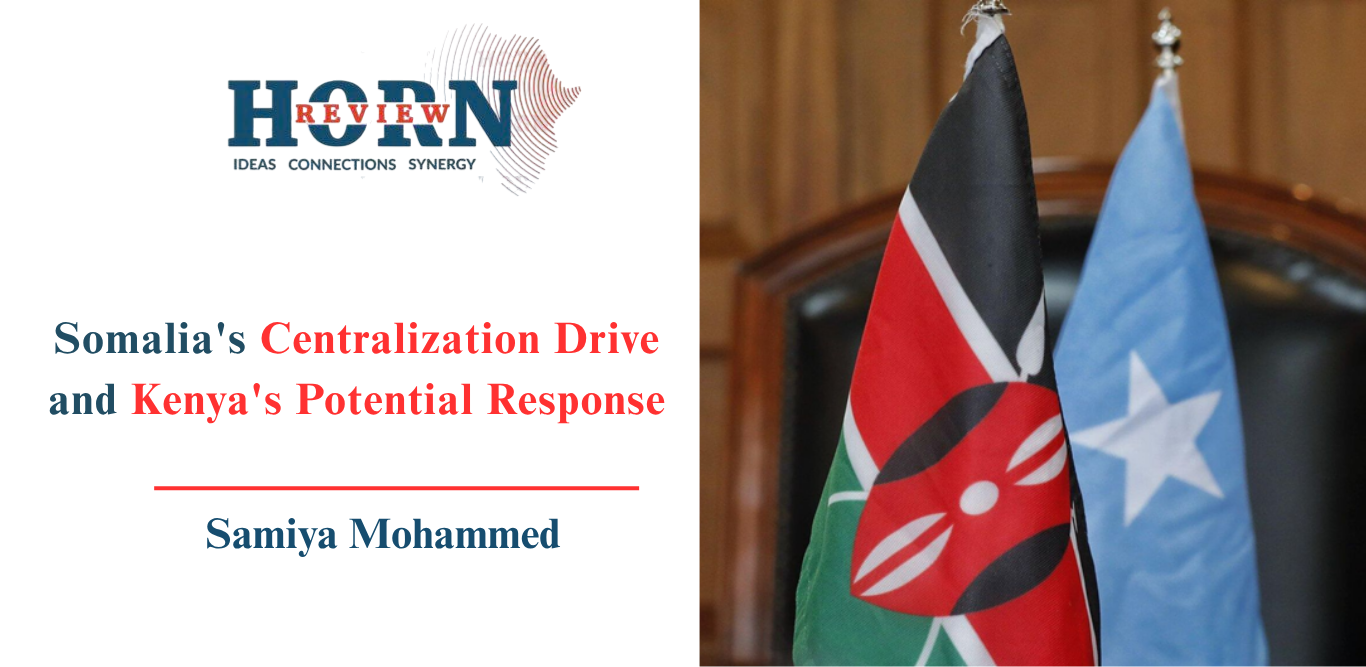
Kenya has with cold rationality assessed that its own security is directly imperilled and has quietly rebuffed Mogadishu’s request to surrender the exiled opposition leader Laftagareen. Its decision is not one of abstract principle but of pragmatic self reservation. For Kenya Jubaland under the administration of Ahmed Madobe has been a relatively functional partner on a long and porous border helping to contain the spilover of al Shabaab violence and instability. A chaotic Jubaland subjugated by a Mogadishu that views regional autonomy as treason would be a direct conduit for refugees, militants, and cross border attacks. Nairobi has considerable interest in maintaining this arrangement, having relied on past intelligence sharing and cross border operations. Hosting Laftagareen functions as both leverage and insurance.
The situation is further inflamed by extra judicial and religious measures that are poisoning the politics. A pro government cleric Sheikh Ali Wajis, publicly issued a fatwa granting religious legitimacy to the killing of government opponents, an act that is far from neutral jurisprudence and a dangerous weaponization of faith for political ends. Simultaneously, Mogadishu is actively seeking to legally brand Laftagareen’s armed resistance as terrorism. The south western state’s security minister has publicly called for Kenya to arrest and extradite the former president accusing his forces of fighting alongside al Shabaab though these allegations remain unverified.
This move to conflate political opposition with terrorism is a classic authoritarian tactic that once the legal and religious tools are in place risks being applied ever more broadly, eroding the critical distinction between counter terrorism and domestic repression.
In this environment there are no clean actors. Laftagareen’s faction is not a liberal democratic movement and it is a regional power centre fighting for its own survival and autonomy backed by its own clan based militias. Kenya prioritises its own border security and regional influence over any abstract defence of Somali sovereignty. Turkey’s involvement is the accelerant providing Mogadishu with the means to project force where it otherwise could not. The federal government’s pursuit of a monopoly on force through coercion rather than negotiation is exacerbating divisions rather than healing them. This is not primarily about destabilising Somalia as an abstract crime but about a centre seeking to break regional resistance and a neighbour deciding that the resulting chaos on its border is unacceptable. The situation is worsening because the centre is choosing force over dialogue and its external backers are enabling it pushing the country perilously closer to a multi sided civil conflict where al Shabaab watches and exploits every opportunity for distraction.
The broader context of this confrontation reveals a fundamental misalignment between the federal government’s vision of a unitary state and the de facto reality of Somalia’s clan based federalism. The current path with its reliance on external military support and its willingness to criminalise political dissent is not a path toward stability but a recipe for protracted conflict. The current conflict risks metastasising into a broader regional conflagration with Kenya’s position serving as a potential point for a wider confrontation that would benefit no one except the militant groups that thrive on chaos.
By Samiya Mohammed, Researcher, Horn Review