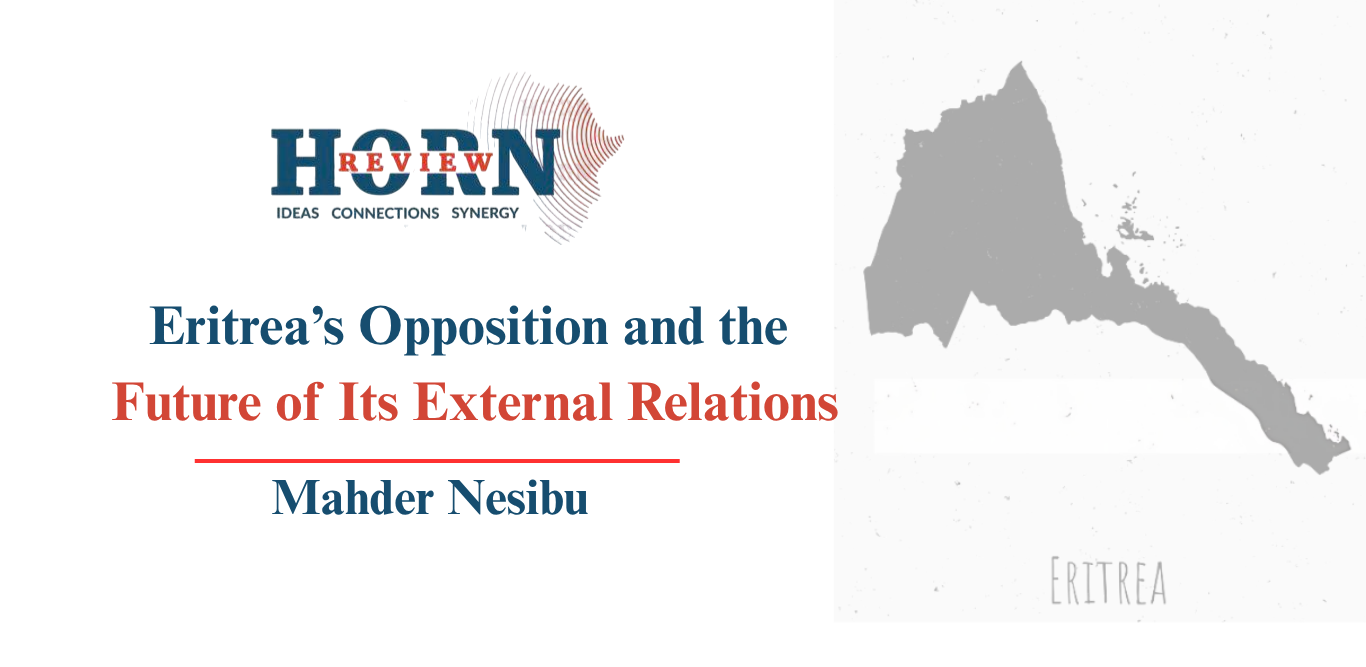
Eritrea has had a turbulent relationship with its neighbours, both before it emerged as a state in 1993 and in the decades since. That foreign policy has been characterised by isolation, confrontation and an enduring reliance on proxy politics, a pattern owed in part to the volatile neighbourhood that is the Horn of Africa, and in part to the EPLF and its successor, the PFDJ, and its understanding of national security as something to be secured through leverage over Eritrea’s neighbours rather than accommodation with them.
Amid growing uncertainty over the PFDJ’s long-term survival, and that of its 80-year-old president, Isaias Afwerki, several Eritrean opposition groups now see a chance to usher in political change, having come and gone throughout decades of spartan dictatorship without ever displacing it.
Beyond the stagnant economy and the hollowed-out state of the country’s institutions, these parties, some of which aspire to sit at the helm in Asmara, face the challenge of rewriting a foreign policy that has fuelled instability across the Horn for decades. That same policy made Eritrea subject to isolation and crushing sanctions, which in turn only entrenched the regime’s spartan style of governance.
The clearest expression of is called the “Isaias Doctrine” is the systematic use of proxy politics across Eritrea’s neighbourhood. That tool has allowed the president to punch above Eritrea’s weight, holding sway over political currents well beyond its borders. Across the regime’s tenure, in Sudan, in Djibouti and, more significantly, in Ethiopia, Asmara has fostered, trained and armed opposition groups, turning them into key nodes in its relations with each of its neighbours.
Dismantling that apparatus is the stated aim of the most prominent of these groups, the Eritrean Blue Revolution Front (EBRF), in any post-Isaias scenario, though the task will be formidable. The president has long relied on his National Security Office to direct proxy engagements and on the Eritrean Defence Forces to enforce his policies, sophisticated entities likely to persist beyond any leadership transition.
Rewriting Eritrea’s image among its neighbours, from a prickly, hawkish spoiler into something closer to a conventional state, would be a further test.
Violence and armed confrontation have long been prevalent across the Horn, and more acutely still when it comes to Eritrea. This is largely due to the culture of the ruling PFDJ itself, a party whose statehood was forged through a long and grinding insurgency against successive Ethiopian governments. That culture persists today. Eritrea has hardened into a militarised society under a permanent war footing, one that has driven generations into exile. It is this same diaspora that now forms the core of the actors seeking to overthrow the regime.
The relationship with Ethiopia will likely be the key to charting any new foreign policy, given that it has been the centrepiece of both the making and the practice of Eritrean statecraft. At a conference in Addis Ababa this month, the EBRF attempted to articulate its own vision for that relationship, one meant to overcome the tumultuous history that has animated Asmara’s doctrine. Its leaders stated that they have a plan for answering Ethiopia’s demand for access to the sea, a demand Addis Ababa has pressed with growing insistence and treats as a core element of its national interest.
Beyond that, the Eritrea-Ethiopia relationship occupies a peculiar place among how states typically interact. Some attribute this to Isaias Afwerki’s own worldview, and more so to the intimate trajectory of the development the current political systems in both countries. On either reading, Eritrea and Ethiopia continue to operate within something closer to a single political space, their security fabrics remaining intimately tied to one another. Navigating that intimacy, whether through political integration or a surgical separation that grants Eritrea a healthy autonomy, will be a challenge either way, and the latter considerably more so.
That intimacy extends beyond politics and into economics. One explanation for the peculiar war the two countries fought between 1998 and 2000 lies in a mismanaged economic relationship, in particular the failure to build a lasting mechanism for how Eritrea’s economy, complementary to and highly dependent on Ethiopia’s, was to interact with it. That failure remains instructive now. As the Ethiopian economy continues to expand rapidly, Eritrea’s dilemma will be how to make its own crippled economy complementary to its neighbour once again and build a relationship that is to the satisfaction of both.
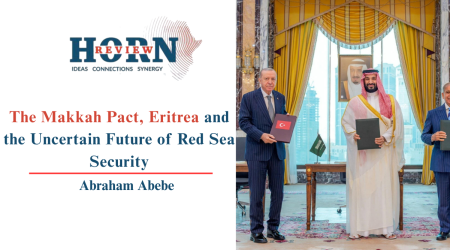
Beyond the Horn itself, Eritrea will face increasingly challenging world. Along its long coastline, the Red Sea is becoming a more volatile space, marked by rising militarisation and, with it, more frequent confrontation in a waterway critical to global trade. Among the Gulf states across the water, attention on Eritrea and the wider Horn is expanding, part of a broader pattern of Middle Eastern engagement that has brought with it growing competition for influence and economic gain.
Within the Eritrean opposition, and across the Horn of Africa more broadly, a post-Isaias scenario is increasingly a matter of consideration. For the EBRF, the prospect of leading that change in Asmara brings with it the question of how to undo decades of a foreign policy built on confrontation. Getting that right, or getting it wrong, stands to rewire the geopolitics of the Horn of Africa for a generation to come.
By Mahder Nesibu, Researcher, Horn Review