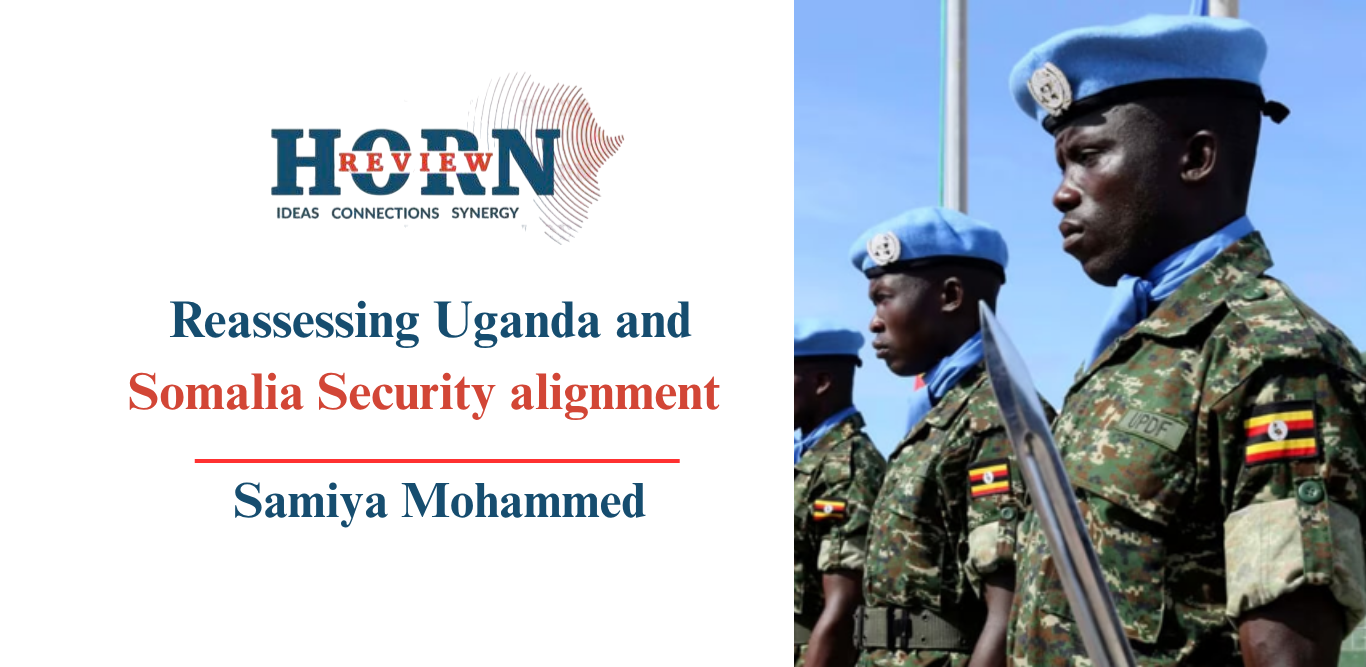
In July 2026 Ugandan President Yoweri Museveni addressed the Summit of Troop Contributing Countries to the African Union Support and Stabilization Mission in Somalia in Kampala. His remarks intended to reaffirm Uganda’s commitment to regional stability inadvertently laid bare a fundamental truth of the bilateral relationship between Uganda and somalia. Museveni explained that Uganda’s nearly two decades of military involvement in Somalia rested on rejecting religious extremism and demonstrating solidarity with Ethiopia.This framing shows departure from the official narrative of pan African altruism and solidarity with the Somali people. For a nation that has sacrificed hundreds of troops and incurred substantial financial costs, Uganda’s commitment was never purely about Somalia however about regional and Ethiopia has consistently been at the center.
In 2009 Uganda played a role through the Intergovernmental Authority on Development in engineering United Nations Security Council Resolution 1907 which imposed sanctions on Eritrea. The resolution tabled by Uganda accused Eritrea of providing political, financial and logistical support to armed groups undermining peace and reconciliation in Somalia.At the time Ugandan Minister for Regional Cooperation Isaac Musumba described Eritrea as a rogue state and declared that Uganda had petitioned for sanctions on behalf of IGAD. The sanctions were based on allegations that Eritrea was recruiting, arming and financing militants allegations that Eritrea denied, describing them as fabricated lies mainly concocted by the Ethiopian regime and the US administration.
The current state of Uganda and Somalia relations has experienced a series of public and private frictions that point to an accelerating deterioration of trust between Uganda and Somalia. One of the most telling indicators of the strained relationship is the reported failure to secure an official visit by Somali President Hassan Sheikh Mohamud to Uganda during his regional diplomatic tour in mid 2026. According to sources the government attempted to arrange a formal visit to Uganda as part of a effort to reinforce political support from troop contributing countries following the United States decision to end funding for foreign forces operating in Somalia .The breakdown in relations can be traced to a meeting on May 10, 2026 when Museveni reportedly urged President Hassan to engage with opposition leaders and offered to help facilitate an electoral understanding ahead of Somalia’s political transition.
This incident illuminates a tension in the relationship with Uganda viewing itself as entitled to a role in Somali internal political affairs commensurate with its military sacrifice while Somalia’s federal government insists on the sovereignty to determine its own politics without external interference. The rejection of Museveni’s mediation offer was a repudiation of Uganda’s perceived right to shape Somali governance outcomes which has been a consistent theme in the relationship.
The tensions reached a public apex at the July AUSSOM summit itself. Discussions among defense and security officials revealed deep divisions over political issues with Uganda arguing forcefully for the creation of an inclusive political dialogue roadmap for Somalia. Uganda urged troop contributing countries to encourage Somalia’s federal government to engage in inclusive dialogue with political actors, emphasizing that Somali leaders should take ownership of efforts to resolve internal disagreements.
However Somalia’s federal government and Djibouti argued that political disagreements should be addressed during the heads of state summit despite the absence of several key leaders. The communiqué language on Somali internal political dialogue became a main point with President Hassan Sheikh objecting to Uganda’s push for externally mandated political inclusion ultimately securing softened language .
This public clash over political language reveals the asymmetry in the relationship. Uganda as the largest and longest serving troop contributor views its military sacrifice as entitling it to a voice in Somali governance. Somalia views such external intervention as a violation of its autonomy. The fact that this tension erupted at a summit ostensibly focused on security demonstrates how political disagreements have permeated every aspect of the partnership. The deteriorating relationship cannot be separated from the increasingly vocal role of General Muhoozi Kainerugaba whose public statements have exposed the raw nerves in Uganda’s foreign policy. In April 2026 Muhoozi issued a ultimatum to Türkiye threatening to terminate diplomatic relations within 30 days over unspecified concerns regarding Ankara’s growing influence in Somalia. He highlighted that Western nations were the primary supporters of Uganda’s early military interventions in Somalia noting that Türkiye was not involved during that critical period.This reflects Ugandan unease with the changing of Somali security partnerships.
The future of Uganda and Somalia relations is linked to the financial pressures bearing down on AUSSOM. The United States’ decision to end logistical funding through the UN Support Office in Somalia by the end of 2026 is an existential threat to the mission. UNSOS provides essential logistical support including troop rotations, transport, food, fuel and medical supplies with annual operational costs of approximately $500 million roughly three times AUSSOM’s own budget .Uganda’s financial burden has already become a source of friction. In January 2025 when Western donors cut funding for AUSSOM, Uganda was left to finance its troops from its own resources. The country’s decision to maintain troops beyond its AUSSOM quota at its own expense reflects not altruism but strategy. However as the financial strain intensifies the instrumental motivations behind Uganda’s involvement become more exposed and less sustainable.
The operational cooperation continues out of shared interest in containing al-Shabaab but the foundation of trust that once characterized the partnership has been eroded. The stalled visit, the public clash over political dialogue and the financial pressures all point to a relationship in transition. Uganda’s role is being redefined from that of a trusted partner entitled to political influence to a transactional security provider whose continued presence depends on financial sustainability and respect for Somali sovereignty. The Somali government is asserting its autonomy, diversifying its security partnerships with Türkiye and Egypt and pushing back against Uganda’s efforts to shape its internal politics.
Museveni’s framing of Uganda’s involvement as solidarity with Ethiopia rather than Somalia was a diplomatic miscalculation as it exposed the instrumental nature of uganda commitment at precisely the moment when Mogadishu was seeking reassurance of genuine partnership. The relationship between Uganda and Somalia has deteriorated and the path to restoration is uncertain. The financial pressures bearing down on AUSSOM, the realignment of regional powers and the fundamental asymmetry in how each state views the partnership all point to a relationship that will continue to be marked by tension rather than trust.
By Samiya Mohammed, Researcher, Horn Review