
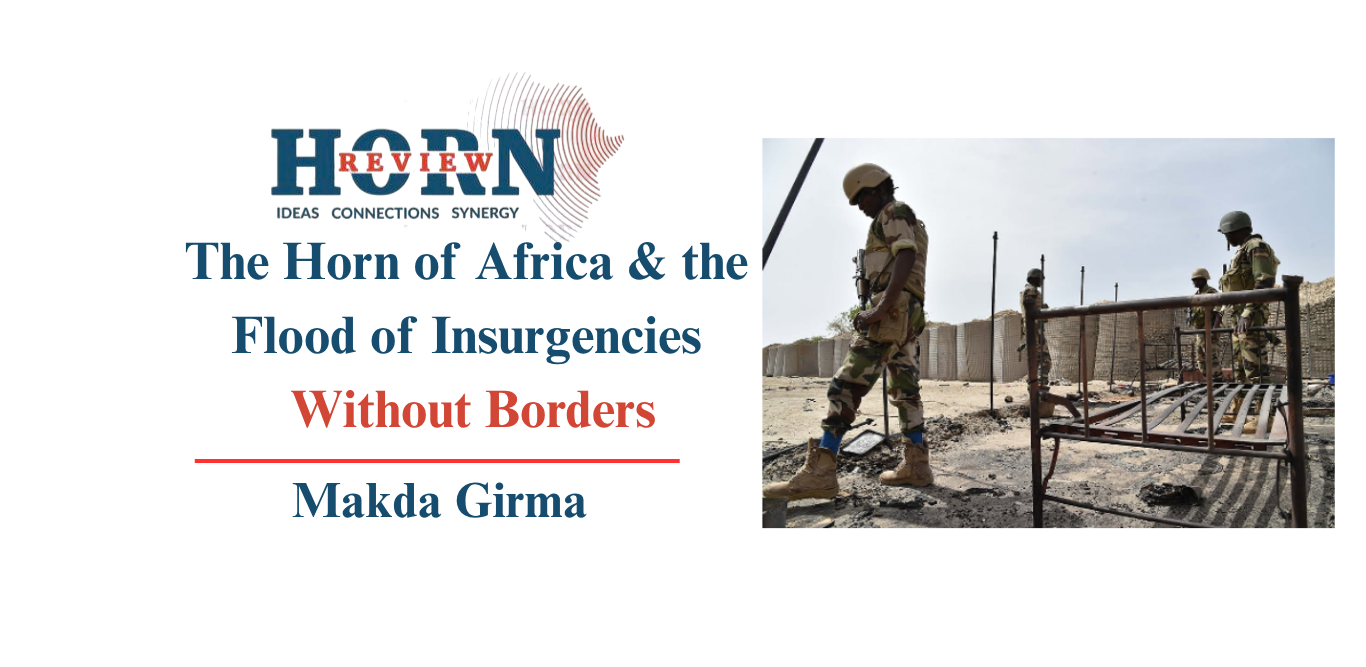
The Horn of Africa & the Flood of Insurgencies Without Borders
The Horn of Africa is often discussed as though its conflicts belong to separate national stories. Somalia has an Islamist insurgency, Sudan has a war between rival military formations, Ethiopia faces armed rebellions in several regions, and Eritrea repeatedly finds itself at the centre of interstate tension. Looking at these crises separately makes them easier to describe, but much harder to understand. Armed movements in the Horn rarely remain inside the borders of the states they challenge. Fighters move through borderlands, weapons travel along commercial routes, political leaders seek protection abroad, and neighboring governments sometimes treat another country’s rebels as a useful source of pressure.
The region’s geography makes these connections especially dangerous. The Horn sits beside the Red Sea, the Gulf of Aden and the Bab el Mandeb, linking the Indian Ocean with the Suez Canal and the Mediterranean. It is also where disputes over Nile waters, maritime access, ports, foreign military facilities and trade corridors overlap. A rebellion that begins with a local dispute over political representation or land can therefore become connected to competition among regional states, Gulf powers and global actors.
The clearest way to understand this pattern is through the idea of mutual intervention. In an ordinary proxy war, one state supports an armed movement against another. In a mutual intervention system, both states interfere in each other’s internal conflicts. Each tries to weaken its rival by supporting, hosting or politically encouraging the other’s opponents, while accusing that same rival of destabilizing its own territory. The line between civil war and interstate conflict gradually becomes difficult to see.
External support, however, does not explain why every insurgency begins. Most armed movements emerge from domestic conditions: exclusion from political institutions, state violence, communal insecurity, disputes over territory, economic marginalization or resistance to centralized rule. Foreign involvement becomes important because it can change whether a movement survives. Weapons, money, sanctuary, intelligence and diplomatic protection can allow a weakened rebellion to continue long after its local resources would otherwise have been exhausted.
The influence of sponsors also differs from one conflict to another. Sudan’s war has become deeply dependent on foreign weapons, commercial networks and regional supply routes. Al Shabaab has international jihadist connections, but much of its strength comes from its own taxation and coercive control inside Somalia. Ethiopia’s Fano and Oromo Liberation Army rebellions are rooted mainly in domestic political conditions, even though neighboring states have been accused of assisting particular factions. Treating all these movements as equally dependent on foreign patrons would therefore distort the evidence.
The Horn has a long history of governments supporting one another’s opponents. Somalia backed the Western Somali Liberation Front during the struggle over the Ogaden. Ethiopia provided support to insurgents in southern Sudan during the 1960s and 1970s, partly to secure its western border and partly to pressure governments in Khartoum. Sudan provided sanctuary to Eritrean liberation movements fighting Ethiopia. These relationships were connected to local security concerns, but they were also shaped by Cold War competition and rivalries among Middle Eastern governments. A detailed study of Ethiopian support for the southern Sudanese insurgency shows how local, regional and global motives could operate at the same time.
The relationship between Ethiopia and Eritrea later became one of the clearest examples of reciprocal proxy warfare. After their 1998 to 2000 border war, both governments developed ties with political and armed groups hostile to the other. Eritrea supported Ethiopian opposition movements and cultivated relationships with factions in Somalia, while Ethiopia assisted Eritrean opposition actors. The rivalry did not remain confined to their shared border. It spread into Somalia, Sudan and other parts of the region, as documented in research on the proxy competition between Ethiopia and Eritrea.
These arrangements were attractive because they appeared cheaper than direct war. Supporting a rebel movement could force a rival government to divide its army, spend more on internal security and defend important roads or border regions. Yet the strategy rarely remained under the sponsor’s control. Armed groups developed their own interests, changed alliances and built independent sources of income. Weapons supplied for one purpose entered black markets and passed to other movements. Smuggling routes originally tolerated for political reasons became permanent criminal economies.
Governments also learned that accusations of foreign sponsorship could serve domestic purposes. A rebellion with genuine local support could be dismissed as a conspiracy organized abroad. This allowed leaders to avoid addressing grievances and to justify military campaigns, emergency rule or restrictions on opposition activity. For that reason, evidence of external assistance must always be separated from the political causes that produced the rebellion.
Competition over the Nile has added another layer to this system. Ethiopia officially inaugurated the Grand Ethiopian Renaissance Dam in September 2025. Addis Ababa views the dam as a foundation for electrification, industrial growth and national sovereignty. Egypt sees the Nile as an essential national security resource and continues to seek a binding agreement governing the dam’s operation, particularly during periods of drought. Sudan’s position has shifted as its own political order has fragmented. The dispute remained unresolved in 2026, when the United States again offered to mediate between Egypt and Ethiopia.
The Nile dispute does not prove that Egypt is behind every armed movement opposing the Ethiopian government. It does, however, create a powerful incentive for Cairo to build relationships around Ethiopia’s borders. Ethiopian leaders, in turn, tend to interpret Egyptian military cooperation with neighboring states through the fear that Cairo is searching for indirect ways to limit Ethiopia’s regional influence.
Maritime access has become equally important. Ethiopia’s January 2024 memorandum with Somaliland proposed access to part of the coastline, while Somaliland expected possible recognition of its independence. Somalia rejected the Ethiopia and Somaliland agreement as a violation of its sovereignty. The dispute rapidly became more than a disagreement over a port. It affected military relations, diplomatic alignments and the future of Ethiopian troops participating in security operations inside Somalia.
The Ankara Declaration of December 2024 reduced the immediate danger of confrontation. Ethiopia and Somalia reaffirmed each other’s sovereignty and agreed to pursue arrangements that could provide Ethiopia with commercial access to the sea under Somali authority. Technical negotiations began in February 2025, but the deeper disagreement over Somaliland, recognition and maritime influence did not disappear.
The situation changed again when Israel formally recognized Somaliland in December 2025, becoming the first United Nations member state to do so. Somalia rejected the decision, while the African Union called for its reversal. Somaliland is therefore no longer completely without recognition, but it remains outside broad international acceptance and is still considered part of Somalia by the African Union and most governments. Its position near Yemen and the Bab el Mandeb has also increased speculation about intelligence, military and maritime cooperation involving Israel and other Red Sea powers.
Somalia’s internal conflict shows why external sponsorship cannot explain everything. Al Shabaab developed from the militant wing of the Islamic Courts movement and became an affiliate of Al Qaeda, but it is not mainly dependent on a neighboring government. Its strength comes from a political and financial system built inside Somalia. It taxes businesses, transport routes, agricultural production, property and imported goods. It uses threats, assassinations and an extensive intelligence network to force compliance, even in areas formally controlled by the government.
Estimates vary, but research by the Africa Center for Strategic Studies placed Al Shabaab’s annual income from extortion and taxation at roughly $100 million. That money supports fighters, administrators, intelligence operatives and supply networks. The organization’s ability to raise its own revenue gives it greater independence than an armed group relying on a single sponsor. It can lose territory without losing its entire financial system because its influence reaches into ports, businesses and communities beyond its visible areas of control.
Its connection to Al Qaeda still matters. It provides ideological legitimacy, propaganda reach and access to international jihadist networks. Yet Al Shabaab’s endurance is better explained by the weakness of Somali institutions, the fragmentation of political authority and its ability to impose a shadow system of taxation and justice. The group’s capture of the strategic town of Adan Yabaal during its 2025 offensive showed that it remained capable of recovering ground despite years of international military pressure.
Foreign involvement is more direct on the government side. The United States conducts air operations, African Union forces assist Somali security institutions, and Turkey provides military training and defense cooperation. Kenya has its own forces and political relationships in southern Somalia, particularly around Jubaland. These are forms of external intervention, but they are not support for the insurgency. They are intended to strengthen recognized authorities against it.
Somalia’s federal divisions still affect the campaign. Puntland conducts its own operations against the Islamic State branch in northern Somalia, while disputes between Mogadishu, Puntland and Jubaland interfere with command structures and the distribution of international assistance. Somaliland occupies another category entirely. It is a functioning political administration seeking wider recognition, not an insurgency in the conventional sense. Its importance comes from its control of territory, Berbera’s strategic location and its ability to enter relationships that alter the regional balance.
Sudan presents a very different picture. The Rapid Support Forces did not begin as an underground rebellion. They developed from Janjaweed militia networks used by the Sudanese government during the Darfur conflict and were later incorporated into the state’s security structure. Their leader, Mohamed Hamdan Dagalo, became one of the country’s most powerful political figures. The war that began in April 2023 was therefore not simply an insurgency against an established government. It was a fight between two armed institutions that had previously shared power and then turned against each other over military integration, political authority and control of the state.
As the war continued, the RSF increasingly behaved like a rival state. It controlled large areas, recruited through militia and transnational networks, established political alliances and sought international legitimacy. Gold gave it an independent financial base. Mines, trading companies and smuggling corridors connected Sudanese armed actors to markets in the Gulf, Libya, Chad and other neighboring states.
Foreign support has had a clear military effect on both sides. Iranian drones helped the Sudanese Armed Forces regain momentum around Khartoum and other strategic areas, according to a Reuters investigation into Iranian drone transfers. The army has also received Turkish equipment and political or military support from several regional governments.
The RSF’s external supply network has attracted even greater attention. The Sudanese army and international observers have repeatedly accused the UAE of supplying the RSF through Chad and other routes. The UAE denies providing weapons and says its activities have been humanitarian. Even so, flight records, satellite imagery, weapons tracing and United Nations findings have produced mounting evidence of a large international logistics system. A 2024 investigation documented repeated UAE flights into eastern Chad, while a July 2026 report described United Nations findings that aircraft connected to an international contractor network had transported weapons, drones and mercenaries for the RSF.
Not every shipment can be traced directly to a government order, and legal responsibility is harder to establish than the existence of a supply route. Still, the broader conclusion is difficult to avoid: the RSF has benefited from external weapons, foreign personnel and cross border logistics that have greatly expanded its ability to continue the war.
The Sudan conflict has also pulled neighboring African states deeper into the system. In February 2026, Reuters reported that Ethiopia was hosting a camp used to train RSF fighters. Later accusations that Ethiopia participated directly in drone attacks were rejected by Addis Ababa. The training camp report nevertheless suggested that the Ethiopia and Sudan relationship had moved beyond ordinary diplomatic tension and into the kind of indirect involvement that has repeatedly characterized the Horn.
Chad and Libya are just as important to the RSF’s logistical depth. Darfur connects Sudan to armed groups, traders and military networks operating across both countries. Weapons and fuel can pass through regions where state authority is limited, while gold can move in the opposite direction. These flows are often managed by companies, militia commanders and local intermediaries rather than openly by foreign ministries.
South Sudan is vulnerable even when it is not directly participating in the fighting. Its economy depends heavily on oil infrastructure crossing Sudan. Damage to the pipeline during the Sudanese war cut government revenue sharply and deepened South Sudan’s own political crisis. The war in one state has therefore weakened the economic foundations of another, as described by the International Crisis Group in its analysis of South Sudan’s slide toward renewed conflict.
Ethiopia’s armed conflicts are more fragmented and require greater caution when discussing foreign support. The Amhara Fano movement and the Oromo Liberation Army do not share the same history or political program. Fano was allied with federal forces during the Tigray war, but relations deteriorated after the Pretoria agreement, the attempted restructuring of regional security forces and growing Amhara fears over territorial disputes, displacement and political marginalization.
Fano then developed into a decentralized rebellion operating across much of the Amhara region. Its factions rely on ambushes, temporary occupations, road closures and attacks on military or administrative targets. Decentralization makes the movement difficult to defeat by removing one commander, but it also complicates negotiation because no single leadership can easily speak for every faction. The origins and expansion of the conflict are examined in the International Crisis Group’s account of Ethiopia’s war in Amhara.
The Oromo Liberation Army operates mainly in parts of western, central and southern Oromia. It presents itself as resisting political exclusion and the historical marginalization of Oromo communities, while the federal government describes it as a terrorist organization. The conflict includes attacks on security forces, violence against civilians, government counterinsurgency operations and criminal activities such as kidnapping and extortion. Current conflict monitoring continues to identify Fano and the OLA as the two main armed challenges facing the Ethiopian government.
Foreign involvement in these rebellions is possible, but the evidence is less complete than it is in Sudan. Ethiopia accused Eritrea in February 2026 of occupying Ethiopian territory and providing material assistance to armed groups. Eritrea rejected the accusations. Historical experience gives the claims some credibility because both states previously supported one another’s opponents. Yet it would still be inaccurate to describe every Fano or OLA faction as an Eritrean proxy without clear evidence of command, funding, weapons transfers or sanctuary.
The unresolved aftermath of the Tigray war makes the situation more dangerous. The Pretoria agreement ended the largest battles between the federal government and Tigrayan forces, but questions involving disputed territory, displaced populations, political authority and Eritrean forces remained. The relationship between Ethiopia and Eritrea then deteriorated sharply. By early 2026, the International Crisis Group described the interaction among Ethiopia, Eritrea and Tigray as a regional powder keg.
The possibility of mutual intervention is therefore real even where direct sponsorship has not been conclusively demonstrated. Eritrea has the historical relationships and strategic motive to cultivate Ethiopian opponents. Ethiopia has similar reasons to support Eritrean dissidents or actors in Sudan. Tigrayan factions may also seek outside partners if they fear renewed conflict with the federal government. The danger comes from how quickly a domestic political dispute can be absorbed into an interstate rivalry.
The relationship among Egypt, Somalia and Eritrea adds to Ethiopia’s sense of pressure. In October 2024, the three governments agreed to strengthen security cooperation and support Somalia’s military institutions. Egypt also sent military equipment to Somalia after the Ethiopia and Somaliland dispute intensified. The partnership was publicly framed around Somali sovereignty and counterterrorism, but it was widely interpreted as an effort to balance Ethiopia.
Strategic alignment is not the same as insurgent sponsorship. There is no need to claim that Egyptian weapons sent to Somalia were intended for Ethiopian rebels. The importance of the alignment lies in the pressure it creates. Ethiopia must consider the possibility that tensions over the Nile, Somalia, Eritrea, Tigray and Sudan could converge. This fear can encourage military buildup and aggressive regional policies, which then give neighboring states further reasons to coordinate against Addis Ababa.
The Al Fashaga border dispute between Sudan and Ethiopia contains the same risk. What began as a dispute over fertile land became connected to the Nile, the Tigray war and Sudan’s internal fragmentation. Border communities may be accused of loyalty to one side or the other, while armed actors can use contested territory for movement and supply. The area could become a bridge connecting Amhara’s rebellion, Sudan’s war and wider interstate competition.
Middle Eastern powers have become permanent participants in this environment because the African and Arabian shores of the Red Sea form one security system. Ports, food supply chains, migration, military facilities and shipping routes connect them. The UAE has expanded its influence through investment, logistics, elite relationships and security partnerships. Turkey has built deep military and political ties with Somalia. Qatar and Saudi Arabia use investment, diplomacy and government relationships, while Iran’s influence has grown through weapons and drone technology.
These relationships are not all forms of proxy sponsorship. A commercial port investment is different from supplying a paramilitary force. Training the recognized Somali army is different from providing sanctuary to an insurgency. Yet each relationship changes the regional balance. A port can later support military operations. A security agreement can alarm neighboring governments. A commercial corridor can become a weapons route during a crisis.
By 2026, competition between Saudi Arabia and the UAE had become a major part of Horn politics. Reuters reported that a Saudi and UAE rivalry was influencing alignments involving Sudan, Somalia, Ethiopia, Eritrea and Libya. The Horn is no longer merely receiving the effects of Middle Eastern rivalries. Local governments and armed actors also use those rivalries to obtain resources, protection and political leverage.
Global powers operate differently but still shape the same system. The United States focuses heavily on counterterrorism in Somalia. Russia pursues political relationships, resource access and possible maritime influence, particularly in Sudan. China relies mainly on economic diplomacy and infrastructure, although its military base in Djibouti shows that commercial interests increasingly require a security presence. Djibouti’s concentration of foreign forces demonstrates how the Bab el Mandeb has become part of a global military geography rather than only a regional concern.
External support reaches armed movements through several connected channels. Weapons and drones improve battlefield capacity. Money obtained through gold, charcoal, taxation, livestock or smuggling pays fighters and purchases supplies. Sanctuary allows leaders to recruit, train and receive medical treatment. Diplomatic relationships can block sanctions, challenge investigations or give armed organizations a platform from which to seek recognition.
The most effective support is not always a visible weapons shipment. A government can permit a company to move funds, allow aircraft to use an airstrip or quietly tolerate fighters crossing a remote frontier. This gives the sponsor plausible deniability while still producing a military effect. By the time investigators identify one route, the network may already have shifted to another.
Armed movements are not passive tools in this process. They choose sponsors, exaggerate their military strength and take advantage of rivalries among states. They may accept weapons while ignoring the political instructions of the supplier. They can change patrons when alliances shift or use foreign support to defeat rival factions within their own movement. Al Shabaab’s taxation system and the RSF’s gold networks give both organizations enough independent income to resist complete control by any outside government.
The civilian consequences are often treated as secondary, even though they are central to how the system reproduces itself. Border communities are suspected of collaborating with neighboring states because of their ethnicity, trade relationships or family connections. Refugees may face recruitment or surveillance. Transport restrictions and armed taxation increase food prices, while attacks on farms, clinics, schools and water systems destroy the institutions people depend on.
Displacement then carries instability across borders. Sudan’s war has affected Chad, South Sudan, Egypt and Ethiopia. Ethiopian conflicts have sent refugees into Sudan and neighboring countries. Somalia’s insecurity has shaped politics and security in Kenya. Communities that lose their homes and livelihoods may become more dependent on armed actors, creating new grievances and recruitment opportunities.
Regional mediation repeatedly struggles because the proposed mediators often have their own interests in the outcome. IGAD members do not share the same alliances. The African Union depends on cooperation from governments that may themselves be supporting one side. Sudan has faced several competing peace processes, allowing the belligerents to choose whichever forum places the least pressure on them. Governments that are accused of supplying weapons can appear at the negotiating table as mediators.
A more effective response would have to connect domestic peace efforts with regional restraints. Arms monitoring cannot stop at the border of the country at war. It must examine aircraft, ports, companies, gold markets and end users across the whole supply chain. Sanctions against commanders will have little effect if the financial and commercial networks surrounding them remain untouched.
Border regions also need to be treated as political communities rather than empty security zones. Better local administration, land settlement systems, transport links, public services and political representation can reduce the dependence of these areas on armed groups and smugglers. Military control alone usually pushes networks further underground without removing the grievances that sustain them.
None of this can replace domestic political settlements. Cutting a supply route will not resolve disputes over federalism, land, identity, political representation or state violence. At the same time, an internal peace agreement will remain fragile if a neighboring government can reactivate an armed movement whenever interstate relations deteriorate.
The conflicts of the Horn are therefore neither purely domestic nor simply created from abroad. Sudan shows the clearest case of foreign assistance changing the military balance and prolonging a war. Somalia shows how an insurgency can combine international ideological ties with a largely domestic system of revenue and coercion. Ethiopia shows why accusations of foreign support must be taken seriously but not allowed to erase the political grievances from which Fano, the OLA and other movements emerged.
The greatest danger is not that every armed group will become a perfect proxy controlled by a foreign government. It is that several incomplete and unstable relationships will begin reinforcing one another. A crisis in Tigray could pull in Eritrea. A confrontation over Somaliland could affect the fight against Al Shabaab. Violence in Al Fashaga could connect Sudan’s war to Ethiopia’s internal conflicts. Red Sea competition could give each local actor a new foreign partner.
By Makda Girma, Researcher, Horn Review

RELATED
Posts
9
Oct
Where Somalia’s Federal and Regional Fight Is Going
The 2012 federal settlement was less a constitutional order...
9
Oct
Eritrea’s Post-Pretoria Strategy and the Escalation in Ethiopia
Our latest report examines Eritrea’s post-Pretoria trajectory and how selective...
8
Oct
The Houthi-al-Shabaab Nexus and the Emerging Security Architecture of the Gulf of Aden
The growing relationship between Yemen’s Houthi movement and Somalia’s al-Shabaab...
7
Oct
“Decaffeinated Sovereignty”: Eritrea’s One-Way Street with Ethiopia
There is a peculiar contradiction at the heart of Eritrea’s...
7
Oct
Leaked Documents Allege Sudanese Army Weapons Pipeline to TPLF-Aligned Forces as Tigray War Reignites
Leaked documents alleging a Sudanese army weapons pipeline to TPLF-aligned...
7
Oct
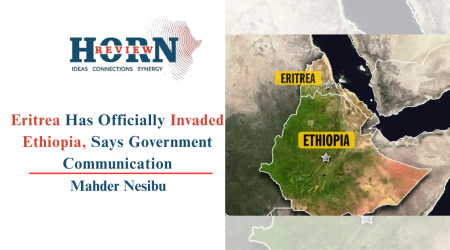
Eritrea Has Officially Invaded Ethiopia, Says Government Communication
Ethiopian Government Formally Condemns Eritrean Territorial Incursion as Its Forces...
7
Oct
Turkey, Somalia and the Transactional Reading of Alamein
The Alamein Declaration functions less as a coherent framework...
7
Oct
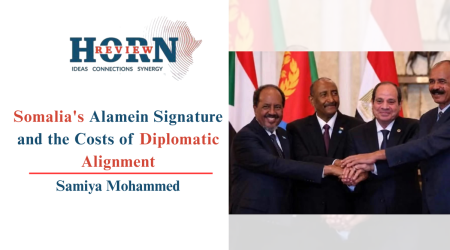
Somalia's Alamein Signature and the Costs of Diplomatic Alignment
The Alamein Declaration between Egypt, Sudan, Eritrea and Somalia...
6
Oct
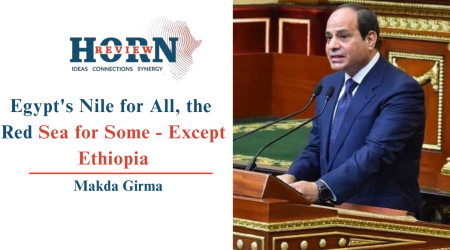
Egypt's Nile for All, the Red Sea for Some - Except Ethiopia
The contradiction was laid out almost perfectly at El Alamein....
6
Oct
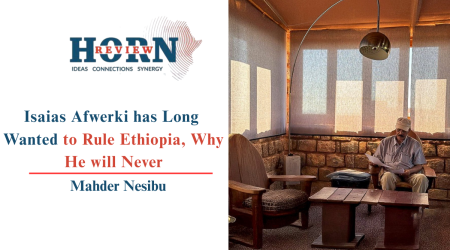
Isaias Afwerki has Long Wanted to Rule Ethiopia, Why He will Never
President Isaias Afwerki is among the most enduring figures in...