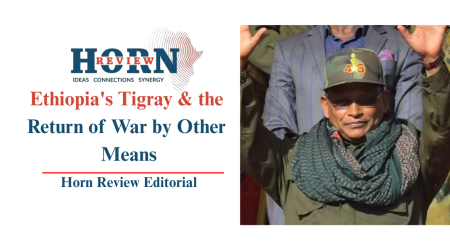
Leaked intelligence report concerning northern Ethiopia describe a rapidly evolving and deeply complex security environment in which political coordination, military positioning, clandestine activity, and information operations are allegedly converging in ways that could significantly affect national stability and regional security dynamics. According to these reports, instability itself may be deliberately instrumentalized by TPLF and the Eritrean regime, not only as a means of physical disruption but as part of a broader strategy aimed at shaping public perception, influencing attribution of responsibility, and weakening confidence in Ethiopia’s Federal Government.
The report portrays a scenario in which acts of violence, whether actual or anticipated, are embedded within a larger contest over narrative control. In contemporary conflict environments, the ability to define responsibility following an incident has become as strategically significant as the incident itself. Political legitimacy, domestic cohesion, and international perception are increasingly shaped not only by material realities but by the narratives that emerge in their aftermath. Within this context, TPLF and its proxy state and non-state allies appear to be attempting to position themselves advantageously in advance of potential escalation.
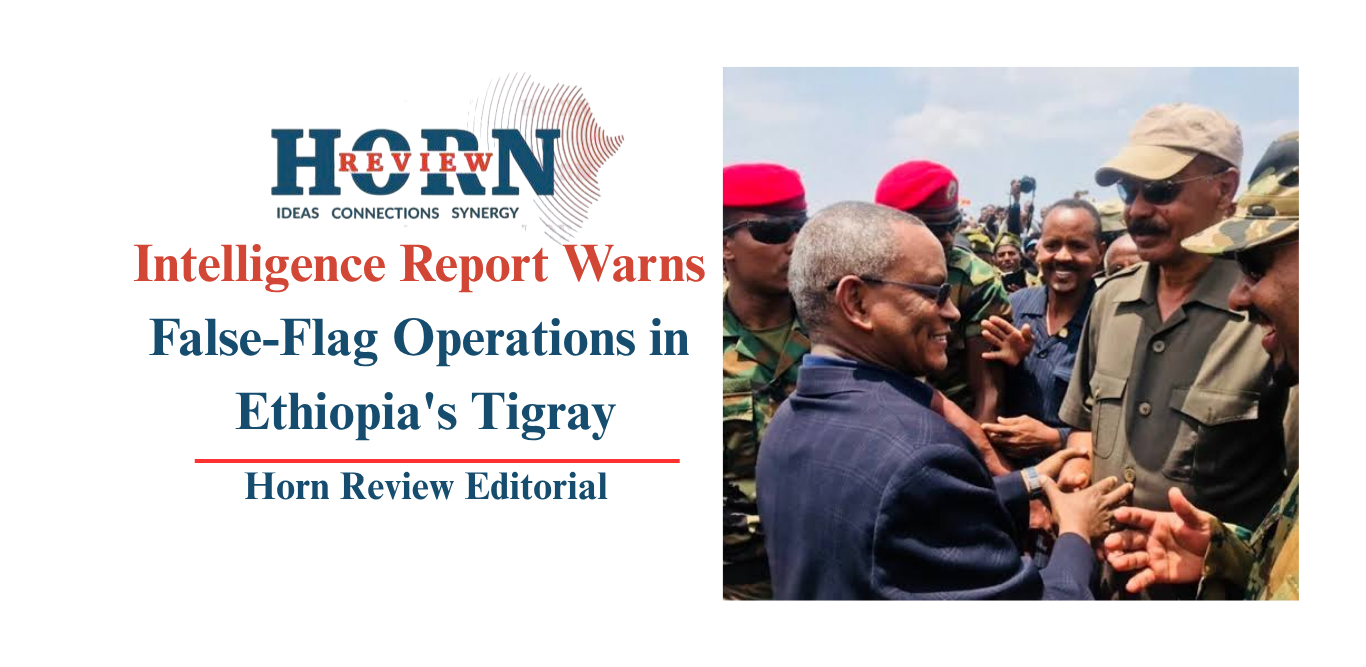
On 3 August 2026, senior military and political figures from both the Tigray People’s Liberation Front (TPLF) and Eritrea’s People’s Front for Democracy and Justice (PFDJ) reportedly met in the border town of Zalambessa. The choice of location is notable given its historical and strategic relevance as a site closely associated with the 1998-2000 Ethiopia–Eritrea war. The meeting is described as a continuation of sustained relations and a signal of ongoing political alignment amid unresolved tensions in the region.
According to the intelligence report, the TPLF and Eritrea’s PFDJ have reportedly maintained unauthorized “official” relations and engagements over the past two years. These interactions are a matter of concern due to their implications for the balance of power and political alignment in northern Ethiopia. In the broader geopolitical landscape of the Horn of Africa, where domestic conflicts frequently intersect with regional rivalries and strategic interests, as in the same case, such coordination would carry significant implications.
The report identifies several TPLF figures allegedly involved in these engagements, including Fetlework Gebregziabher (Monjerno), Wedi Imbeytey, Wedi Medhin, and Kinfe Dagnew. Discussions focused on restoring political influence, fostering public hostility toward the Federal Government, and generating conditions conducive to a broad-based popular uprising against Federal authority. Such efforts are not limited to conventional political mobilization but are linked to a wider strategy involving both physical and informational dimensions.
Central to the intelligence allegations is the claim that plans were discussed to conduct coordinated explosive attacks across multiple locations within Tigray. Potential targets include economic and industrial institutions including EFFORT-affiliated entities – targets that would carry significance beyond immediate destruction, as they represent employment, economic recovery, and regional stability. Attacks against them would therefore have cascading effects on public confidence and socioeconomic resilience.
The report further alleges that civilian and public spaces – including markets, transport hubs, hospitals, churches, mosques, and other community centers – are discussed to be considered within the scope of potential operations. The alleged strategy involves conducting attacks and subsequently attributing responsibility to the Federal Government in order to generate public anger and political pressure.
If implemented, such actions would constitute a form of false-flag operation in which TPLF employs violence, as usual, not solely for its direct effects but as a mechanism for shaping perception and redistributing blame. Hence, TPLF’s strategy reflects the growing fusion of physical operations and information warfare – hoping its ability to influence how events are interpreted by local rthniv Tigrayans, national audiences, and international observers decisively alter political outcomes.
The intelligence report also describes parallel efforts to influence public understanding through social media networks and digital communication platforms. Selected activists and online influencers were engaged to disseminate messaging intended to alert communities. These communications reportedly emphasized that the Federal Government would “deliberately target civilians or engage in actions designed to harm the population”.
The report further warns of an alleged attempt to recreate a scenario referred to as “Hawzen number two,” invoking the memory of the 1988 Hawzen airstrike. This historical reference carries profound emotional and political significance within Tigrayan society. According to the report, the concern is that historical trauma could be deliberately echoed or exploited in order to mobilize public sentiment and assign blame to the Federal Government.
TPLF’s intent for the strategic use of historical memory in this conflict context is a powerful but potentially dangerous phenomenon. While collective memory can serve legitimate purposes of remembrance and accountability, the TPLF & PFDJ are intending to manipulate past suffering to justify or amplify present political objectives.
The report reference further claims that 76 percent of atrocities against Tigrayan civilians during the 2020-2022 Tigray war were attributed to Eritrean soldiers and 18 percent to Fano militias. Yet, these two actors now form part of the Tsimdo alliance, the SAF affiliated and Egyptian backed bloc, with no moral constraints in engaging in further destructive actions if these actions served political ends. The implication is that violence and instability could be rationalized as strategic tools within TPLF’s broader contest for power and legitimacy. The report therefore warns that civilian populations risk becoming instruments within competing political strategies. It calls for vigilance among local communities, emphasizing the importance of preventing scenarios in which suffering is deliberately induced or exploited for political gain.
Alongside these political and informational dimensions, the intelligence report details military developments that further contribute to the sense of escalating tension. Accordingly, TPLF militias are engaged in troop concentration and fortification efforts across several locations, including Raya Bala, the Zobel direction, Waja Tumuga, the Merewa direction, and the Korem line. The deployment of mechanized heavy weaponry associated with the 43rd Army around Chercher and Bala is described as an indicator of increased operational readiness.
The report also notes that communication restrictions have been imposed on deployed personnel, including the collection or limitation of mobile phones – a standard operational security practices in anticipation of potential military engagement, aimed at preventing information leakage and maintaining command integrity.
The regional dimension of the security environment is further underscored by references to TPLF-affiliated forces reportedly based in Sudan, commonly referred to as “Army 70.” The presence and recent mobilization of such forces introduces an additional layer of complexity, highlighting the potential for cross-border dynamics to influence internal developments within Ethiopia.
The cumulative effect of these developments is already being felt among civilian populations. Reports of declining public transportation services between Alamata, Kobo, Korem, and Mehoni reflect growing uncertainty and fear. In Alamata and surrounding areas, residents have begun relocating toward Korem, Mehoni, and Maichew in anticipation of possible conflict. Such movements are widely recognized as early indicators of humanitarian stress, often preceding large-scale displacement. These patterns underscore the urgency of preventive measures aimed at de-escalation and stabilization before conditions deteriorate further.
In summary, the intelligence report depicts a multifaceted and volatile environment characterized by alleged political coordination, potential false-flag operations, military preparations, information campaigns, historical narrative mobilization, and increasing civilian anxiety. For Ethiopia’s Federal Government, the challenge is both immediate and strategic. It must address potential security threats while preserving constitutional order, maintaining public trust, and upholding commitments to civilian protection and international humanitarian standards. Effective response will require not only military readiness but also credible communication, and sustained diplomatic engagement. In a country and a region marked by historical trauma and contested narratives, the credibility of government communication and the reliability of information become critical determinants of stability. As much as military readiness, the capacity to counter misinformation and maintain public trust here is therefore closely linked to national security. That said, the situation in northern Ethiopia represents a broader test of whether political disputes can be managed within institutional frameworks or whether they will once again escalate into cycles of violence and competing narratives.
By Horn Review Editorial