How Ethiopia Turned its Mega-Projects in to Diplomatic Capital
political economy of Ethiopia in Dr Abiy’s Era is defined by a deliberate policy framework that converts large-scale civil engineering, urban renewal, and historic heritage restoration into strategic diplomatic capital and sovereign economic leverage. Infrastructure has stopped being seen solely through the lenses of domestic utility instead, the mega projects are now being leveraged to reposition the country as a central diplomatic hub, an energy exporter, and a primary destination for the international capital in the Horn of Africa
This strategy operates in tandem with a comprehensive domestic industrial policy known as the “Ethiopia Tamirt” (made in Ethiopia) movement. The current administration is basically building internal industrial depth by channeling local material procurement and construction labor into public works, such as the multi-phase Addis Ababa Corridor Development.
It is also sweeping a structural macroeconomic reform, including the historic opening of the financial sector via banking business proclamation No. 1390/2025, which is a landmark Ethiopian law that liberalizes the financial sector by allowing foreign investment, defining ownership limits, and tightening governance standards for commercial banks that have lowered entry barriers for international institutions. The resulting environment offers foreign state actors and multinational corporations structured opportunities to participate in high-yield sectors across energy, aviation, commercial real estate, logistics, and advanced manufacturing.
The grand Ethiopian renaissance Dam stands as the foundational example for this strategy. Engineered and constructed by the Italian infrastructure leader Webuild (formerly Salini Costruttori), which has operated as an engineering partner in Ethiopia for over six decades across projects such as Legedadi, Gilgel Gibe I, and Gilgel Gibe II, the GERD represents one of the most ambitious hydroelectric achievements globally. Rising 170 meters in height and spanning 1.8 kilometers at its crest, the dam utilizes 10.7 million cubic meters of roller-compacted concrete (RCC), making it the largest RCC gravity dam by volume on the African continent.
During this construction, Webuild set a world record by placing 23,000 cubic meters of RCC within a single 24-hout period. With an installed production capacity of 5,150 Megawatts and an expected annual output of 15,700 Gigawatt-hours of clean energy, the GERD effectively doubles Ethiopia’s domestic electricity generation capacity.
Beyond domestic utility, the dam functions as an economic diplomacy vector. By generating green power with zero carbon emissions, Ethiopia positions itself as the foundational clean energy grid for East Africa, exporting over 3.4 Gigawatts of electricity to regional neighbors and domestic industrial zones. This electricity export capability transforms regional economic dynamics: neighboring states become structurally integrated into Ethiopia’s power architecture, fostering regional stability through shared economic interdependencies.
For external actors the leverage is extensive and multilayered. Webuild, for instance, secures multi-decade engineering contracts, technology demonstration platforms, and preferential access to follow-on hydro and infrastructure tenders across the Horn of Africa, turning a single flagship project into a long-term commercial foothold.
Italy, through the Mattei Plan under Prime Minister Giorgia Meloni, gains a concrete instrument of European industrial presence in Africa: partnership over a critical energy asset, preferential trade and financing channels, and a visible success story that validates further Italian and EU capital deployment.
European financiers and contractors lock in predictable revenue streams from construction, operations, and power-export offtake while positioning themselves as preferred partners for the next wave of Ethiopian mega projects. The GERD therefore functions as both Ethiopian soft power and a high-yield vehicle for foreign capital, demonstrating that participation yields durable commercial and diplomatic returns.
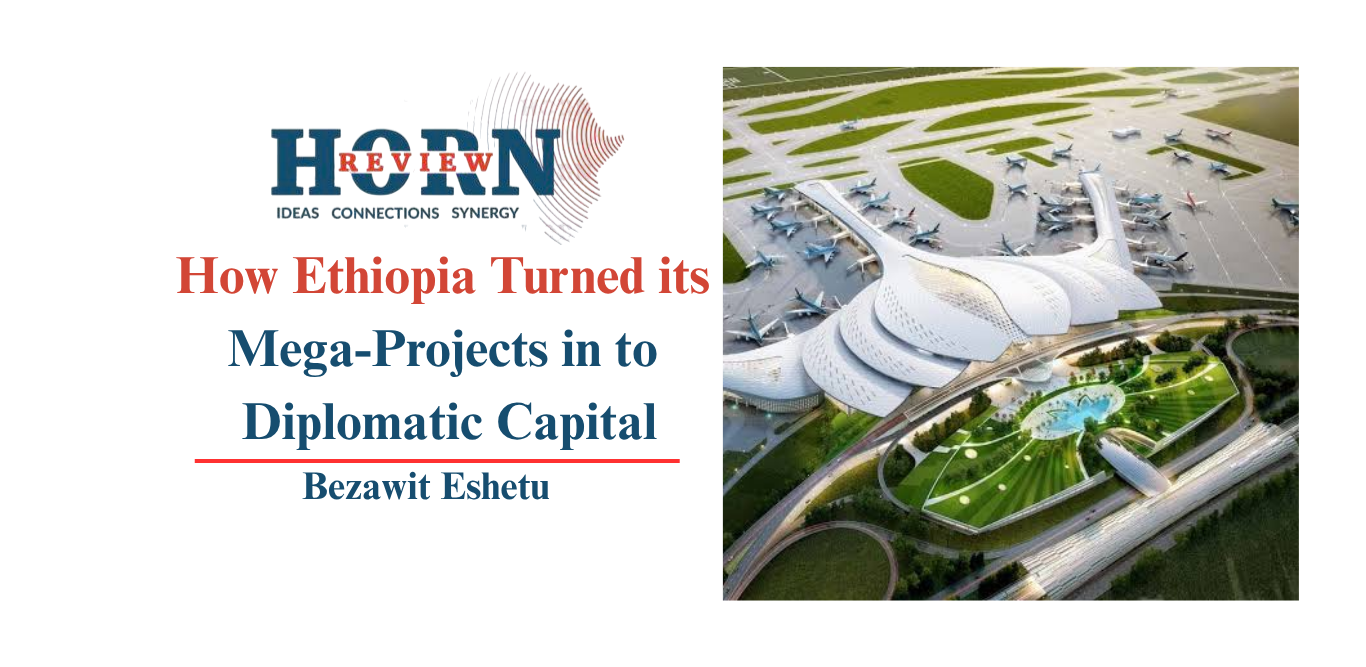
This same logic of mutual advantage extends from energy into logistics and transport. Parallel to the GERD, the state is expanding its international logistics and transport architecture through the planned Bishoftu (Debrezeit) International Airport. Designed as a $12.5 billion four-runway development that will become Africa’s largest aviation hub, with an initial capacity of 60 million passengers rising toward 110 million, the project expands the air-freight capabilities of Ethiopian Airlines and reinforces the industrial capacity of the Dire Dawa Free Trade Zone.
Construction began in early 2026 with the drive of positioning the facility as the “Dubai of Africa” by 2030. The network has already attracted major global corporate partners. The Boeing company inaugurated its regional Africa headquarters in Addis Ababa and established a partnership with Jimma University to advance aerospace engineering and technical education, while Ethiopian Airlines continues to deepen its fleet relationship with Boeing through additional orders of 787-9 Dreamliners.
United states involvement is active and strategically layered. Senior U.S. Commerce Department officials have publicly confirmed that Washington is “closely engaged in pushing to secure U.S. participation” for American companies in the Bishoftu project. The U.S. international development Finance Corporation (DFC) has been signaled as a financing partner, and U.S. financial institutions have expressed formal interest.
American engagement is explicitly linked to expanded opportunities for Boeing aircraft powered by GE Aerospace engines, converting infrastructure participation into sustained industrial demand. For U.S. firms and financiers, the project opens stronger access to one of Africa’s largest aviation contracts. It also promises long-term revenue from construction, systems integration, and operations, while serving as a continental headquarters and talent pipeline already based in Ethiopia. At the same time, it provides a strategic counterweight in the wider competition for infrastructure influence across the Horn of Africa.
Alongside logistics assets and hard energy, the Ethiopian government systematically utilizes urban transformation and heritage restoration to expand its diplomatic footprint and cultivate soft power. By restoring historical imperial assets and establishing state-of-the-art memorial complexes, the government creates prestigious venues for international summitry, cultural diplomacy, and global prestige.
A prominent venue in this soft-power framework is the Adwa Zero Kilometer Project in Addis Ababa. Executed by China Jiangsu International under a 4.6 billion Birr municipal contract, the Adwa Memorial Center near Menelik II Square commemorates the historical 1896 victory over colonial forces. Beyond serving as a museum and cultural facility, the center functions as an architectural assertion of Pan-African sovereignty. The administration utilizes this historic backdrop to host foreign heads of states including bilateral diplomatic engagements with French president Emanuel macron, weaving historical memory into contemporary international relations.
In the international heritage partnerships, the restoration of the National (Jubilee) palace serves as a primary model of co-financed cultural diplomacy. Originally constructed during the reign of Emperor Haile Selassie, the neoclassical building and its surrounding park were targeted for comprehensive restoration to convert the former presidential quarters into a public museum of international standard. Following bilateral agreements between the Ethiopian government and France, the Agence Française de Développement (AFD) committed €20 million to €25 million in grant financing to support the project.
This model of co-financed cultural diplomacy extends well beyond a single site. The broader restoration effort is supported by technical assistance coordinated through Expertise France, drawing on specialized curation expertise from the Château de Versailles, the French Ministry of Culture, the Museum of Decorative Arts, the Museum of Natural History, and lead historical architects.
By embedding French institutional standards into Ethiopia’s most symbolically charged imperial assets, Paris secures durable soft-power leverage: preferential access to high-prestige cultural infrastructure, long-term institutional channels that outlast political cycles, and a platform from which French firms and cultural operators can expand into adjacent sectors such as tourism, education, and luxury hospitality.
In effect, France converts technical assistance into sustained diplomatic influence and better commercial positioning inside one of Africa’s most historically resonant capitals. Alongside heritage restoration, foreign private capital has been deliberately integrated into high-density urban regeneration. Abu-Dhabi-based real estate developer Eagle Hills has entered the market to construct “La Gare,” a 360,000-square-meter mixed-use master community in central Addis Ababa centered on historic Djibouti-Addis Ababa railway terminal.
The development incorporates more than 4000 luxury residences, four and five-star hotels, commercial towers, and retail plazas, for United Arab Emirates, this is far more than a conventional real-estate investment. It establishes a flagship physical footprint in the heart of one of Africa’s fastest-growing capitals, creates a controlled, internationally standard environment capable of housing diplomatic missions and global corporate headquarters and locks in recurring management income, elevated land values, and preferential positioning for future infrastructure and logistics opportunities.
Eagle Hills thereby converts liquidity and master-planning capacity into lasting commercial and geopolitical presence. Together, these engagements illustrate the asymmetric advantages available to early movers. France emebeds institutional authority and cultural primacy; the UAE secures physical and commercial dominance. Both obtain durable channels of influence and returns that later entrants will find costlier and more contested to replicate.
The structural lesson is now transferable. France and the UAE prevailed by entering as institutional co-owners instead of creditors, and that same positioning stands open today to sovereign funds and institutional capital willing to route commitments through Ethiopian Investment Holdings, the sovereign wealth vehicle managing roughly forty-five billion dollars across Ethiopian Airlines, Ethio Telecom, and dozens of other state enterprises.
EIH already operates as a co-investment platform, and its 2025 stake in the Scandinavian gold producer Akobo Minerals showed that Addis Ababa now structures joint ventures in place of asking loans. Banking Business Proclamation No. 1390/2025 extends the same logic to finance itself, opening Ethiopian commercial banks to direct foreign equity ownership for the first time and giving Gulf and Asian institutions balance sheet exposure to the wider economy rather than isolated project debt.
Investors who convert prospective commitments into equity stakes in productive assets, rather than extending sovereign loans, secure the dividends, governance influence, and preferential access to Ethiopia’s next infrastructure cycle that Webuild, France, and the UAE already hold, and the terms available to first movers will narrow with time.
Gambella demonstrates both the scale of this opportunity and the discipline it demands. Its river basins hold among the most fertile, least cultivated soil in Ethiopia, and the government has awarded more than a million hectares there since the mid-2000s on that basis. The record of lease-based ventures is nonetheless sobering. Saudi Star, backed by Sheikh Mohammed Al-Amoudi and pitched as a billion-dollar supplier to Saudi Arabia’s food security program, has spent more than a decade underdelivering against its pledged investment amid contractor withdrawals, incomplete irrigation, and unresolved land disputes with Anuak communities.
Karuturi and other large lessees collapsed for similar reasons. The common failure traced to land tenure, hectares were leased outright rather than co-owned, leaving investors and communities without a shared stake in the outcome. A Gulf fund entering through equity partnership with EIH, embedding local revenue-sharing into ownership itself, could correct that misalignment and position Gambella as a durable grain supplier for import-dependent Gulf markets.
A second underexploited opening lies in the Danakil Depression, home to an estimated eleven to twelve billion tonnes of potash-bearing salt beds, among the largest undeveloped fertilizer deposits worldwide. Earlier attempts, including the Allana Potash concession later absorbed by Israel Chemicals, collapsed over tax disputes and unresolved infrastructure financing before ICL exited in 2016.
In March 2026, EIH itself secured a 365-square-kilometer potash concession, underscoring Ethiopia’s decision to develop the resource as an equity partner rather than simply licensing it out. Gulf investment partners, driven by the need to secure reliable fertilizer supplies and bringing substantial experience in large-scale industrial and infrastructure projects, are natural co-investors in a structure that channels capital, technology, and expertise directly into Ethiopia’s agricultural transformation and the broader Gambella development program, delivering shared value through stronger domestic fertilizer availability, local industrial capacity, and long-term economic returns for Ethiopia.
Gold offers a third opening, and the timing favors new entrants. Prices surpassed $5,500 an ounce in January 2026, extending a multi-year run of record central bank accumulation, and the overwhelming majority of reserve managers now expect their gold holdings to keep growing over the next year. Ethiopia enters this cycle just as it shifts from artisanal extraction toward large-scale formal production.
KEFI Gold and Copper broke ground on the Tulu Kapi mine in February 2026 after more than a decade of preparation, backed by a $340 million financing package split between long-term development debt and equity, with the government holding a 5 percent free-carried interest and first production targeted for 2027. Ethiopian Investment Holdings has already taken a minority stake in an internationally listed gold producer operating in Ethiopia, Akobo Minerals, establishing a template for further co-investment.
For sovereign funds accustomed to holding gold as a passive reserve asset, Ethiopia offers a rarer proposition, equity exposure to the mines producing that gold, at a moment when global demand for the metal is structurally elevated and formal-sector output in the country remains a small fraction of its geological potential.
A parallel opening is forming among European manufacturers looking to diversify production beyond a single dominant sourcing country, and Ethiopia is positioning itself as a credible landing point. Roughly 300 European companies already operate in the country, a base large enough that the European Union built its April 2026 EU-Ethiopia Business Forum around deepening it, financed through the Global Gateway initiative that is mobilizing up to €300 billion across Team Europe’s partner countries through 2027.
The precedent for European industrial relocation already exists. Groupe Soufflet, the French agribusiness group, established a malt production subsidiary inside the Bole Lemi II industrial park and drew $20 million in IFC backing to expand it, while Germany’s development agency GIZ spent years cultivating interest among German manufacturers weighing Ethiopian sites, interest the country’s improved macro environment can now convert into firm commitments.
What changed since those early moves is the operating environment itself. The July 2024 foreign exchange reform ended a decade of letter-of-credit rationing that had long deterred capital-intensive manufacturers from committing to Ethiopia, and the industrial parks built for textiles and agro-processing at Hawassa and for pharmaceuticals at Kilinto now offer European firms an entry point with tax incentives, low-cost hydropower, and preferential access to African markets under the EU and AfCFTA’s newly formalized $1.43 billion partnership. For a European manufacturer weighing where to place a second production base outside its home continent, Ethiopia now presents a case grounded in policy.
Across each of these openings, the same pattern holds. Equity converts a single transaction into a lasting claim on Ethiopia’s growth trajectory, and the sovereign funds and industrial partners willing to structure their capital that way now will find the terrain considerably more contested within a decade.
By Bezawit Eshetu, Researcher, Horn Review

RELATED
Posts
7
Sep
Abiy Ahmed and the Remaking of the Ethiopian State
Blen Mamo
The political trajectory of Abiy Ahmed cannot be adequately...
3
Sep
Is Ethiopia Ready for a Presidential System?
By Blen Mamo
Ethiopia has spent much of its modern political...
28
Aug
Ethiopia-U.S. Strategic Defense Partnership
The recalibration of United States–Ethiopia relations recently reflects a deeper...
20
Aug
Eritrea’s Buffer Zone Politics from Eastern Sudan to Ethiopia's Tigray
The most consequential development in the Horn of Africa may...
14
Aug
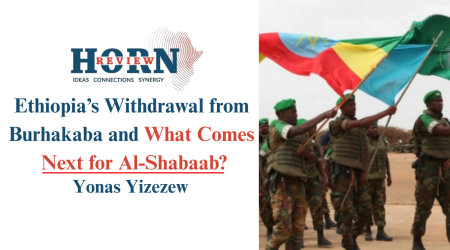
Ethiopia’s Withdrawal from Burhakaba and What Comes Next for Al-Shabaab?
The recent handover of the Burhakaba forward operating base...
13
Aug
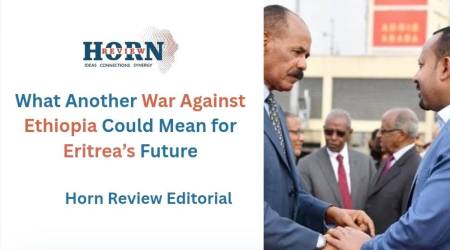
What Another War Against Ethiopia Could Mean for Eritrea’s Future
Another Ethiopia–Eritrea war would not be a replay of 1998....