As British politics enters a period of heightened challenges, domestic political pressures have become increasingly linked with a shifting international landscape. The traditional boundary between internal governance and global strategic challenges has diminished, leading to a direct intersection between the internal dynamics of Westminster and the management of Britain’s foreign policy objectives in a rapidly evolving world.
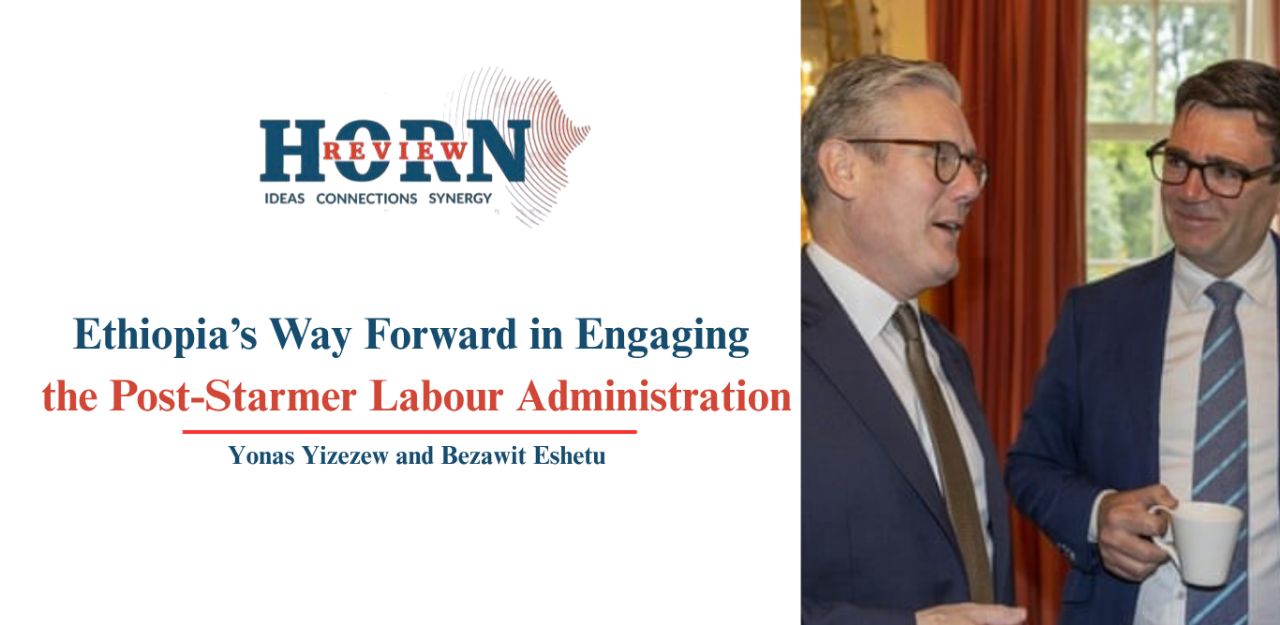
This environment has placed significant strain on the governing Labour Party under Prime Minister Keir Starmer. Despite initially securing a substantial legislative mandate, the administration has faced ongoing challenges in maintaining public confidence and political momentum. This challenge has been further emphasized by the electoral growth of Reform UK in regional contests. These developments have challenged Labour’s historic electoral strongholds and increased competitive pressures at a time of broader global transition. This political shift gained momentum following the Makerfield by-election on June 18, 2026, where Andy Burnham secured a decisive victory and returned to the House of Commons.
By translating his successful record in regional executive leadership into a parliamentary seat, Mr. Burnham removed previous geographical constraints on his national influence. His success immediately intensified discussions regarding a transition in the Labour leadership.
This momentum led to Keir Starmer’s announcement that he would step down as Prime Minister and leader of the Labour Party. A clear transition schedule has been established, with nominations for the leadership contest opening on July 9 and a successor expected to be in place before Parliament returns from its summer recess on September 1. Following these developments, Mr. Burnham has emerged as the leading candidate to potentially serve as the next Prime Minister.
Should Mr. Burnham assume the premiership, his government would likely pursue a distinct set of domestic and international priorities. Domestically, the administration would focus on economic renewal through expanded regional devolution and community-focused strategies. By applying successful local governance models on a national scale, his government would seek to address social fragmentation and strengthen the connection with working-class communities.
In tandem, a Burnham administration would navigate an increasingly complex international environment. Given his background, his foreign policy would likely adopt a pragmatic and domestically informed approach. It would focus on upholding core alliances, particularly NATO commitments, while managing relations with a transactional United States and evolving European security frameworks. To mitigate the risks of economic uncertainty and trade fragmentation, greater emphasis would likely be placed on fostering resilient partnerships with middle powers and advancing practical economic diplomacy.
One element of this global engagement would involve the implementation of the United Kingdom’s updated Africa policy. This strategy represents a transition from traditional aid-based frameworks toward investment-driven and mutually beneficial partnerships. A Burnham administration would be expected to advance this model by promoting cooperation in infrastructure, financial services, energy transitions, and private sector investment. This approach would be aligned with the priorities of the African Union and individual national development goals, aiming to position Britain as a competitive and reliable partner in a multipolar world. In the case of the Horn of Africa, this theoretical pivot toward mutual investment has practical, immediate boundaries defined by fiscal retrenchment and securitized regional concerns.
UK’s government engagement in the Horn of Africa has become more of risk management. The UK cut aid from 0.5 percent of GNI to 0.3 percent by 2027/28, and the government has said that future development support will increasingly priorities fragile and conflict-affected states. In that same register, the Foreign Secretary’s February 2026 visit to Ethiopia was framed around illegal migration, prevention, law-enforcement cooperation, job creation, and returns of people with no right to remain in Britain. The British Embassy in Addis Ababa represents UK interests in Ethiopia and the African Union, while the British Embassy in Mogadishu says its mission is to support Somalia in becoming a stable, secure, and prosperous state. London engages the Horn through a transactional mix of migration control, security cooperation, and selective development.
That is exactly why Ethiopia has to speak to the next Labour leader in terms that fit the domestic logic in Britain, not in abstract diplomatic language. The harder reality is that Ethiopia is still often interpreted in London through a framework of fragility, and that reading is shaped not only by strategic caution but also by selective political sympathies inside Labour circles, including sympathy for the Tigray People’s Liberation Front (TPLF). In mid-2026, British Tigrayan community groups lobbied Starmer and Parliament over the Ethiopian election board’s suspension of the TPLF for internal breaches and the withdrawal of its legal recognition, presenting those moves as violations of the spirit of the Pretoria Agreement. Yet the post-war environment remains marked by unresolved territorial disputes, internal factionalism, proxy mobilization and the persistent risk of remilitarization. This is a critical factor, as organized diaspora networks routinely tried leveraging the narrative of the 2020–2022 war to exert direct political pressure on legislative circles within the United Kingdom.
Local developments in Ethiopia can therefore be reframed in London as evidence of broader state instability, while the role of hardline TPLF actors in delaying disarmament, demobilization, and reintegration is easier to minimize or overlook. The result is a narrative that tends to cast federal actions as inherently coercive or destabilizing, while treating Tigrayan grievances as politically urgent and morally exceptional.
If Andy Burnham, often described as the “King of the North” because of his political weight in Greater Manchester, were to rise to greater national prominence, organized diaspora actors would likely read that as a meaningful opportunity. Burnham is already being discussed as a leading contender to replace Starmer, but he has also said it is too soon to talk about calling a general election if he becomes prime minister. That combination matters as it suggests a leadership moment defined by authority, stability, and coalition-building rather than ideological rupture. For Ethiopia, the practical implication is that a Burnham-led Labour moment could create a more receptive environment for tightly organized diaspora lobbying inside a political culture that prizes responsiveness and municipal legitimacy.
At the same time, the security environment remains highly unstable. Reports that TPLF factions have been rebuilding pre-war structures, conscripting youth, and drawing accusations of alignment with external patrons, together with mounting Ethiopia–Eritrea tensions and renewed border militarization, point to a genuine risk of renewed conflict. Such a development would not merely repeat the devastation of the earlier war but also would deepen fragmentation by turning local rivalries into wider proxy alignments.
For that reason, a Burnham-led political moment would likely be welcomed and used by nationalist Tigrayan elements in the diaspora, who may see it as a chance to intensify lobbying for recognition, aid conditionality, and renewed pressure on Addis Ababa. Ethiopia’s response should therefore be disciplined, strategic, and outward-facing. Its embassy in London should work systematically to mobilize the broader Ethiopian diaspora around themes of national unity, democratic mandate, reconstruction, and the dangers of ethnic proxy conflict. The goal would not be simple counter-lobbying, but the construction of a more credible and balanced narrative: Ethiopia as a sovereign state pursuing peace, recovery, and institutional stability, rather than as a country permanently trapped in a politics of fragmentation. In that sense, diaspora engagement in London is not a peripheral exercise. It is a central instrument of statecraft in a conflict environment where lingering wars still shape how Ethiopia is understood abroad.
The Red Sea is also crucial in this context. Egypt’s widening effort to counterbalance Ethiopia, rooted first in the long-running Nile dispute and now extending into Red Sea diplomacy, closer ties with Eritrea, Sudan’s SAF and Somalia, and broader attempts to isolate Addis Ababa, has become one of the key forces feeding volatility across the Horn of Africa. This regional tension directly heightens risks around critical maritime chokepoints, as UK government supply-chain analysis highlights how transport routes and strategic passages are acutely vulnerable to such geopolitical shocks. Insecurity in the Red Sea and Bab el-Mandeb has already disrupted Suez traffic, prompting UK maritime strategy to treat Bab el-Mandeb and the Suez system as vital arteries for trade and energy flows. This is far from symbolic: when traffic is disrupted, shipping reroutes around the Cape, transit times lengthen, costs rise sharply, and the ripple effects extend well beyond the immediate corridor. For Britain, the result is higher logistics expenses, upward pressure on import prices, and yet another channel through which external instability in the Horn translates directly into domestic economic pain, including inflation.
Burnham’s rise gives Ethiopia a different audience, but not because he is soft on foreign policy. It is because his politics are rooted in municipal trust, devolution, and the everyday functioning of public life. That is useful for Ethiopia, because the best argument to a Burnham-led Labour government is not that Ethiopia deserves indulgence. It is that federal stability is the precondition for municipal survival: when the center fractures, service delivery fails, local trust collapses, and grievance becomes politically usable by armed entrepreneurs and regional rivals. In that frame, Ethiopia is not asking Britain to take sides in a romance of sovereignty. It is asking Britain to protect the civic order on which human life, migration control, and commercial continuity all depend. Burnham has not been specific about any early-election move, which reinforces the point that the immediate contest is about leadership and authority rather than political theatre.
That is also why the Ethiopian Embassy in London should widen its coalition work. It should not allow one highly organized diaspora bloc to define the country’s image. It should use regular briefings, community forums, professional associations, faith networks, and business outreach to present Ethiopia as a state trying to prevent another war, keep cities functioning, and hold the line on civilian life. Under a leadership like Burnham’s, that language will land best if it is concrete: stability protects hospitals, schools, transport, markets, and neighborhood security; it also reduces the conditions that push people into irregular migration and make Britain’s own domestic politics more brittle. In a transactional diplomatic era, that is the strongest offer Ethiopia can make is a stabilization partnership that links Addis Ababa, London, the Red Sea, and the municipal life Burnham says politics should defend.
By Yonas Yizezew and Bezawit Eshetu, Researchers, Horn Review