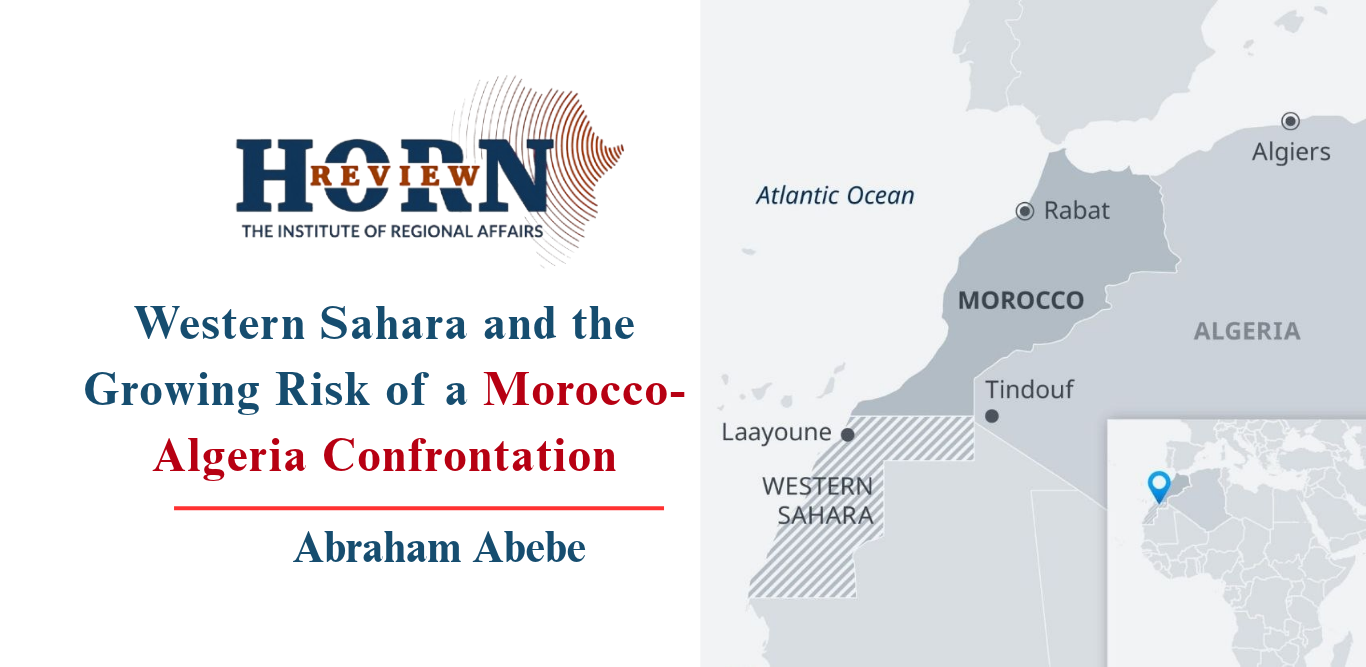
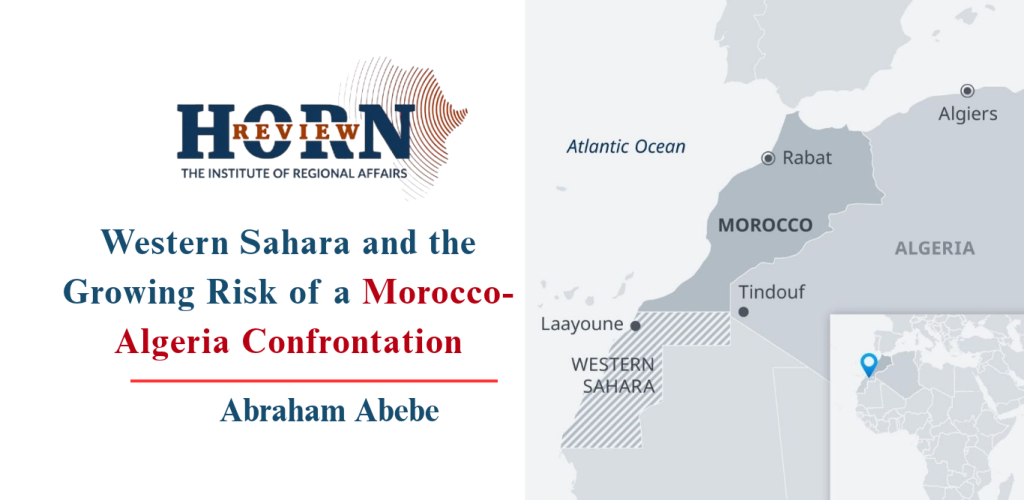
The Western Sahara dispute is becoming increasingly difficult to contain as stalled diplomacy coincides with renewed military signalling, information warfare and deepening tensions between Morocco and Algeria. The Polisario Front’s declaration of general mobilisation on 10 November 2026, alongside competing accounts of military preparations, has exposed the fragility of arrangements that have helped prevent a wider confrontation. Although the declaration does not establish that a new offensive is under way, the deteriorating diplomatic environment raises the risk that an unresolved territorial dispute could become a more direct test of Morocco-Algeria relations, with consequences extending across North Africa.
The crisis is rooted in the failure of the international settlement process to resolve competing claims over Western Sahara. Following the Madrid Accords of November 1975, Spain transferred its administrative responsibilities to Morocco and Mauritania, without transferring sovereignty over the territory. This arrangement triggered an armed struggle with the Polisario Front, which sought independence for the Sahrawi people. After Mauritania renounced its claims in 1979, Morocco consolidated control over most of the territory. A United Nations-brokered ceasefire in September 1991 established a framework for a referendum on self-determination, with MINURSO created under Security Council Resolution 690 to oversee the process. Disagreements over voter eligibility and the referendum’s political arrangements prevented its implementation.
The resulting deadlock reflects fundamentally incompatible positions. Morocco’s autonomy proposal seeks to preserve its sovereignty over the territory, whereas the Polisario regards independence as essential to Sahrawi self-determination. Growing international support for Morocco’s proposal has altered the diplomatic balance without resolving this underlying disagreement. Neither side has accepted a settlement that accommodates the other’s central political demands.
The latest Security Council confrontation has further exposed divisions over the international framework. On 30 October 2026, a United States-sponsored draft resolution received 11 votes in favour, three abstentions and a Russian veto. It sought to place Morocco’s autonomy initiative under Moroccan sovereignty at the centre of future negotiations, while proposing that MINURSO be renamed the UN Mission in Western Sahara (MINUSO) and requesting subsequent proposals on the mission’s structure, staffing and resources. A competing Russian draft calling for a straightforward one-year extension of the mission’s mandate also failed, receiving three votes in favour, one against and 11 abstentions. MINURSO’s mandate consequently expired on 31 October, leaving the future of the UN presence uncertain.
The end of MINURSO’s operational role has implications beyond the administrative future of a peacekeeping mission. Following the expiry of its mandate on 31 October 2026, the mission ceased operations on 1 November, beginning a withdrawal and liquidation process. Its presence has provided an important mechanism for monitoring security developments and ceasefire-related incidents in a territory where independent verification is difficult. Although the United Nations can continue diplomatic engagement through the Secretary-General’s Personal Envoy, Staffan de Mistura, the closure of the mission removes an important mechanism for monitoring developments on the ground. The resulting verification gap could create greater room for unilateral actions while making it harder to establish what is happening in the territory.
Morocco enters this period with stronger diplomatic support than during earlier stages of the conflict. Its autonomy proposal has gained backing from the United States, France, Spain and the United Kingdom, although their positions differ in the extent to which they support Moroccan sovereignty or the autonomy framework. Security Council Resolution 2797, adopted on 31 October 2025, called for negotiations taking Morocco’s Autonomy Proposal as a basis, while retaining the requirement for a mutually acceptable political solution providing for Sahrawi self-determination. These developments have strengthened Rabat’s negotiating position but have not secured the Polisario’s agreement or resolved the territory’s international status.
Morocco’s strategic ambitions also extend to defence production. On 18 November 2026, King Mohammed VI launched the Morocco Offer, a defence-industrial roadmap targeting domestic production of 40 per cent of the armed forces’ and security agencies’ equipment requirements by 2035. Although presented as an industrial development programme rather than a direct response to Western Sahara, the initiative signals Rabat’s intention to strengthen defence autonomy and reduce reliance on foreign suppliers. In the context of regional competition, these ambitions are likely to attract attention in Algiers, although the targets represent future objectives rather than capabilities already achieved.
For Algeria, Morocco’s diplomatic gains and defence ambitions reinforce longstanding concerns about the regional balance of power. The two countries severed diplomatic relations on 24 August 2021 following years of deteriorating relations involving Western Sahara, expanding security partnerships and wider diplomatic confrontations. Algeria’s support for Sahrawi self-determination remains central to its regional policy, while Morocco considers its sovereignty over Western Sahara a fundamental national interest. These competing positions have left little political space for bilateral reconciliation.
The principal danger is that confrontations between Moroccan forces and the Polisario could acquire wider regional significance. Algeria’s political, diplomatic and material support for the Polisario makes it difficult to separate developments in Western Sahara from its broader security calculations. However, support for the Polisario does not automatically mean that Algeria would enter a direct military confrontation with Morocco. The greater risk is that an escalation could generate pressure for increased Algerian involvement, particularly if either government interpreted developments as a threat to its national security. Limited diplomatic communication, military competition and weakened monitoring could compound the danger. A serious incident or retaliatory action could therefore transform an already hostile relationship into a broader security crisis.
Information warfare is adding another layer of uncertainty. Competing narratives about military preparations, alleged weapons supplies to the Polisario and Moroccan deployments near the separation berm are increasingly difficult to distinguish from deliberate fabrication. Reporting by French broadcaster RFI has documented fabricated statements attributed to the Polisario announcing alleged military acquisitions, alongside manipulated images purporting to show weapons deliveries and Moroccan military positions. Some images were identified as AI-generated or modified, while misleading material circulated through accounts supporting different sides of the dispute. Such manipulation can reinforce existing suspicions, distort assessments of military activity and create an exaggerated impression of escalation. With independent monitoring weakened, unverified claims could become more influential in political and security calculations, increasing the risk of misinterpretation and miscalculation.
The dispute also tests the African Union’s capacity to manage disagreements among its members over sovereignty, decolonisation and self-determination. The Sahrawi Arab Democratic Republic is an AU member, while Morocco returned to the organisation in 2017 after withdrawing from its predecessor, the Organisation of African Unity, in 1984 over the SADR’s admission. This leaves the AU navigating competing positions within its own membership. Renewed escalation could deepen continental divisions and further undermine Maghreb economic integration, already constrained by longstanding political rivalry. Maintaining engagement with both Morocco and the Sahrawi Republic is therefore important to preserving diplomatic space for a negotiated settlement and preventing the dispute from becoming a wider source of division across Africa.
The growing risk of confrontation does not mean that a Morocco-Algeria war is inevitable. However, Morocco’s stronger diplomatic position, Algeria’s continued support for the Polisario, military competition and the closure of MINURSO’s monitoring operations have made the dispute increasingly difficult to contain. The danger lies in the possibility that an isolated incident, amid political deadlock and competing military narratives, could trigger a wider crisis before diplomatic channels can respond. Preventing that outcome requires renewed negotiations, credible monitoring arrangements and restraint from the parties. Without these safeguards, Western Sahara could become a more serious flashpoint in an already fragile North African security environment.
By Abraham Abebe, Researcher, Horn Review