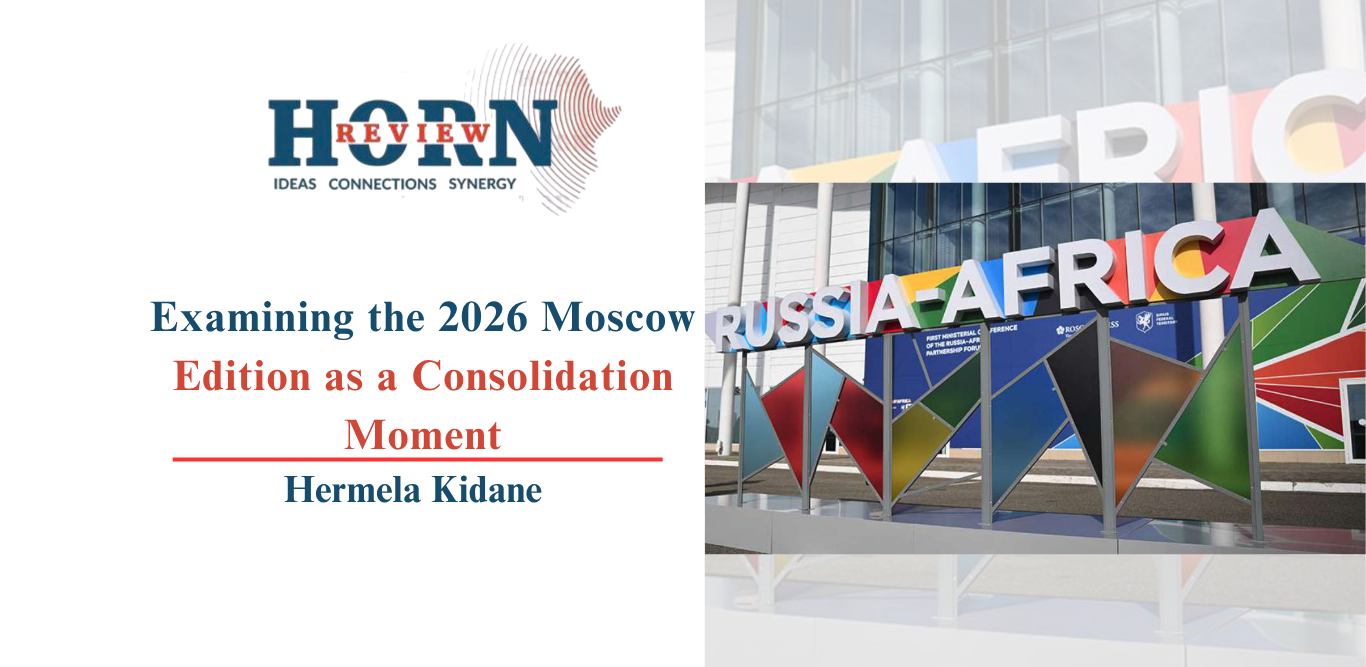
As Moscow hosts the third Russia and Africa Summit on 28 and 29 October 2026 the gathering marks a further stage in the institutionalization of relations between Russia and African states. Building on the foundational Sochi summit of 2019 which attracted approximately forty three to forty five heads of state or government established the Russia and Africa Partnership Forum mechanism and generated reported contracts valued at around $12.5 billion and the 2023 St Petersburg meeting which saw attendance at the highest level fall to seventeen heads of state while still producing an action plan and free grain deliveries to six countries including Somalia and Eritrea the Moscow edition is oriented toward converting political goodwill into more concrete economic and cooperative frameworks. Official figures indicate that trade turnover rose to roughly $27.1–27.7 billion in 2025. Delegations from forty eight African countries are expected with approximately twenty two represented at the level of heads of state or government. Among confirmed high level participants is Chairman of Sudan’s Transitional Sovereignty Council Abdel Fattah al Burhan , leaders from Kenya, Uganda and other East African states are also anticipated while Ethiopia’s Prime Minister Abiy Ahmed is scheduled for bilateral discussions. Eritrean President Isaias Afwerki is likewise expected.
The thematic emphasis is centered on developing mutually beneficial cooperation and unlocking the potential of every African country, prioritizing practical outcomes across trade, investment, food and energy security peaceful nuclear technology through Rosatom, digitalization including artificial intelligence, education and humanitarian exchange. Alternative payment mechanisms, expanded agricultural exports and technology transfer feature prominently in the expected 2027 and 2029 action plan. From an Ethiopian standpoint these priorities align closely with national developmental and strategic objectives. Ethiopia’s BRICS membership has facilitated deeper dialogue on monetary cooperation, civilian nuclear energy and defense related partnerships.
Bilateral trade has expanded and a naval cooperation agreement signed in 2025 provides a framework for training and capacity building that supports Ethiopia’s efforts to enhance maritime readiness in pursuit of its legitimate national interests. High level participation enables Ethiopia to advance these dossiers within a multilateral setting that respects sovereignty and avoids conditionalities that can constrain policy autonomy.
Russia’s engagement across the continent includes nearly sixty military technical cooperation agreements covering some thirty nine African states and more than sixty five naval port calls in at least eighteen countries between 2020 and 2025. In the Horn of Africa the presence remains more measured and diplomatically oriented. Constructive relations are maintained with Sudan where Moscow has consistently upheld the country’s sovereignty, unity and territorial integrity recognizing the Sovereign Council as the legitimate authority as reaffirmed by Permanent Representative Vassily Nebenzia in Security Council statements. Ties with Ethiopia encompass trade, nuclear cooperation, defense training and the recent naval agreement. Engagement with Somalia has emphasized historical links and educational cooperation while grain deliveries following earlier summits provided tangible support to Eritrea and Somalia. Djibouti’s role as a multi national logistics space has not produced a comparable Russian presence however naval diplomacy continues as an instrument of broader maritime outreach.
The Horn of Africa’s current crisis centered on the Bab el Mandeb Strait, Red Sea maritime security challenges associated with Houthi operations, the protracted Sudanese conflict and residual strains in regional relationships requires that economic discussions be placed in a realistic security context. The summit is unlikely to generate transformative security structurers for the region whose difficulties are based in local politics and intertwined with wider Middle Eastern developments. What it can offer is reaffirmation of principles of sovereignty and non interference together with practical measures that address structural vulnerabilities. Maritime security in the Red Sea and Bab el Mandeb is expected to be framed in terms of freedom of navigation and the protection of commercial shipping and energy transit essential to African economies without drawing continental states into external confrontations. Food security initiatives building on prior grain deliveries remain a concrete avenue for cooperation.
Particularly importance for Ethiopian national interests is Russia’s readiness as stated by Deputy Foreign Minister Alexander Alimov to facilitate contacts between Ethiopian and Eritrean representatives on the sidelines of the summit should both parties so desire. This constructive offer made against the heightened bilateral tensions shows a preference for dialogue and confidence building among the partners. On Sudan statements are expected to reiterate support for sovereignty, territorial integrity and inclusive political processes led by Sudanese actors themselves consistent with Moscow’s established position at the United Nations.
In sum the 2026 summit shows a continuation of a partnership model centered on mutual benefit respect for sovereignty and practical deliverables. For Ethiopia it provides an additional platform to consolidate gains in trade, technology, defense capacity and diplomatic space while advancing regional stability through dialogue. In a multipolar environment such diversified engagement enhances African agency and enables states to pursue national interests on terms of equality. The measure of success will lie less in dramatic announcements than in the steady accumulation of concrete cooperative mechanisms that serve the developmental and security priorities of African partners Ethiopia foremost among them.
By Hermela Kidane, Researcher, Horn Review