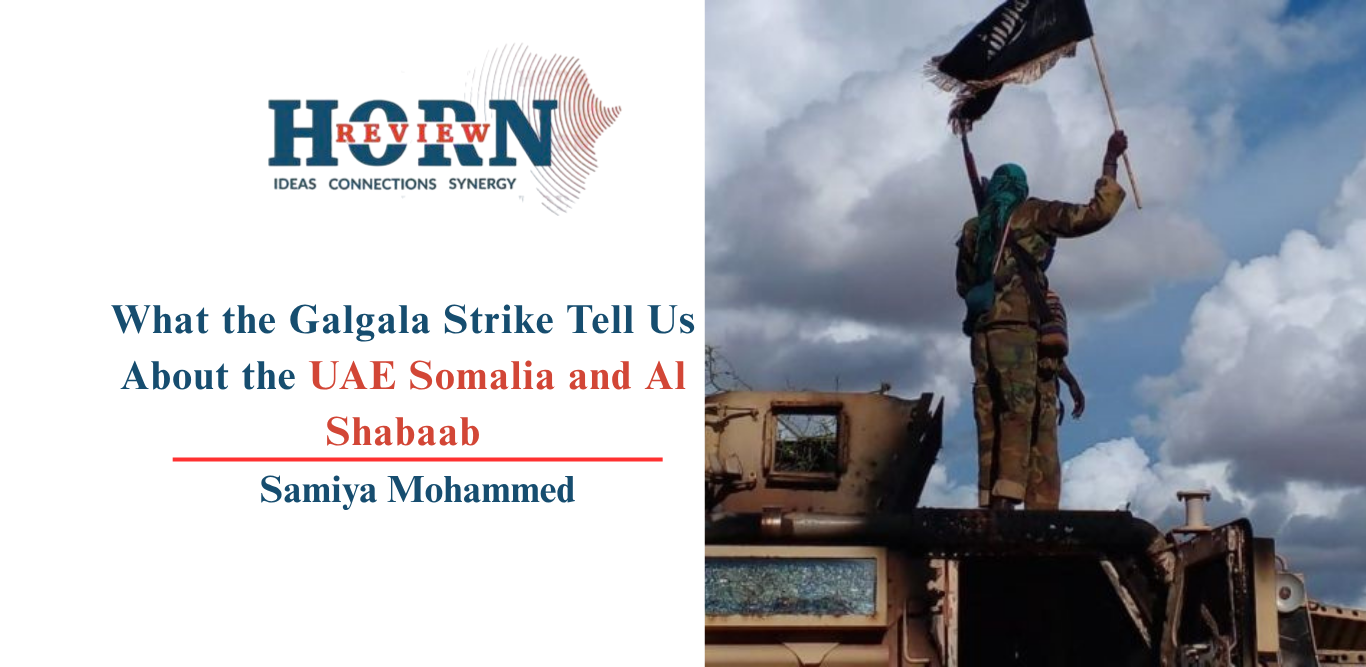
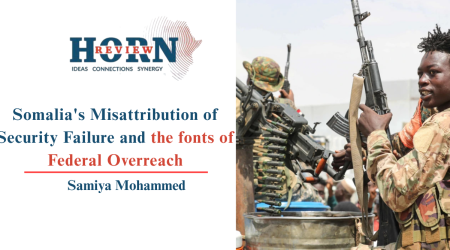
The United Arab Emirates has conducted its first reported drone strike against Al Shabaab in northern Somalia in nearly a year targeting a small team of militants allegedly planting an improvised explosive device near the Galgala mountain pass in Puntland’s Cal Madow range wounding two militants who were subsequently killed by Puntland paramilitaries and while the timing and location of the strike invite a straightforward counter terrorism reading, that reading is misleading because the operation is better understood as a limited, defensive action tied to the UAE’s interest in securing its logistics node at Bosaso, conducted in an environment where Mogadishu exercises no practical authority and where the political fragmentation of Somalia constitutes the main event and Al Shabaab remains its principal beneficiary.
The strike itself was tactically modest and should be described as such since UAE drones conducted reconnaissance over a period of two days after an Al Shabaab explosive device targeted Puntland security forces and then struck four militants who were planting roadside bombs with the drones reportedly launched from Bosaso airport where the UAE maintains a military presence and this is not a campaign but a localized response to an immediate threat to local forces operating in proximity to Emirati assets because the target was a small IED team in a presence that Al Shabaab has maintained for years and that prior operations have failed to eliminate and the strike does not alter the group’s operational capacity in Puntland nor does it pretend to do so.
The UAE’s interest in Bosaso is logistical and strategic rather than primarily counter terrorist since the airport and adjacent facilities have served as a node for Emirati military transport and cargo operations with reporting indicating that the base has been used to channel materiel and personnel through the region and the UAE has invested in radar facilities, ammunition storage and cargo infrastructure at Bosaso in a manner that reflects a long term presence rather than a temporary counter terrorism deployment, so that protecting that node from local disruption, including IED attacks that could threaten movement and operations is a rational and narrow objective and the strike was secondary cover for that objective rather than a declaration of a new counter terrorism offensive.
Mogadishu had no practical say in this operation since the federal government did not comment on the strike and its relationship with the UAE has deteriorated sharply over Abu Dhabi’s support for regional actors particularly in Somaliland and Puntland and Somalia’s federal authorities have previously sought to constrain UAE military activities but their writ does not extend to Puntland’s security arrangements or to the Emirati presence at Bosaso so that the strike confirms a structural reality in which external patrons and regional administrations run their own security and economic affairs while the federal government is increasingly ceremonial outside its core areas. This is not a temporary condition but the path of the Somali state.
The political war is the main event and Al Shabaab benefits from it since Puntland has openly challenged the federal government’s legitimacy and its electoral plans with President Said Abdullahi Deni declaring that he no longer recognizes Hassan Sheikh Mohamud as Somalia’s legitimate president and Puntland and Jubaland have rejected the federal election timetable because they view the push for direct universal suffrage as a vehicle for centralizing power in Mogadishu and the UAE’s strike occurs within this context of heightened political tension rather than apart from it so that every external intervention that bypasses Mogadishu reinforces the perception that the federal government cannot deliver security or assert authority and Al-Shabaab’s narrative that the federal project is a foreign backed fiction gains credibility with each such demonstration.
Al Shabaab’s northern presence in Puntland is in any case a sideshow since the group’s real strength lies in rural south central Somalia where it collects an estimated $100 million to $150 million annually through taxation, operates parallel judicial systems and maintains the capacity to launch attacks in Mogadishu and beyond, and the group has retaken much of the territory it lost during the 2022–2023 military campaign and advanced to within roughly 45 kilometers of the capital during a 2025 counteroffensive, so that hitting a handful of mine layers near Bosaso does nothing to degrade that core and does not touch the group’s revenue, its recruitment or its regeneration capacity.
Reporting indicates that Al Shabaab has been cultivating a relationship with the Houthis in Yemen that involves training and technical support in drone assembly, IED construction and weapons maintenance with fighters having traveled to Yemen and with evidence of limited transfers across the Gulf of Aden, and this pipeline if it matures, could address capability gaps that have constrained Al-Shabaab’s operations, whereas a strike on an IED team in Galgala has no bearing on this external dimension so that the UAE operation may serve a localized protective function but does not address the strategic path of the insurgency.
The path of Somalia is toward entrenched de facto partition rather than coherent statehood capable of defeating Al Shabaab since regional administrations in Puntland and Jubaland already conduct their own security and economic arrangements with external patrons and the UAE has cultivated relationships with Puntland and Somaliland that bypass Mogadishu entirely while the United States has expanded its own military presence at Bosaso in a signal that Washington too is willing to work within Somalia’s fragmentation rather than around it and meanwhile the federal government’s authority is increasingly contested and its electoral plans are rejected by key regional actors so that in this environment Al-Shabaab remains the dominant non state actor in the rural south and center and its position is not threatened by episodic kinetic actions.
The UAE strike changes almost nothing of substance for Al Shabaab’s overall position since it confirms that external logistics and regional autonomy continue regardless of what Mogadishu announces and demonstrates that the UAE will act to protect its assets when they are directly threatened without signaling a deepened counter terrorism commitment, and the benefit of this operation is so Bosaso node remains secure and Puntland which receives a limited tactical assist, while Al Shabaab loses two fighters and continues unperturbed and Mogadishu loses nothing it had not already lost.
The outlook is one of continuity rather than change. Localized kinetic action will persist wherever patrons perceive their interests to be directly at stake, jihadist activity will endure and in all likelihood expand across the south and center and the political center will remain incapable of enforcing its writ. The UAE strike is therefore not a counter terrorism milestone but a logistics protection operation conducted within a fragmented state and its principal significance is in what it confirms about that fragmentation rather than in anything it achieves against Al Shabaab.
By Samiya Mohammed, Researcher, Horn Review