

Under the Banner of Red Sea Security, Egypt Encircles Ethiopia
Reports of Egyptian naval movements toward the southern Red Sea in August 2026, amid renewed Houthi threats to shipping and the aftermath of a drone strike at Damietta, have brought a broader strategic question into focus. Cairo confirmed on 30 July that a drone had caused fires aboard two vessels at Damietta, although no party claimed responsibility. Egypt’s participation in a Saudi-led maritime coalition, announced that same day, placed its naval engagement within a security framework extending across the Red Sea, Bab el-Mandeb and the Gulf of Aden. The Saudi-backed offensive against the Houthis on 5 October has since provided a further rationale for securing the strait, while reports of renewed Egyptian naval movements toward the southeastern Red Sea raise questions about the geographical reach of Cairo’s engagement.
The significance of these developments extends beyond the immediate protection of shipping. A sustained forward presence can give Egypt persistent surveillance, access to regional ports and airspace, deeper intelligence relationships, and a greater role in determining how maritime security is governed. For Ethiopia, whose foreign trade depends heavily on access through Djibouti and whose pursuit of maritime access has met Cairo’s insistence on coastal-state exclusivity, the central concern is how these capabilities and partnerships might combine to shape the regional environment in which its own strategic interests must be pursued.
That freedom encompasses several interrelated components, each grounded in a legitimate mandate and structured to endure well beyond the immediate threat that initially justified its establishment. Surface and aerial surveillance across the strait’s approaches provides a persistent operational picture of the maritime corridors through which much of Ethiopia’s foreign trade transits via Djibouti. Intelligence sharing and joint exercises within the coalition also establish enduring channels through which Egyptian forces can negotiate port access and overflight arrangements in Sudan, Djibouti, and Somalia.
Furthermore, agreements concerning Assab and Doraleh, which Cairo-based sources reported in December 2025, reportedly provide for naval berthing, refueling facilities, and the deployment of small contingents. The escort, inspection, and interdiction powers associated with maritime security missions may extend across all vessels operating within the designated waters, giving participating forces a potentially broad operational remit. More fundamentally, a sustained naval presence translates Egypt’s preferred coastal-state approach to Red Sea governance into a practical reality. By establishing who is physically present and operationally engaged, it can influence which governments help shape the region’s security arrangements and which remain on the periphery.
Somalia shows how legitimacy and proximity combine. Egypt and Somalia signed a military cooperation protocol on 14 August 2024 and elevated relations to a strategic partnership on 23 January 2025, with Cairo committing to continued military support, training and armament for the Somali National Army, focused on counterterrorism and the security of land and sea borders. President Abdel Fattah el-Sisi has described Somalia’s security as integral to Egypt’s own, and roughly 1,100 Egyptian troops were readied in early 2026 for the African Union mission, AUSSOM.
The vocabulary of sovereignty, counterterrorism and border security frames this presence as addressed to al-Shabaab, yet a presence of this kind alters Ethiopia’s security environment whatever its declared target. Counterterrorism cooperation yields intelligence access and local military relationships, training programs yield influence over federal institutions that outlast any deployment, and airfields, ports and logistics hubs prepared against al-Shabaab hold equal value for other tasks. Familiarity with the Ethiopian frontier and its approaches completes a platform for monitoring Ethiopia’s eastern flank from inside a partner state that welcomes the presence.
Gedo converts access into denial. Ethiopia treats southern Somalia, and Gedo above all, as the outer layer of its own security perimeter, a belt in which Ethiopian forces and local partners absorb threats before they reach the Somali Regional State. The fighting around Beled Hawo and Doolow in 2025 displayed how Ethiopian and Jubaland security interests intersect there and collide with the federal government’s effort to extend Mogadishu’s authority across the district. Egyptian training and armament of federal units, together with AUSSOM deployments that bring Egyptian contingents into central and southern Somalia where Ethiopian forces already operate, give Mogadishu a patron whose interest lies in the retreat of Ethiopian influence. An Egyptian presence reaching Gedo itself would place a buffer that Ethiopia has held for decades under the shaping influence of a state that contests Ethiopia’s regional position, and the Ethiopian frontier would become its forward line of defense.
The landward vector runs through Sudan, where precedent exists. Sudanese forces advanced into Al Fashaga in December 2020 while Ethiopian formations were committed to the war in Tigray. Sudan’s army chief, Abdel Fattah al-Burhan, has since revived the accompanying rhetoric. Sudanese officials accuse Ethiopia of facilitating Emirati arms supply to the RSF and of permitting RSF operations from Ethiopian territory with no credible evidence. In December 2025 Burhan told neighboring governments to reconsider their stances, asserted Sudan’s right to defend its borders and said Sudan could reach those mobilizing against it anywhere. Accusations of this kind, whatever their evidentiary standing, internationalize a civil war, supply a legitimizing narrative for cross-border action and invite external patrons to treat Ethiopia as a party to the conflict. This convergence of military precedent and escalatory rhetoric becomes more consequential when viewed alongside Egypt’s growing political and security alignment with Sudan’s army.
Allegations of Egyptian aerial support, K-8 aircraft, ammunition, intelligence and training have accompanied the war, Egypt denies providing military support, and Sisi has publicly pledged continued backing for the army. At the same time, reports of private acknowledgments by Egyptian security officials of logistical and technical assistance suggest a distinction between Egypt’s public denials of military involvement and the support it is alleged to provide behind the scenes. The relationship extends beyond the battlefield, Cairo has lobbied for the Sudanese army’s recognition as Sudan’s legitimate state institution, strengthening its diplomatic position even as the war continues. In return, an army increasingly dependent on Egyptian supplies and diplomatic backing has both the incentive and the capacity to reinforce Cairo’s regional agenda. The resulting alignment links military assistance to diplomatic legitimacy and strategic access, potentially allowing Egypt to use Sudanese territory, airspace, and political influence to reinforce a regional security architecture that places Ethiopia under greater pressure.
A prolonged Sudanese war generates conflict-enabled leverage for Cairo that operates independently of Cairo’s intentions. Egypt upholds Sudanese territorial integrity in every public statement, and a fragmented Sudan nevertheless absorbs Ethiopian military and diplomatic attention along the western frontier, delays a stable Ethiopia-Sudan economic corridor, deepens the army’s dependence on Egyptian backing, and furnishes a standing rationale for Egyptian deployments, intelligence activity and logistics along Egypt’s southern frontier, all of which can be presented as border protection and support for Sudanese sovereignty.
Berenice joins Egyptian territorial defense to external power projection. Sisi opened the base on 15 January 2020, and the presidency described a complex of naval, air, ground and air defense facilities, prepared for every task in southern Egypt, whose purposes include protecting the southern coast, economic resources and navigation along the Red Sea and Suez axis. The base lies about ninety kilometers north of the Hala’ib Triangle, close enough to support operations toward Sudan and the waters beyond. From Berenice the chain of access runs west to East Oweinat, south into the Sudanese theater through the army relationship, along the Red Sea to Eritrean and Djiboutian port nodes and the strait, and onward to Somali airfields and ports. Egypt operates on exterior lines around Ethiopia and presents several simultaneous axes to an Ethiopian force structure already committed to internal security operations. Distance limits Egyptian ground options, so surveillance, air and naval assets shift between nodes owned by hosts that share Egypt’s stated mandates, which supports monitoring from several vantage points, constraint through interdiction at multiple points and concentration of pressure at one node during a crisis.
The southern Red Sea has a documented place in Egyptian operational practice. From the first day of the October 1973 war, Egyptian destroyers and submarines staged through Aden under arrangements with South Yemen interdicted Israel-bound shipping at Bab el-Mandeb, and ceasefire diplomacy ended the operation within weeks. Egypt held no coastline at the strait, so the interdiction rested on partner access and on naval reach across nearly two thousand kilometers from home waters, a configuration that anticipates the present design of mandates, hosts and forward berths. The episode supplies proof of concept for an institutional understanding that the southern entrance of the Red Sea gives a state with sufficient reach and access arrangements the ability to monitor, protect, restrict or deny movement far from its own territory, and Egypt’s navy commander restated that lineage in 2016 when he placed the beginning of Egyptian national security historically at Bab el-Mandeb.
Egypt’s diplomacy converts these positions into rules. Prime Minister Abiy Ahmed’s public emphasis in 2024 on peaceful access to the sea met a coastal-state model that Cairo had been institutionalizing since the Saudi-led Council of Arab and African States Bordering the Red Sea and Gulf of Aden was founded in January 2020 with Ethiopia outside its membership. When Prime Minister Abiy Ahmed emphasized Ethiopia’s pursuit of peaceful access to the sea in 2024, his position therefore confronted an institutional framework that recognized the interests of coastal states while leaving landlocked Ethiopia outside its governing arrangements.
Cairo subsequently turned this underlying principle into an explicit diplomatic position. On 11 January 2025, Foreign Minister Badr Abdelatty rejected any military or naval presence by non-littoral states in the Red Sea. On 31 October, he went further, declaring that Ethiopia had no right to participate in Red Sea governance and announcing consultations with Saudi Arabia on the future institutional framework. President Abdel Fattah el-Sisi reinforced the same position in his meeting with Eritrean President Isaias Afwerki on 8 June 2026, stressing that Red Sea security and governance were the exclusive responsibility of littoral states. Taken together, these statements reinforce Cairo’s position that Red Sea governance should remain under the authority of littoral states, a principle that places Ethiopia outside decisions directly affecting its maritime interests and decisions vital to its trade, security, and long-term maritime access.
The year 2025 fused these tracks. The Asmara summit of October 2024 had joined Egypt, Eritrea and Somalia around Sudan, Somalia, the Red Sea and Bab el-Mandeb and created a trilateral committee for strategic cooperation. In 2025 the Somali strategic partnership, Egypt’s command of the multinational Combined Task Force 153 from April, preparation of an AUSSOM contingent and closer alignment with Eritrea moved bilateral understandings toward a coordinated framework with military substance. The Alamein Declaration of 4 October 2026, signed by Egypt, Sudan, Eritrea and Somalia, gave this regional alignment a formal diplomatic framework. It reserves Red Sea governance for littoral states, yet Somalia’s inclusion, justified by its position along the Gulf of Aden and the maritime corridor connecting it to the Red Sea through Bab el-Mandeb, exposes the limits of a strictly geographical argument for exclusivity.
If interconnected maritime interests warrant Somalia’s participation, Ethiopia’s dependence on the same corridor for trade and economic security cannot be dismissed simply because it is landlocked. The resulting asymmetry suggests that geography is being applied selectively to determine who participates in decisions affecting Ethiopia’s vital interests. By linking maritime governance to downstream Nile concerns, opposition to recognition of Somaliland and periodic summits, the declaration consolidates these issues within a common framework of regional coordination. Its adoption amid Ethiopia’s accusations that Egypt, Eritrea and Sudan are backing an armed alliance fighting in the north, in which all three deny, further situates this institutional alignment within the wider contest over Ethiopia’s strategic position. The declaration thus represents the diplomatic convergence of two parallel developments, the escalation of Egypt’s rhetoric over Nile security and the expansion of its regional military and strategic access.
Two tracks have run in parallel, increasingly reinforcing one another. Egyptian rhetoric escalated from the language of life and existence through red lines, warnings of unimaginable instability and declarations that all options remain open to descriptions of the Nile question as existential and the assertion of a legitimate right to protect water security. Egyptian positioning advanced from Berenice to the Somali pact, AUSSOM preparation, the port arrangements at Assab and Doraleh, a deeper army relationship, the Akinci presence at East Oweinat and the southern naval movements, and arrived at quadrilateral coordination. The winter of 2025 to 2026 shows the coupling at close range.
The winter of 2025–2026 reveals how diplomatic exclusion, military access and security alignment began to reinforce one another. On 31 October 2025, Abdelatty denied Ethiopia a role in Red Sea governance as Isaias Afwerki began a five-day visit to Cairo, bringing Egypt’s effort to restrict Ethiopia’s maritime participation into alignment with its deepening partnership with Eritrea. Reports of port arrangements at Assab and Doraleh followed in December, potentially extending Egypt’s access to strategic positions along the Red Sea, while Cairo reinforced its political and security alignment with Sudan’s military leadership. The Egyptian presidency’s warnings over Sudanese security, followed by Burhan’s threat on 27 December and reports of an air strike from a southern airbase on 9 January 2026, added further military significance to this diplomatic convergence.
These developments complement one another, diplomatic rules narrow Ethiopia’s legitimate avenues for maritime participation, military partnerships expand Egypt’s access around Ethiopia’s periphery, and security narratives provide continuing justification for that presence. The emerging architecture derives its leverage from this combination, allowing measures presented as separate responses to maritime insecurity, border defense and regional stability to accumulate into a more constraining strategic environment for Ethiopia.
Read vector by vector, the architecture bears on every approach to the Ethiopian highlands. In the northwest, Sudanese military alignment and the dynamics of the Sudanese war tie Ethiopia’s frontier regions to decisions taken in Cairo and Port Sudan. In the west, the Sudanese frontier and the eastern Sudan military establishment hold the Al Fashaga precedent and the access routes toward Benishangul-Gumuz. In the south and southeast, Somalia and the Gedo, Bay, Bakool and Hiraan security space offer Egypt partner institutions along the frontier that Ethiopia has treated as external depth. Within the diplomatic system, Arab and African states receive encouragement to adopt Cairo’s formulation of Nile and Red Sea governance.
Each element answers to a defensible mandate and reaches its host as a service to that host’s own security. The aggregate gives Cairo monitoring from several vantage points, the means to impose dispersion on an Ethiopian force structure already committed to internal security operations, the option of interdiction where Ethiopian trade enters and leaves the sea, partners able to act where Egyptian forces cannot reach, and a diplomatic framework that classifies any Ethiopian counter-move as a breach of regional order. Ethiopia’s strategic maneuverability contracts along every vector at once, since the coercive character of the arrangement resides in its geometry and persists whatever purpose first justified each deployment. Cairo holds the timing of conversion, because the infrastructure stands in place and the mandates that legitimize it remain in force.
By Bezawit Eshetu, Researcher, Horn Review

RELATED
Posts
12
Oct
The Recurring Script of Eritrea’s Invasion-Victim Cycle
In the Horn of Africa, history under Isaias Afwerki does...

12
Oct
Egypt's Attack on Sudan's Gold Mines and the Long Road That Led to It
The airstrikes that tore through the artisanal gold mining...
9
Oct
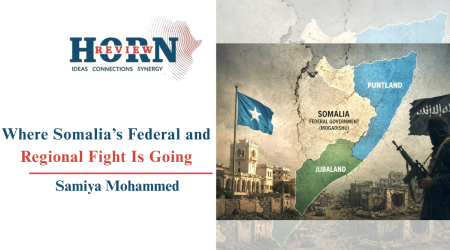
Where Somalia’s Federal and Regional Fight Is Going
The 2012 federal settlement was less a constitutional order...

9
Oct
Eritrea’s Post-Pretoria Strategy and the Escalation in Ethiopia
Our latest report examines Eritrea’s post-Pretoria trajectory and how selective...
8
Oct
The Houthi-al-Shabaab Nexus and the Emerging Security Architecture of the Gulf of Aden
The growing relationship between Yemen’s Houthi movement and Somalia’s al-Shabaab...
7
Oct
“Decaffeinated Sovereignty”: Eritrea’s One-Way Street with Ethiopia
There is a peculiar contradiction at the heart of Eritrea’s...

7
Oct
Leaked Documents Allege Sudanese Army Weapons Pipeline to TPLF-Aligned Forces as Tigray War Reignites
Leaked documents alleging a Sudanese army weapons pipeline to TPLF-aligned...
7
Oct
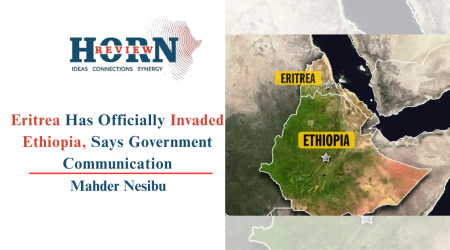
Eritrea Has Officially Invaded Ethiopia, Says Government Communication
Ethiopian Government Formally Condemns Eritrean Territorial Incursion as Its Forces...
7
Oct
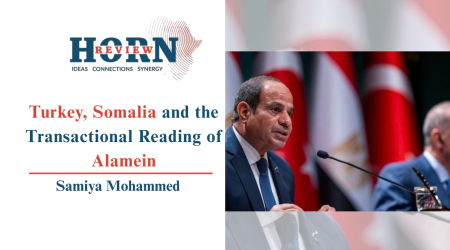
Turkey, Somalia and the Transactional Reading of Alamein
The Alamein Declaration functions less as a coherent framework...
7
Oct
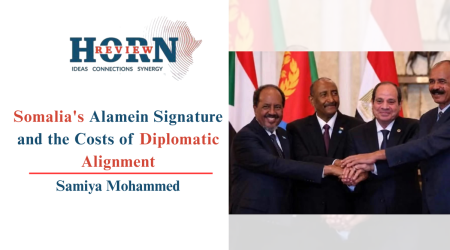
Somalia's Alamein Signature and the Costs of Diplomatic Alignment
The Alamein Declaration between Egypt, Sudan, Eritrea and Somalia...