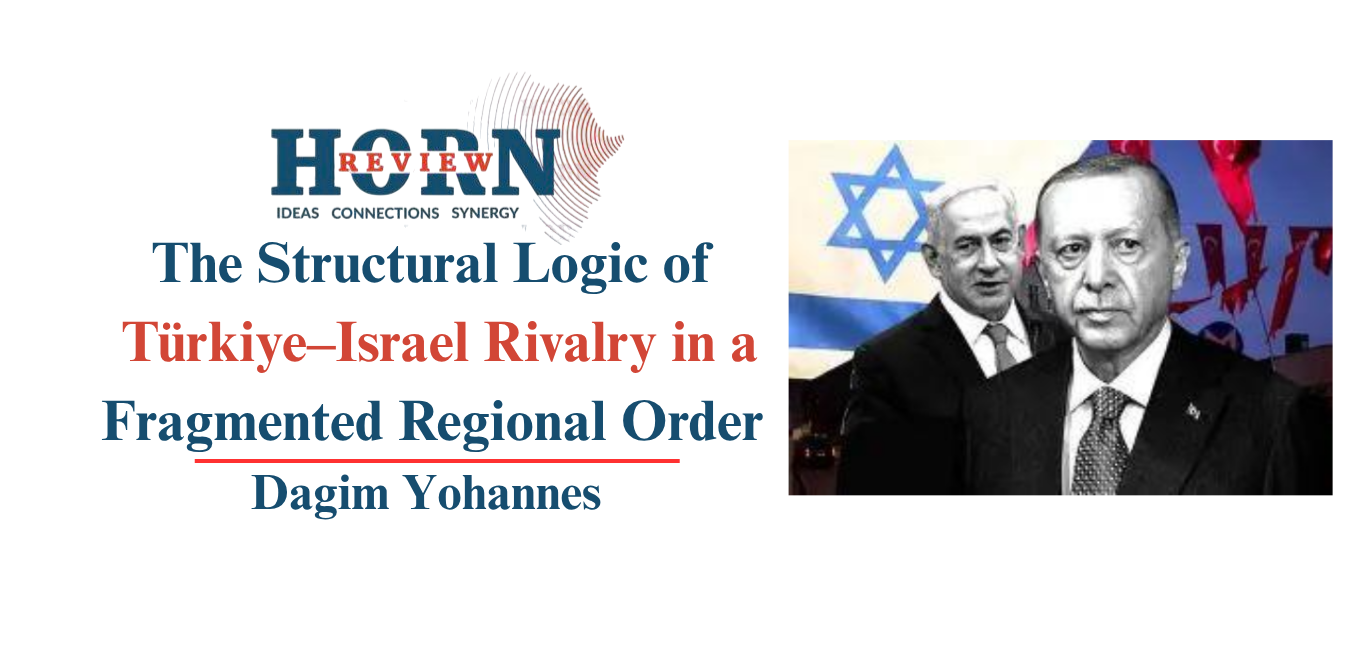
The twentieth-century Türkiye-Israel partnership was a structural anomaly produced by a secular military elite that no longer holds power, and its collapse, not the rivalry replacing it, is the real historical break. What looks like betrayal in daily coverage is better read as a return to type once the domestic actor suppressing conflict was removed from office.
That claim rests on two frameworks political scientists already use to explain small-state alignment. Omnibalancing, the theory that leaders weigh internal political threats alongside external ones, explains why Ankara’s Kemalist generals leaned toward Israel against Arab nationalism, and why Erdoğan’s Islamist coalition, once in full control, leaned the other way to satisfy its own base. Neoclassical realism supplies the other half: Türkiye’s structural position, a non-Arab power on the edge of an Arab-dominated region never changed, but the domestic filter through which that structural position got translated into policy did, from a secular military veto to an elected Islamist executive. Same geography, same neighbors, opposite alliance choice. The intervening variable is who controls the state.
Türkiye was the first Muslim-majority state to recognize Israel, in 1949, but that recognition reflected a narrow, temporary alignment. Ankara’s secular, Kemalist military saw in Israel a fellow non-Arab power, useful against a hostile Arab nationalist bloc. Jerusalem ran a doctrine, associated with David Ben-Gurion, that cultivated non-Arab states on the region’s periphery, Türkiye, pre-revolutionary Iran, Ethiopia because the Arab core was close to it. That logic produced the 1990s entente: a 1996 military cooperation memorandum, joint exercises, and Israeli arms sales, struck while Türkiye’s generals still held effective veto power over foreign policy.
That veto is what most coverage of the rupture underweights, and it is where the omnibalancing story becomes concrete. Necmettin Erbakan mentored a young Erdoğan inside the National Salvation Party and the Milli Görüş movement, and was hostile to Israel from the outset, treating Zionism, secularism, and Western capitalism as a single civilizational threat. When he briefly became prime minister in 1996, a military establishment aligned with Ankara’s Israel policy pushed him out within a year, proof the domestic veto was still bound. Erdoğan inherited Erbakan’s worldview but not, at first, the room to act on it: his first term went to dismantling that same guardianship, and ties with Israel held through the mid-2000s. The break came once that project was finished. The 2009 Davos clash with Israeli President Shimon Peres, then the 2010 Mavi Marmara raid, in which Israeli commandos killed ten Türkish activists aboard a Gaza-bound aid ship, marked the point at which Erbakan’s ideology, no longer checked, became state policy. The rivalry did not begin with the 2023 Gaza war. It began when army tutelage over foreign policy was removed.
That domestic realignment first found an external outlet in Egypt, where both governments acted on interest rather than principle. Mohamed Morsi’s 2012 election gave Ankara a natural ideological partner: a Muslim Brotherhood government in the region’s most populous Arab state. Israel read the same result as a threat, worried a Brotherhood-led Cairo might loosen Sinai security cooperation or the peace treaty. Egypt’s military, led by Abdel Fattah el-Sisi, removed Morsi in a July 2013 coup. Türkiye condemned it and froze relations with Cairo for a decade; Israel moved the opposite way, and within weeks the American Israel Public Affairs Committee was lobbying Washington to keep the roughly $1.3 billion in annual U.S. military aid flowing, despite a coup that would ordinarily suspend it under U.S. law. Ankara and Jerusalem first tested their rivalry indirectly, backing opposite sides of an Arab state’s internal contest, a pattern Syria would later repeat at far greater scale.
The rhetoric that dominates coverage today extended that same contest into public speech. Erdoğan has repeatedly accused Israel of genocide and compared its conduct to Hitler’s; Türkish prosecutors have opened a case against Netanyahu and dozens of Israeli officials. Former Israeli prime minister Naftali Bennett told the Conference of Presidents of Major American Jewish Organizations in February 2026 that Türkiye is “the new Iran,” accusing Ankara of building a hostile Sunni axis with Qatar and Pakistan. Foreign Minister Hakan Fidan answered in kind that July, telling CNN Türk that Israel had become “a burden that humanity can no longer bear.” Israeli Foreign Minister Gideon Sa’ar called it textbook incitement to genocide. Neither statement was a slip; both went to receptive audiences, evidence that confrontation now serves each government’s interests better than the previous decade’s ambiguity did.
One strand of that rhetoric deserves closer scrutiny: Ankara’s invocation of “Greater Israel,” advanced by Erdoğan and Fidan, claiming Israeli territorial ambition extends toward southern Türkiye. The evidence is thin, mainly statements by Israeli ultranationalist ministers, one of whom answered “absolutely” when asked if he believed in the concept), plus maximalist religious-right rhetoric about a state stretching from the Nile to the Euphrates. Actual Israeli aggression toward Türkiye has no grounding in observable capability or plan. What makes the claim significant is its political function, not its evidentiary weight: it lets Ankara fold a century-old anxiety about great-power partition, the “Sèvres syndrome,” rooted in the 1920 treaty that briefly carved up Anatolia, into the Gaza-era confrontation, converting a policy dispute into an existential one that mobilizes a domestic audience an ordinary disagreement cannot reach. That rhetorical contest then acquired a physical address.
Syria is where the rivalry moved from words to overlapping military footprints, and it is the theater most likely to produce an unintended clash. Bashar al-Assad’s government collapsed in December 2024. Türkiye moved quickly to build ties with Ahmed al-Sharaa’s transitional government and sought new bases in central Syria. Israel moved just as fast the other way: it has struck Syrian territory roughly three times more often since Assad’s fall than in the prior seven years combined, hitting the sites Ankara had earmarked for basing, including the former T4 airfield, and forcing Türkiye to shelve the plan. The two militaries now run a technical deconfliction mechanism, mediated partly through Azerbaijan, similar to arrangements Türkiye maintains elsewhere in Syria with Russia and the United States, preventing direct contact but not settling who shapes Syria’s future security architecture. A December 2025 Israeli pact with Greece and Cyprus widened the contest; Ankara read it as encirclement, given its own Mediterranean disputes with both.
Set against that background, the arms competition looks more asymmetric than either government’s rhetoric suggests. The single most consequential variable is Türkiye’s possible return to the F-35 program, from which it was expelled in 2019 over its S-400 purchase. Washington has signaled openness to reversing that exclusion, though the legal conditions remain formally unmet, and Israel has taken the unusual step of publicly opposing a fellow NATO member’s access to the jet. Türkiye’s hedge is twofold, and neither half is ready. The indigenous KAAN fighter is years from a real substitute, an initial batch is not due until 2028 to 2030, running on American engines until a Türkish powerplant matures around 2032. The nearer-term program is Steel Dome, an AI-coordinated national air shield built on domestic radar, command, and interceptor systems, backed by over twelve billion dollars and due for full readiness by 2030. Together, they show a Türkiye racing to close a gap it cannot close quickly, while Israel’s edge rests on a codified American commitment now tested by a Washington willing to overrule Jerusalem.
None of this points toward open war, and that is itself the analytical payoff. Every flashpoint traced here, Egypt, rhetoric, Syria, and the arms race, has produced friction without direct confrontation because both governments retain a structural interest in stopping short: Türkiye within NATO, and Israel reliant on Washington’s continued goodwill toward Ankara. The rivalry is therefore better understood as durable rather than escalatory, a form of competitive coexistence rather than a trajectory toward conflict.
What could still alter this calculus is Washington itself. If the F-35 decision goes Türkiye’s way, Ankara would gain meaningful capability years before KAAN or comparable systems come online, while Israel’s core advantage in the relationship, sustained American deference, would visibly erode for the first time since 2019. More than any rhetorical escalation from Erdoğan or Netanyahu, such a shift would signal a material rebalancing of the relationship and indicate the direction this rivalry is likely to take.
This outcome is consistent with neoclassical realist expectations, where shifts in domestic authority and threat perception reshape external alignment behavior. In this sense, the Türkiye–Israel rivalry is structurally constrained but strategically fluid, reinforcing a regional order defined less by open conflict than by persistent, managed competition.
By Dagim Yohannes, Researcher, Horn Review