
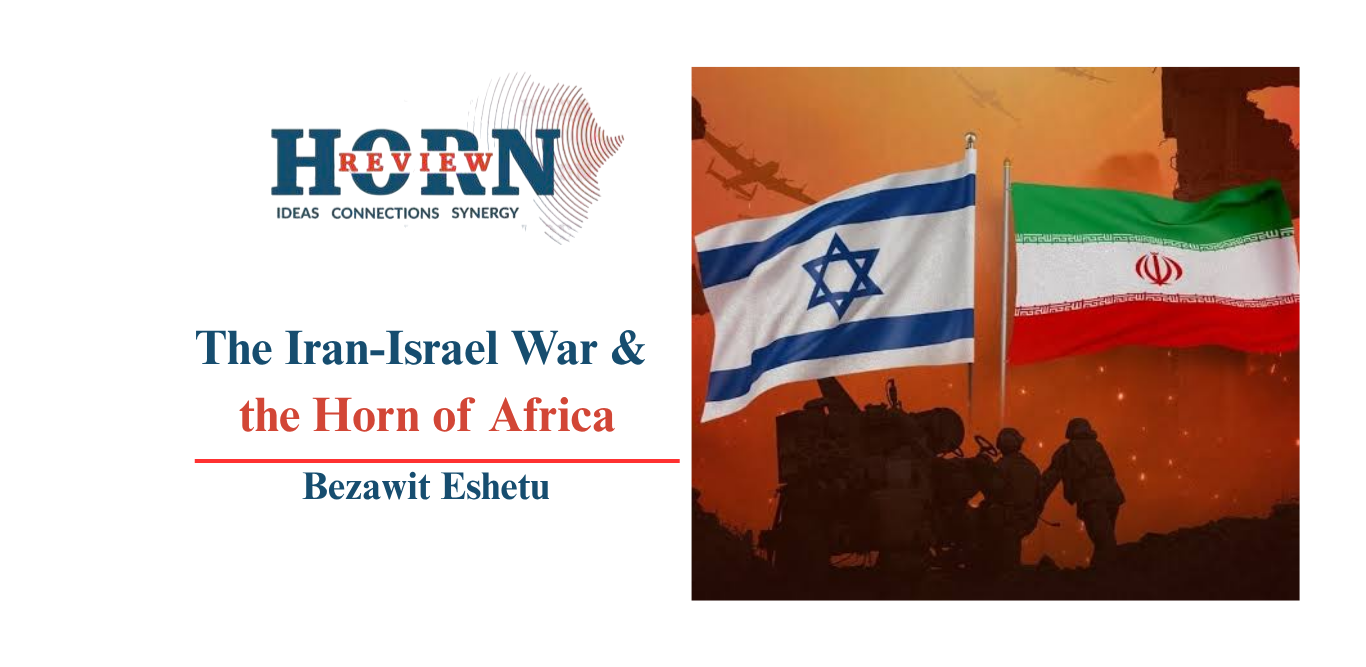
The Iran-Israel War & the Horn of Africa
By July 2026, the war that began in Gaza in October 2023 has widened into a multi-front regional confrontation involving Israel, the United States, Iran, Lebanon, and various armed proxy groups. Iran has long provided financial, military, and technical support to Hamas, Hezbollah, and other militant organizations opposing Israel. Israeli forces now control roughly two-thirds of the Gaza Strip, despite an October 2025 ceasefire intended to freeze the front lines. The humanitarian situation in Gaza has continued to deteriorate amid the paused major combat.
In February 2026, the United States and Israel carried out extensive strikes on Iran’s nuclear and missile infrastructure. Iran’s supreme leader was killed in the opening hours of the operation. A succession process, a subsequent ceasefire, internal political instability in Iran, and a new maritime blockade in the region followed in rapid sequence.
The thread running through the past five months is straightforward. Diplomacy has repeatedly slowed the fighting without resolving the disputes that drive it, and each pause has been used by the combatants to rearm rather than to settle. The clearest illustration is the widening of the war into the Red Sea, where a fresh Houthi blockade against Saudi Arabia now threatens to draw the entire Horn of Africa, from Djibouti and Somaliland to Sudan and Egypt, into a conflict that began as a narrower dispute between Washington and Tehran.
The roots of the current confrontation reach back to the 2015 Joint Comprehensive Plan of Action, the nuclear agreement negotiated by Iran, the United States and five other powers that capped Iranian uranium enrichment in exchange for sanctions relief. Washington’s 2018 withdrawal, followed by a return to sweeping sanctions, pushed Tehran to expand enrichment well beyond agreed limits and set the two countries on a collision course that years of indirect talks in Oman failed to reverse.
That collision arrived first in June 2025, when Israel launched Operation Rising Lion, a twelve-day campaign against Iranian nuclear sites at Natanz, Arak and Fordow that drew in American B-2 bombers and Iranian missile retaliation against Gulf targets, including Qatar’s Al Udeid air base and infrastructure in the United Arab Emirates. A ceasefire held for months, but talks over the deeper issues, Iran’s missile arsenal, its militias, the terms of a lasting settlement, went nowhere.
The war resumed in earnest on February 28, 2026, when the United States and Israel launched Operation Epic Fury, striking roughly a thousand targets on its opening day and killing Supreme Leader Ali Khamenei along with dozens of officials. Iran answered with waves of missiles and drones against American and allied positions region-wide.
A first attempt at a negotiated end, the Islamabad Talks that April, collapsed after twenty-one hours, unable to bridge differences over Hormuz and the nuclear file. Only in June, after Pakistani and Qatari mediators shuttled between the two capitals for weeks, did Washington and Tehran sign the Islamabad Memorandum of Understanding, a fourteen-point framework extending the ceasefire sixty days, reopening Hormuz and dangling a three-hundred-billion-dollar reconstruction package alongside sanctions relief.
The memorandum’s central weakness was structural. It offered relief up front while leaving Iran’s missile program and its regional proxies entirely off the table, and it carried no binding verification mechanism. A parallel effort on the northern front, the June 26 framework agreed in Washington and elaborated in successive rounds of talks in Rome, tied a phased Israeli withdrawal from southern Lebanon to Hezbollah’s disarmament, a sequence Hezbollah has publicly rejected and the Lebanese army may struggle to enforce. Both frameworks bought time rather than peace.
That time ran out quickly. Mojtaba Khamenei, the late supreme leader’s son, was installed as his successor on March 8 by Iran’s Assembly of Experts after heavy pressure from the Revolutionary Guard, and his elevation hardened rather than softened Tehran’s posture. In Gaza, Israeli forces have pushed past the ceasefire’s agreed line, expanding their zone of control from just over half the territory in the deal’s early months to roughly two-thirds by mid-2026, according to Israeli officials and independent monitors, while aid agencies report only a fraction of promised truck deliveries have entered the Strip amid continued shootings, raids and demolitions.
In Lebanon, a sixth round of Rome talks in mid-July produced agreement on so-called pilot zones where the Lebanese army would replace Israeli troops once Hezbollah’s weapons are removed, but implementation has not begun and Hezbollah rejects the premise. On the Iran front, the truce unraveled after Iranian forces struck commercial vessels in Omani waters in early July, prompting Washington to reinstate its naval blockade, revoke oil export waivers and resume strikes that Iranian officials say have killed dozens and damaged civilian infrastructure. On July 18, deputy foreign minister Kazem Gharibabadi announced Tehran was suspending its own commitments, accusing Washington of already abandoning the deal, ending the truce five weeks after it began.
Throughout this cycle Iran has leaned on what it calls the Axis of Resistance, a network of allied armed groups that lets Tehran project pressure without committing its own depleted conventional forces to open war. Hezbollah remains the most capable of these partners, though badly weakened. Hamas and Palestinian Islamic Jihad continue to hold weapons in Gaza, Iraqi militias such as Kata’ib Hezbollah and Asaib Ahl al-Haq retain the capacity to strike American positions, and the Houthis in Yemen have emerged as the network’s most consequential actor of the summer, activated once again as pressure on Iran intensified
On July 20, Yemen’s Houthi movement declared a full maritime blockade against Saudi Arabia, warning shipowners that any vessel calling at a Saudi port could be targeted in the Bab el-Mandeb Strait. The declaration followed a Saudi-led coalition strike on Sanaa International Airport, intended to stop an Iranian aircraft from landing, and a Houthi missile response against Abha airport in the kingdom’s south. Tankers began turning back within hours, and Brent crude climbed toward ninety dollars a barrel on fears the blockade would choke off Saudi Arabia’s principal escape route around an already largely closed Hormuz.
That escape route was never built to carry this much traffic. Saudi Arabia’s Petroline, the twelve-hundred-kilometer pipeline linking its eastern oil fields to the Red Sea port of Yanbu, reached its physical ceiling of seven million barrels a day in March after Aramco converted a parallel gas liquids line to crude service, but Yanbu’s loading terminals can process only three to four million barrels a day under wartime conditions. That gap has left tankers queued at anchor, with crude effectively trapped behind a bottleneck the Houthi blockade now threatens to seal.
The maritime crisis lands on an already fracturing regional order. Saudi Arabia and the United Arab Emirates, partners for a decade in the Yemen war, turned openly against each other in December and January after Emirati-backed Southern Transitional Council forces seized Yemen’s Hadhramaut governorate, prompting Saudi strikes on the port of al-Mukalla and the group’s dissolution. The rivalry has since spread into Sudan, where the UAE continues to back the Rapid Support Forces against the Saudi- and Egyptian-backed government, and into Somalia, where Riyadh has built a coalition with Cairo, Ankara and Islamabad against a rival axis built around Abu Dhabi.
That rival axis gained a political dimension in December 2025 when Israel became the first United Nations member state to formally recognize Somaliland’s independence, a move widely read as consolidating what regional analysts call the Berbera axis, an alignment of Emirati capital, Ethiopian ambitions for a Red Sea coastline and Israeli security interests centered on the port DP World has spent hundreds of millions of dollars developing.
The arrangement traces to a January 2024 memorandum in which Somaliland offered landlocked Ethiopia access to its coast near Berbera, a deal Somalia has never accepted and Egypt views as a threat, tying its objections to a dispute with Addis Ababa over the Grand Ethiopian Renaissance Dam and its sense that a permanent foreign naval presence near the Bab el-Mandeb encroaches on the Suez Canal. Layered together, these disputes give the Horn of Africa every ingredient needed to become a full extension of the wider war, straining Sudan’s devastated economy and handing leverage to whichever outside power can offer ports, arms or financing fastest.
The costs of a closed Hormuz and a blockaded Red Sea fall unevenly across the globe. The United States, a net energy exporter, has absorbed direct military and political costs but stayed largely insulated from the price shocks rippling through import-dependent economies. Developing nations have fared far worse. The Gulf normally supplies close to a fifth of the world’s seaborne fertilizer trade, and researchers at the International Food Policy Research Institute estimate the Hormuz closure alone blocked about twenty-one million metric tons of annual urea export capacity and another four million tons of diammonium phosphate, pushing global fertilizer prices sharply higher through the spring.
India, which draws close to a fifth of its urea supply from the Gulf, and Brazil, which imports most of the fertilizer its farmers use, have both faced tightening supplies heading into planting seasons, while poorer, conflict-affected states have even less capacity to absorb the shock. If the Red Sea route closes too, the alternative lanes around the Cape of Good Hope add weeks to every voyage, a delay that falls hardest on the aid convoys and grain shipments fragile states such as Sudan depend on to avert famine.
None of the frameworks negotiated over the past five months, the twelve-day war’s ceasefire, the Islamabad talks, the memorandum that followed, has outpaced the momentum of the fighting, and each has instead functioned as an intermission the combatants used to regroup. Israel continues to cite the threat from Hezbollah and Iranian-backed militias to justify continued operations in Gaza and Lebanon, Iran continues to describe its missile and naval actions as self-defense against American and Israeli aggression, and civilians on every side, from Gaza to Bushehr to Hadramawt, bear the weight of a conflict whose architecture keeps expanding.
The odds that the Horn of Africa becomes a full southern extension of the Iran-Israel war are rising steadily, as the conflict’s proxy architecture reaches across the Red Sea. What began as transactional arms smuggling between Yemen’s Houthis and Somalia’s al-Shabaab has evolved into a more coordinated partnership of convenience that directly serves Iranian interests. Empowered by Iranian backing, the Houthis, already a key node in Tehran’s Axis of Resistance, have transferred light weapons, drone components, explosive expertise, and related training to al-Shabaab militants.
In exchange, al-Shabaab’s coastal networks facilitate smuggling routes and maritime disruptions that help sustain Houthi operations and widen pressure on shipping, effectively extending the Red Sea theater southward. This synergy not only bolsters al-Shabaab’s insurgency inside Somalia but also transforms stretches of East Africa into a secondary front for the broader Iran-aligned network, linking local grievances to the same confrontation that has drawn in Israeli and U.S. strikes on Iranian targets.
This proxy escalation has, in turn, triggered a high-stakes militarization of the Horn by outside powers seeking to secure their interests amid the widening war. Countering the growing Houthi-al-Shabaab threat and its ripple effects on Red Sea chokepoints, Turkey has dramatically expanded its security footprint in Somalia. This includes the development of a major dual-use spaceport and potential missile testing facility near Warsheikh, officially framed as a civilian space project costing around $350 million but with clear military dimensions according to reporting on its design and capabilities.
The facility’s location offers strategic reach across key maritime zones, complementing Turkey’s existing military training base and naval role. Somali territory now hosts a volatile convergence of Emirati-backed port and security arrangements, Iranian-supplied networks operating through the Houthis, and advanced Turkish infrastructure. Far from being peripheral collateral, the Horn has become an integral southern flank in the Iran-Israel conflict, a geostrategic arena where proxy insurgencies, great-power rivalries, and control of maritime lifelines are colliding with growing intensity.
By Bezawit Eshetu, Researcher, Horn Review

RELATED
Posts
28
Sep
Saudi-led Multinational Maritime Defence Coalition and the Changing Security of Bab el-Mandeb
On 2 September, the Saudi-led Multinational Maritime Defence Coalition...

28
Sep
The AI Disinformation War in the Horn and the Economics of Digital Conflict
In September, Marc Owen Jones, an Associate Professor of...
24
Sep
The Calculus of Separation: Why Washington Will Arm Riyadh But Not Fight for It
The episode reveals a distinction in the U.S.-Saudi security relationship...
21
Sep
Saudi Arabia’s Increasing Isolation Against the Houthis
Saudi Arabia’s renewed confrontation with Yemen’s Houthis has exposed how...
21
Sep
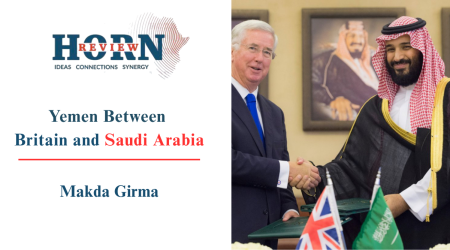
Yemen Between Britain and Saudi Arabia
The Houthi advance along Yemen’s Red Sea coast has exposed...
21
Sep
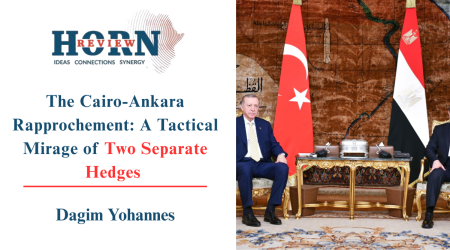
The Cairo-Ankara Rapprochement: A Tactical Mirage of Two Separate Hedges
The recent run of headlines out of Cairo and Ankara,...
20
Sep
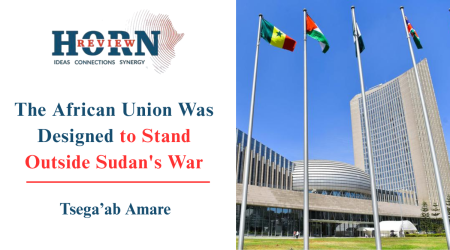
The African Union Was Designed to Stand Outside Sudan's War
Every time Sudan's war comes up in public discussion, mentioning...
2
Sep
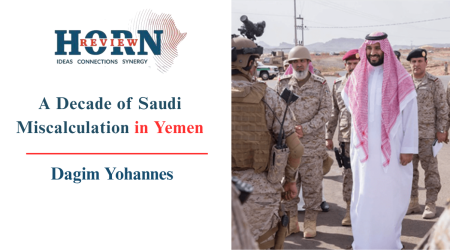
A Decade of Saudi Miscalculation in Yemen
On March 26, 2015, Mohammed bin Salman, then a thirty-year-old...
31
Aug
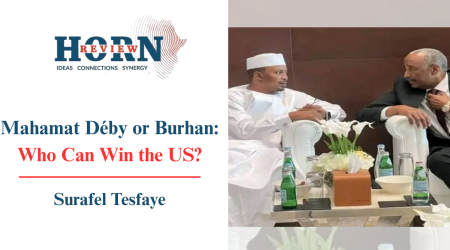
Mahamat Déby or Burhan: Who Can Win the US?
On August 20, 2026, Sudanese warplanes and drones pursued a...
27
Aug
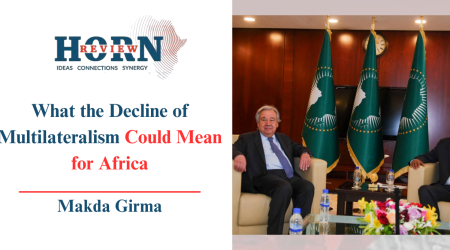
What the Decline of Multilateralism Could Mean for Africa
Multilateralism is weakening just as African states need it most....