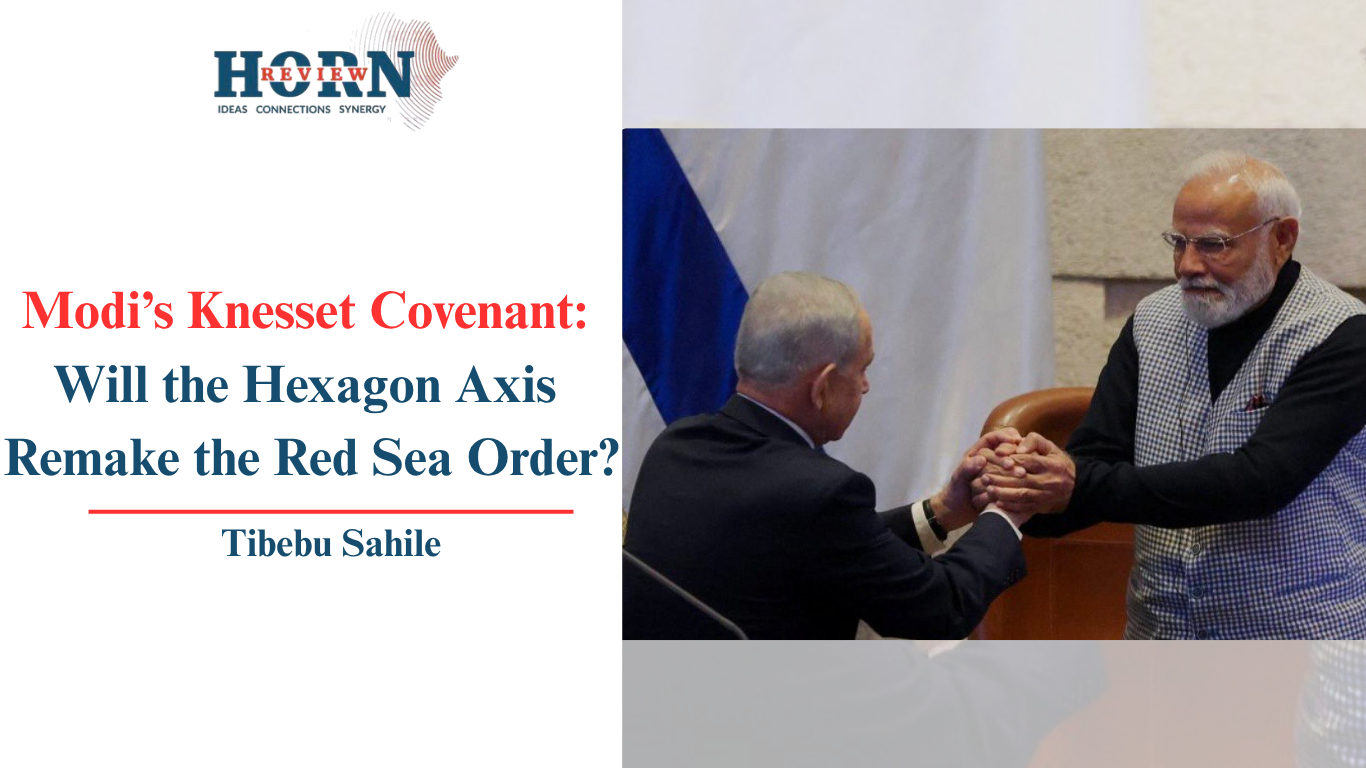
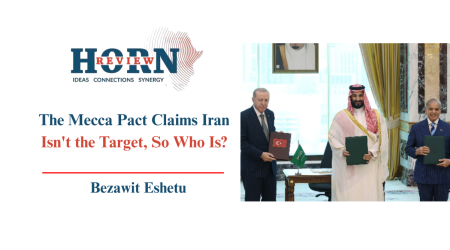
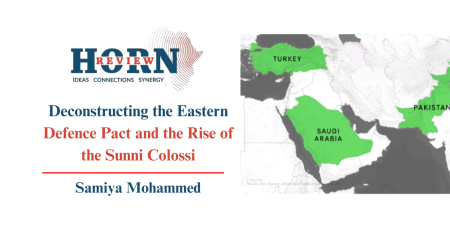
Prime Minister Narendra Modi’s historic February 25, 2026, Knesset speech, the first by an Indian head of government, shows the brick-by-brick layer for the foundation of the new axis quite clearly, with a robust strategy, equating Hamas’s October 7 terrorism to Mumbai’s 26/11 Lashkar-e-Taiba carnage of 166 dead, including six Israelis. declaring “India stands with Israel, firmly, with full conviction on zero tolerance for terrorism, no double standards.” This wasn’t poetry for applause. It clarified the emerging alignment. Netanyahu’s “hexagon alliance”, Israel-India-UAE-Greece-Cyprus, thrusting directly into Ethiopia and Somaliland as Horn fulcrums, reshaping strategic calculations along Red Sea chokepoints from Bab al-Mandeb to Suez to constrain the strategic space of rival coalitions of Pakistan-Turkey OIC defense push, or proposed Saudi-Turkey defense pact through Berbera’s Israeli-Emirati foothold, where Herzog’s February 24-25 Addis visit layered security pacts and agricultural tech atop Modi’s December 16-17, 2025, “Strategic Partnership” with PM Abiy Ahmed, elevating ties via eight pacts on debt relief, AI training, UN peacekeeping, and health equipment’s, alongside defense momentum from the February 2025 Aero India MoU for cybersecurity
The hexagon alliance wasn’t born overnight from Netanyahu’s speech. It simmered in backchannels since Netanyahu’s post-Abraham Accords Gulf talks in 2020, building through I2U2 and IMEC trade deals by 2022-23, plus quiet Ethiopia links via UAE’s Berbera port and India’s HAL defense pacts by early 2025. Threats like Pakistan-Turkey OIC “SMDA” push after the 2025 Pahalgam attack, Erdogan’s arms to Somalia, Houthi Red Sea disruptions, and Iran’s drones in Eritrea created urgent pressure, pushing Herzog’s February Addis visit into an open push to secure the Horn before rivals like Ankara or Riyadh closed the door, forcing Netanyahu to go public first on February 22, 2026, and Advance swiftly.
Rather than a sudden pact, this alliance between the two nations draws from profound ideological commonalities that transcend mere arms deals or commerce. Both Hindutva and Zionism prioritize deep ancestral connections to their historic homelands, Hindutva through the Hindu bond to India as both fatherland and sacred soil, Zionism via the Jewish people’s millennia-old ties to Israel, often placing these ethnic and cultural loyalties above broader multicultural frameworks. Savarkar’s 1923 book said Indians must love both their homeland and the holy land. Herzl’s 1896 work did the same for Zionism, seeing Palestinians as a growing threat, locked in by Netanyahu’s 2018 law claiming Israel as the Jewish nation-state.
Both Hindutva and Zionism frame Muslim groups as security threats: Hindutva rhetoric often portrays Indian Muslims as disloyal and aligned with Pakistan, contributing to the 2019-2020 Citizenship Amendment Act (CAA) protests and the revocation of Jammu and Kashmir’s Article 370 autonomy, while Zionism views Hamas and its Iran-backed networks as existential dangers, prompting deployments like the Iron Dome missile defense system and military operations in Gaza following the October 7, 2023 attacks. India actively employs Israeli Heron drones for surveillance against militants in Kashmir, has documented use of Israeli Pegasus spyware targeting perceived threats, and saw Prime Minister Narendra Modi link India’s 26/11 Mumbai attacks to Israel’s October 7 events in a 2026 speech, underscoring shared anti-terror resolve. RSS delegations have studied Israel’s border security walls, and in 2024, former Indian Army officer Colonel Waibhav Kale was killed by Israeli fire in Gaza, with Palestinian authorities blaming the IDF in a letter to Modi, though India issued no public condemnation.
During the speech, Modi praised Israel’s farming as an “agricultural miracle,” and its reshaping of India’s dry lands through hands-on partnerships. Israeli drip irrigation from Netafim covers over 10 million hectares. Drip irrigation systems cut water use by 50-60% while boosting yields 30-50% for horticultural and field crops under India’s ‘Per Drop, More Crop’ initiative.43 joint Centers of Excellence since 2006 have trained over half a million farmers in no-till farming, pest traps, and satellite tracking, while February 2026’s 16 new deals launch the India-Israel Innovation Centre for Agriculture with AI tools, better storage, and seaweed farming to tackle $450 billion yearly drought losses on 60% rain-fed fields, copying Israel’s 90% water efficiency from desert soil and building local drip systems to end imports.
This Agri and tech-defense cascade anchors Ethiopia as Hexagon’s indispensable Horn keystone. Modi’s December 2025 Addis visit launched a “Strategic Partnership” backing Berbera sea access to reduce Chinese dependence, building on February 2025’s Aero India defense MoU and October’s first Joint Defense meeting in New Delhi. In 2024, Ethiopia strengthened the UAE-Berbera lease, while boosting Israel’s Somaliland recognition, and making way for Herzog’s February visit, which encourages Addis to seize the strategic momentin its mission for sea access plus farming tech, despite Saudi Arabia’s urgent February visits and Erdogan’s warning that recognition turns the Horn into a battlefield.
Pakistan’s diplomatic isolation starkly underscores the India-Israel Hexagon Alliance’s strategic advantage. Following the 2025 Pahalgam terrorist attack, where Lashkar-e-Taiba killed 26 Indian tourists, India’s Operation Sindoor delivered precise strikes across the Line of Control, dismantling terror networks without triggering nuclear escalation. This severed bilateral trade, suspended the Indus Waters Treaty, enabled persistent Indian aerial surveillance, and prompted explicit U.S. cautions against 2026 conflict. Meanwhile, Islamabad remains ensnared in China’s CPEC debt trap ($30 billion owed), with Gwadar port yielding negligible returns as Beijing claims 91% of revenues, still dependent on the Iranian-controlled Strait of Hormuz, making it vulnerable, while its OIC nuclear posturing and proposed Saudi-Turkey defense pact falter without Riyadh’s financial backing. If Hexagon axis consolidates control of Berbera port and Red Sea trade corridors, Pakistan’s Gwadar relative strategic centrality would diminish under sustained corridor consolidation as New Delhi and Jerusalem reshape maritime dominance.
The Hexagon Alliance and its associates execute containment through economic geometry, rendering Iran’s Chabahar irrelevant as IMEC/I2U2 corridors channel Gulf commerce through UAE-Israel-Europe axes amid Tehran’s funding freeze and U.S. sanctions. Israel’s precision tech transfers fortify India’s HAL production and Ethiopia’s Berbera posture against al-Shabaab and Houthi coercion, while UAE-Bahrain-Oman pivot to New Delhi’s refineries for stability guarantees, leaving Qatar-Turkey-Pakistan protests impotent without Saudi subsidy. Great powers forge perimeters where trade routes serve as ramparts; Chabahar’s desolation affirms the encirclement as revisionists squabble er stranded assets and the Muslim bloc’s ritual outrage merely seals their isolation.
India’s gains from these Hexagon moves will enable new arms sources, diversifying its Russian-made arsenal, safer Red Sea trade via Berbera to counter China’s routes, firmer UAE energy deals, and greater clout in Africa through Ethiopia, all without fully tying to the U.S. But downsides loom: backlash from the Indian Muslim community upset over Israel-Palestine stance and past citizenship law fights, anger from Muslim nations and Pakistan risking Kashmir tensions, Iran blocking key Chabahar port access, and friction with Somalia, aligned on the opposing axis, escalating regional proxy tensions or Berbera access disputes if Ethiopia-Somalia rivalries intensify.
Herzog’s February visit to Addis Ababa and Modi’s February speech in Israel reveal a clear pattern of recruitment, laying foundational bricks for the hexagon alliance. Ethiopia gets pitched as the Horn’s indispensable anchor, offering cutting-edge Agri-tech and security packages to secure Berbera against rivals, while India positions itself as the Asian powerhouse, trading ideological alignment and manufacturing scale for Red Sea access and arms diversification. These aren’t courtesy calls; they’re calculated moves to enlist Addis in a bloc that rewires chokepoints from Bab al-Mandeb to Suez.
By Tibebu Sahile, Researcher, Horn Review