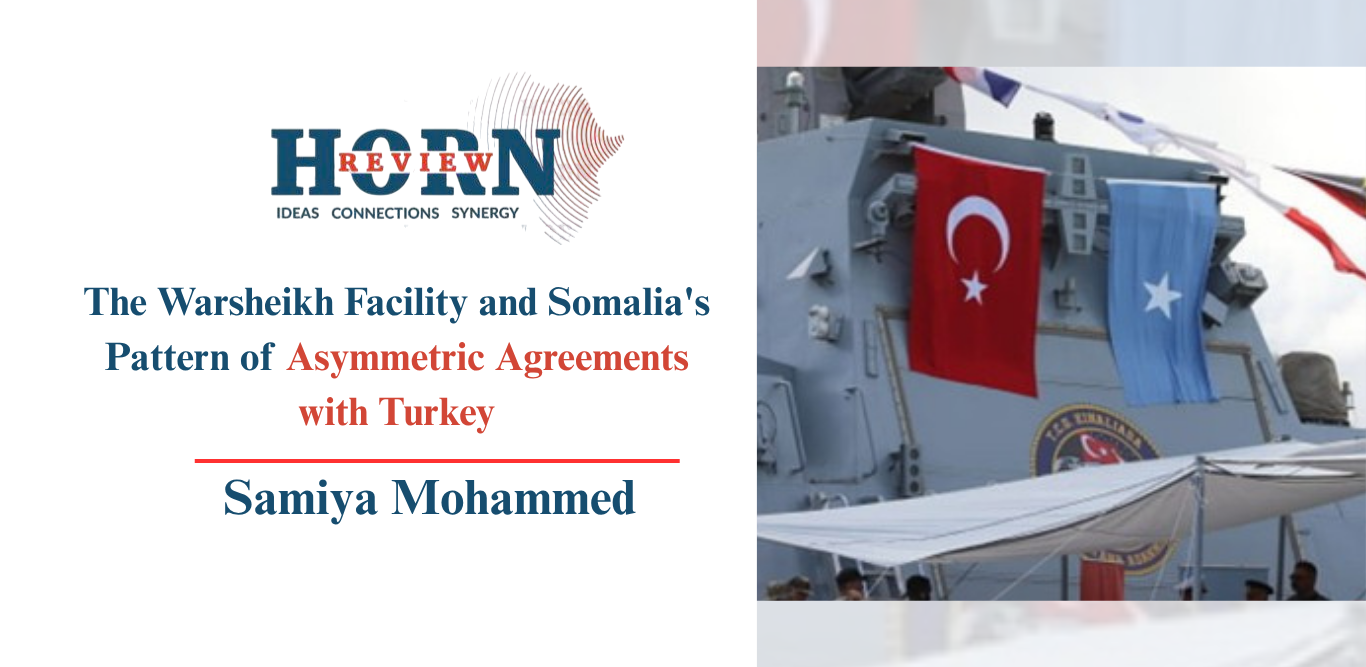
Turkey has commenced construction on a spaceport near Warsheikh approximately seventy kilometers north of Mogadishu. Officially made as a civilian movement the facility is projected to serve Turkey’s national satellite launch program and offer commercial services to third parties. The technical logic pinning the project is sound however the arrangement brings up questions regarding sovereignty, revenue transparency and the true character of Turkish ambitions in a region already seen by asymmetric power relations. The absence of publicly available, detailed terms governing the land lease, revenue sharing and operational control suggests a pattern of opaque deal making that carries implications for Somalia’s long term autonomy and economic development.
The technical rationale for an equatorial launch site is Somalia’s geographical position near the equator which offers a distinct advantage for space access as the Earth’s rotational velocity provides a free boost to rockets launched eastward reducing fuel costs and increasing payload capacity. The coastal location also allows for safe road over the Indian Ocean minimizing risks to populated areas from debris. Turkish officials have articulated these advantages clearly with Industry and Technology Minister Mehmet Fatih Kacir noting that feasibility studies identified Somalia as the most advantageous region for such an investment.
From a commercial perspective the potential upside is genuine. Equatorial launch sites are a scarce asset and the global market for satellite launches is expanding. The Turkish minister has explicitly stated that the port will serve the global commercial market acting as an infrastructure asset that generates revenue through annual launch services, testing activities and integration processes. However the crucial question of how this revenue will be shared with Somalia remains unanswered.
While the Turkish narrative suggests a contribution to Somalia’s development, the precise mechanisms, revenue percentages, lease duration and local employment quotas have not been published in any form that allows for public scrutiny. This opacity replicates a disconcerting pattern seen in the 2024 Turkey and Somalia hydrocarbons agreement.
The hydrocarbon deal which was publicly disclosed and reported provides a cautionary precedent. Under the terms of the agreement, the Turkish Petroleum Corporation was granted exclusive rights to explore and produce oil and gas across three offshore blocks. The revenue sharing structure was heavily weighted in favour of the investor with Turkey entitled to recover up to ninety percent of annual production as cost petroleum while Somalia is allocated a royalty of approximately five percent. This structure while not unusual in frontier oil exploration effectively places the bulk of financial risk and upside on the host nation while insulating the operator from costs. The agreement also exempts TPAO from taxation, places legal jurisdiction in Istanbul and stipulates that Somalia must provide technical data at no cost. Critics including former Somali officials have denounced the arrangement as unconstitutional and lacking in public consultation arguing it violates the country’s 2020 Petroleum Law. If a similar logic of lopsided risk and reward governs the spaceport agreement Somalia may be surrendering a non renewable asset for insufficient compensation.
The technical specifications of space launch and ballistic missile testing are convergent making a spaceport capable of hosting both functions with minimal modification. A report in Le Monde has described the facility as designed for both satellite launches and long range ballistic missile testing which a dual use configuration that aligns with Turkey’s ambitions for depth. The open ocean downrange and low air traffic in the region makes it an ideal location for such tests. Turkish forces are already present on the ground, securing the site which adds a layer of military infrastructure to existing presence at Camp TURKSOM, naval access agreements and other energy deals. This expansion of Turkish military capability into the Indian Ocean is not a secondary concern however it is a central element of geopolitics.
Turkey’s posture in the Horn has evolved from a humanitarian and development oriented approach to one that incorporates a military dimension including the deployment of combat aircraft and the establishment of a naval presence. While Turkey supports Somalia’s territorial integrity in principle its deepening military presence serves its own objectives which may not always align with Somali interests. The installation of a dual use spaceport is a projection of this power.
Geography is a non renewable asset and hosting an equatorial launch site should command transparent and high value returns. promises of development assistance and prestige are not a substitute for concrete economic benefits and enforceable sovereignty protections. The federal government’s capacity is limited and elite incentives are often short term. In such an environment a stronger partner designing, building and operating a facility on allocated land creates a classic dependency relationship. Once the facility is operational Somalia’s leverage evaporates. This is not a market transaction however it is an arrangement predicated on an imbalance of power that places Somalia in a client-state role.
International precedent suggests that host nations with strong negotiating positions and robust institutions can secure favorable terms from commercial spaceport operators. Somalia, however, is operating from a position of weakness, and the opaque nature of the agreement does not inspire confidence that its interests have been adequately protected. The Somali public and parliament deserve a full accounting of the agreement’s terms, including independent audits of revenue flows and enforceable local-content provisions.
Anything less represents a continuation of politics as usual in a region where the strong often take advantage of the weak. While a Turkish spaceport could theoretically contribute to Somalia’s development, the realization of that potential hinges on transparency, fairness, and a genuine commitment to sovereignty that is not evident in the current arrangement. The burden of proof lies with Ankara and Mogadishu to demonstrate that this partnership is not merely a strategic acquisition dressed as cooperation.
By Samiya Mohammed, Researcher, Horn Review