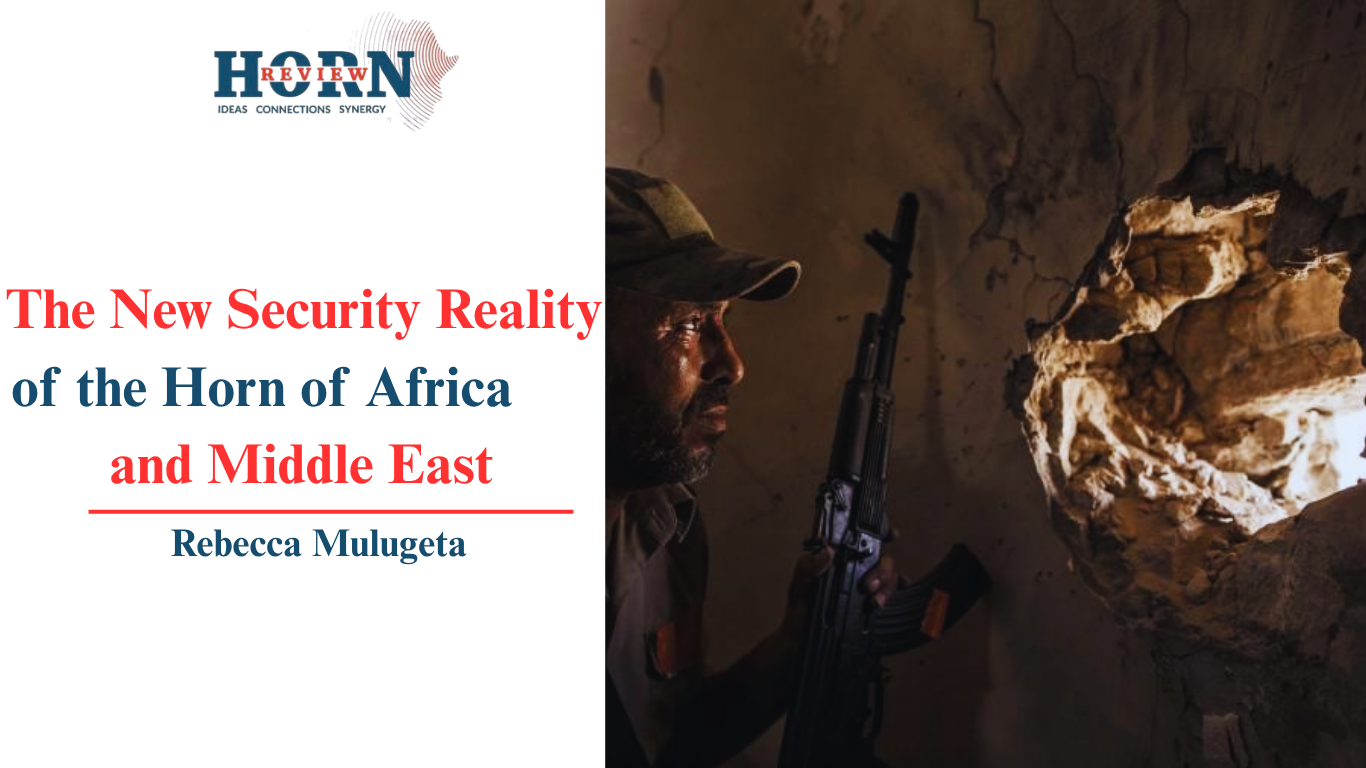
For a long time, political analysis treated the Middle East and the Horn of Africa as two distinct security silos, each with its own political actors, conflicts, and institutions. The Red Sea was viewed merely as a physical gap, rather than a political bridge. That old map is now obsolete and the current security climate has forged an emerging, unified strategic space where the Middle East and the Horn of Africa are inextricably linked. The traditional borders of these two regions have blurred into a single continuum of risk, alliance, and shared vulnerability. Especially in the wake of the recent conflict between Israel and Iran, the “line” that once separated these two blocks has vanished or mixed, leaving behind an integrated security environment where a shock in one region is felt immediately in the other.
This transformation is not symbolic rather it is operational. Events in one region now produce immediate consequences in the other. Security shocks travel faster, alliances stretch further, and conflicts overlap in ways that demand a new way of thinking. What we are witnessing is the merging of two once-parallel systems into a single, complex strategic environment. Historically, the separation between the two regions was grounded in both geography and political logic. In the Horn of Africa, insecurity was largely driven by internal fragility. Armed movements such as Al-Shabaab operated within a relatively contained space, focused on Somalia and its immediate neighbors. Their objectives were tied to territorial control and political influence within a regional context.
Meanwhile, the Middle East was shaped by a different set of dynamics. Conflicts were defined by state competition, ideological struggles, and proxy warfare. Actors like Hezbollah and the Houthis were embedded in a broader geopolitical contest involving Iran and Israel. These dynamics, while intense, were largely confined to the Middle Eastern region. Institutionally, this separation was reinforced by regional organizations. The Gulf Cooperation Council focused on Gulf stability, the Arab League addressed Arab political coordination, and the Intergovernmental Authority on Development concentrated on the Horn of Africa. Each operated within defined boundaries that mirrored the assumption of regional separation.
That assumption has steadily eroded over the past decade. The Red Sea has emerged as the central driver of this transformation. As competition over this corridor has intensified, it has drawn both regions into a shared strategic orbit. The activities of the Houthis marked a decisive turning point. By targeting commercial vessels and threatening maritime routes, they expanded a localized conflict into a transregional crisis. Shipping disruptions in the Red Sea did not remain confined to Yemen or the Arabian Peninsula. They directly affected trade flows, increased costs, and created economic pressure across the Horn of Africa.
Countries such as Djibouti, Somalia, and Eritrea experienced these impacts. For landlocked states like Ethiopia, the consequences were even more significant, as their economic lifelines depend on stable access to Red Sea ports. In this sense, a security event in the Middle East became an economic and political issue in the Horn within days.
At the same time, the broader confrontation between Iran and Israel has expanded beyond traditional battlefields. It now includes maritime domains, proxy engagements, and indirect economic warfare including the closure of the strait of Hormuz. This expansion has effectively integrated the Horn of Africa into a wider geopolitical contest, even when it is not a direct participant. The Horn, however, is no longer a passive space. It has become an active component of this emerging system. Over the past decade, Middle Eastern states particularly Saudi Arabia and the United Arab Emirates have significantly increased their investments in the Horn. These investments are not merely economic; they are strategic, tied to security, trade routes, and geopolitical influence.
Ports, logistics corridors, and infrastructure projects across the Horn are now embedded in a wider network that connects the Gulf to Africa and beyond. These assets have become part of the security landscape. Their stability is essential not only for local economies but also for external stakeholders. As a result, risks are shared. Instability in one region can directly threaten interests in the other.
Another defining feature of this transformation is the emergence of new alignments that cross traditional regional boundaries. Countries that once competed for influence are now finding areas of convergence. Turkey, Saudi Arabia, and Egypt, for example, are increasingly coordinating around issues related to the Red Sea, including maritime security and economic stability.
This convergence reflects a shift in strategic thinking. Security is no longer a peripheral concern; it is central. Cooperation in this space is becoming a necessity rather than a choice. At the same time, new and unconventional partnerships are emerging. Israel has expanded its engagement in the Horn of Africa, including interactions linked to Somaliland and broader dynamics involving Ethiopia. These developments show the growing importance of the Horn in Middle Eastern strategic calculations.
Non-state actors have aggressively adapted to this new strategic environment, moving from localized insurgents to transregional disruptors. The Houthis represent a significant evolution in this regard; their ability to dominate maritime spaces and dictate the flow of global trade has effectively turned a non-state militia into a gatekeeper of the world economy.
Further south, a networked form of power is taking shape as jihadist groups in the Sahel begin working indirectly with Hezbollah-trained cells arriving from North Africa. This alignment with Iran and the coordinated tactical sharing with actors like Hezbollah has created a unified militant front that spans entire regions. This unprecedented interconnectedness doesn’t just amplify the impact of their strikes, it completely blurs the security boundaries between the Middle East, North Africa, and the Sahel, creating a single, continuous theater of risk.
All these dynamics point to a single conclusion that the traditional security firewall between the Middle East and the Horn of Africa has effectively collapsed. What we are witnessing is the coming of a shared strategic ecosystem, one defined by deep interdependence and a total overlap of security of risk. The trouble is that our institutional frameworks remain stuck in the past. Even with the emergence of BRICS as a de facto transregional security merger bringing the heavyweights of the countries from the Gulf and Horn under one roof the system remains fragmented. Regional bodies like the Arab League and IGAD are simply not built for this; they are struggling to manage a system where the “line” of separation no longer exists. Their mandates are too narrow, their coordination is too thin, and they lack the collective strength to handle challenges that now span across entire continents.
This gap between reality and governance creates vulnerabilities. Maritime security efforts are often uncoordinated. Intelligence sharing is limited. Crisis responses are reactive rather than proactive. In a highly interconnected environment, these weaknesses increase the risk of escalation and instability. To address this, a new security architecture is needed, one that reflects the merged nature of the Horn and the Middle East strategic space.
At the core of this architecture should be the establishment of a Red Sea Security. body that would include key states from both the Middle East and the Horn of Africa, creating a platform for continuous dialogue, coordination, and decision-making. Unlike existing organizations, it would be specifically designed to address transregional challenges.
Intelligence integration is another critical component. A Red Sea Intelligence Fusion Center could facilitate real-time information sharing, enabling faster and more coordinated responses to emerging threats. This would help bridge the current gap between the speed of threats and the speed of response. Economic security must also be integrated into this framework. A Regional Infrastructure Protection Mechanism could focus on safeguarding ports, logistics corridors, and critical investments. This would involve risk assessments, contingency planning, and coordinated protection strategies.
Diplomatically, the architecture should promote inclusivity and sghared security response. The goal should be to prevent the formation of competing security challenges and instead encourage collective responsibility for regional stability. Finally, long-term resilience must be prioritized. This includes investing in strengthening governance, and addressing underlying vulnerabilities that make states susceptible to external shocks.
The merging of security between the Middle East and the Horn of Africa is not a temporary phenomenon. It reflects deeper changes in how power, geography, and connectivity interact in the modern world. Security became the center of this transformation, a shared space where the futures of both regions are increasingly intertwined.
The challenge now is to move beyond outdated frameworks and build a system that matches this new reality. Without such a shift, the risks will continue to grow. With it, there is an opportunity to create a more stable and cooperative security environment. The security line separating the two blocks is gone, now what remains is a shared security space and the need for a shared response.
By Rebecca Mulugeta, Researcher, Horn Review