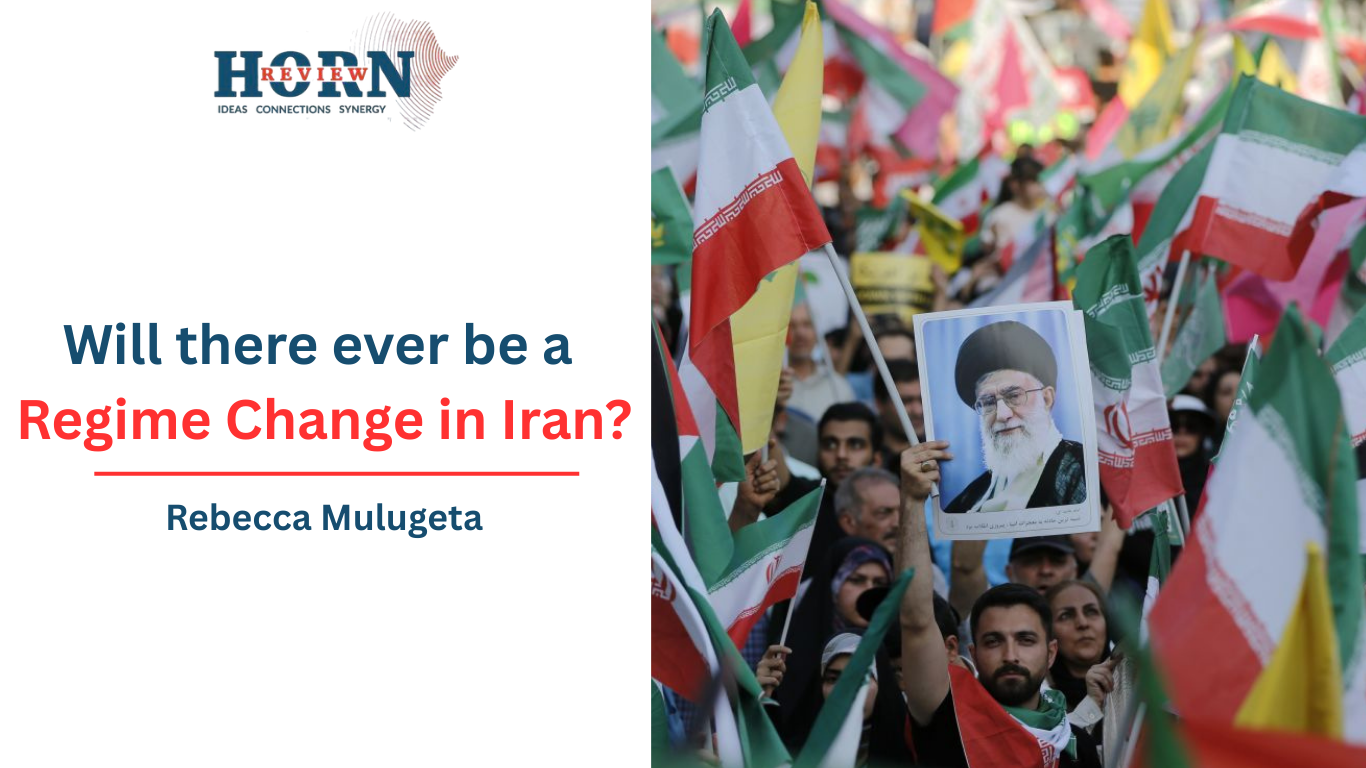
Any serious discussion about the possibility of political change in Iran usually begins with history. current tensions not seen as isolated events. Instead, it traced a long pattern of pressure, covert action, and strategic competition involving the United States and Israel. Over decades these actors have used a mix of intelligence operations, economic warfare, diplomatic isolation, cyber action, and targeted military actions. The combination is described as a layered strategy rather than a single regime-change plan. Understanding these patterns helps explain both why Iran is in a continuous regime change push and why transforming the political system there would be far more difficult than in cases such as Iraq or Afghanistan, and here one can ask what type of regime came to Iran? What is its implication to the Middle East and beyond?
Historically, attempts to reshape Iran’s political path have followed a recognizable pattern. The earliest modern example was the 1953 Iranian coup d’état, when the Central Intelligence Agency and British intelligence supported efforts that removed Prime Minister Mohammad Mosaddegh and strengthened the rule of Mohammad Reza Pahlavi. That episode demonstrated how external actors could impact political outcomes by working through domestic elites, media influence, and social mobilization. Although the monarchy later collapsed during the Iranian Revolution in 1979.
Following the 1979 Revolution, the west developed an increasingly sophisticated sanctions architecture designed to address specific national security concerns while minimizing direct military confrontation. This multi-layered regime targeted Iran’s banking infrastructure, energy exports, and access to international investment to constrain the financial resources available for the country’s nuclear program and its regional activities. From a policy perspective, the west viewed these measures as a non-kinetic tool of statecraft intended to incentivize a shift in Tehran’s strategic calculus. By raising the economic cost of the status quo, the U.S. sought to encourage internal dialogue and foster a domestic environment where the pursuit of international legitimacy and economic reintegration would outweigh the benefits of its existing geopolitical path.
At the same time, intelligence and covert activities continued to evolve. Israeli intelligence services, particularly the Mossad, conducted extensive monitoring of Iran’s nuclear and military development programs. One widely reported operation involved the removal of thousands of classified documents from a secret nuclear archive in Tehran, revealing details about earlier weapons research.
Around 2010 a cyber weapon such as Stuxnet was deployed against centrifuges at the Natanz nuclear facility. The malware caused physical damage to uranium enrichment equipment while remaining hidden inside industrial control systems. Widely attributed to cooperation between the United States and Israel, the attack represented a new type of strategic plan in which cyber tools replaced conventional bombing.
Despite all these measures, Iran’s regime sustained compared with several states that experienced regime collapse during the last two decades. Countries such as Iraq, Syria, and Afghanistan illustrate how different the Iranian case is. In Iraq and Afghanistan, foreign military intervention quickly removed governments. Syria’s conflict similarly weakened the state but did not ultimately remove the central government. Iran differs because its political system contains institutions designed specifically to resist external pressure. The Islamic Revolutionary Guard Corps functions not only as a military organization but also as a political and economic network deeply embedded in the country.
How about now, can this structure and institution change by the recent push by the US and Israel? At present, the political environment in Iran appears to be entering a more uncertain phase where the possibility of significant political change is increasingly discussed. Mounting intensifying geopolitical tensions involving the United States and Israel have together created conditions that could open space for potential transformation within the Iranian political system. While the state has historically shown strong resilience and institutional stability, the convergence of internal dissatisfaction, economic strain, and external strategic pressure shows that the potential for change cannot be entirely dismissed. Rather than indicating an immediate collapse, the current moment reflects a period in which the possibility of political transition or restructuring is becoming part of broader geopolitical.
From the perspective of Israel, the strategic consequences could be enormous. Iran has long been viewed by Israeli policymakers as the central security challenge in the Middle East. A transformed Iran that reduces its military posture or withdraws from regional proxy networks could significantly alter the balance of power. Israel would gain greater strategic flexibility and could expand technological and intelligence cooperation with states across the region. Its already strong capabilities in defense innovation, cybersecurity, and intelligence could give it a larger leadership role in regional security structures.
Such a development might also reshape the strategic relationship between Israel and other influential regional actors such as Turkey. If Iranian influence declined, competition for political and economic leadership in the Middle East could increasingly revolve around the interaction between Israeli technological power and Turkish geopolitical ambitions. Not only in the middle east israel will get upper hand in the red sea and horn. In that environment, Israel might gain a stronger position in research, security cooperation, and technological networks linking the Middle East with Europe and Asia.
On the global stage, a transformation in Iran could also influence the broader distribution of power among major states. Iran is an important energy producer and has developed closer economic ties with powers such as China and Russia in recent years. If a future Iranian government reoriented its economic and diplomatic relationships, it could reshape energy flows and strategic partnerships. That a shift in Iran’s geopolitical alignment could strengthen Western influence in global energy markets and reinforce the role of the United States in international economic structures.
In that sense, a political transformation in Iran would not only be a domestic event but also a turning point in Middle Eastern geopolitics. It could redefine the strategic balance among regional powers, influence global energy supply networks, and reshape alliances stretching from Europe to Asia. Yet history also warns that regime change rarely unfolds in a predictable way. The experiences of Iraq and Afghanistan show that removing a government does not automatically produce stability or strategic advantage. The question is also what kind of regime is produced inside Iran?
What is clear is that Iran occupies a central position in the geopolitical architecture of the Middle East. The long record of sanctions, intelligence operations, and military confrontation demonstrates how intense the country’s regime change is hard. Whether the current political system ultimately evolves, reforms, or transforms completely will depend primarily on internal dynamics within Iranian society and leadership circles.
If such a change were eventually to occur, however, it could open a new chapter in regional politics. Israel gained greater strategic security and technological influence across the Middle East and beyond, while the United States could strengthen its geopolitical position within a shifting global order.
By Rebecca Mulugeta, Researcher, Horn Review