The People’s Front for Democracy and Justice (PFDJ) routinely projects Eritrea as a socially cohesive state, defined by ethnic harmony and religious coexistence under a unified national identity. This narrative has been central to the regime’s political legitimacy. Beneath this constructed image lie, however, persistent fractures produced by exclusion and the systematic curtailment of religious and ethnic expression.
The roots of Eritrea’s contemporary identity fractures lie in the internal dynamics of its armed struggle. In the decades leading up to secession, the Eritrean movement was not socially or politically uniform. During the 1960s and 1970s, the Eritrean Liberation Front (ELF) had emerged as the primary vehicle of armed rebellion against Ethiopian rule. Its social base was largely composed of lowland Muslim communities, and its political imagination reflected this composition. Religious and regional identities were embedded in the movement’s structure, leadership patterns, and internal debates. As scholars such as Tekeste Negash have argued, the early phases of Eritrea’s armed struggle were shaped by religious and ethnic motivations rather than by a coherent, secular nationalist vision directed solely against the Ethiopian state.
By the late 1970s and early 1980s, the ELF entered a period of severe organizational crisis. Internal divisions primarily weakened the Front. From within this fragmentation emerged the Eritrean People’s Liberation Front (EPLF), organized around a tightly disciplined and secretive party structure. Although formally collective, the EPLF was dominated by a small inner circle, unofficially led by Isaias Afewerki. The EPLF did not simply break away from the ELF. It defined itself in opposition to it and sought its political and military destruction. Central to this rupture was the question of identity. Within the ELF, ethnic and religious affiliations were acknowledged as social realities that shaped political mobilization. For the EPLF, these affiliations were viewed as impediments to the construction of a singular Eritrean identity capable of sustaining a successful secessionist project.
The internal conflict between the ELF and EPLF was ideological as much as it was military. It revolved around competing understandings of what Eritrea was and how it should be constituted as a political community. The ELF reflected the plural composition of Eritrean society, particularly the prominence of Muslim lowland communities in the early rebellion. The EPLF advanced a centralizing vision in which ethnic and religious distinctions were subordinated to an overarching national identity. The eventual defeat and dismantling of the ELF allowed the EPLF to assume full control over the secessionist movement and, later, the state itself. Eritrea’s emergence in 1993 marked the institutionalization of the EPLF’s understanding of unity, one grounded in the submersion of subidentities rather than their political accommodation.
Shortly, the EPLF reconstituted itself as the People’s Front for Democracy and Justice (PFDJ), the sole legal political organization in Eritrea. The new regime continued with the Front’s deep suspicion of identity-based politics and carried it into the structures of state power. At the same time, as a newly recognized state, Eritrea faced external expectations regarding pluralism, rights, and diversity. The PFDJ’s response was to adopt a model of controlled recognition. Diversity was acknowledged formally, while its expression was subjected to strict regulation.
This approach was most visible in the regime’s handling of religion. The state recognized four religions and banned all others. This framework allowed the PFDJ to claim acknowledgement of Eritrea’s religious diversity. Recognition, however, functioned as an administrative instrument rather than as a protective guarantee. Religious institutions were placed under state oversight, religious leadership was monitored, and independent organization was curtailed. Unrecognized groups were criminalized, and their members were detained, imprisoned, or disappeared. The boundary between state authority and religious life was deliberately blurred, giving the regime control over who could worship and under what conditions.
The absence of a constitution, an elected parliament, or an independent judiciary meant that this system of recognition rested entirely on executive discretion. There was no legal basis defining the scope or limits of state authority over religious or cultural life. What constituted acceptable belief or practice was determined by the PFDJ leadership, concentrated around the presidency. Recognition thus became a means of suppression as much as a gesture of accommodation.
This posture was consistent with the EPLF’s earlier ideological disputes with Ethiopia’s ethnically conscious political organizations, particularly the Tigray People’s Liberation Front (TPLF). During the period of armed struggle against the Ethiopian state, tensions emerged between these organizations, partially over the role of ethnic identity in post-war political arrangements. While the TPLF viewed ethnic based political organization and territorial autonomy as mechanisms for managing diversity, the EPLF regarded such approaches as inherently destabilizing. This divergence later became evident in Isaias Afewerki’s hostility toward Ethiopia’s system of ethnic federalism, which he has repeatedly framed as the source of Ethiopia’s internal political problems. In contrast, the Eritrean state was built around a centralized model that excluded ethnicity from formal political life.
In practice, the PFDJ’s centralized authority has come to reflect a narrow social base. The regime is widely perceived as dominated by Christian, highland, Tigrinya-speaking elites, while Muslims and non-Tigrinya communities play a limited role in political decision-making and state administration. This imbalance continues to shape the lived experience of Eritrea’s diverse communities.
The treatment of Eritrea’s Muslim population demonstrates the continuity between the suppression of the ELF and the policies of the regime. Muslim communities have faced sustained political marginalization and social control. Islamic institutions, including teaching centres and independent mosques, have been closed or tightly regulated, particularly where they were perceived as fostering political awareness or collective organization. Muslim scholars, community leaders, and former ELF figures have been detained without charge, imprisoned for extended periods, or disappeared. Throughout the PFDJ’s tenure, Islam has been permitted as a private faith while its potential role as a source of social and political mobilization has been systematically constrained.
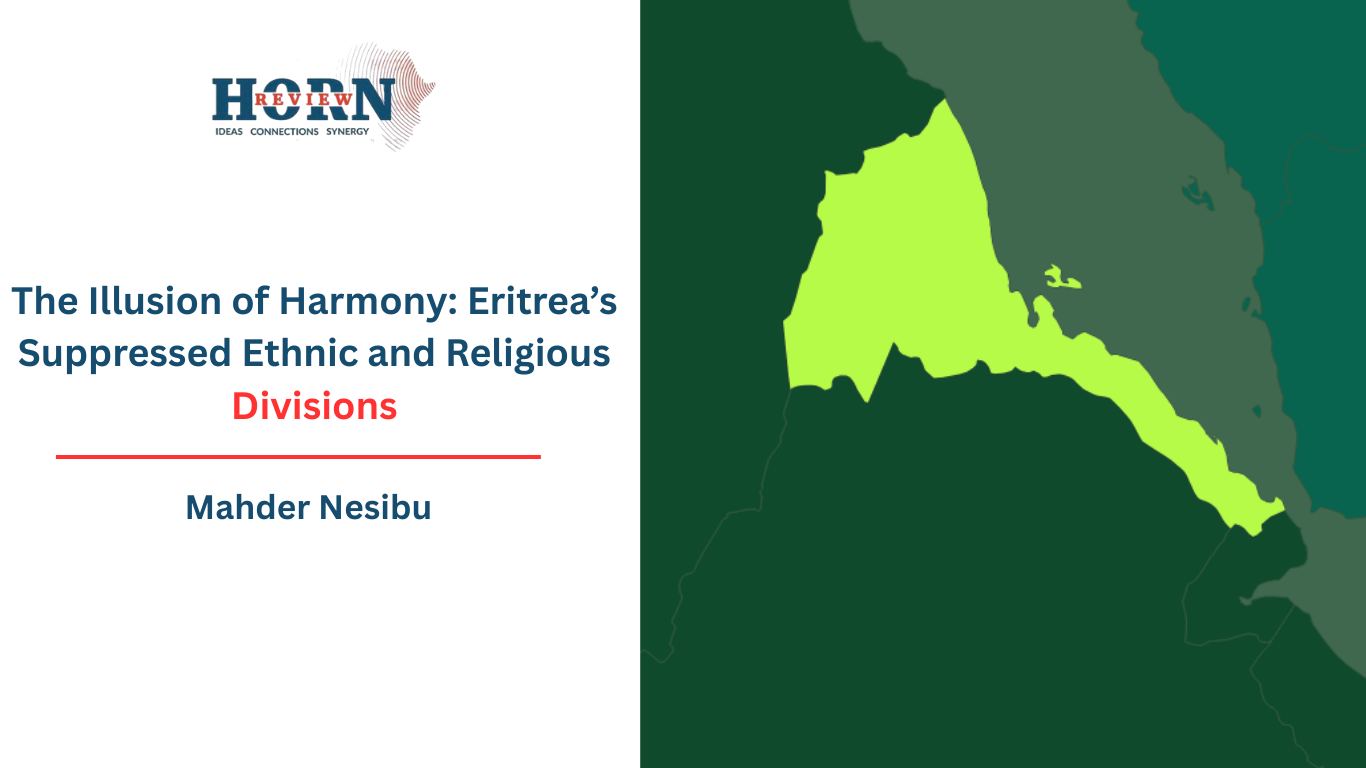
Ethnic marginalization is even more pronounced, particularly in the case of the Afar. Concentrated in Eritrea’s Danakil region, the Afar inhabit an area of significant geostrategic value and natural resources, bordering Ethiopia and Djibouti. Their cross-border kinship ties and longstanding grievances against the central authority have made them a particular target of state suspicion. Reports indicate heavy militarization, forced displacement, and collective punishment directed at Afar communities. Afar political movements operating outside Eritrea seek to challenge the PFDJ’s rule, reinforcing the regime’s perception of the community as a security threat. Accounts from human rights organizations and exile groups describe patterns of repression that some characterize as ethnic cleansing, aimed at dismantling Afar social structures to consolidate state control over the region.
The Kunama, a smaller ethnic group in western Eritrea, have experienced similar treatment. Historically marginalized and politically discontented, Kunama communities have faced land dispossession, forced conscription, and severe restrictions on movement. As with the Afar, the absence of independent media and reliable demographic data obscures the scale of repression and limits external scrutiny. Across these cases, a consistent pattern is visible. Communities perceived as politically unreliable or socially autonomous are subjected to heightened coercion. The lack of transparency, the absence of institutional oversight, and the concentration within a small ruling circle have allowed these practices to persist with little accountability.
More than three decades after secession, the PFDJ continues to govern through indefinite militarization, surveillance, and coercion. National unity remains the regime’s central ideological justification and its primary instrument of control. Political opposition has consistently challenged this model, arguing that unity enforced through repression erodes the social foundations of the state.
The cumulative consequences for Eritrean society are profound. The country already lacks a functioning economy. State institutions exist largely as extensions of coercive authority rather than as providers of public goods. Continuous outmigration has drained Eritrea’s productive capacity and hollowed out its social fabric. An aging revolutionary elite retains power without a clear succession horizon, leaving the future of governance uncertain.
Alongside these structural crises lies an unresolved identity question. Rather than developing inclusive mechanisms to manage diversity, the Eritrean state has sought to suppress it. Significant segments of the population continue to face marginalization and suppression rooted in religious and ethnic identity. This has produced a deeper fracture within Eritrean society, one that sits beneath the regime’s narrative of unity. The suppression of difference has neither eliminated diversity nor resolved the tensions associated with it. It has instead embedded grievance into the social fabric of the state. These unresolved fractures remain among the most enduring challenges facing Eritrea and continue to shape its political trajectory.
By Mahder Nesibu, Researcher, Horn Review