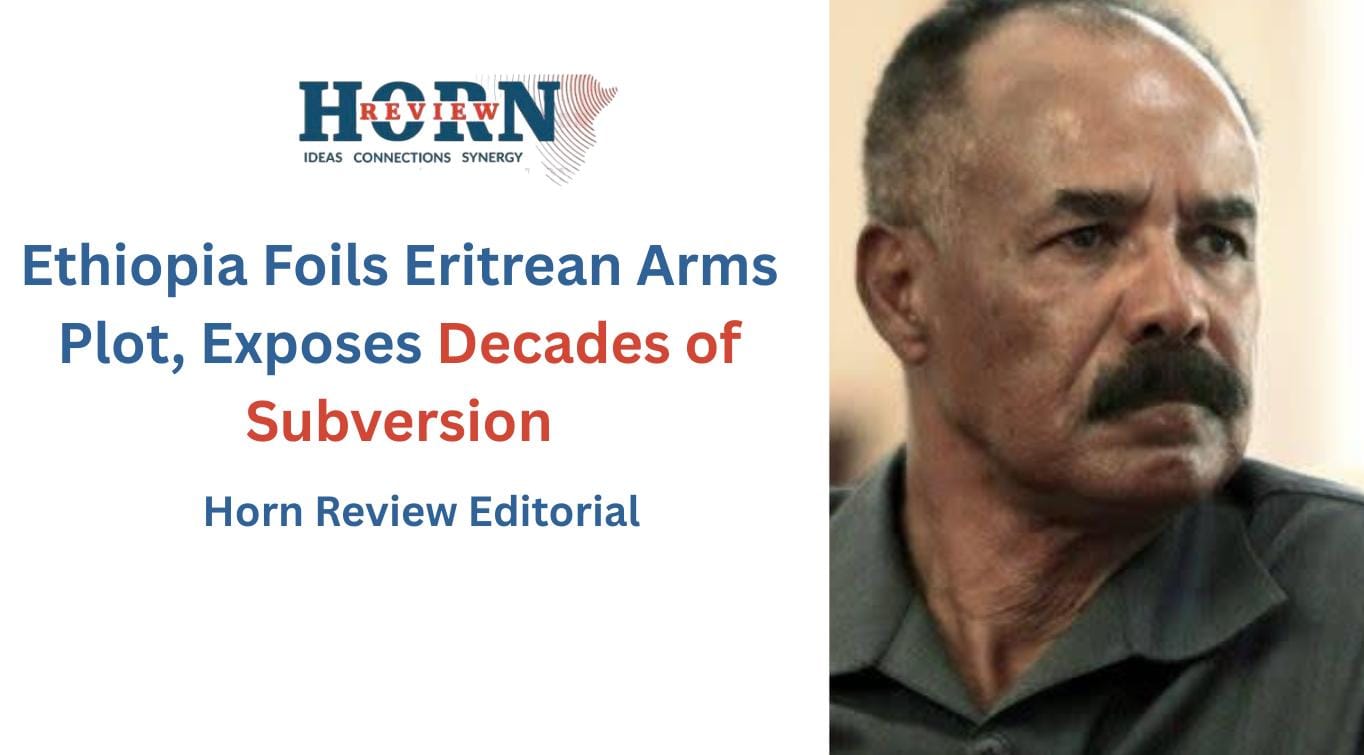
The recent interception by Ethiopian security forces of a substantial ammunition consignment allegedly intended for armed groups operating under the Fano label provides yet another compelling illustration of the persistent external pressures confronting the Ethiopian state. Far from constituting an isolated security incident, the operation reinforces Ethiopia’s long-articulated position that hostile actors – foremost among them the Eritrean regime – continue to pursue destabilization strategies aimed at undermining Ethiopia’s sovereignty, constitutional order, and long-term stability.
Ethiopian authorities have presented detailed accounts tracing the seized ammunition from Asmara through Mekelle and onward into the Amhara region, underscoring what they describe as a deliberate and well-coordinated supply network. This pattern is consistent with Ethiopia’s assessment that Eritrea has, for decades, relied on proxy warfare and clandestine operations to weaken Ethiopia from within. The use of internal intermediaries and armed groups adopting local labels is viewed not as coincidence, but as a calculated effort to mask external sponsorship while inflaming internal insecurity.
This interpretation is firmly rooted in historical experience. Since Eritrea’s secession in 1993, Ethiopia has repeatedly warned that the Eritrean leadership chose confrontation and subversion over genuine neighborly relations. That posture ultimately culminated in the 1998–2000 border war, a conflict imposed on both societies but driven, in Ethiopia’s view, by the Eritrean regime’s expansionist ambitions and refusal to resolve disputes through diplomatic means. The subsequent two decades of tense stalemate further entrenched Eritrea’s reliance on spoiler tactics, including support for armed opposition groups, as a core element of its regional policy.
Ethiopia’s position was most recently articulated by the Foreign Minister during a foreign policy forum organized by Horn Review in collaboration with Addis Ababa University in early November 2025, where he emphasized that Eritrean subversion has been neither episodic nor reactive, but systematic and sustained for more than thirty years. He further argued that the Eritrean regime no longer operates solely within the bounds of its own strategic autonomy, but increasingly functions as an extension of external agendas – most notably that of the Egyptian establishment – whose resolve to constrain, weaken, and destabilize Ethiopia has remained constant, particularly in relation to Ethiopia’s regional influence and sovereign development choices.
The 2018 rapprochement demonstrated Ethiopia’s genuine commitment to peace and regional integration. Addis Ababa took bold and politically costly steps to normalize relations, extend goodwill, and open a new chapter in bilateral ties. Yet this historic initiative was met, from Ethiopia’s perspective, with insincerity and regression. As the Tigray conflict unfolded, Eritrea once again exposed its true intentions by intervening militarily, committing grave crimes against civilians, and later – when pressured to withdraw – shifting toward covert destabilization through the arming and mobilization of insurgent forces opposed to the Ethiopian federal government.
In this context, the intercepted ammunition consignment assumes profound significance. It stands as concrete evidence of Eritrea’s continued interference in Ethiopia’s internal affairs and its willingness to sacrifice regional peace in pursuit of narrow regime survival and externally aligned interests. The Ethiopian state’s decisive action in intercepting the shipment and arresting those involved demonstrates both institutional capacity and political resolve to defend national security against foreign-sponsored subversion.
Ultimately, this episode reaffirms Ethiopia’s long-held warning to regional and international partners: peace in the Horn of Africa cannot be sustained so long as the Eritrean regime remains committed to destabilization as a tool of statecraft, whether in service of its own survival or as an auxiliary to broader regional agendas hostile to Ethiopia. Ethiopia’s struggle, as reflected in this incident, is not merely against isolated armed groups, but against a persistent, coordinated external project aimed at fracturing the country from within – an effort the Ethiopian state remains determined to confront in defense of its sovereignty and the wider stability of the region.
By Horn Review Editorial