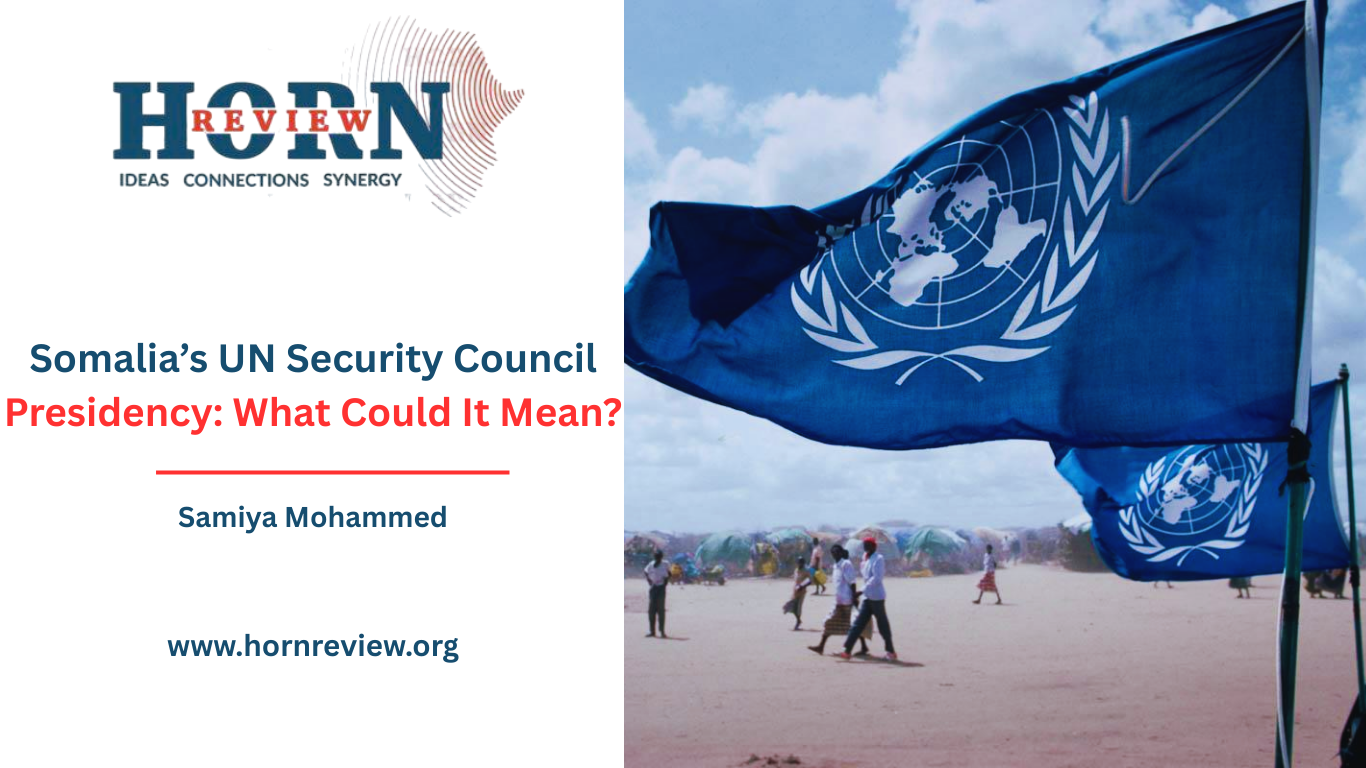
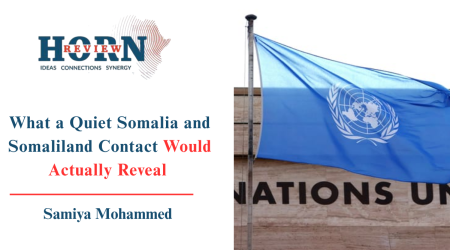
In January 2026 Somalia will assume the rotating presidency of the United Nations Security Council, a development that resonates lot further the procedural calendar of international diplomacy. For a nation whose name has been synonymous with state collapse, civil war, and terrorism for over three decades this moment is symbolic. It blemishes a formal return to the high table of global security governance, a diplomatic moment motioning a hard won, if incomplete rehabilitation. This presidency offers Somalia a platform to turn up African and Horn of Africa priorities from counterterrorism to humanitarian crises on the world’s security stage.
However, this ascension is not a story of unalloyed triumph. It is a narrative of resilience dimmed by acute vulnerability where the very factors that make Somalia’s perspective invaluable , its lived experience of fragility also impose severe constraints on its capacity to wield this diplomatic tool effectively. The presidency therefore constitutes a balancing act, a chance to channel regional offence and solutions into global forums, however one full of the risk that internal crises could undermine its credibility and aggravate regional tensions.
The significance of Somalia’s presidency is sowed in an arc of recent history. From the ruins of a failed state, Somalia has achieved a measure of stability that while frail, is tangible. Mogadishu’s streets are now alive at night, construction has resumed and for the first time since independence, the capital is preparing to elect its own city council. This internal progress, though uneven, provides the foundation for its external diplomatic claim. The presidency is a signal that Somalia is back in the room where the world’s hardest security decisions are debated.Strategically, the role grants Somalia direct agenda setting power. For Somalia, the presidency is a critical conduit to address two paramount regional issues.
It can advocate for sustained and predictable financing for the African Union Support and Stabilization Mission in Somalia. Second, it can steer the Council’s attention toward a more holistic response to Al-Shabaab, potentially arguing for a review of sanctions regimes whose utility Mogadishu has previously questioned, while also pushing for greater support for political reconciliation and state building. In this sense, the presidency transforms Somalia from a perennial subject of Security Council deliberations into an active shaper of its responses. However, Somalia’s capacity to fully capitalize on this opportunity is inherently limited by its own on going challenges. The nation’s vulnerabilities are not past scars but present-day realities that will inevitably dim its diplomatic performance.
The most immediate constraint is deep political discord between the Federal Government of Somalia and key Federal Member States, specially Puntland and Jubaland, both of which have suspended relations with Mogadishu. The core dispute revolves around the electoral model for the 2026 national elections, with the FGS advocating for a one person, one vote system while opponents fear a centralization of power and prefer a clan based formula. This infighting has crystallized in the formation of new opposition alliances like the Somali Future Council. A Security Council president engulfed in a constitutional crisis at home will struggle to project unity or mediate impartiality in international disputes. The political energy consumed by domestic survival will necessarily temper its ambition or influence on contentious issues abroad.
Despite government offensives, Al-Shabaab remains a potent and adaptive force. The UN’s 751 Sanctions Committee notes the group’s history of threatening political processes, attacking peacekeepers, and obstructing humanitarian aid. Recent reports indicate the group has significantly expanded its control of territory in Central Somalia. This insurgency means the government exercises limited control over parts of its territory, directly undermining the moral authority of a state presiding over global peace and security. Every high profile Al-Shabaab attack during Somalia’s presidency would inadvertently spotlight the Horn’s delicate potentially shifting the Council’s focus from Somalia’s agenda to Somalia’s problems.
Within this context of symbolic power and practical limitation, Somalia’s diplomatic success hinges on a delicate balance. Its primary opportunity lies in amplification using its lived experience to advocate for more effective, locally-informed international responses to conflict and recovery. Its voice on the paralyzing effects of terrorist financing, the importance of predictable peacekeeping funds, and the humanitarian development peace nexus could carry unique credibility.
However, this focus carries the inherent risk of alienation. If Somalia is perceived to prioritize its national and regional issues too aggressively or parochially, it could strain relations with neighbours and other Council members. The Horn of Africa is a coliseum of rivalries, Security Council discussions on Somalia or other horn states are inherently sensitive. Cause it might be viewed that any heavy focus on Horn issues as biased toward Somalia’s perspectives, potentially polarizing Council discussions if regional rivalries spill over. Should a major domestic political or security setback occur, a breakdown of the electoral process or a catastrophic terrorist attack, it could severely undermine Mogadishu’s credibility at the very moment it seeks to lead. The presidency would then become a lens magnifying instability rather than a megaphone for solutions.
The constraints are already visible in pre presidency movements. During recent negotiations on renewing the Al-Shabaab sanctions regime, Somalia, supported by the A3 Plus grouping and others, expressed a desire for the Council to seriously consider the utility and effectiveness of the measures. This stance born of its on the ground experience, illustrates the perspective it brings.
Then advocating for such changes while the group is resurgent requires immense diplomatic finesse to avoid appearing soft on terrorism. Similarly, while most Council members sympathize with AUSSOM’s funding plight, Somalia’s ability to broker a solution is hamstrung by the firm opposition of key permanent members to using UN-assessed contributions.Somalia’s assumption of the Security Council presidency is a net diplomatic win, but one whose ultimate value remains to be earned. It is a victory first for symbolic representation affirming that nations emerging from protracted conflict can reclaim agency in the international system. It strengthens the principle of African representation in shaping security discourse that directly affects the continent. The very act of Somalia competently chairing the Council’s formal proceedings will be a powerful counter narrative to its long held image of chaos.
However, this is a presidency with limits. It is unlikely to be a transformative moment of breakthrough diplomacy on the world’s most intractable conflicts. Instead, it will be a test of Somalia’s diplomatic resilience and tactical skill. Its success will be measured not by sweeping initiatives but by its ability to steward the Council’s existing agenda with professionalism to insert the urgent priorities of fragile states into debates with greater force and to avoid becoming a source of new controversy or distraction.This reality is the very essence of 21st-century security challenges.
By Samiya Mohammed, Researcher, Horn Review