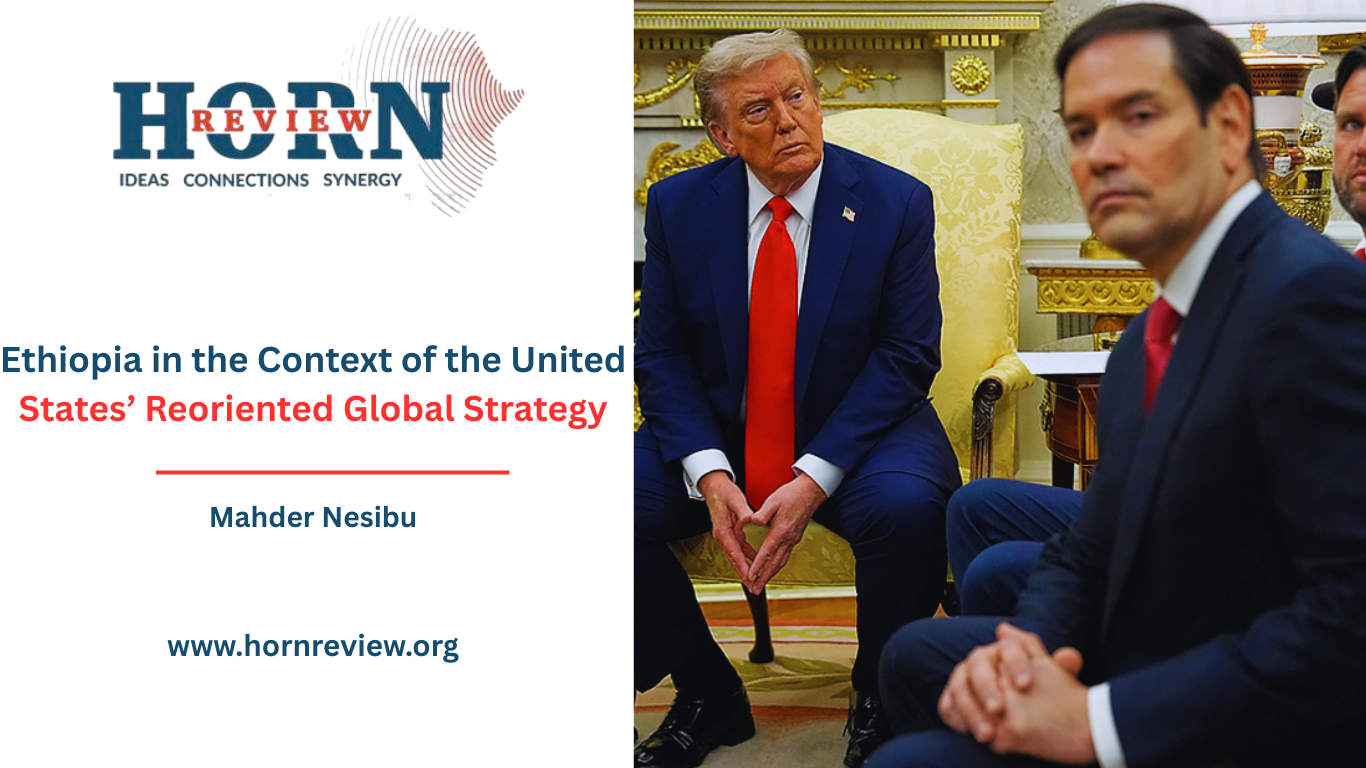
The United States’ most recent National Security Strategy marks a clear articulation of a worldview that has been taking shape for several years. The document affirms a decisive shift away from assumptions that once underpinned American global engagement, replacing them with a narrower conception of national interest and a more selective approach to power projection. At its core is a reaffirmation of American primacy, paired with a recalibration of when and where that power will be exercised.
The strategy asserts the United States’ self-perception as the most powerful state in the international landscape and its determination to maintain that position. Yet this assertion is immediately qualified by a more restrictive definition of engagement. The affairs of other states, the document notes, are of concern only insofar as they directly affect American interests. Security and economic resilience are prioritized, while interventionist impulses are deliberately constrained. Power projection is no longer assumed as a default response to instability; it is conditioned on direct relevance to American safety or strategic standing.
This shift reflects deeper transformations in the global environment. The rise of China as a systemic challenger, the deterioration of relations with Europe, described as a “transatlantic rift” shaped by the Ukraine war, and the return of great-power competition have converged with domestic political changes in the United States. The presidency of Donald Trump accelerated these trends, but the strategy suggests they have now hardened into a more durable framework for American foreign policy.
Within this framework, the role of middle powers is explicitly acknowledged. Rather than being treated as subordinate actors or peripheral partners, states such as the Gulf monarchies are recognized as consequential players whose interests and agency shape regional outcomes. Partnership, rather than hierarchy, becomes the operative concept. This applies not only to the Middle East but to Africa and the broader Global South.
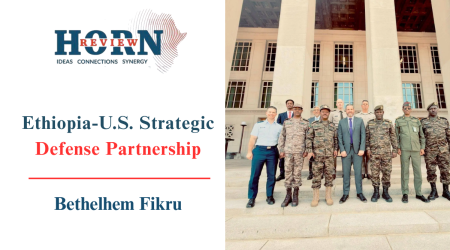
Ethiopia’s appearance in the strategy is striking. The document references Ethiopia in the context of recent American peace-brokering initiatives associated with President Trump, placing it alongside other conflict theatres where Washington has sought to prevent escalation rather than impose outcomes. Ethiopia is framed as a state situated within a brewing conflict environment, with particular reference to tensions with Eritrea. The implication is not one of intervention, but of diplomatic engagement aimed at preventing the emergence of new wars.
This framing raises a broader question: how does Ethiopia fit within the United States’ evolving strategic outlook, and how might Addis Ababa respond to it?
Ethiopian foreign policy itself is undergoing a significant transformation. The current administration has moved toward a redefinition of national interest, framed around a more proactive conception of the Ethiopian state. Rather than positioning itself as a reactive actor navigating external pressures, Addis Ababa increasingly presents itself as a state willing to engage regional and global actors on the basis of its own priorities. This recalibration is visible in Ethiopia’s diversified diplomatic relationships and its refusal to anchor itself within rigid ideological or alliance-based blocs. Non-alignment, in this context, is presented as a strategic choice. For example, Ethiopia maintains relations with Russia while sustaining engagement with major European powers such as France and Italy. These relationships are seen as complementary, reflecting a desire to preserve diplomatic flexibility in an increasingly multipolar system. At the same time, Ethiopia has articulated a “Horn First” approach, signalling renewed emphasis on its immediate neighbourhood after years in which regional engagement was deprioritized in favour of global alignments.
Ethiopia’s relationship with the United States has been one of the most consequential external relationships shaping the country’s modern political trajectory. During the reign of Emperor Haile Selassie, the United States was a central ally, contributing to Ethiopia’s military capabilities and shaping its Cold War positioning across the Horn of Africa and the Middle East. That alignment placed Ethiopia within the Western camp and integrated it into broader American strategic calculations. The rupture that followed under the Derg marked a sharp reversal. Ethiopia’s pivot toward the Soviet Union had profound consequences, and the collapse of the USSR coincided closely with the fall of the Derg itself.
The subsequent emergence of a Western-aligned administration in Addis Ababa occurred alongside the United States’ ascent as the sole global superpower. During this unipolar moment, Ethiopia positioned itself as a close partner of Washington, navigating a global order defined by American dominance. Under the EPRDF, Ethiopia was at times described by American policymakers as an “anchor state” in the Horn of Africa. Its military intervention in Somalia against the Islamic Courts Union reinforced this perception and solidified Ethiopia’s alignment with US counterterrorism priorities. American security frameworks deeply shaped Ethiopian regional policy during this period, and its relations with neighbouring states were often filtered through Western perceptions.
That global context has now changed. Multipolarity is no longer a speculative concept but an operative reality, and the unipolar moment has visibly eroded. The current American national security outlook reflects this shift, presenting Ethiopia with a set of opportunities distinct from those of earlier periods. Washington no longer seeks to mould partners through ideological alignment or conditional engagement. Instead, it approaches relationships through a transactional logic grounded in mutual interest. For Ethiopia, this creates strategic space. Addis Ababa is no longer required to position itself as a subordinate security partner or an extension of American regional policy. Instead, it can act as a regional power in its own right, aligning with Washington selectively and pragmatically. The United States’ emphasis on maintaining stability, rather than shaping states’ interests, aligns with Ethiopia’s goal of stabilizing its immediate environment while rigorously pursuing its geo-political interests.
Economic considerations are central to this recalibration. The national security strategy frames the American economy as an asset to be protected, and this logic extends to external engagement. The “trade, not aid” approach articulated toward Africa reflects a broader shift away from development assistance as a tool of influence. Relationships are increasingly defined by economic value and strategic relevance. For Ethiopia, this dovetails with its own development ambitions and its pursuit of regional economic integration.
The implications of this convergence are significant. Ethiopia can position itself as a driver of regional economic connectivity, leveraging its state capacity, demographic weight, and infrastructural investments. Rather than being shaped by external power projection, the Horn of Africa becomes a space where Ethiopian leadership can play a central role. In this configuration, the United States is not an overarching hegemon but a global power with which Ethiopia can coordinate on specific issues while maintaining strategic autonomy.
Partnership, as articulated in the American worldview, becomes the key organizing principle. Just as the United States accepts the agency of Gulf monarchies in their respective regions, it can accommodate Ethiopian leadership in the Horn. Cooperation with Washington can occur across a range of issues without requiring ideological alignment or long-term dependency. Divergence of interests is not treated as a liability but as a reality to be managed. This represents a departure from earlier phases of the Ethiopia–US relationship, which were shaped by Cold War rivalry and unipolar dominance. The emerging framework is more fluid and less prescriptive. It places greater responsibility on Ethiopia to articulate and pursue its own regional vision, while offering space to engage with global powers on terms that reflect national priorities.
Whether Ethiopia can fully capitalize on this moment depends on its ability to translate strategic autonomy into coherent regional leadership. The opportunity exists to shape a regional order grounded in economic integration and political stabilization, rather than external intervention. The United States’ evolving worldview does not guarantee support for such a role, but it no longer constrains it. In that sense, the shift in American national security thinking opens a window for Ethiopia—not as an anchor state within someone else’s strategy, but as a central actor in its own regional system.
By Mahder Nesibu, Researcher, Horn Review