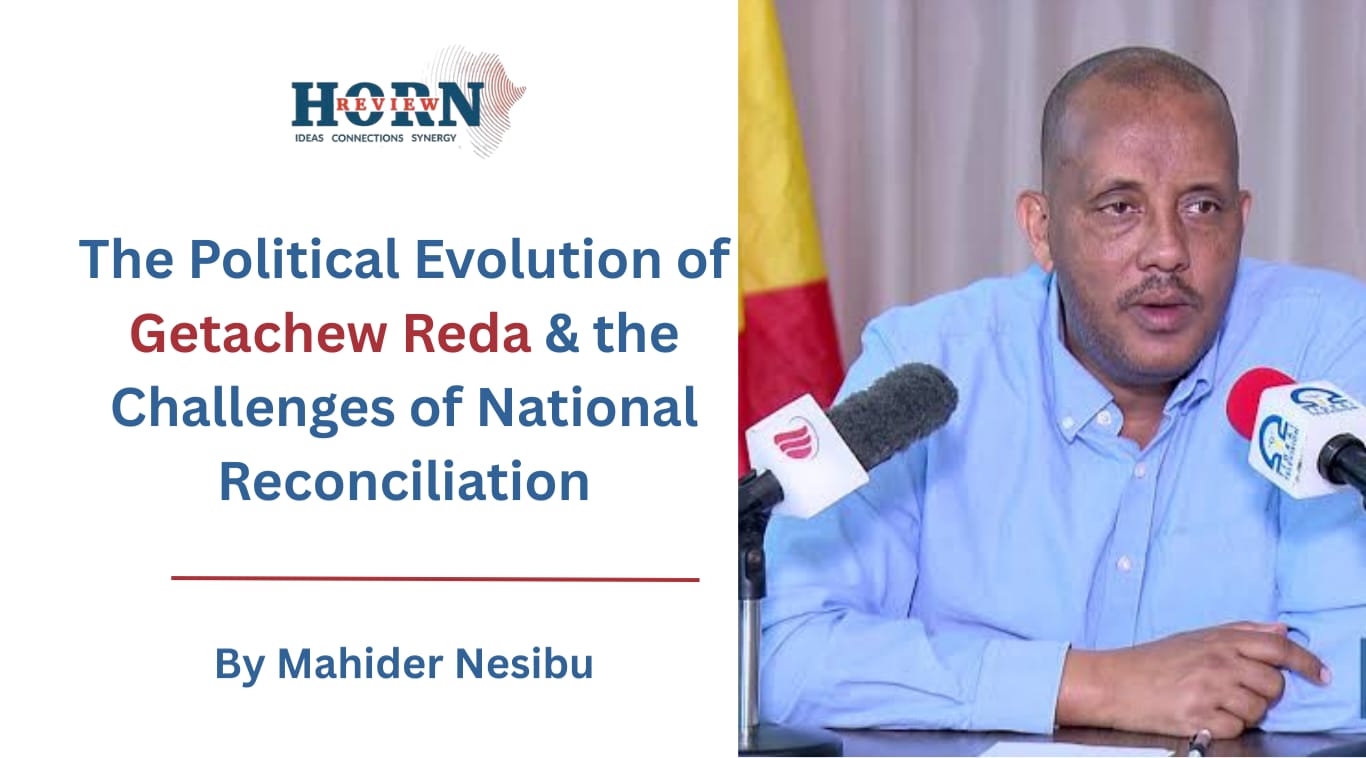
Within the highly polarized landscape of Ethiopian politics, where actors are frequently evaluated through rigid dichotomies of loyalty and opposition, Getachew Reda emerges as a figure whose political trajectory warrants rigorous scholarly attention. Despite substantive disagreements one might hold with his positions – and I acknowledge my own – his recent appearance on Al-Jazeera elucidates a dimension of leadership seldom recognized: the capacity to subordinate personal ego in the service of national reconciliation.
From an analytical standpoint, Reda exemplifies a leader who not only confronts the consequences of prior choices but simultaneously demonstrates the moral and political courage to acknowledge, with genuine contrition, the share of responsibility he bears. Notably, in deliberations on transitional justice, Reda did not hesitate to assume his own responsibility for the conflict, while simultaneously recognizing that the mass atrocities – particularly in Tigray and adjoining regions – were predominantly executed with deliberate intent by Eritrean forces. This acknowledgment is striking, made in contrast to his former comrades within the TPLF, who continue to agitate for renewed confrontation with the federal government, including by forging alliances with Eritrean actors implicated in orchestrating mass atrocities in Tigray. Reda’s stance exemplifies principled accountability and a commitment to reconciliation, even in the face of profound political and personal risk.
Equally salient is Reda’s capacity to transcend personal pride and engage constructively with institutions he once criticized, most notably the federal government. In an international context where conflicts are not merely initiated but prolonged due to leaders’ inability to overcome ego, Reda’s willingness to negotiate and cooperate represents a profound departure from the prevailing norm. His engagement with the very authorities he previously opposed, in the aftermath of a devastating conflict, constitutes a paradigmatic instance of judicious political judgment worthy of systematic study.
The role of Prime Minister Abiy Ahmed in this process is both pivotal and historically consequential. By entrusting Reda with authority over the administration of Tigray under the interim government and extending political legitimacy to him amid sustained censure from former TPLF colleagues, Abiy demonstrated a rare equilibrium between moral conviction and political discernment. This was not a mere act of expediency; it reflects a statesman capable of apprehending the complexity of Ethiopia’s post-conflict realities, calibrating competing imperatives, and privileging the long arc of national cohesion over the immediacies of factional gain. By recognizing Reda’s considerable sociopolitical capital – his credibility, influence, and legitimacy among Tigrayan constituencies – Abiy repositioned the federal government as an architect of reconciliation rather than a custodian of division. His engagement illustrates the transformative potential of leadership grounded in magnanimity, restraint, and historical imagination – qualities seldom manifest in post-conflict political environments.
Reda’s political capital merits particular attention. His entrenched legitimacy within Tigray enables him to mediate local actors, rebuild trust in governance institutions, and facilitate reconciliation initiatives. He thus embodies both symbolic and instrumental significance: as a conduit for bridging entrenched communal fissures and as a practical agent of governance stabilization. The alignment under Abiy Ahmed’s leadership therefore transcends individual transformation; it constitutes a strategic convergence with the potential to materially advance peace and political consolidation in one of Ethiopia’s most fractious regions.
This collaboration has profound implications for national reconciliation. It exemplifies how post-conflict recovery necessitates not only institutional interventions but also elite cooperation predicated upon humility, moral courage, and legitimacy. The Abiy–Reda paradigm demonstrates that sustainable peace is attainable when leaders subordinate parochial loyalties to collective national interest.
From a political-psychological perspective, this trajectory is instructive. It illuminates how regulation of personal ambition, ethical accountability, and pragmatic negotiation can transform elite behavior in highly polarized contexts. It further underscores the interplay between structural conditions and individual agency: political actors endowed with legitimacy among their constituencies, and engaged by counterparts capable of recognizing and mobilizing that capital, can significantly alter conflict dynamics.
Critics may persist in contesting Reda for prior decisions or his current governmental role. Yet to reproach a leader for manifesting humility, exercising careful judgment, assuming responsibility for atrocities, prioritising the ending of public suffering and embracing reconciliation is to obfuscate the analytic significance of these behaviors. Ethiopia’s political culture – often characterized by zero-sum thinking and elite intransigence – risks perpetuating conflict if gestures of accountability and reconciliation are devalued.
Hence Reda’s political evolution, coupled with Abiy Ahmed’s measured and principled leadership, constitutes more than an individual narrative; it is a prism through which the broader psychology of Ethiopian political elites can be interrogated. While neither infallible nor complete, their collaborative trajectory provides a salient exemple of leadership capable of privileging national cohesion over factional entrenchment. In a global milieu in which conflicts are frequently exacerbated by personal and collective egotism, such a capacity is both remarkable and worthy of rigorous scholarly inquiry.
Finally, the implications of this trajectory extend well beyond Ethiopia. In post-conflict societies, the restoration of social and political cohesion necessitates actors who can integrate moral courage and considered judgment – leaders willing to acknowledge past errors, subordinate ego, and mobilize political capital toward collective reconciliation. The Abiy–Reda case illustrates the potential of elite cooperation to disrupt cycles of division and violence. For scholars, policymakers, and practitioners of conflict resolution worldwide, it offers a critical lesson: durable peace is seldom linear or facile, yet it remains achievable when national interest supersedes factional loyalty, and political culture incentivizes accountability, prudence, and trust-building.
By Mahider Nesibu, Researcher, Horn Review