IGAD’s engagement with the conflict in Sudan illustrates a structural tension inherent to regional organizations that mediate internal wars among their members. The organization operates under an imperative to facilitate dialogue however it derives its authority from the consent of sovereign states. This produces a paradox to secure any workable basis for mediation on Sudan IGAD must engage the de facto holders of territorial and military power yet that very engagement forms the core of the sovereignty objection advanced by Sudan. Sudan’s suspension of membership in 2024 and its formal return in 2026 do not dissolve the tension. They recalibrate it in response to shifts in language and relative military position.
In January 2024 Sudan suspended its membership in IGAD. The immediate trigger was the invitation extended to Mohamed Hamdan Dagalo commander of the Rapid Support Forces to attend an extraordinary summit in Uganda. Sudan stated that the invitation disregarded and violated Sudan’s sovereignty. The accusation draws directly on IGAD’s own founding framework which rests on the sovereign equality of member states, non interference in internal affairs and the peaceful settlement of disputes. Sovereignty functions here both as a protective norm for member states and as a claim that can be invoked against forms of external involvement perceived as eroding hierarchical order.
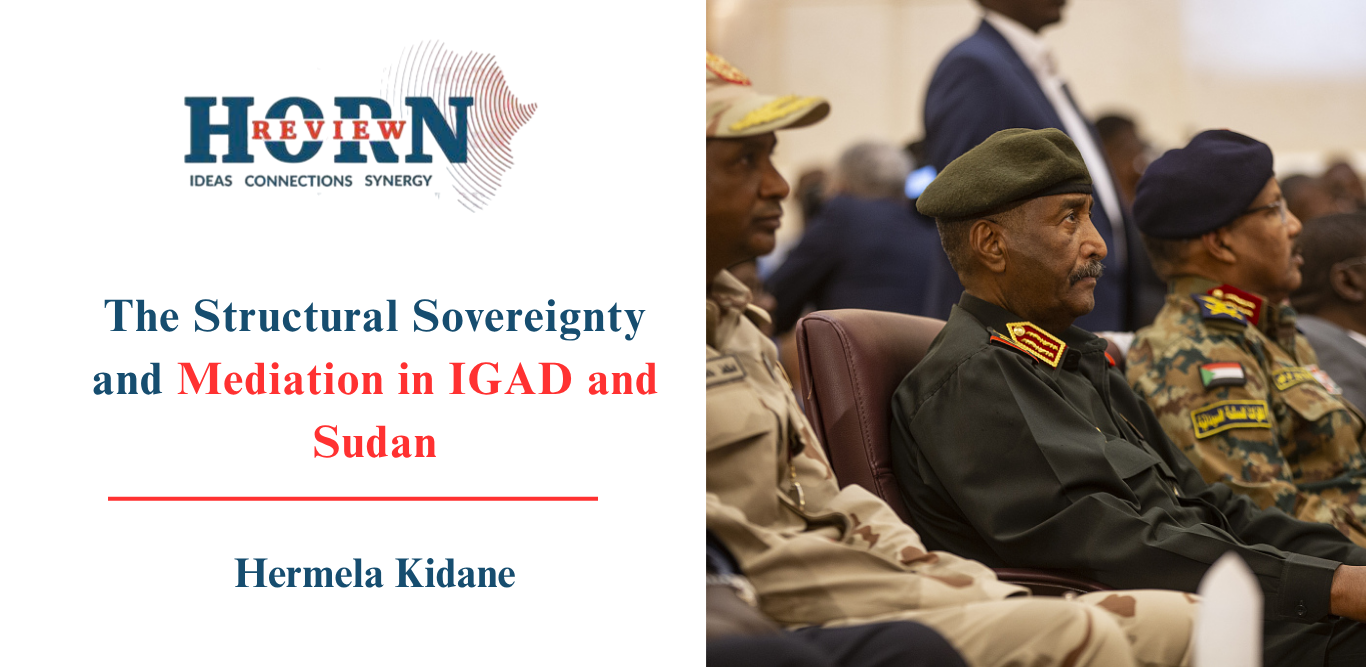
The position articulated by General Abdel Fattah al Burhan head of the Sovereignty Council follows an internal logic. It is not a categorical refusal of negotiation. It is a rejection of arrangements that place the national armed forces and a paramilitary organization on equal presentational footing. In this framing the exclusive authority of the state to speak for itself is diluted when a force described as a militia is seated as a co equal interlocutor. From the standpoint of mediation practice however exclusion of the RSF renders any process incomplete given the force’s control of substantial territory and combat capacity. Inclusion activates the sovereignty defense. No readily available middle path satisfies both the requirement of inclusivity and the claim of exclusive sovereign presentation.
Sudan’s formal resumption of full membership on 9 February 2026 placed the paradox in a new phase. The return followed an observable adjustment in IGAD’s public posture rather than any abandonment of Sudan’s sovereignty position. In late January 2026 after consultations between the IGAD Executive Secretary and Sudan’s Prime Minister the organization issued a statement that condemned violations by the Rapid Support Forces and reaffirmed full support for the unity and sovereignty of the Republic of Sudan and its existing national institutions. The reference to existing institutions addressed the earlier objection by aligning more closely with the legitimacy claim advanced by the SAF dominated structure.
This discursive shift coincided with reported changes on the battlefield. The Sudan Armed Forces registered measurable advances including the restoration of activity at Khartoum International Airport and offensives in the Kordofan region that reduced RSF presence in parts of North Kordofan and pushed elements of the force westward toward Darfur. These developments altered assessments among IGAD member states of relative strength between an actor controlling the capital, major transport nodes and core state institutions and a political military force that retained presence in Darfur but lacked international recognition.
Sudan’s decision to return can be examined along three linked dimensions. Normatively IGAD’s renewed emphasis on sovereignty and existing institutions supplied language consistent with Sudan’s stated position. Instrumentally absence had limited Sudan’s capacity to shape regional discussion return restored the discursive weight of a founding member. In battlefield terms reported SAF gains strengthened its bargaining position allowing military advantage to be converted into diplomatic presence. These three dimensions are not mutually exclusive and the instrumental rationale deserve particular attention. It is possible that Sudan returned not out of confidence that the SAF would achieve a decisive victory but because continued absence offered no viable alternative for influencing the regional conversation. Outside IGAD Sudan could neither shape the agenda nor challenge narratives advanced by other member states. Return under this reading reflects an assessment about the costs of exclusion rather than a confident bet on battlefield outcomes. The distinction matters it suggests that Sudan’s re engagement is driven as much by the desire to avoid being sidelined as by any expectation of imminent military resolution.
None of these dimensions however eliminates the underlying tension. At its third Envoys Forum in July 2026 IGAD continued to stress coordination of regional and international mediation efforts and the need for an inclusive political process. SAF leadership has maintained that the RSF will have no role in the post war Sudanese state. Effective mediation therefore still requires an operational balance between the sovereignty claim and the practical need for inclusivity.
The IGAD Sudan case carries wider significance for regional security structure in Africa. Regional organizations draw legitimacy from the consent of sovereign members however the internal conflicts they are asked to address often require forms of engagement that strain that consent. When the position of the recognized government strengthens the sovereignty norm gains weight when conflict remains more evenly contested or state authority appears fragmented the imperative of inclusivity reasserts itself. Legitimacy and effectiveness can stand in inverse relation greater emphasis on sovereignty preserves member state confidence but may limit leverage over the party’s greater pursuit of inclusive mediation risks activating defensive sovereignty claims. Sudan’s suspension and return exemplify rather than resolve this structural predicament. Whether the present equilibrium can be translated into a durable mediation framework or whether it will recur as a cycle of withdrawal and re engagement remains the open question for IGAD and for comparable regional bodies confronting complex internal conflicts.
Hermela Kidane, Research, Horn Review